Plan music for a multi-day wedding by giving each gathering its own atmosphere, then coordinating songs, sound, and responsibilities across the full schedule. Effective wedding music planning starts with clear direction, so the welcome party, ceremony, reception, and farewell brunch feel connected without repeating the same experience.
Your guests will move between conversation, meaningful traditions, and dancing throughout the celebration. Start by deciding what each event should feel like.
Key Takeaways
- Give each gathering a distinct musical identity, reserving signature songs for their intended moments.
- Build one shared entertainment schedule with separate coverage, equipment, and responsibilities for every location.
- Finalize your music brief at least four weeks before the wedding, while leaving room for crowd-responsive selections.
Give Each Day Its Own Musical Atmosphere
Welcome Party and Rehearsal Dinner
The opening events should encourage guests to connect. Familiar music at conversation-friendly volume works well; save your biggest dance floor favorites for the reception.
A welcome-party mix of wedding songs might include “Lovely Day” by Bill Withers, “Put Your Records On” by Corinne Bailey Rae, and “Sunday Best” by Surfaces. For rehearsal dinner, consider “Beyond” by Leon Bridges, “Our Love” by Curtis Harding, and “L-O-V-E” by Nat King Cole.
Give family performances and cultural traditions their own scheduled moments, with clear introductions and microphone coverage.
Reception and Farewell Brunch
The reception can carry the weekend’s strongest energy, while brunch offers a relaxed finish. Save higher-energy wedding songs for the reception, and choose acoustic pop, soul, and light jazz for brunch conversation.
Reserve the first dance and final dance for their planned appearances. Other favorites can return in different arrangements, but avoid replaying an identical playlist.
Document start times, end times, locations, and the person responsible for music at each gathering.
Choose a DJ, Live Band, or Playlist for Each Event
Different events can use different entertainment. A rehearsal-dinner playlist, ceremony ensemble, and reception DJ can work together under one coordinated plan.
These broad planning ranges describe individual bookings, not complete wedding-weekend packages.
| Option | Planning range | Main consideration |
|---|---|---|
| Professional DJ | $1,500-$4,000 | Recorded originals, flexible requests, and coordinated hosting |
| Live band | $3,000-$15,000 or more | Live performance energy, larger setup, and scheduled breaks |
| DIY playlist | $0-$300 for basic equipment rental | Suitable only for simple setups; labor and other costs are additional |
A band suits couples who want a performance-centered atmosphere. A DJ offers broader genre flexibility and can adjust selections as guests respond.
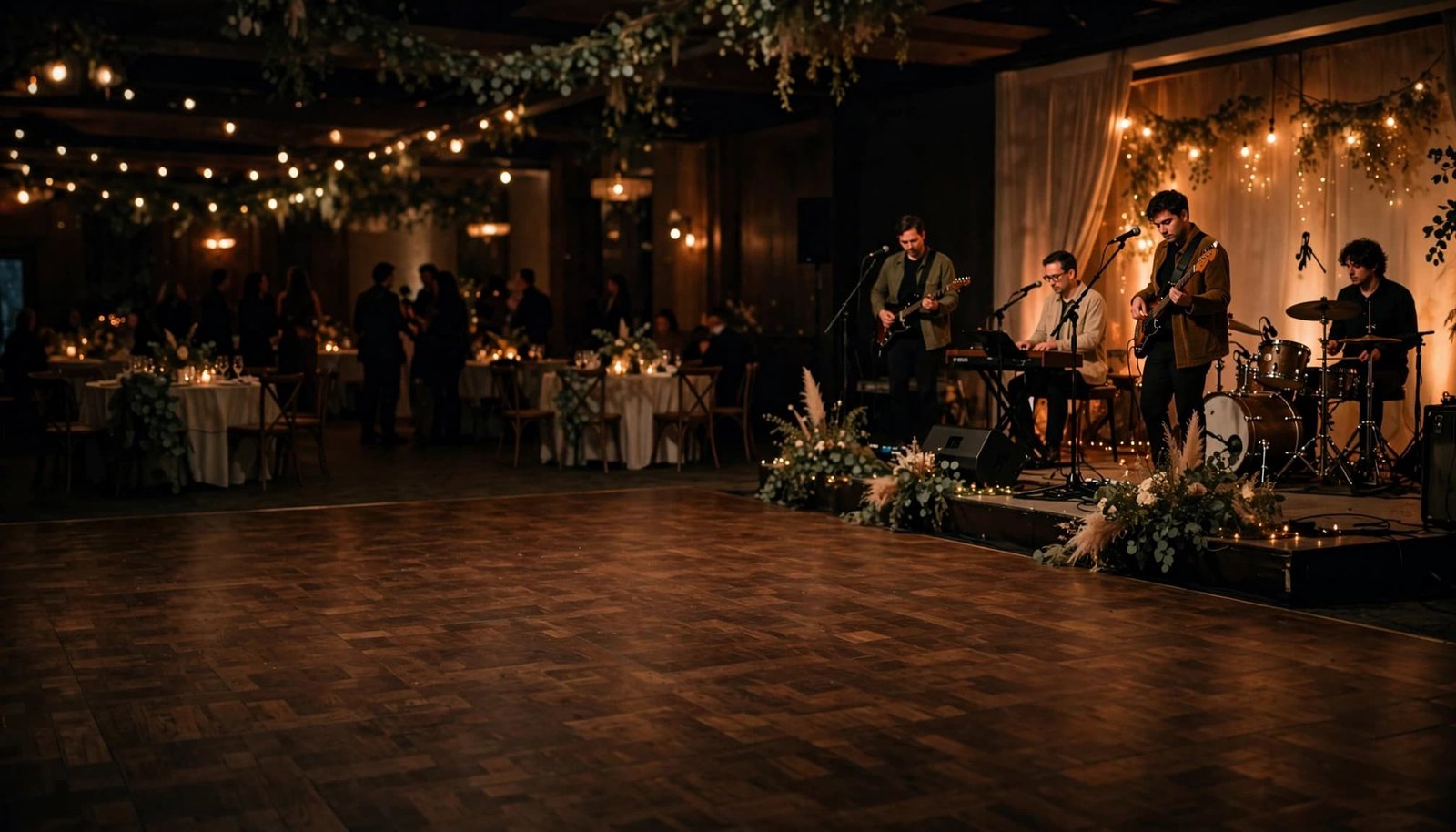
Agency bookings can cost roughly 10%-30% more than direct bookings, although representation and included services differ. Compare complete coverage, including travel, setup, microphones, overtime, and additional days.
Our guide to choosing a wedding DJ outlines the communication, hosting, and preparation that support a dependable reception.
Map the Wedding Day’s Musical Moments
Most weddings involve 8-12 musical moments, depending on traditions and formalities. A musical cue isn’t necessarily a full song; an entrance may use only part of a recording.
Use this starting framework.
| Moment | Practical music allowance |
|---|---|
| Prelude and guest arrival | 15-30 minutes, approximately 5-10 songs |
| Family and wedding party processionals | 1-3 selections |
| Unity ritual or signing | One selection, if included |
| Recessional | One celebratory selection |
| Cocktail hour | Approximately 15-20 songs |
| Grand entrance | One selection or short edited segments |
| Dinner and toasts | Background playlist; music off during speeches |
| First dance | One selection |
| Parent dances | One selection per dance |
| Cake cutting | One selection, if featured |
| Open dancing | Flexible library guided by guest response |
| Final dance | One agreed closing selection |
Extend the prelude to 30-60 minutes only when guest arrival, transportation, or seating requires it.
A four-hour reception needs roughly 50-70 songs in inventory. A six-hour wedding day needs approximately 80-100 tracks, with extras for delays. These are preparation estimates, not mandatory request-list lengths.
Our wedding ceremony music timeline provides more detailed entrance and exit cues.
Select Ceremony Music Around Timing and Tradition
Keep Entrances Composed and Manageable
A straightforward ceremony often needs three or four featured songs beyond the prelude. Five to seven selections accommodate separate entrances, signing, or additional rituals. Choose the moments first.
Keep the processional to no more than three selections so entrances flow naturally. Music below about 80 BPM can support a composed walk, although aisle length and phrasing matter more than a rigid tempo rule.
Consider “Clair de Lune” or “Air on the G String” for arrival; “Turning Page” or “Bloom” by The Paper Kites for entrances. “This Will Be (An Everlasting Love)” and “You Make My Dreams” provide brighter recessional options.
Respect Religious Structure and the Setting
Catholic ceremonies follow a defined liturgical structure. Traditional sacred selections include “Ave Maria,” “Panis Angelicus,” and “Jesu, Joy of Man’s Desiring,” with placement governed by parish policy.
Popular love songs generally belong outside the liturgy. These Catholic wedding music guidelines explain why there isn’t one universal approved-song list.
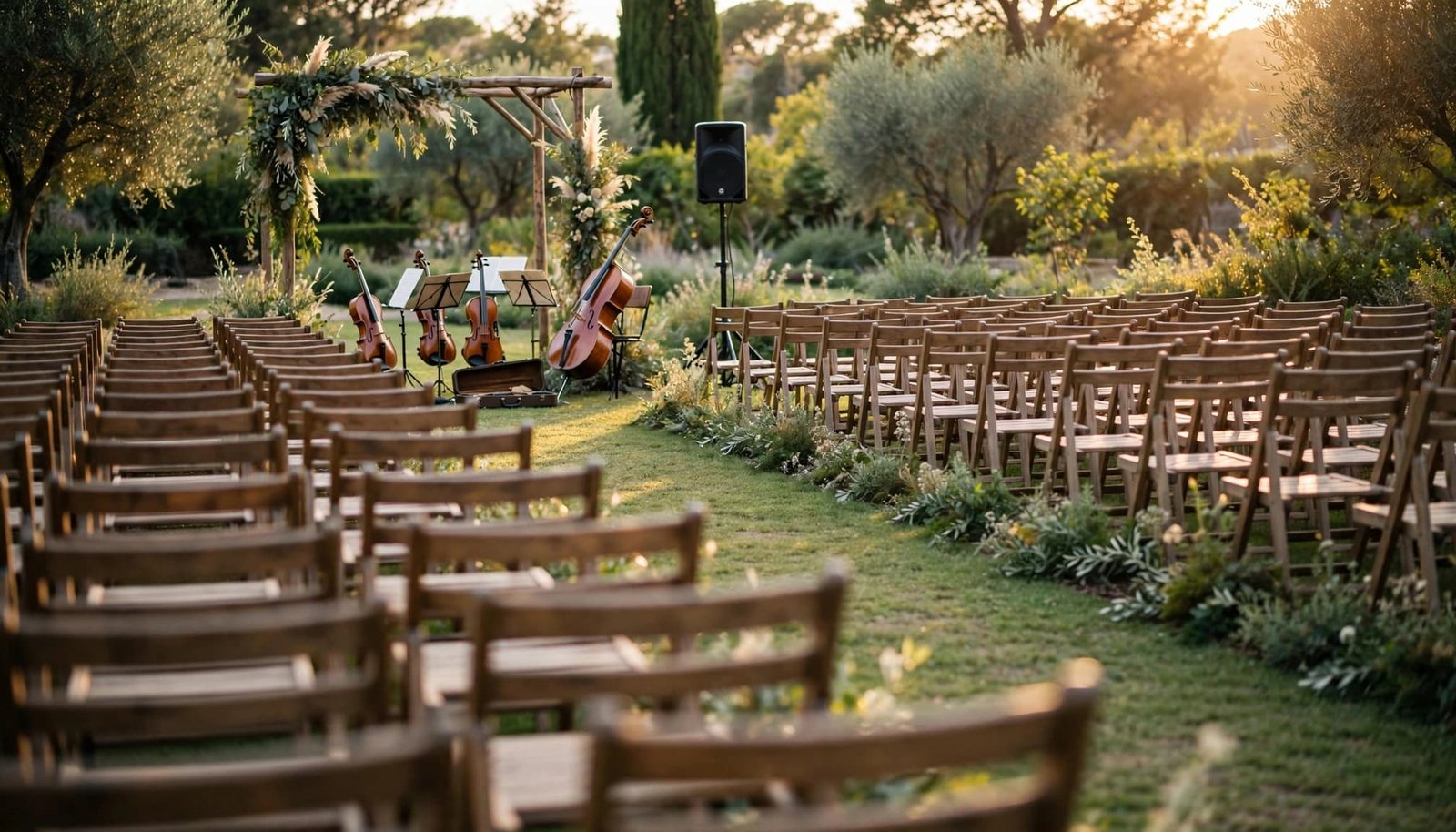
A string quartet carries well indoors but can lose clarity outdoors in wind. Include amplification, microphone needs, and weather protection in the ceremony sound plan early.
Build Reception Music Around Your Guests
Choose Meaningful Songs for Formal Moments
Cocktail music around 80-100 BPM creates a welcoming pace without competing with conversation. Dinner selections should remain comfortable beneath table conversation.
For a first dance song, consider “Joy of My Life” by Chris Stapleton or “You Are the Best Thing” by Ray LaMontagne. For parent dances, “My Girl” by The Temptations could suit a father-daughter dance, while “You’ll Be in My Heart” by Phil Collins is a mother-son dance possibility.
“How Sweet It Is (To Be Loved by You)” suits cake cutting. “Last Dance” by Donna Summer gives the closing moment a clear identity, and you can decide whether your last dance will be private or an all-guest sendoff. If you plan a bouquet toss, choose an upbeat song and agree with the MC on a cue to invite guests forward. Family relationships and personal meaning should guide the final choices.
A first-dance edit of approximately two to three minutes keeps the moment comfortable. Agree on the ending before any choreography is finalized.
Balance Dance Floor Energy With Appropriate Lyrics
Dance floor peaks often sit around 120-140 BPM, but successful pacing also needs changes in genre and intensity. Avoid forcing every selection into one tempo range.
Options include “September,” “Shut Up and Dance,” “Dynamite” by BTS, “Dance the Night,” “I Wanna Dance with Somebody,” and “Wake Me Up.” Your DJ can place these around guest response.
Listen to every song in full. A romantic-sounding chorus can conceal unsuitable themes. “Every Breath You Take,” “Someone Like You,” “Before He Cheats,” and “Love the Way You Lie” contain possessiveness, heartbreak, revenge, or violence that may conflict with your celebration.
Put Your Music Brief and Contract in Writing
Finalize Requests and Cue Details
Aim to lock in your music direction and major selections six to nine months ahead. Send the final written brief at least four weeks before the wedding, then review it together.
Separate your must-play list, play-if-it-fits favorites, and never-play restrictions. Include genre guidelines, clean-version requirements, cultural selections, pronunciations, and who can approve guest requests.
Our wedding playlist planning worksheet helps organize requests alongside reception timing.
Confirm whether the planner or officiant signals the processional, then record that responsibility in the written brief. Use cue details like these for formal moments.
| Moment | Start cue | Ending instruction |
|---|---|---|
| Processional | Assigned person signals that attendants are ready | Fade after final entrance |
| First dance | MC completes the introduction | Use agreed edit |
| Final dance | MC invites remaining guests | Play through agreed ending |
Add the exact artist, recording version, start point, and fade point to each selection.
Document Coverage Across Every Day
The contract should include your names, the performer or group’s name, wedding date, music start and end times, total fees, payment schedule, and cancellation policy.
For multi-day coverage, list every event date, venue, performance window, and setup requirement. Include MC responsibilities, band-break music, overtime, equipment, and backup provisions.
Assign one overall entertainment contact. A reception DJ isn’t automatically responsible for amplifying a separately booked musician; equipment and operator responsibilities need explicit agreement.
Coordinate Sound and Venue Handoffs
Every location needs its own sound plan, even when events share a property. Include power, safe cable routes, speaker placement, microphone coverage, setup access, and noise restrictions.
A ceremony sound system shouldn’t be taken down while guests are still exiting. Keep cocktail music ready on a separate system when moving equipment would create silence or delay.
During dinner, guests should converse without raising their voices. During speeches, music should stop and microphones should reach the back of the room clearly.
Name the person who starts cocktail music after the recessional. “The DJ will handle it” is incomplete when the DJ is still operating ceremony sound.
For late-night events, place the venue’s sound cutoff in the shared timeline. A multi-day schedule also needs protected equipment storage and clear responsibility for each day’s setup.
Frequently Asked Questions
Can We Use Spotify for the Entire Wedding?
A Spotify playlist can support a small, straightforward celebration, but someone must handle cues, announcements, volume, and technical problems. Include authorized playback arrangements, equipment, backup music, and operator time in the budget; a personal streaming subscription doesn’t automatically provide event-use permission.
Do We Need a Different Song for Every Event?
No. Keep signature moments distinct, then reuse selected favorites where they suit the atmosphere. A recurring artist or musical style can connect the weekend without repeating entire playlists. Give your entertainment team flexibility around those preferences.
Bring the Celebration Together With Clear Coordination
Successful wedding music planning gives every gathering a purpose and every important moment a clear cue. Personalized selections work best alongside defined responsibilities, reliable sound, and enough flexibility to respond to guests.
Build one shared plan, finalize the meaningful details, and let your entertainment team manage the flow. That preparation gives you more time to enjoy the celebration.