A great reception has a pulse. It moves naturally from cocktail hour conversations to dinner and a full dance floor, while wedding reception music connects each moment.
The wedding DJ vs live band question isn’t about finding one universal winner. Your budget, guest list, venue, favorite music, and hoped-for atmosphere should guide the choice. A professional DJ and a talented live band can both create an unforgettable celebration, but they bring different musical direction and energy.
Start by deciding what you want the guest experience to feel like when the last song ends.
Key Takeaways
- A wedding DJ offers broad music variety, flexible requests, continuous playback, and strong control over reception timing.
- A live wedding band creates visual impact, concert-style energy, and a distinctive atmosphere, but usually requires more space and a larger budget.
- Venue restrictions, including sound limits, stage dimensions, loading access, power, and curfews, should be confirmed before booking.
- Compare complete written quotes that include setup, travel, equipment, lighting, microphones, overtime, meals, and backup coverage.
- A hybrid setup can combine live musicians with a DJ for added flexibility, live performance energy, and a smooth reception flow.
Wedding DJ vs live band: Choose the Experience First
Think about the feeling you want in the room. A DJ can create a flexible, high-energy mix that moves through decades and genres without stopping. A live wedding band brings performers onto the stage, creating visual impact, concert excitement, and dance floor energy.
Neither choice is automatically better. It comes down to what matters most on your wedding day.
| Consideration | Professional DJ | Live Wedding Band |
|---|---|---|
| Music variety | Broad music library and easy song requests | A rehearsed set list with a defined style |
| Reception flow | Continuous music and quick transitions | Live performance energy with scheduled breaks |
| Space needed | Usually a compact booth and sound setup | Stage area, instruments, monitors, and more setup room |
| Volume control | Easy to adjust for dinner, speeches, and dancing | Depends on the group, instruments, and venue acoustics |
| Hosting duties | May include master of ceremonies support, but confirm announcements and reception coordination in the package | Some bands offer announcements, while others focus on performance |
| Visual impact | Lighting, booth design, and dance-floor interaction | Musicians performing live in front of guests |
A DJ is often the right fit when guests expect Top 40, hip-hop, country, oldies, EDM, and personal requests throughout the night. A band is a strong choice when the desired atmosphere centers on Motown, jazz, funk, rock, or a polished pop cover style.
The best entertainment choice supports the entire reception and creates the experience you want guests to remember.
Wedding DJ Cost vs. Live Band Cost
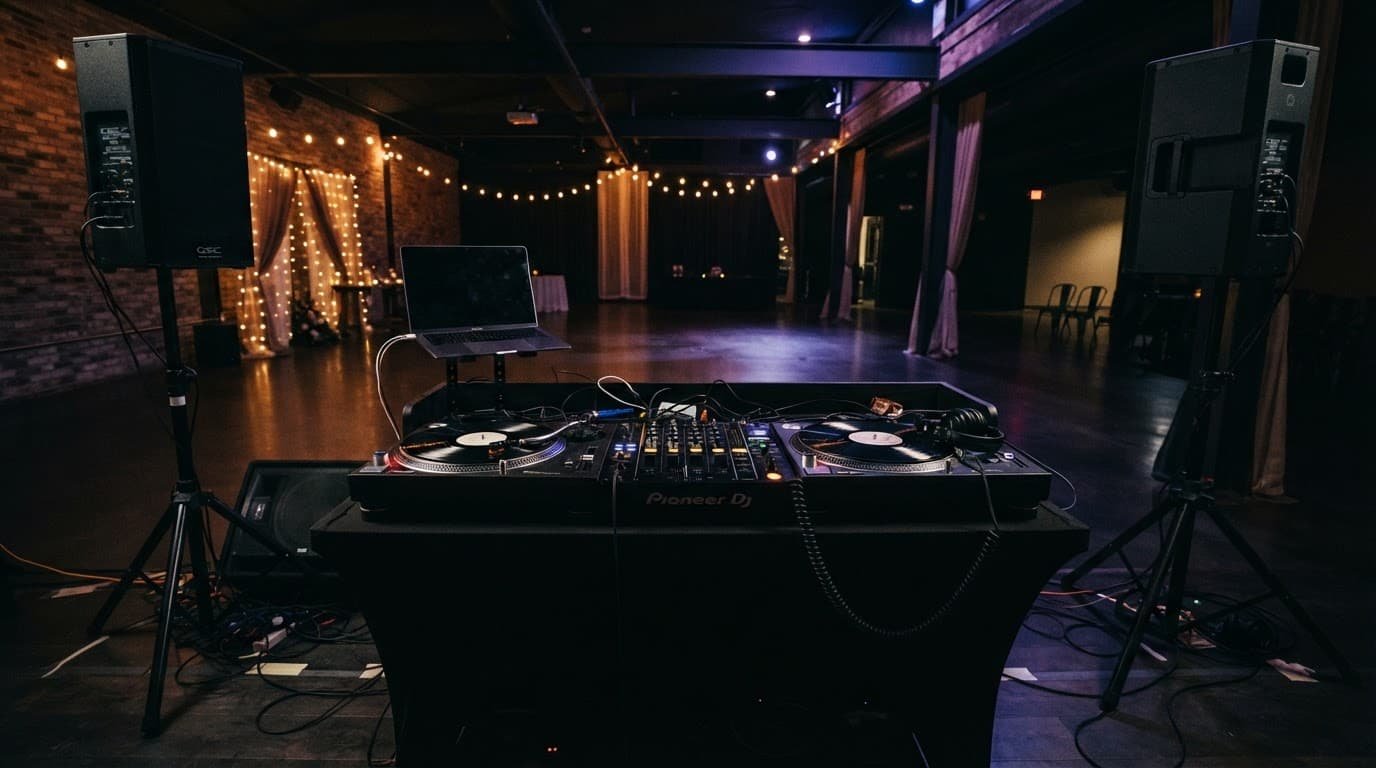
The price difference often starts with how many people are involved. A DJ may be one experienced performer with professional sound equipment. A band quote may cover five or more musicians, instruments, rehearsal time, travel, and a larger production setup.
For broad planning purposes, wedding DJ cost commonly falls between $1,500 and $4,000, while live band cost often starts around $3,900 and can reach $20,000 or more for sought-after groups, larger lineups, horn sections, and major metropolitan dates. The DJ range is typical, while the upper band range reflects premium bookings and market-specific pricing.
New York City and other major metro areas can push prices higher. Saturday availability, loading access, parking, travel, union labor requirements at some venues, and peak-season demand all affect the final number. A wedding-planning cost conversation illustrates local variation, but it isn’t authoritative pricing data.
Read every proposal closely. A lower band fee may not include a stage, additional speakers, lighting, vendor meals, or a separate sound technician. A DJ package may include ceremony audio, music during cocktails, wireless microphones, uplighting, and MC services, or those items may be separate.
Ask for a written quote that lists performance time, setup time, overtime rates, travel, taxes, backup coverage, lighting, microphones, vendor meals, and venue-specific labor. Confirm which items are included and which carry an extra charge. Clear details protect your wedding budget and prevent last-minute surprises.
Venue Space, Noise Limits, and Event Timing
Your venue has a major say in choosing between a DJ and a band. Before booking, request a written list of venue restrictions, including floor-plan rules, stage dimensions, loading access, power, sound curfew, and decibel limits. A band needs room for musicians, instruments, speaker cabinets, monitors, and a safe setup path. A DJ can often work comfortably in a smaller footprint, which makes a DJ setup a natural fit for a micro wedding.
If your reception is in a barn, tent, historic property, restaurant, or private estate, acoustic limitations deserve extra attention. Hard walls, high ceilings, historic rooms, barns, tents, and open spaces can carry or amplify sound unpredictably. Some venues use sound limiters or restrict subwoofers after a certain hour.
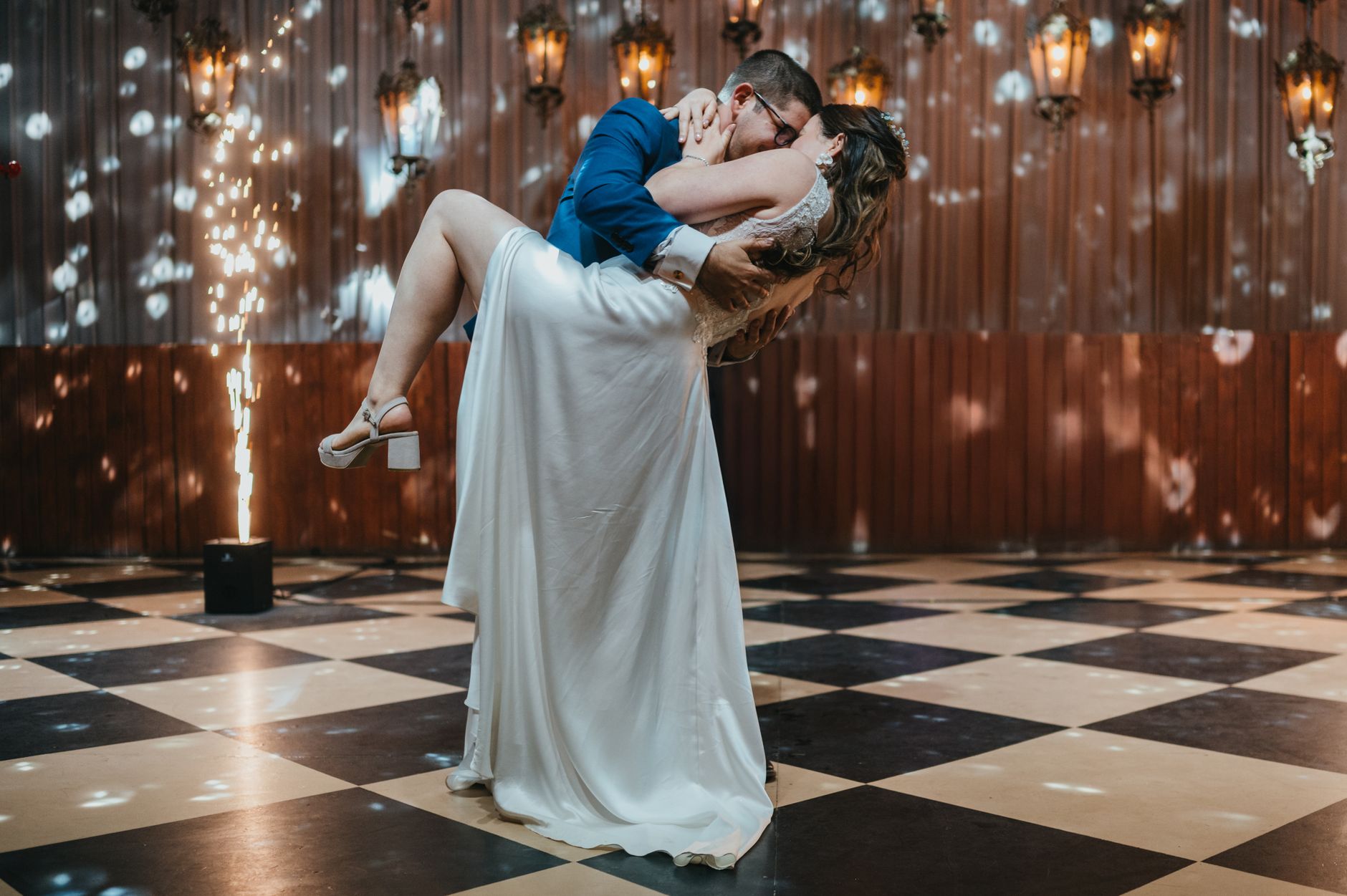
Photo by BR1 FDS
A DJ can adjust volume quickly during toasts, dinner, and formal dances. A full band can also work in a quieter room, but the group needs the rules before signing. Drums, horns, and amplified instruments require careful planning when the venue has strict sound limits.
Timing matters as well. Bands usually take planned breaks. Ask whether recorded music will play during those intermissions, who controls it, and whether the band returns for the final dance-floor push. A DJ keeps music continuous and can adapt quickly if dinner runs late or speeches run long.
Music Variety, Song Requests, and Guest Demographics
A DJ offers the widest music variety and flexible access to recorded tracks. You can move from Frank Sinatra to Shania Twain, then into Usher, Dua Lipa, and classic rock without changing performers. That flexibility helps when your guest list includes several generations and different musical tastes.
A live band cannot promise every request like a DJ can. Most bands have a polished song repertoire and may learn one or two special selections for a first dance or parent dance. Ask for their current song list, recordings from real receptions, and examples of their strongest performances.
Couples in a live band versus DJ discussion often return to the same question: do you want faithful original recordings, or the sound and personality of live musicians? Both can fill a dance floor, but the experience is different.
Look honestly at your guests. A group that loves sing-along classics and broad genre changes may respond best to a DJ, whose music customization can honor many tastes and requests. Guests who enjoy live shows, dancing to a featured vocalist, and staying with one music genre may love a band. Your reception vibe should feel personal to your own guests, not like a playlist or performance chosen for someone else’s wedding.
A Hybrid Setup Can Bring Both Together
A hybrid setup gives couples flexibility without booking a full band all night. One option pairs a DJ with live saxophone, percussion, violin, or vocals for cocktail hour music and selected dance-floor moments.
Another option uses live musicians for the ceremony and cocktail hour, such as a string quartet, then lets a DJ lead the reception. Guests enjoy live music as they arrive, followed by continuous music and broader selections once dancing begins.
A band-and-DJ combination can also work when the schedule allows it. The band performs early, then the DJ handles late-night requests. This arrangement needs a detailed handoff plan, adequate power, and realistic changeover time. Assign clear responsibility for announcements and music between sets to prevent interruptions.
Questions to Ask Before You Book
The right questions show how prepared a DJ or band is for your venue, guests, and schedule. Local conversations, including this Louisville wedding music discussion, can highlight practical concerns that national pricing guides may miss.
- Can you provide a complete written quote covering setup, travel, overtime, and equipment costs?
- How many hours of active performance are included, and when will you arrive to set up?
- Will you handle announcements, introductions, toasts, and reception coordination?
- How will you prepare for a venue with a sound limit, small stage, or difficult loading route?
- Can we submit must-play songs, do-not-play songs, and cultural or family requests?
- How do you handle band set breaks, recorded music, or last-minute timeline changes?
- What backup equipment and staffing plans do you have if something goes wrong?
A reliable entertainment professional answers clearly and asks about your priorities. They should also build a practical plan around your venue and schedule.
Frequently Asked Questions
Is a wedding DJ or live band better for a reception?
Neither option is universally better. A DJ is often best for broad music variety and continuous dancing, while a live band suits couples who want performers, visual impact, and concert-style energy.
Is a wedding DJ cheaper than a live band?
In many cases, yes. A DJ often costs less because one performer provides the music and sound equipment, while a band quote may include several musicians, instruments, rehearsal time, travel, and larger production needs.
Which option is better for a small wedding venue?
A DJ usually requires less space and can fit more easily in a compact venue. A band may still work, but you should confirm stage dimensions, setup room, power, loading access, and sound restrictions first.
Can a live band take song requests?
Most bands perform a rehearsed repertoire and may learn one or two special songs, but they cannot usually accommodate requests as broadly as a DJ. Ask for the current song list and confirm whether recorded music will play during band breaks.
Can you combine a DJ and live band for a wedding?
Yes, a hybrid setup can pair a DJ with live vocals, saxophone, percussion, violin, or a full band. Create a detailed handoff plan that covers announcements, equipment, power, changeover time, and responsibility for music between sets.
Make the Choice That Fits Your Celebration
A DJ brings flexibility, uninterrupted music, personalized playlists, and a steady event flow. A live band adds performance energy, visual presence, and a fresh feel to familiar songs.
Put your venue details, guest list, budget, and favorite music side by side before deciding. The best wedding entertainment supports the guest experience, feels right for your people, and keeps the dance floor packed as the celebration moves forward.