A small wedding doesn’t need a smaller experience. The right choice might be a DJ or live music, depending on the setting and desired energy. A clear plan helps every guest feel included without turning the evening into a production.
A thoughtful DJ can bring structure to a 20-person lakeside dinner, a relaxed barn celebration, or an intimate inn gathering. The goal isn’t loud music all night. It’s creating intimate wedding entertainment that feels personal, comfortable, and well-paced.
The best starting point is deciding what kind of celebration you want your guests to remember.
Key Takeaways
- A micro wedding DJ can be especially valuable when music supports the ceremony, toasts, dinner transitions, and dancing. For a very small gathering without formal moments, a carefully planned playlist may be enough.
- Build the reception around the experience you want, using meaningful music, short announcements, and a flexible timeline instead of forcing traditional wedding events.
- Choose sound equipment based on the venue, guest layout, weather, power access, sound limits, and nearby neighbors. Clear microphones and comfortable volume matter as much as the music itself.
- A DIY playlist can work for a simple celebration, but it requires offline music, a defined person to manage cues, backup equipment, and safe cable placement.
- Compare DJ quotes by the full scope of service, including ceremony audio, microphones, lighting, travel, setup, breakdown, MC support, and weather backup planning.
Does a Micro Wedding DJ Fit Your Celebration?
A micro wedding can be wonderfully flexible. You may want a short ceremony, cocktails on a porch, a family-style dinner, and a few favorite songs at the end of the night. Or you may want a full dance floor with 45 of your closest people. Both can work beautifully.
The decision is less about tradition and more about the number of guests, setting, schedule, and the role music plays during the day.
Guest Count and Reception Format Matter
For an elopement or a dinner with fewer than 20 guests, a carefully prepared playlist may be enough. An elopement DJ is a specialized option for ceremony audio, but it isn’t automatically necessary for a short gathering. If there are no formal introductions, speeches, or dancing, simple audio can keep the gathering warm and easy.
Once your list reaches 30 to 40 guests, the details start to add up. Guests need to hear vows, and family members need a microphone for toasts. Someone has to cue the ceremony, introduce the newlyweds, release tables for dinner, and shift the room toward dancing when the time feels right.
A professional DJ is often a smart choice when music has a role in more than one part of the day. Compare a wedding DJ vs live band, or a playlist, based on how many transitions need managing.
A small guest list makes every transition more visible. One missed cue or awkward silence can feel larger in an intimate room.
A DJ Does More Than Play Songs
The right DJ serves as a music curator and a calm master of ceremonies. Working alongside a wedding coordinator, they can manage ceremony music and background music during cocktail hour. They can also handle wireless microphones, special dances, dinner cues, and announcements.
That support matters when your photographer needs everyone ready for a sunset photo, dinner is running late, or a parent needs an extra moment before a toast. A polished DJ adjusts without making the room feel interrupted.
For couples who dislike the “hype-person” style, ask for minimal announcements. A warm welcome, clear introductions, and well-timed cues are often all your celebration needs.
Build a Reception Flow That Feels Personal
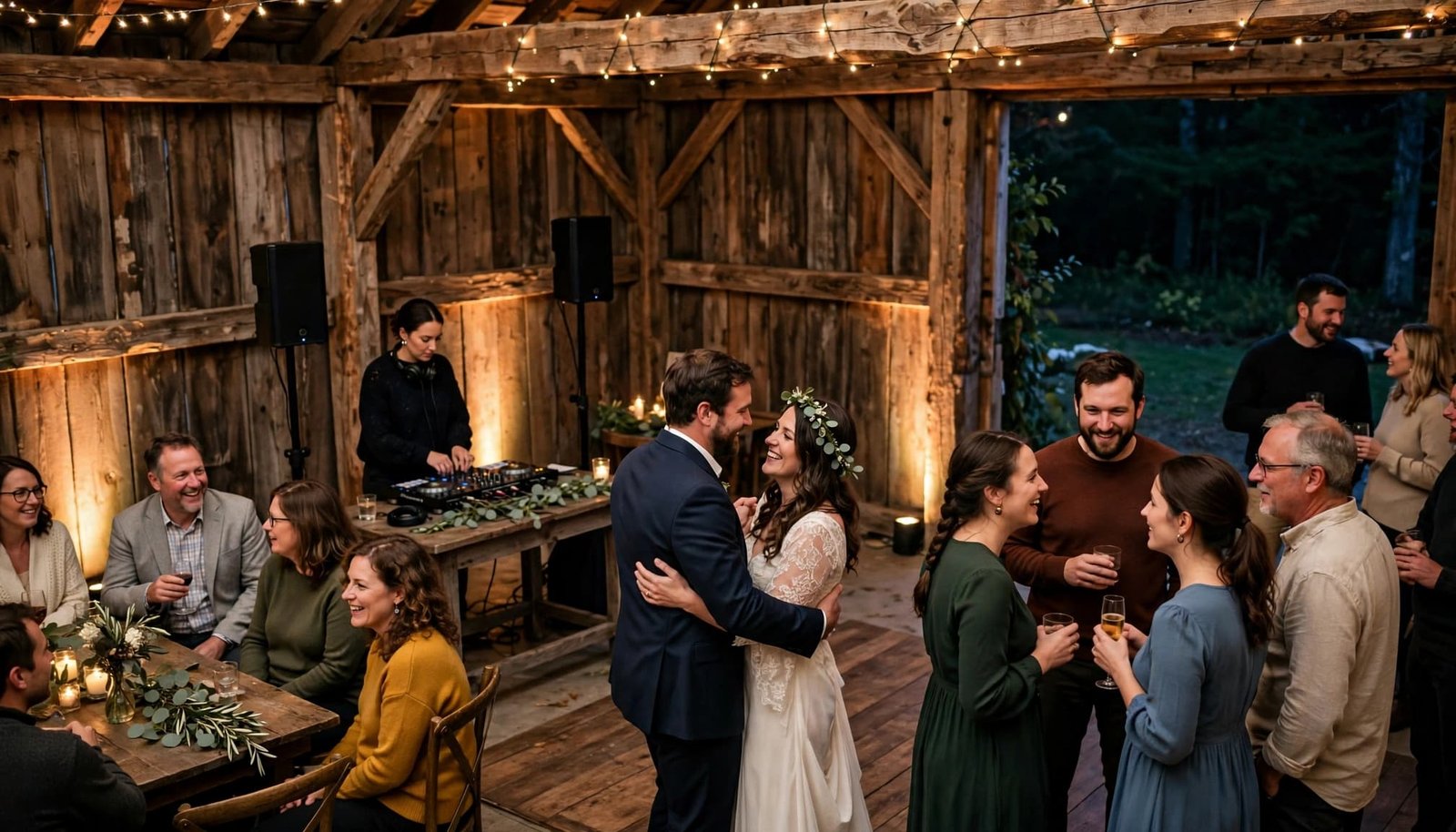
A smaller celebration gives you room to skip traditions that don’t feel like you. You can enter quietly, share one toast instead of five, or begin dancing before dinner. The music should support those choices rather than force a standard timeline.
Think of the day as connected moments, not separate playlists.
Create Four Distinct Music Moments
Ceremony music should feel meaningful and clear. Guests need to hear the officiant, your vows, and any readings without straining over wind, traffic, or a nearby crowd.
Cocktail hour is the time for conversation. Acoustic covers, jazz, folk, soft country, classic soul, or relaxed indie music work well here. The volume should support the mood without asking guests to speak over it.
Reception music can bridge dinner conversation and dancing. It can build a little more energy while leaving room for stories at the table. After dinner, the first dance, parent dances, or a short welcome set can naturally invite guests toward the dance floor.
A grand entrance can be shortened, personalized, or skipped entirely. A good DJ reads the room and adjusts the energy accordingly. If guests are lingering over dessert, there’s no need to force a party song.
Use Short, Clear Announcements
Long announcements can feel out of place at a gathering where everyone already knows each other. A low-key DJ can act as a practical master of ceremonies, keeping the microphone work brief and useful.
A few practical small wedding reception ideas may be all you need:
- Welcome guests and direct them toward the ceremony area.
- Invite everyone to find dinner seating or explain a family-style meal.
- Introduce toasts, cake cutting, or a first dance.
- Let guests know when the evening is moving outdoors, indoors, or toward a late-night gathering.
The room stays relaxed, yet no one has to guess what happens next.
Sound Ideas for Barns, Inns, and Lakeside Settings
New Hampshire wedding venues vary from timber-frame barns and mountain lodges to historic inns, backyard tents, and lakeside lawns. The right sound setup depends on the room, guest layout, and nearby neighbors. Sound equipment, including speakers and microphones, should be sized for the space.
The best audio setup is one guests notice only because everything is easy to hear.
Keep the Volume Comfortable
In a small dining room or barn, oversized speakers can make a gathering feel harsh fast. A good setup should provide clear speech and full music at a comfortable level, without overpowering bass. The same sound limits apply to amplified DJ audio and live music.
Ask how the DJ plans to handle dinner volume, especially if guests range from young children to grandparents. You should be able to hear the music and still have a conversation across the table.
Speaker placement also matters. Pointing sound toward the area where people gather and away from dining tables, neighboring homes, or the lake can make a major difference. Before booking, review the venue’s written policy for amplified music, curfew times, and outdoor sound limits. Outdoor events often have a set time when amplified music must end, as noise-ordinance planning guidance explains.
Prepare for New Hampshire Weather
Mountain views and waterfront ceremonies are memorable, but New Hampshire weather can change plans quickly. Wind can affect microphone sound, and light rain may mean moving speakers under cover. A cold fall evening may send guests indoors sooner than expected.
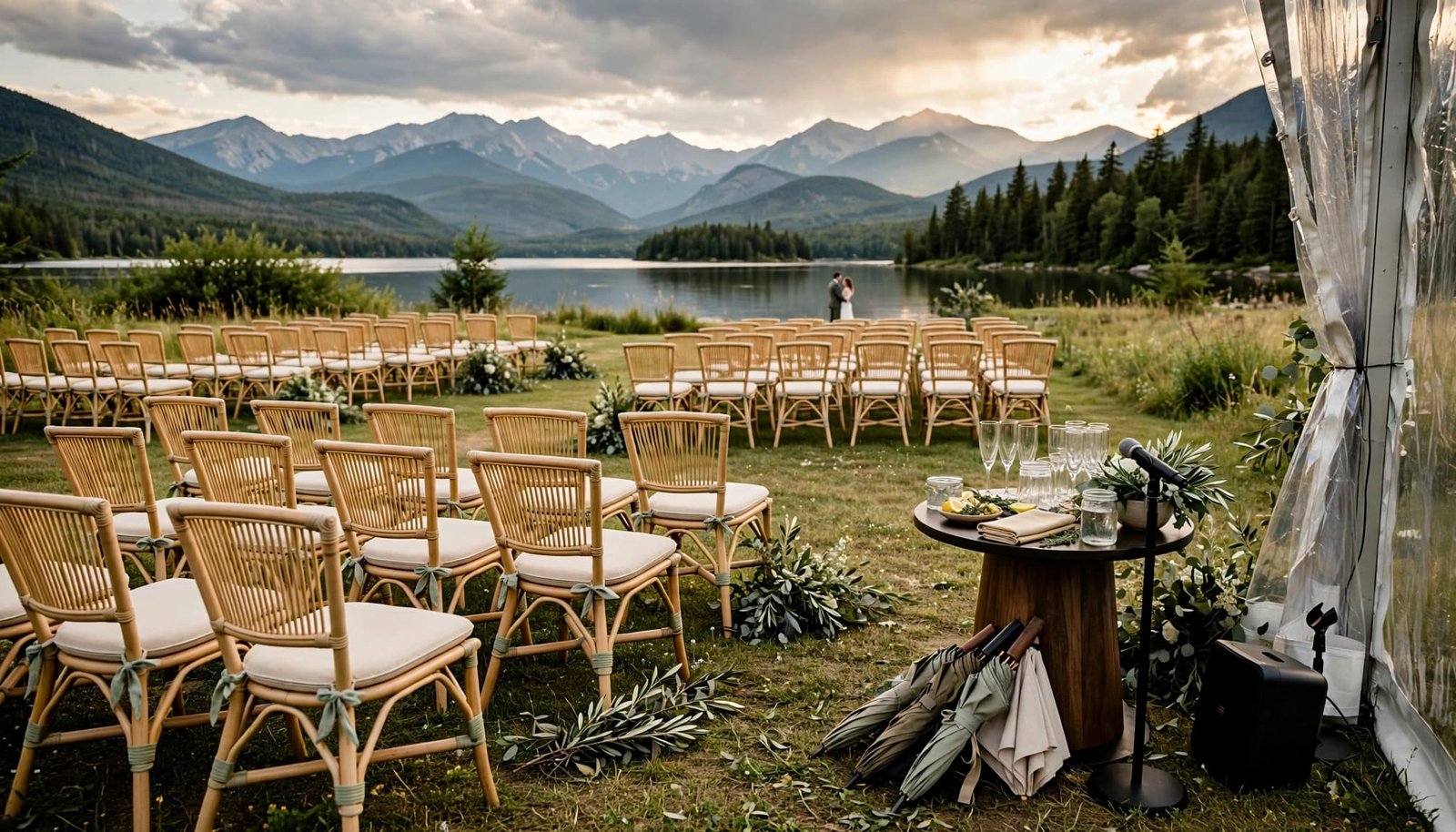
Discuss a weather backup before the wedding day. Confirm where ceremony equipment will move, whether power is available at both locations, and how much time the venue allows for the change.
Check the National Weather Service forecast for New Hampshire during wedding week, but don’t wait until then to create the backup plan. A tent, covered porch, or indoor ceremony room gives everyone confidence.
A DIY Playlist Can Work, With a Real Plan
A Spotify playlist and Bluetooth speaker can suit a simple gathering. It works best when the music stays in the background, the ceremony is short, and transitions are straightforward.
The challenge is not choosing songs. The challenge is managing the day while still being a guest.
When DIY Music Is a Good Choice
A DIY setup may be right if you are hosting a restaurant dinner, an Airbnb-style gathering with approved music, or a very small backyard ceremony. Keep the setup simple and test every piece beforehand. Organize a custom playlist into reception playlists for dinner, transitions, and late-evening music.
Download your Spotify playlist for offline use. Streaming can be unreliable in rural areas, near lakes, or inside older buildings with thick walls. Use a charged device, a backup device, and an adapter that works with your speaker.
A Bluetooth speaker is best for low-key background music. It may not be loud enough for a windy outdoor ceremony. It may also fall short when guests need to hear readings and toasts.
Give One Person a Defined Role
Don’t hand the music job to someone with no instructions. Your friend shouldn’t have to search for the right song while guests are waiting and the wedding party is lining up.
Create a one-page cue sheet with the song title, exact moment, and a simple action. Unlike live music, a DIY setup requires someone to manage every cue. For example, start the processional music, fade it after the final person reaches the front, then begin the recessional music after the kiss.
Keep cables along walls and away from doors, aisles, and guest walkways. If a crossing is unavoidable, ask the venue about an approved cable ramp. Gaffer tape may hold a thin cable in a low-traffic location, but it isn’t a substitute for a proper floor protector in a busy path.
Bring a backup speaker, charging cable, and downloaded music files. Those small details protect the experience when technology decides to be difficult.
What DJ Services Cost in New Hampshire
Pricing depends on hours, travel, ceremony audio, microphone needs, lighting, and MC support. The broad New Hampshire DJ listings on The Bash show an average hire cost of $575, but that figure includes many event types and short bookings.
For a wedding-focused package with professional sound, planning meetings, ceremony coverage, and reception coordination, couples should expect higher pricing. In New Hampshire, packages for smaller events often begin around $1,000 to $1,650, while more complete wedding services commonly reach the low thousands.
Ask for a clear quote that states what’s included. A lower price may cover only reception music. Another wedding package may include ceremony sound, microphones, lighting, setup, and breakdown. It may also cover travel to a mountain or remote-lake location and coordination for the wedding reception.
The most useful comparison isn’t simply DJ versus playlist or live music. Compare the scope of service against the time, equipment, backup planning, and coordination you’d otherwise handle yourself.
Plan for Travel, Seasons, and Venue Logistics
New Hampshire’s geography can make a short drive look easy on a map, then take much longer on winding roads or during a busy weekend. Realistic arrival and load-in planning is part of responsible wedding planning, especially for mountain, lakeside, rural, foliage-season, or winter events. Account for guests, caterers, photographers, and DJs carrying equipment.
Fall foliage weekends can also bring heavier travel and tighter lodging availability. Visit New Hampshire’s foliage travel guide recommends booking accommodations early for popular leaf-peeping areas. Give out-of-town guests hotel information early, especially for mountain, lake, and rural locations.
Confirm Load-In and Power Details
Ask your venue or wedding coordinator where vendors can park, how far equipment must travel, and when setup can begin. Confirm these details before finalizing the timeline. A DJ may need more time for an outdoor ceremony and an indoor reception in a separate barn than for a single-room restaurant celebration.
Confirm these practical details before finalizing your timeline:
- Is there reliable power at the ceremony and reception locations?
- Is the outdoor area protected from rain, direct sun, or strong wind?
- Are there sound limits, curfews, or restrictions on lighting?
- Can equipment be moved indoors if weather changes?
- Is there a clear, safe route for load-in and cables?
If guests are traveling during snow season, heavy rain, or a peak foliage weekend, check New Hampshire road conditions and travel updates before the event. Build a little breathing room into arrival times.
Questions to Ask Before Booking a Wedding DJ
The best conversation goes beyond favorite songs. Start with practical wedding DJ questions about how they’ll support your celebration.
Ask how they approach 25 guests versus 60. Find out whether they can provide separate audio for the ceremony and reception, and whether wireless options are available for vows and toasts.
Ask how they handle guest requests, do-not-play lists, outdoor weather changes, sound restrictions, and timeline updates. Can they coordinate with live music or support a hybrid performance? Ask whether they’ll serve as master of ceremonies and keep announcements quiet and low-interruption. A dependable DJ will welcome these questions and give clear answers.
Discuss music in terms of feeling, not only genres. Share a few songs you love, a few you never want to hear, and the energy you want during dinner and later in the evening. That gives the DJ room to build a personalized soundtrack instead of playing a generic wedding set.
Frequently Asked Questions
Do I need a DJ for a micro wedding?
Not always. A playlist may be enough for a short dinner or gathering with fewer than 20 guests, but a DJ becomes more useful when you need ceremony audio, microphones, announcements, formal transitions, or dancing.
What should a micro wedding DJ handle?
A DJ may provide ceremony and reception sound, wireless microphones, background music, special dances, dinner cues, and brief announcements. They can also adjust the timeline when dinner runs late, weather changes, or guests need more time to visit.
Can I use a Spotify playlist instead of hiring a DJ?
A DIY setup can work for a simple, low-key celebration when music stays in the background and transitions are straightforward. Download the music for offline use, assign one person to manage cues, test the equipment, and bring backups.
What should I confirm with a New Hampshire venue?
Ask about amplified sound limits, curfews, power access, load-in routes, weather coverage, and whether equipment can move indoors. These details are especially important for lakeside, mountain, rural, outdoor, and older barn venues.
How much does a wedding DJ cost in New Hampshire?
Smaller wedding packages often begin around $1,000 to $1,650, while more complete wedding services commonly reach the low thousands. Request an itemized quote so you can compare ceremony coverage, equipment, travel, lighting, setup, breakdown, and coordination support.
A Small Wedding Can Still Feel Complete
The best small-celebration ideas begin with the experience you want to share. Maybe that means a quiet dinner with meaningful songs playing softly. Maybe it means a joyful dance floor with your closest people singing every word.
A polished plan keeps the sound, microphones, timing, and volume in balance. Personalized entertainment makes an intimate wedding feel intentional, comfortable, and memorable from the first guest arrival to the final song.