A wedding buffet feels relaxed when your wedding catering team, DJ, and planner share a clear plan. A smooth wedding reception depends on coordinating dinner announcements, table releases, speeches, and the transition to dancing.
Clear coordination helps protect both the meal service and the celebration without making guests feel rushed or overmanaged.
Start by deciding who gives each cue, then build the room layout and reception timeline around that plan.
Give Your DJ and Caterer Clear Responsibilities
Choose One Person to Approve Changes
The couple or planner should approve the reception schedule before the wedding. On the wedding day itself, designate one planner, venue coordinator, or trusted contact to authorize adjustments.
That person can speak with the wedding caterer and DJ if dinner needs more time, portraits run late, or a speaker isn’t ready. The newlyweds shouldn’t need to settle every small scheduling question.
Give this contact authority to approve changes within your agreed priorities. The DJ can then adjust background music or hold an announcement without conflicting directions from several well-meaning guests.
Confirm What Your DJ Will Handle
Ask whether your DJ will announce dinner, release tables, introduce speakers, and coordinate formal moments with the photographer. Include those responsibilities in the written service agreement or planning document.
When choosing a wedding DJ, discuss hosting style as carefully as music preferences. A warm, professional MC can provide clear direction without constant microphone commentary.
Now based in Concord, New Hampshire, DJ Steve Neff Entertainment LLC has professional DJ experience dating back to 1999. Steve Neff and business partner Jon Turgeon provide DJ, MC, sound, lighting, and event entertainment for weddings and special events, with services tailored to each celebration.
Plan the Room Around Buffet Traffic
Keep Guest Routes Open
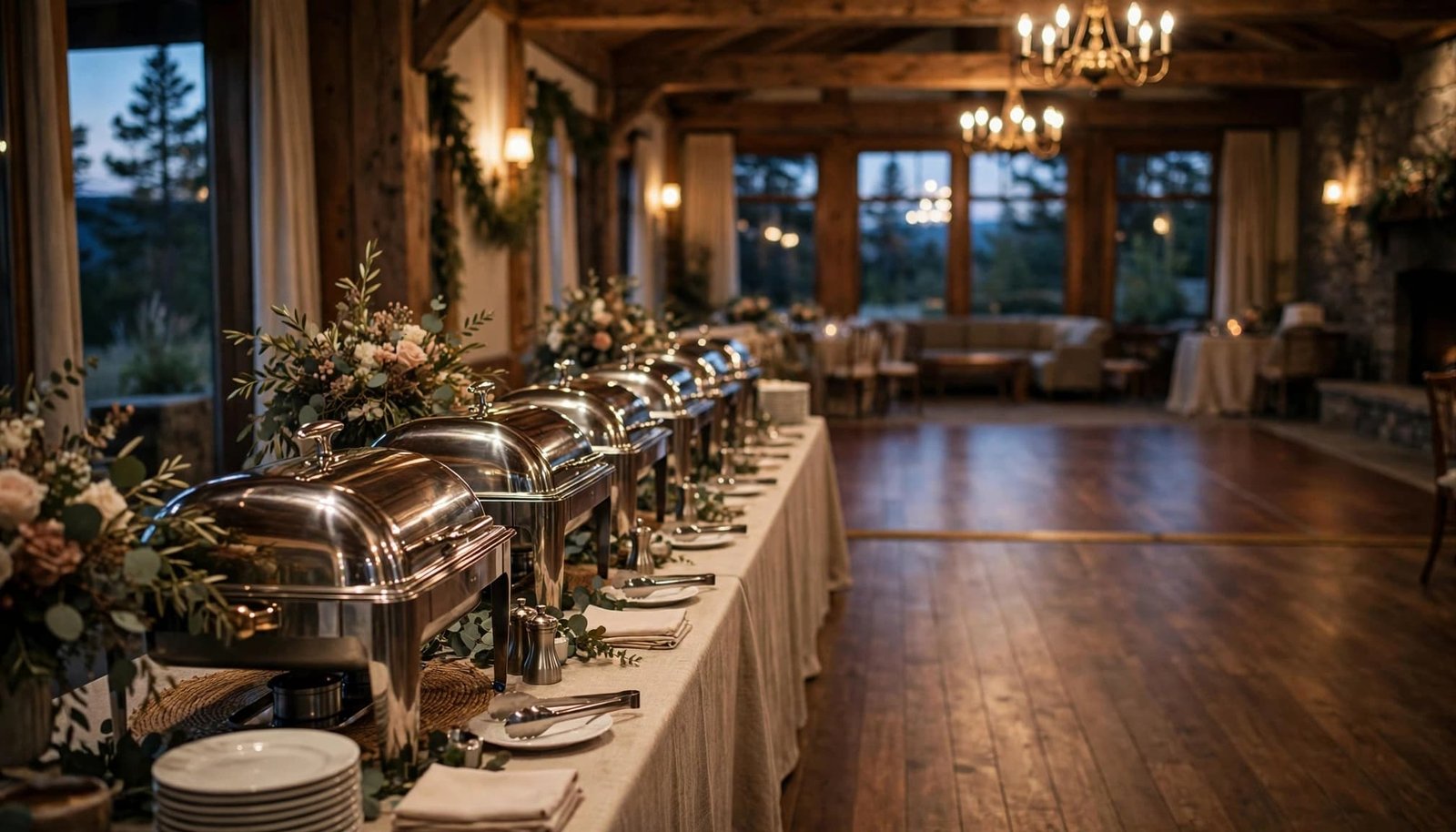
Review the floor plan with the venue, caterer, and DJ before assigning final equipment positions. Guests carrying plates need a clear route between their tables and the buffet.
Keep the cake table, guest book, and photo booth away from that route. Check that buffet queues won’t block exits, accessible pathways, or the photographer’s view during important moments.
A second buffet line may help, but only if the room allows it and the caterer can support it. Let the catering team recommend the service arrangement rather than assuming two lines will automatically move faster.
Position Sound for Dinner and Dancing
The DJ setup should allow a clear view of the reception while leaving room for catering staff and guests. Speakers, stands, and cables shouldn’t obstruct meal-service routes.
During dinner, guests should hear announcements without sitting beside an unnecessarily loud speaker. Later, the sound should support the dance floor while respecting venue restrictions.
Confirm available power, setup access, sound-check requirements, and any music curfew. If cocktail hour happens elsewhere, ask how music will continue in both spaces. One system may not be practical for every location.
Build a Shared Reception Timeline
Connect the Schedule to Actual Readiness
As part of wedding planning, begin with guest arrival and venue access requirements. Work backward to allow time for setup and sound checks. Include the seating invitation, introductions, dinner, toasts, special dances, and open dancing.
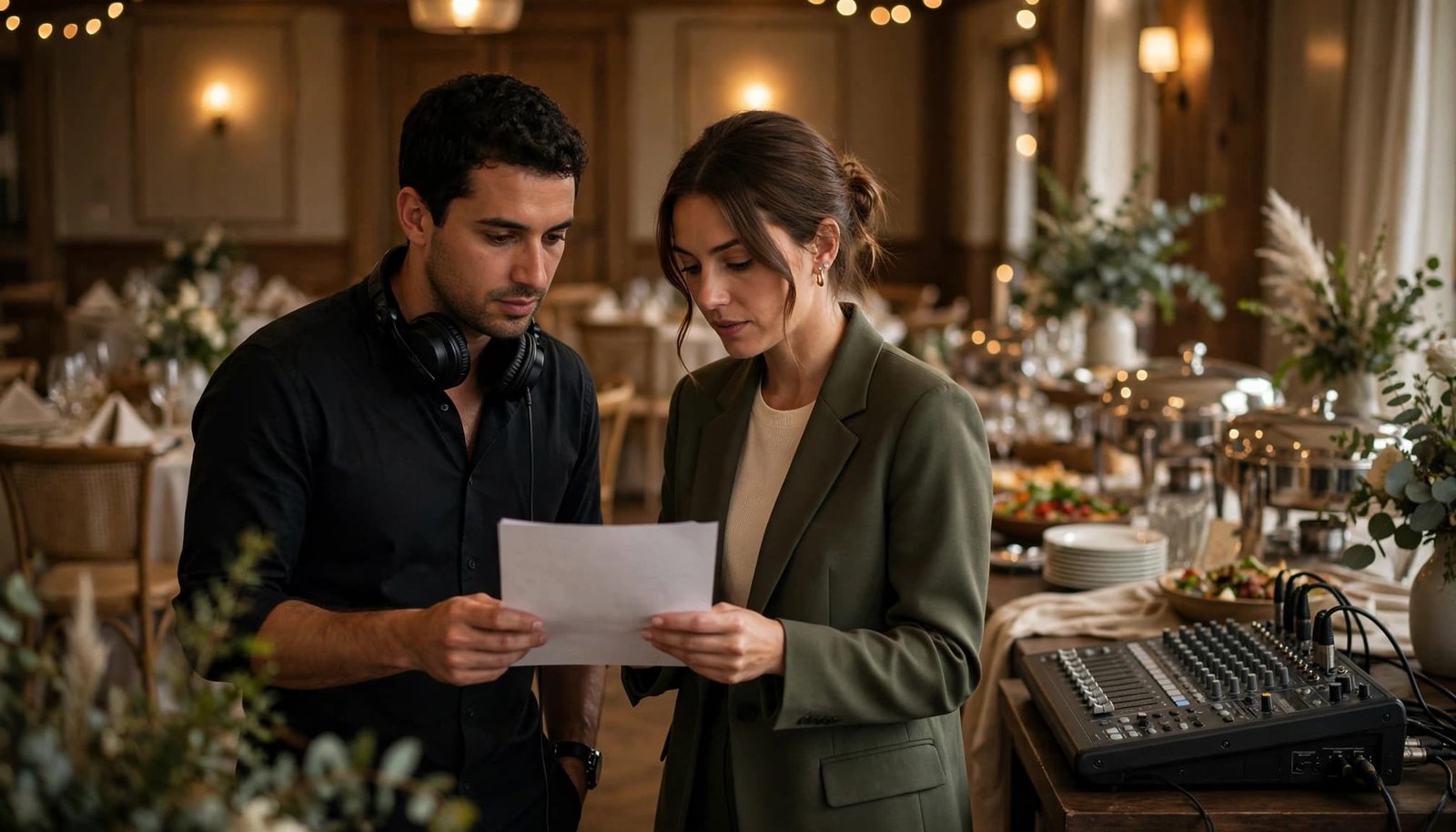
For each major moment, record who gives the cue and who needs advance notice. The catering captain should confirm the buffet is ready before the DJ invites guests to eat.
A scheduled dinner time isn’t permission to open the buffet. The catering team’s readiness cue should come before the microphone announcement.
This protects guests from lining up while staff are still finishing service preparations.
Leave Flexibility Between Formal Moments
Avoid scheduling speeches while guests are collecting food or staff are replenishing busy stations. Ask the caterer when service activity will be quiet enough for everyone to listen comfortably.
Share the final run sheet and relevant vendor contacts one to two weeks before the wedding. Include name pronunciations, speaker order, formal song versions, and the approved decision-maker.
If dinner runs long, the coordinator should confirm the revised sequence with affected vendors. The DJ can continue dinner music while the photographer, caterer, and speakers prepare for the next moment.
Use Brief, Helpful Buffet Announcements
Guests need enough information to understand dinner service, but they don’t need a running explanation of the kitchen’s progress. Decide whether the DJ will call tables or whether venue staff will release them personally.
If tables are announced, provide a final seating chart with the exact numbers or names used in the room. Decorative table names should be easy to recognize and pronounce.
A simple announcement works well: “Dinner is ready. Please remain seated, and we’ll invite each table to the buffet.”
Confirm any priority arrangements for the couple, older relatives, guests with mobility needs, or families requiring assistance. The catering team should manage those details discreetly; personal needs don’t require public explanations.
Planning the order of reception announcements also helps prevent unnecessary interruptions. A seating invitation, dinner explanation, and well-timed table releases may be all that’s needed.
Lower the music before speaking, then return it to a comfortable dinner level. Guests should hear directions the first time without having conversations interrupted by repeated announcements.
Choose Dinner Music That Supports Conversation
Dinner music helps establish the reception’s atmosphere while guests eat, visit, and wait for their table’s turn. Share the styles you enjoy, along with any lyrics or artists you’d prefer to avoid.
Acoustic selections, jazz, soul, and familiar lighter songs can work well, depending on the couple and their guests. The important consideration is comfortable conversation, not a particular genre.
Give the DJ cultural music preferences early, including exact recordings for meaningful traditions. Explain when those selections belong in the celebration and whether a family member should help confirm pronunciation or context.
Save stronger dance-floor energy for the agreed transition after dinner and formal moments. That change feels more natural when guests have finished eating and the room is ready to participate.
During toasts, music should stop so the speaker has everyone’s attention. Confirm microphone placement beforehand rather than passing equipment around while the introduction is underway.
Compare Catering Quotes Beyond the Menu
Review Service, Staffing, and Dietary Support
Wedding catering proposals should explain who sets up, replenishes food, clears tables, and handles cleanup. Ask whether the catering company coordinates directly with the venue and who supervises service on the wedding day. If a proposal is labeled full-service catering, verify what that includes.
Discuss vegetarian meals, food allergies, cultural dishes, and any separate meal arrangements before booking. Ask how dishes will be identified and how staff handle questions about ingredients.
Food-holding arrangements belong in that conversation. USDA wedding food-safety guidance advises keeping food hot above 140°F or cold below 40°F. Your catering team should explain its equipment and service procedures.
Request a Complete Written Price
Compare quotes using the same guest count, service hours, and responsibilities. Ask whether staffing, rentals, delivery, setup, cleanup, taxes, and service charges are included or billed separately.
A lower menu price doesn’t establish the final reception cost. Likewise, a DJ quote should identify coverage hours, MC responsibilities, microphones, lighting, travel charges, and overtime terms.
If you’re considering barbecue catering, wood-fired pizza, or another specialty menu, ask how production and replenishment may affect guest flow. Request menu tastings details too, including availability, fees, and whether any tasting charge applies toward a booking.
Keep vendor recommendations separate from confirmed arrangements. A suggested provider still needs its own availability check and written agreement.
Plan Vendor Meals and Buffet Closing
Your DJ’s meal should be included in the catering discussion before the final headcount deadline. Review the contract, confirm how many team members need meals, and communicate dietary restrictions.
A suitable vendor meal doesn’t have to duplicate every guest menu option. Agree on the meal, price, eating location, and delivery arrangements with the caterer and DJ.
Schedule the meal during a suitable dinner period, away from table-release duties, speeches, or special dances. If the DJ is responsible for ongoing announcements, confirm how that brief meal period will work.
The buffet also needs an agreed closing procedure. The DJ should announce last access only after the catering captain approves it.
According to the FDA’s buffet safety guidance, perishables left at room temperature for more than two hours should be discarded unless kept hot or cold. Leave food-handling decisions to the catering team; don’t extend service simply because guests request it.
Key Takeaways for Buffet Reception Planning
- Assign one person to approve schedule changes and communicate them to affected vendors.
- Confirm buffet readiness before inviting guests to eat, and agree on table-release responsibilities.
- Review the floor plan for clear guest routes, safe equipment placement, and comfortable dinner sound.
- Compare complete written quotes, including staffing, service responsibilities, and additional charges.
- Include vendor meals, food-service closing, and final contact details in the reception plan.
Frequently Asked Questions
Should Toasts Happen Before or After the Buffet?
Either arrangement can work when the caterer, DJ, and photographer agree on the sequence. Avoid placing speeches during active table releases or heavy service activity. Choose a point when guests are seated and can give speakers their attention.
Does the DJ Release Every Table?
Only if that responsibility is agreed upon. Some venues prefer staff-led releases, while others use the DJ’s microphone. Confirm the method beforehand and give the DJ accurate table information. Short, clear directions help guests without dominating dinner.
Are Catering Tastings Complimentary?
Ask each caterer directly. Don’t assume a tasting is free or included in a package. Confirm the fee, who may attend, which menu items are available, and whether the cost is credited toward a booking before scheduling.
A Smooth Buffet Reception Starts With Shared Cues
A relaxed buffet reception depends on reliable preparation: clear responsibilities, practical guest routes, and announcements that match the room’s readiness.
Review the final plan with your DJ, caterer, and venue contact before the wedding. When those details are agreed upon, guests can enjoy dinner and the celebration can move naturally into dancing.