A great dinner soundtrack should make the room feel warm, polished, and welcoming, without making guests lean across the table to be heard. The best selections support the celebration while leaving plenty of space for stories, introductions, laughter, and toasts.
Dinner isn’t the time to use every dance-floor favorite. Ceremony selections can be processional or emotionally focused, while dinner reception music should function as ambient music. This part of the wedding reception helps different families feel like one group.
The goal is simple: choose wedding songs with personality, manage the volume with care, and save the biggest moments for later.
Key Takeaways
- Wedding dinner music should create a warm, polished atmosphere without competing with conversation, speeches, or announcements.
- Build the dinner playlist in gentle waves, starting calmly and adding familiar mid-tempo songs while keeping the overall energy and volume comfortable.
- Choose a DJ, live musician, or curated playlist based on the venue, guest count, budget, and level of timing and volume control you need.
- Test the music in the actual venue using a conversation test, and prioritize speaker placement and clear speech over simply turning up the volume.
- Give your music provider a concise brief with favorite songs, do-not-play selections, cultural considerations, licensing details, and a reliable backup plan.
Plan Wedding Dinner Music Around Conversation
Wedding dinner music has a different job from cocktail hour, the first dance, or open dancing. It creates a pleasant layer of sound that keeps the room from feeling silent, but it should never become the main event.
A full dining room already has plenty of background noise. Plates clink, servers move, guests greet relatives they haven’t seen in years, and people respond to speeches or announcements. The best background music for weddings fills quiet gaps without competing with those moments.
Dinner Soundtrack, Not a Performance
The strongest dinner selections are conversation-friendly wedding songs with a relaxed groove and familiar melodies. Guests should be able to ignore the lyrics while speaking, then notice them gently during pauses. Try soft rock, mellow soul, jazz, acoustic pop, gentle country, piano versions, or light global selections that fit the couple’s taste.
Recognizable wedding songs can still work well. The difference is pacing. “Lovely Day” by Bill Withers feels sunny and easy during dinner. “September” by Earth, Wind & Fire is often better saved for when guests are ready to dance.
Let Guest Comfort Guide the Room
If people must raise their voices to finish a sentence, the music is too loud. If the room feels flat and every small sound carries, the music may be too low.
Dinner music should be noticeable when a conversation pauses, not when a guest is trying to tell a story.
The same principle applies at a formal wedding reception, a barn or backyard celebration, a hotel dining room, or a culturally specific gathering with meaningful music traditions. It can guide wedding ceremony music too; the style may change, but the comfort level should not.
Build Dinner Music in Gentle Waves
A wedding playlist doesn’t need to remain slow for the entire meal. A wedding dinner playlist can move through a few gentle energy changes while keeping the overall volume and mood consistent. Too many slow songs in a row can make the atmosphere feel sleepy.
Start refined, become a little brighter once food is served, then bring the energy down before speeches or the first dance. Keeping dinner music slightly more settled than cocktail hour music gives the reception a polished flow without pulling guests away from their tables.
Start Calm, Then Add Familiarity
Early dinner music should feel settled as guests find seats, review place cards, and reconnect with family. Piano, acoustic guitar, jazz standards, or a few slow songs work well here.
Once everyone is seated, add light pop, soul, soft rock, or mellow tracks guests recognize. Familiar wedding songs can bring warmth without turning dinner into a singalong. Try a Fleetwood Mac song, a Leon Bridges track, or a well-chosen string version of a favorite pop song.
Use the Schedule to Shape the Mood
This timing guide gives your wedding DJ or playlist manager direction for the wedding reception. It also shows when familiar wedding songs fit best.
| Dinner Moment | Music Direction | What to Avoid |
|---|---|---|
| Guests take their seats | Piano, jazz, acoustic, light strings | Heavy bass and fast dance tracks |
| First course and conversation | Soft rock, soul, indie, mellow pop | Songs with abrupt intros or loud choruses |
| Main course | Familiar mid-tempo favorites | Long blocks of one genre |
| Before speeches or dances | Calm selections with clean endings | Tracks that make guests clap or sing over announcements |
A professional DJ can adjust more naturally than a fixed sequence. If dinner runs late or speeches move up, the music can change with the room instead of creating an awkward stop.
Choose a DJ, Live Musician, or Curated Playlist
There is no single right format for a wedding meal. Choose a solo musician, live band, DJ, or curated playlist based on the room, guest count, budget, and flexibility you want.
A wedding DJ offers wide variety and easy control over volume, timing, and transitions. A live band can work when the room, stage footprint, and volume plan support conversation. A smaller musician may feel better for an intimate meal, and the same logic holds when planning music for a micro wedding. A live performer, DJ, or curated playlist may offer different versions of your selected wedding songs, while a playlist needs careful preparation and dependable backup.
When Live Dinner Music Fits Best
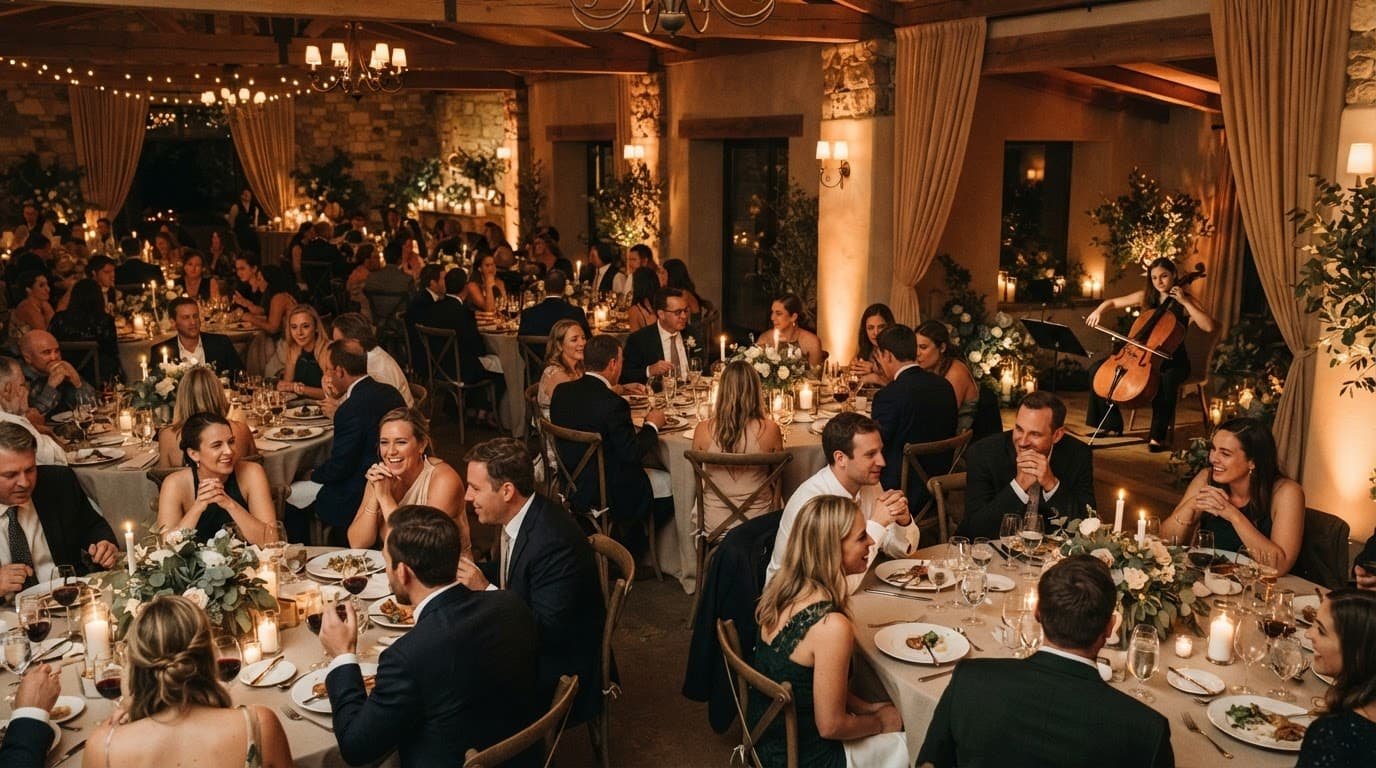
A solo guitarist, pianist, jazz duo, harpist, or string quartet can bring a refined presence to a meal without overwhelming the room. Ask performers how they handle breaks, requests, song changes, and volume in a busy dining space. If the same act played your wedding ceremony, confirm that the dinner repertoire and placement will change.
Keep the setup modest. Dinner music works best when it feels like part of the atmosphere, not a concert placed beside the buffet.
Why a DJ Gives You More Control
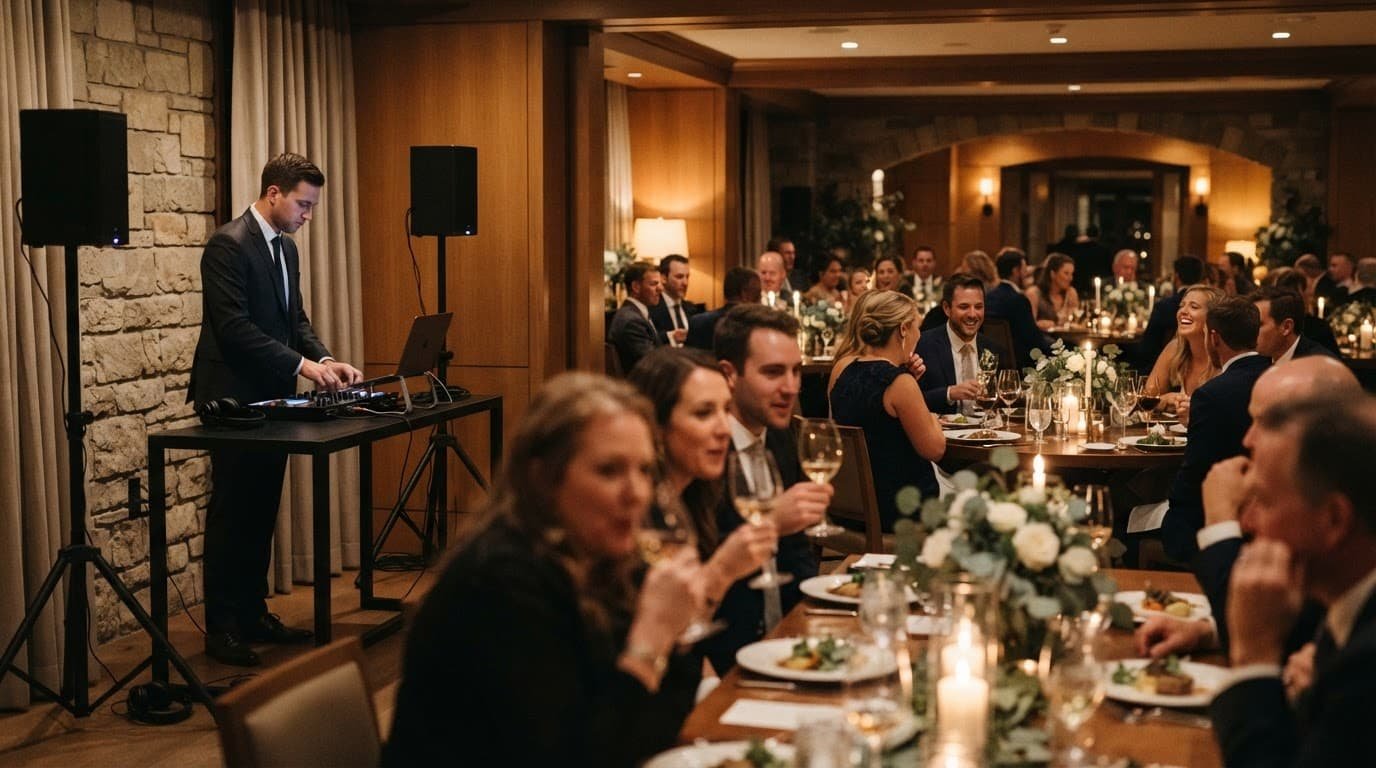
A wedding DJ can blend genres, fade songs early for announcements, lower the sound as speeches begin, and transition into the first dance without dead air. That flexibility matters when dinner service, family photos, or speeches don’t happen exactly on schedule during the wedding reception.
A hybrid plan also works well. You might use a live musician during dinner, then have the DJ take over for formal dances and open dancing. The key is clear coordination between vendors before guests arrive.
Test Dinner Music Volume in the Actual Venue
Volume is where many good playlists go wrong. A volume level that sounds perfect at home or in a car can feel much louder in an empty room with hard floors, tall ceilings, glass, brick, or exposed beams.
The CDC’s explanation of noise exposure shows why sound exposure matters over time, but dinner comfort comes down to speech clarity. Your guests should not need to shout over the speakers.
Use This Five-Minute Conversation Test
Ask your wedding DJ, venue coordinator, or a few trusted family members to test the setup before guests enter.
- Play one of the event’s wedding songs at the planned music volume, rather than using a test tone.
- Seat two people across a table and have them hold a normal conversation.
- Place another pair several tables away, especially near a speaker.
- Ask each person if they can hear normal speech without leaning forward.
- Walk the room and listen for one table that feels much louder than the rest.
If one corner is loud while another is nearly silent, the answer is usually better speaker placement, not more volume. OSHA’s noise overview explains how sound is measured in decibels. You don’t need one magic number for dinner, just comfortable coverage and clear speech.
Speaker Placement Matters More Than Size
A pair of properly placed speakers at a moderate level often sounds better than one large speaker pushed too hard. Keep speakers away from head tables, food stations, and conversation-heavy corners when possible.
Cables should run around the perimeter of the room and stay clear of exits, doorways, stairs, and accessible routes. If a cable must cross a guest path, use a proper cable ramp. Tape may secure a low-profile lead in a low-risk area, but it is not a replacement for protected crossings.
Song Ideas for a Relaxed Wedding Meal
A memorable wedding playlist feels personal while welcoming different music tastes. Balance your favorites with guest-friendly wedding songs.
Availability can vary between DJ libraries, streaming services, live performers, and licensed music providers. Check the exact recording in your dinner playlist before the event, especially if you have a favorite acoustic version or remix in mind.
Classic Jazz, Soul, and Soft Rock
These wedding songs work as refined openings and familiar mid-tempo choices. The mix moves from romantic classics to classic hits with an easy listening feel:
- “The Way You Look Tonight” by Frank Sinatra has an easy, timeless feel.
- “L-O-V-E” by Nat King Cole adds a little bounce without taking over the room.
- “Into the Mystic” by Van Morrison feels relaxed and welcoming.
- “Everywhere” by Fleetwood Mac gives dinner a brighter lift.
- “Beyond” by Leon Bridges offers modern soul with a smooth pace.
- “Dream a Little Dream of Me” by Ella Fitzgerald and Louis Armstrong works well for a quieter moment.
Indie and Acoustic Choices With Personality
These wedding songs add character through acoustic love songs and gentle indie selections. They keep the meal personal without making the playlist feel overly formal.
For couples who prefer newer pop, brighter selections can still suit dinner. Try Harry Styles’ “Adore You” or Corinne Bailey Rae’s “Put Your Records On.” The song “Electric Love” by BØRNS can also work in a short, well-spaced run. Check the lyrics and exact version first, because a title doesn’t reveal the song’s mood.
String, Piano, and Unexpected Covers
Choose wedding songs with piano or strings when you love a melody but don’t want prominent lyrics through dinner. Instrumental covers from groups such as Vitamin String Quartet and The Piano Guys offer familiar songs in a relaxed format.
Selections chosen for a wedding ceremony processional may need a quieter or shorter dinner arrangement. A subtle movie score, piano version of a favorite video game theme, or meaningful cultural selection can add a personal touch. Program these wedding songs as accents within the mix, rather than filling the full meal with one style.
Keep Party Songs and Problem Tracks for Later
Dinner is not the time for every crowd favorite. Some wedding songs are excellent for dancing but unsuitable during the meal. Save high-energy tracks for after dinner, speeches, and formal dances to build anticipation for the dance floor later.
Avoid tracks with sudden bass drops, aggressive production, explicit themes, long silent edits, or lyrics that could distract from a family-friendly meal. A radio edit may remove profanity while leaving an awkward gap or a theme that still does not fit your event.
Create a Clear Do-Not-Play List
Send your DJ a short do-not-play list of songs, artists, or genres you do not want during dinner. Also share a few “must-play if it fits” selections. This gives the DJ direction without turning the full dinner playlist into rigid rules.
Guest requests can still be welcome. Treat them as suggestions, not promises. A request may be appropriate later in the wedding reception but completely wrong for the meal.
Review Special Versions Before the Wedding
The exact version matters. Familiar wedding songs can sound different in live covers, extended remixes, edits, an acoustic version, or downloaded files. Check the length, lyrics, intros, and endings before approving a track.
This small review prevents awkward pauses, surprise language, or a song that suddenly changes the mood of the room.
Give Your DJ a Useful Dinner Music Brief
A strong music brief is short, clear, and personal. Share your dinner timeline, preferred genres, favorite artists, priority wedding songs, tracks to avoid, cultural or family considerations, and the person with final approval. Tell the wedding DJ whether the same provider is handling wedding ceremony music, and confirm who makes day-of decisions.
Describe the atmosphere in three to five words, such as “warm, polished, relaxed, and familiar.” This gives a DJ more useful direction than a 200-track wedding playlist. It also balances personal taste with guest comfort in the music selection.
Confirm Music Rights and Backup Plans
If you are using a venue, DJ, band, or custom playlist for reception music, ask who handles music permissions for the event. ASCAP’s licensing FAQs explain that public performances of music can require licensing. A venue’s coverage may not apply to livestreams, recorded recaps, social clips, or every format of use.
Do not assume a personal streaming subscription or Spotify playlist covers public event playback. This overview of business music licensing is a helpful reminder that the details can depend on the venue and planned use.
Bring downloaded backup music, a second playback device, and a printed schedule for the DJ or coordinator. Settle the final-approval contact and backup plan before the wedding day. A smooth reception depends on preparation as much as song choice.
Frequently Asked Questions
How loud should wedding dinner music be?
Dinner music should be noticeable during pauses but quiet enough for guests to speak in a normal voice. Test the planned volume with people seated across the room before guests arrive.
What types of songs work best during a wedding meal?
Soft rock, mellow soul, jazz, acoustic pop, gentle country, piano versions, and light instrumental covers are strong choices. Familiar melodies add warmth, but songs with heavy bass, abrupt changes, or distracting lyrics are usually better saved for later.
Should we hire a DJ or live musician for dinner music?
Either option can work, depending on the room, guest count, budget, and atmosphere you want. A DJ offers more control over volume, timing, and song variety, while a solo musician or small ensemble can provide an understated live presence.
How can we keep dinner music from disrupting the reception schedule?
Share the dinner timeline and key moments with the DJ, musician, or playlist manager, including speeches and formal dances. A professional DJ can adjust the music when dinner or announcements run early or late, while a curated playlist should include clean endings and backup options.
Do we need a do-not-play list for wedding dinner music?
A short do-not-play list helps your music provider avoid songs, artists, genres, or themes that do not fit the meal. You can also include a few must-play selections while leaving room for the DJ to respond to the room and the schedule.
A Comfortable Soundtrack Makes Dinner Better
The best wedding dinner music is not the loudest or trendiest playlist. It creates a comfortable dinner ambiance where guests can eat, reconnect, and enjoy the people seated around them.
Choose songs with a gentle pace, test the sound system in the real room, and save high-energy selections for later. Wedding songs can reflect the couple, while reception music helps the wedding reception feel personal, relaxed, and well-planned.