Students who prefer not to dance can still enjoy a school celebration through games, photos, conversation, and comfortable spaces away from the speakers. Thoughtful school dance activities give everyone a way to participate without being pulled onto the floor.
For planners, the goal is comfortable participation, supported by clear choices, reliable supervision, and well-timed announcements. Start with activities students can enjoy throughout the evening, then add optional group moments that fit their ages and interests.
Key Takeaways
- Keep games, photos, and seating available while dancing continues.
- Offer standing and seated movement choices, and let students watch without drawing attention to them.
- Assign adults to activity areas, maintain accessible routes, and explain photography practices.
- Use short, optional dance games rather than filling the evening with competitions.
Build a Games Corner and Quiet Chill Zone
A well-planned room gives students several destinations without separating them from the celebration. Show these areas on the event layout and introduce them during the welcome announcement.
Give the Games Corner Clear Boundaries
Giant checkers and bean bag toss offer easy alternatives to dancing. Limbo and basketball shootouts add more active choices, provided the gym has enough space and separate supervision.
Place throwing games away from refreshments, equipment, and walking routes. Explain turns before play begins, and keep lines outside accessible paths. Borrowing school equipment keeps purchasing needs modest; activities should remain available without an additional participation charge.
Make the Quiet Zone Genuinely Comfortable
Set the Quiet Chill Zone away from the main speakers, with lower noise, seating, and drinking water. A nearby supervised room may work better than a corner where students still need to raise their voices.
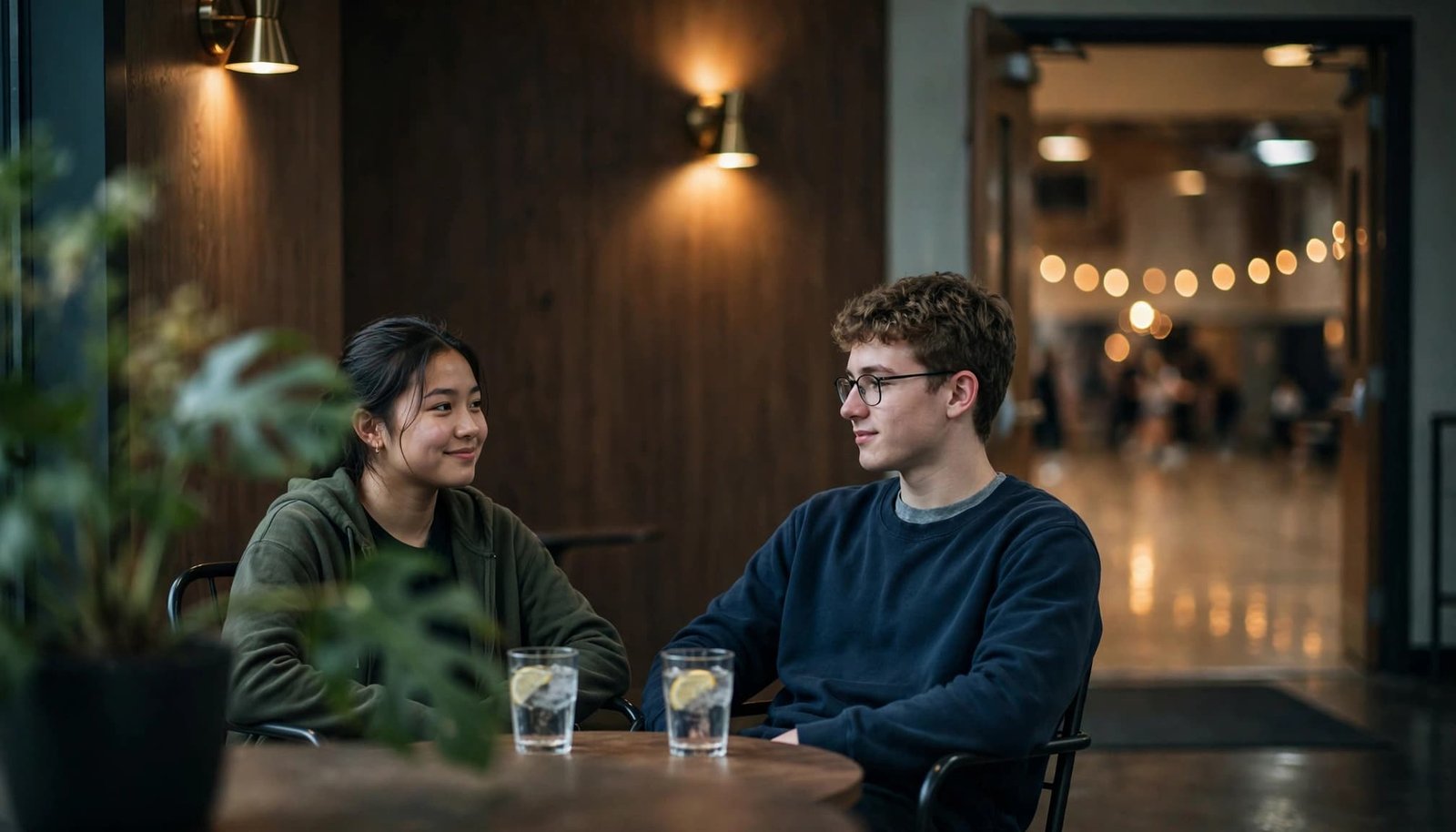
Students shouldn’t need to explain why they’re taking a break. Our sensory-friendly school dance ideas offer additional guidance on sound, lighting, and comfortable participation.
A seating area beside a speaker offers rest, but it doesn’t provide a lower-noise break.
Make Photos Part of the Celebration
A photo booth gives students something enjoyable to do with one friend, a group, or on their own. Use a backdrop that reflects the dance theme, borrowed fabric, playful glasses, and hats; a school-approved phone or tablet on a tripod can support a simple setup.
Assign parent volunteers to manage the station and explain how students receive their pictures. Leave room for mobility devices, formal clothing, and students who prefer standing slightly outside the main pose.

Neon Glow Night pairs black lights, UV-reactive decorations, and glow-stick distribution with an energetic atmosphere. Maintain normal lighting along exits and walking routes. Hollywood Red Carpet is one of these theme nights, with a star backdrop and simple entrance decorations.
Keep photography optional, follow school sharing rules, and obtain consent before displaying or posting student images. A booth visit shouldn’t require public sharing.
Choose School Dance Activities for Each Age Group
Age guidance helps narrow the choices, but student comfort and available space should determine the final plan. Dance Studio Syllabus groups movement activities into these developmental bands.
| Ages | Suggested activities |
|---|---|
| 2 to 3 | Freeze Dance, animal movements, scarf dancing |
| 3 to 5 | Follow the Leader, color movement games |
| 5 to 8 | Obstacle courses, mirror games, musical statues |
| 8 to 11 | Choreography challenges, technique treasure hunts |
| 11 to 14 | Improvisation, partner work, dance-off |
| 14 to 18 | Scene-to-stage activities, judging panels, advanced partner work |
The preschool bands mainly apply to younger siblings attending family events. Older students may appreciate helping with music requests, photos, or judging, provided these roles are voluntary.
These are dance-class suggestions, not requirements for a school social. Advanced partner work needs instruction; students shouldn’t be expected to attempt unfamiliar lifts or partnered skills.
For mixed-age events, choose simple activities with several participation levels. Our elementary family dance planning guide also covers family expectations and supervision.
Keep Introductory Dance Games Short
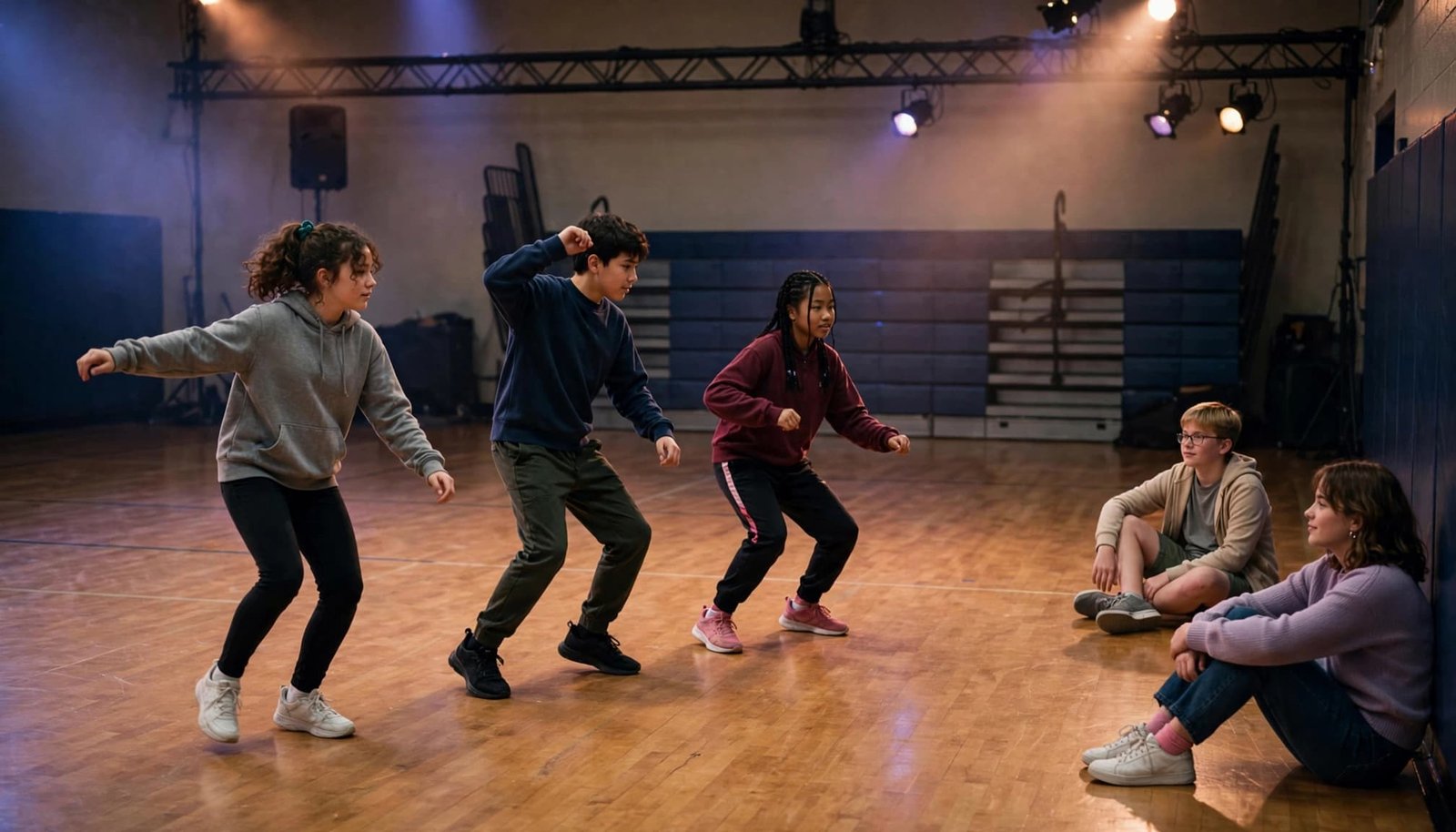
Explain each game before starting the music, demonstrate the cue, and announce when the round ends. Most activities can fit within one song or a one-to-three-minute break.
Freeze Dance
Students move while the music plays and freeze when it stops. Under traditional rules, anyone still moving is out until the next round.
Explain what “out” means before beginning, and identify where students wait. For a more welcoming version, use freeze-and-go without elimination; everyone resumes when the music returns. Offer standing or seated movements, and avoid judging involuntary movement or balance adjustments as mistakes.
Follow the Leader
One person creates a move, and each participant recreates it separately. The leader chooses the best copy.
Going last can be a disadvantage because students may copy earlier players’ mistakes rather than the original movement. Repeat the demonstration and rotate the starting order between rounds. At a casual dance, remove scoring and invite everyone to copy together. Keep movements simple enough to perform within each student’s personal space.
Body Part Dancing
The leader moves one body part for about 10 to 15 seconds, then passes the lead. Traditional rules prohibit repeating a move; a player who repeats one is out.
Name suitable options, such as shoulders, arms, or feet, before starting. Students can pass their turn or use seated movements. For noncompetitive play, allow repeated movements and change leaders when the next student is ready.
Manage Space for Spotlight and Prop Games
These games require additional planning because they involve equipment, competition, or a changing field of players. Keep them optional and separate from the main walking routes.
Spotlight Dancing
In the traditional game, a blindfolded person moves a flashlight around the room. When the music stops, the dancer it lands on is out; the last dancer standing wins.
If using this version, keep the blindfolded operator seated with adult supervision. Direct the light toward floor positions rather than faces, and maintain room lighting. A non-elimination adaptation lets the selected student choose the next approved movement.
Balloon Dance
Players dance while keeping a balloon off the ground. In the partner version, pairs have five minutes to prepare a dance, then perform for judges.
Use this as an opt-in activity, with agreed judging criteria and no forced pairings. Ask the school about latex restrictions before selecting balloons, and remove broken pieces promptly. Students who dislike popping sounds should have another activity available away from the game.
Hula Hoop Dance
Provide at least three to four hoops so students can compete at the same time. The participant who keeps their hoop moving longest wins.
Mark separate spaces with enough clearance for each moving hoop. Run short heats rather than surrounding players with a crowded audience. Students who prefer not to compete can time rounds or help track turns; these supporting roles should remain optional.
Coordinate Music and Featured Moments
Music planning starts with the students attending, the event format, and the school’s content standards. Familiar songs can make joining easier, even for students who spend most of the evening elsewhere.
Match the Music to the Room
For elementary school parties, Kidz Bop covers, Disney songs, kid-movie soundtracks, and Danny Go instructional songs provide useful starting points. Review the complete track and exact version; an edited song can still contain unsuitable themes.
Middle school events generally benefit from quicker pacing and recognizable sing-alongs. At a high school dance or prom, music can include more variety and gradual energy changes. Collect requests one or two weeks ahead, then review them with staff and the DJ.
Schedule Performances Without Taking Over
A 30-minute student performance block early in the evening can give willing performers a featured moment, with the crowd judging. Set an entry limit and performance length so introductions and voting fit that block. Keep other stations open for students who prefer a different activity.
Drama students can also organize a surprise flash mob, with staff approval and advance coordination. Workshops a few weeks before the dance can introduce simple routines without requiring attendance. Announcements should invite students to watch or join, never recruit reluctant participants by name.
Put Staffing and Timing in One Shared Plan
Reliable coordination connects the activities, music, and supervision. Our school dance and prom services combine music planning, professional sound, microphones, and lighting; the activity schedule should be coordinated with those elements.
Use one written plan for the planning team, chaperones, and DJ:
- Assign adults to admission, games, photos, the quiet zone, and student departure.
- Complete setup, announcement testing, route checks, and volunteer briefing before doors open.
- Share activity cues, approved announcement wording, and the name of the school’s decision-maker.
- Identify cleanup duties, equipment return, and the final student pickup procedure.
Our school dance DJ planning guide connects these decisions with event goals and music planning. Keep the schedule flexible enough to leave a successful music set uninterrupted.
Frequently Asked Questions
Can Students Attend Without Dancing at All?
Yes. Students can socialize, play games, take photos, listen to music, or use the quiet area throughout the event. Invitations should describe these choices so families understand that dancing isn’t required. Chaperones can offer help without asking students to justify their preferences or join a group activity.
How Can Organizers Encourage Participation Without Pressure?
Introduce activities briefly, explain how they work, and let student volunteers demonstrate. Keep entry and exit easy, avoid surprise pairings, and don’t announce the names of students watching from the sidelines. A clear invitation gives students useful information; repeated public encouragement can make an optional activity feel compulsory.
Give Every Student a Comfortable Way to Join
A successful school dance gives students meaningful choices, supported by thoughtful preparation and dependable supervision. Games, photos, comfortable seating, and optional movement activities help students enjoy the same celebration in different ways.
Plan those choices before building the entertainment schedule. Students should leave remembering time with their school community, whether they danced all evening or never stepped onto the floor.