A memorable prom begins with students feeling welcome and adults knowing exactly what they’re responsible for. Effective prom security combines professional guards, school supervision, medical readiness, and organized arrival and departure procedures.
Clear responsibility is an event-management priority and one part of prom safety: every entrance, activity area, and response task needs an assigned person. Use the venue layout and school policies to plan security staffing and prom security coverage for a relaxed, well-managed celebration.
Key Takeaways
- Base security staffing on a venue walkthrough, assigned posts, patrol needs, and relief coverage rather than a universal guard-to-student ratio.
- Separate responsibilities: security staff support screening and access control, while school representatives decide guest eligibility and chaperones supervise assigned areas.
- Verify current New Hampshire licensing requirements for the agency and individual personnel. Base any armed coverage on a documented district risk assessment, venue arrangements, and coordination with local law enforcement.
- Put posts, duties, coverage hours, costs, and replacement procedures in writing, and maintain supervision through the final student departure.
1. Define What Prom Security Must Protect
Professional security personnel discourage gate crashers, prevent unauthorized access, enforce approved rules, and help resolve conflict before it interrupts the evening. They also support emergency response and existing school and venue security measures.
Korner Security identifies these responsibilities in its prom guidance, including maintaining a safe environment and addressing interpersonal conflict. Cameras document activity, while trained security guards can respond immediately.
Assess event-specific risks with school leadership and law enforcement before prom. Set a response plan for suspected alcohol use and student conflicts. Treat these steps as planning guidance, and follow district policy and legal requirements.
California’s Department of Alcoholic Beverage Control includes a 2022 AAA teen survey in its prom-season guidance. Schools should base transportation plans on event-specific needs, not dated national figures.
A school’s plan should address event behavior and the safe ride home, including how students can arrange rides with parents, guardians, or designated drivers.
2. Build Prom Security Staffing Around Assigned Posts
Staffing begins with a walkthrough, not a universal guard-to-student ratio. Walk the venue interior and circulation routes, including entrances, parking, shared spaces, and arrival and departure flows. Attendance matters, but these details determine where coverage is needed.
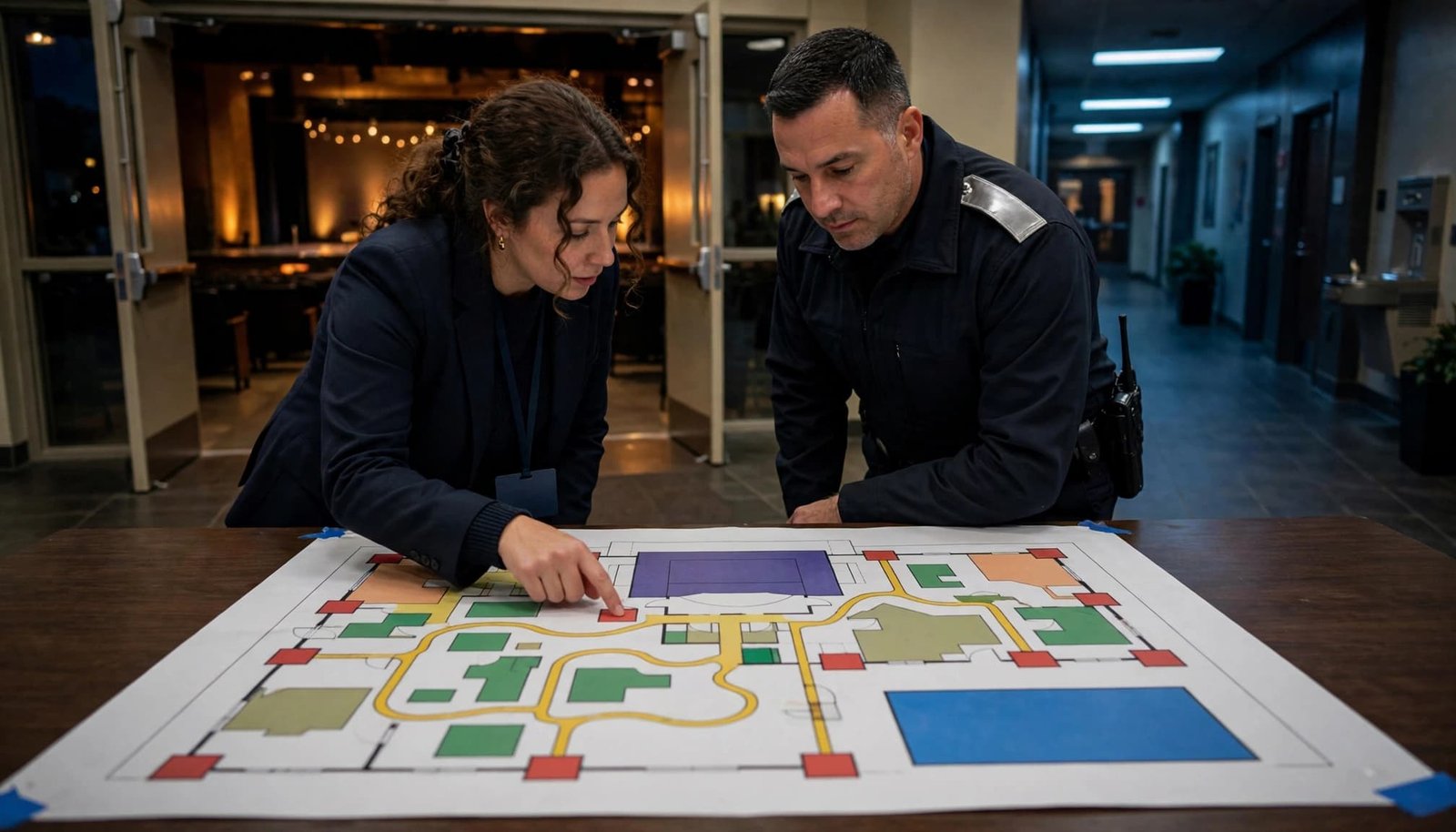
Use the following assignments to separate security duties from school responsibilities.
| Area or task | Primary responsibility |
|---|---|
| Controlled admission points | Security staff support screening and access procedures; school staff decide guest eligibility |
| Dance floor and social areas | Assigned chaperones, supported by security |
| Parking lots and unused hallways | Regular security patrols |
| Medical station | Designated medical or first-aid personnel |
| Pickup and final departure | School supervisors with security and transportation support |
| Guest direction | Ushers direct guests to check-in and designated areas; they don’t replace trained security |
Count fixed security posts first, then assign security guards and add patrol and relief coverage. Someone handling an incident shouldn’t leave an entrance or another assigned post unattended.
Korner recommends guards at all entrances and regular patrols of parking lots and after-hours halls. Identify every doorway that permits entry, set its access control procedure, and keep emergency exits available for evacuation.
Give chaperones their own zones, backup contacts, and reporting method. Apply approved screening procedures consistently and without profiling, and monitor restroom approaches without intruding on student privacy.
Our prom committee planning agenda helps place these assignments alongside venue, transportation, and entertainment responsibilities.
3. Share Rules Early and Organize Check-In
Give Families Clear Expectations
Distribute prom guidelines to students, parents or guardians, staff, and approved guests a few weeks before the event. Under district policy, explain rules on underage drinking, alcohol, prohibited items, respectful behavior, group arrival and departure, and safe transportation.
Explain guest eligibility, permitted bags, prohibited items, early departures, and whether re-entry is allowed. Students should understand the process before reaching the door.
At shared venues, address nearby bars, alcohol storage, restaurants, and public areas in the written plan. Clear boundaries reduce uncertainty for students and staff.
Separate Screening From Admission Decisions
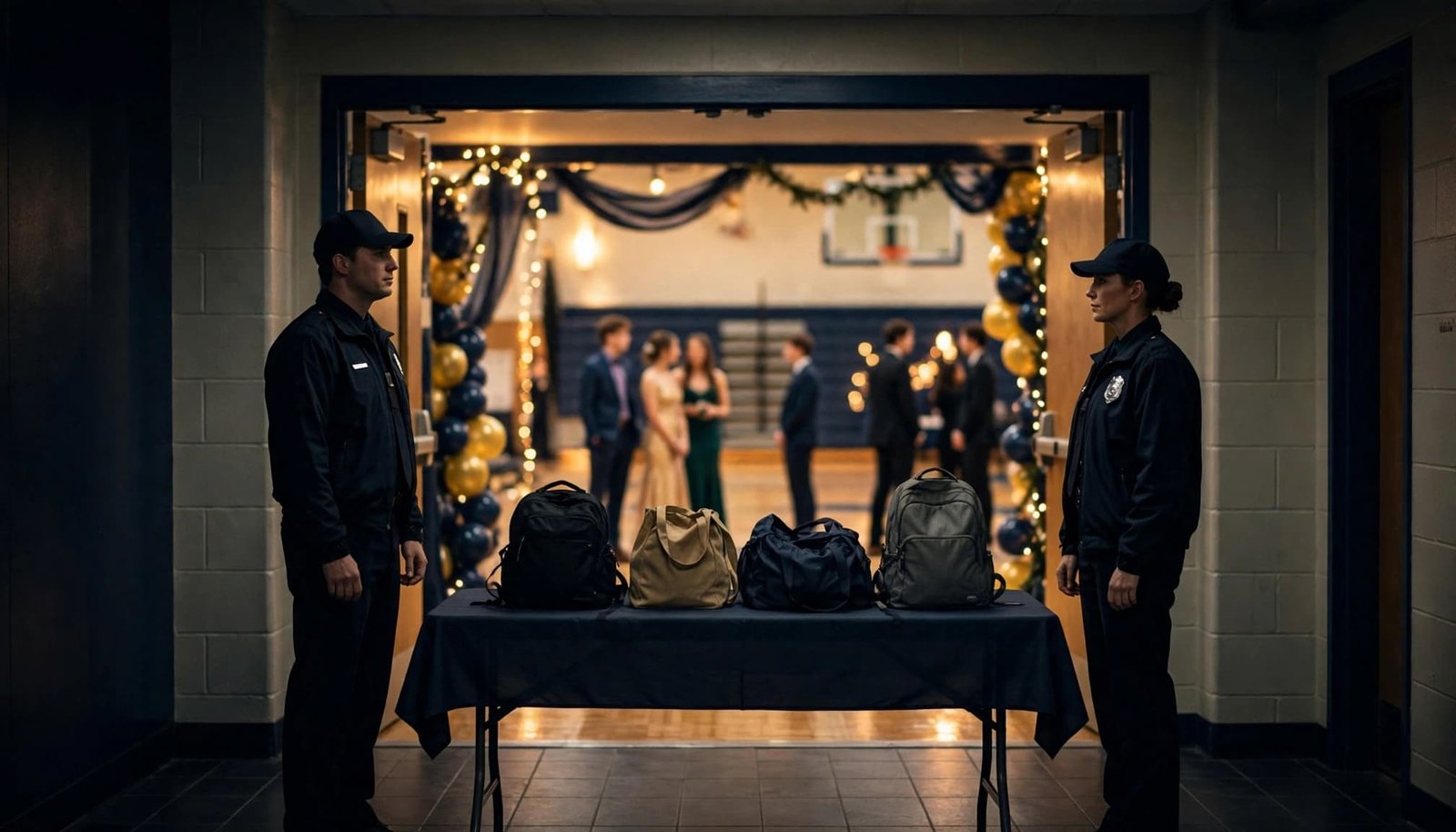
Check-in should combine ticket or guest-list verification, approved identification procedures, and bag checks under district policy. Checks should follow approved school and venue procedures, be respectful and consistent, and protect student privacy. Trained personnel should identify items and secure, confiscate, or transfer them according to the approved procedure.
School representatives should handle eligibility disputes and exceptions. Guards can manage access while administrators make student-related decisions.
An uninvited guest should receive a calm explanation and be directed away from admission. Threats, refusal to leave, or escalating behavior require a calm response from the security lead and appropriate responders.
4. Select Personnel Qualified for the Assignment
Apply New Hampshire Licensing Requirements
New Hampshire’s private security licensing law covers contracted protection services, including crowd control and access control. Schools should verify current agency and individual licensing requirements with relevant state authorities. Insurance documentation and district vendor approval are separate procurement checks.
A dependable proposal should identify the employing agency, assigned supervisor, relevant credentials, and replacement procedures. Ask about experience working with teenagers, de-escalation training, incident documentation, and professional conduct around minors.
An out-of-state credential doesn’t automatically authorize a New Hampshire assignment. The contract should identify the credentials required for the specific work.
Match Armed or Unarmed Coverage to the Risk
Korner promotes armed guards as reassuring for guests and parents, but that claim isn’t a basis for choosing armed security guards. Base armed coverage on a documented district risk assessment, venue arrangements, and coordination with local law enforcement.
New Hampshire has separate requirements for armed security licensing, including fingerprint examination before approval.
School staff, unarmed security guards, armed security personnel, and a police detail have different responsibilities. Define each role’s authority, equipment, and escalation limits instead of relying on the general label “security.”
5. Compare Services by Function, Not Marketing Labels
Event staffing descriptions cover a wide range of duties. Trinity Event Staffing lists greeters, ticket takers, ID checkers, doormen, and overnight watch, with attire such as business suits, server uniforms, branded uniforms, and reflective vests.
Those roles aren’t interchangeable, even when listed by a security staffing agency. Greeters, ticket takers, and ushers direct guests, but they don’t replace trained security personnel, and clothing doesn’t establish qualifications.
AAA Security Guards describes one-day, weeks-long, emergency, short-term, and long-term coverage, which can help explain when temporary security may be relevant. It also discusses vetting, training, licensing, and assistance with temporary licensing; New Hampshire requirements still govern a local assignment.
Harvard Protection describes armed and unarmed officers, mobile patrols, canine teams, command posts, and credentialing, with over two decades of experience. Pro Protection Security describes law-enforcement backgrounds, New York State certification, and over 25 years of experience.
These descriptions illustrate service differences, not recommendations or verification of New Hampshire authorization. Choose event security functions for the actual prom and graduation assignments, rather than based on the length of a vendor’s service list.
6. Put Timing, Costs, and Responsibilities in Writing
Reserve Coverage During Venue Planning
After selecting the date and venue, review risks and layout, then coordinate staffing with school leadership and local responders. Reserve temporary security early for prom and graduation events, with staffing adapted to event needs and district policy. Booking after ticket sales leaves less time for district approval, staffing coordination, and a venue walkthrough.
Schedule the final staffing review two to three weeks before prom. Confirm posts, relief coverage, accessible routes, communications, pickup assignments, and any venue changes.
Set coverage hours to include the briefing, student arrival, the full event, and final departure. The last song shouldn’t automatically end security coverage.
Budget for the Complete Assignment
Calculate the budget using billable staff-hours and contracted rates, then include supervision, minimum-hour charges, travel, overtime, and any police detail billed separately. Compare total assignments rather than headline hourly prices.
The agreement should name posts, staffing levels, duties, uniforms, equipment, incident-reporting procedures, cancellation terms, and replacement coverage.
Specify who approves additional hours and how venue security overlaps with school-hired personnel. A clear contract prevents paying twice for the same task while leaving another responsibility uncovered.
7. Prepare Medical and Emergency Response
Provide Medical Support Alongside Security
Include medical personnel on site or a fully equipped first-aid station staffed by assigned, appropriately trained adults. Security guards shouldn’t automatically become the medical-response team.
Locate the AED, identify the emergency-services entrance, and assign someone to meet arriving responders. Provide a private, supervised area for a student who needs assistance.
Suspected intoxication, including possible alcohol use, requires immediate attention to safety. Keep the student supervised, involve the designated medical responder and administrator, and contact a parent or guardian under school policy. Medical care takes priority over disciplinary discussion; serious symptoms require emergency services.
Use the School’s Approved Response Structure
Adapt the school’s existing emergency procedures to the prom venue, schedule, and student movement. Name one lead administrator with final authority and a backup who can take over.
Coordinate procedures with local responders, including law enforcement, and follow district policy. These are planning steps, not statements of legal requirements.
Our school dance emergency planning guide connects venue-specific preparations with the school’s established response process.
Provide current floor plans and district-approved response language. Assign someone to call emergency services and meet responders. Identify who directs evacuation or sheltering, accounts for students, and communicates with families.
Plan for a staffing gap, medical incident, venue or weather change, or loss of a communication method. Identify who can cover each post and how staff will share updates if their primary communication method fails.
Include accessibility arrangements in advance. Staff shouldn’t improvise lifting or carrying students. Ask permission before assisting with mobility equipment, and follow the student’s established support plan.
8. Coordinate Transportation and Entertainment
Keep Departure Supervised
Departure deserves the same attention as admission. Assign adults to pickup areas, bus loading, early-release records, and students waiting for late rides.
Tell students whom to contact if a planned ride feels unsafe, and where to wait while staff help arrange another option. Families may use designated drivers, but school release procedures still apply. AAA’s prom transportation guidance emphasizes communication between teens and parents about preventing impaired driving involving alcohol.
For after-prom transfers, identify the receiving supervisor, transportation arrangement, and handoff procedure. Limit student lists and family contact information to adults who need them. Security coverage should continue until the final student leaves safely.
Give the DJ a Clear Communication Role
Share the approved run sheet, announcement process, and emergency contact with the DJ. One designated school representative should authorize routine changes. The school retains authority over emergency instructions, which follow its response structure.
Our professional prom DJ services support music, MC announcements, sound, and lighting. Security supervision and emergency decisions remain with the assigned school and safety personnel.
Plan brief announcements with the music lowered for clarity. Keep sound equipment, lighting, decorations, and cables clear of walking routes, and maintain enough light for staff to monitor entrances and circulation areas.
Prom Security Staffing Checklist
Before students arrive, hold a short prom safety briefing using one district-approved staffing document.
- Give every guard and chaperone an assigned location, responsibility, backup contact, and working communication method.
- Confirm responder contacts and escalation steps. Identify the administrator, venue manager, security supervisor, and medical-response lead.
- Check entrances, exits, parking, circulation routes, restrooms, accessible routes, quiet spaces, and pickup areas under event conditions.
- Review screening, prohibited items, conduct concerns, medical escalation, early departures, and re-entry procedures.
- Confirm patrol relief and incident coverage, and assign supervision through the final student departure.
Keep sensitive student information separate from the general staffing sheet. Share it only with adults who need it for their assignments.
Frequently Asked Questions
How should a school decide how many security guards it needs?
A venue walkthrough should determine staffing placement, rather than a universal guard-to-student ratio. Count fixed posts first, then add patrol and relief coverage based on entrances, parking, circulation routes, and event needs.
Who decides whether a guest can attend prom?
School representatives decide guest eligibility and handle exceptions or disputes. Security staff can support screening and manage access under the school’s approved procedures.
What licensing requirements apply to New Hampshire prom security?
Schools should verify current agency and individual licensing requirements with relevant state authorities. Armed security has separate New Hampshire licensing requirements, including fingerprint examination before approval.
How should a school choose between armed and unarmed security?
Base armed coverage on a documented district risk assessment, venue arrangements, and coordination with local law enforcement. A vendor’s claim that armed guards reassure families isn’t a basis for choosing them.
Who handles a medical incident at prom?
Assign medical or first-aid personnel rather than treating security guards as automatic medical responders. For suspected intoxication, supervise the student, involve the designated medical responder and administrator, and contact a parent or guardian under school policy; serious symptoms require emergency services.
A Well-Prepared Team Supports a Better Prom
Effective security staffing for prom gives students room to celebrate while adults maintain clear, dependable coverage. Assigned posts, qualified personnel, written procedures, and supervised departure make the plan practical.
Build around defined responsibilities, then brief the entire event team before doors open. A welcoming prom atmosphere starts with preparation that leaves staff ready to respond and students free to enjoy the evening.