Yes, you can host an outdoor prom when the venue supports safe access, reliable power, professional sound, and a ready indoor backup. The strongest plan treats weather readiness as part of the event design, rather than a last-minute adjustment.
An outdoor setting creates a memorable atmosphere, but music, lighting, student supervision, and guest comfort need coordinated preparation. Start with the location and its practical requirements before choosing decorations or announcing the setting.
Key Takeaways for Outdoor Prom Committees
- Reserve the outdoor space early, along with an indoor location that can accommodate the full event.
- Build sound coverage around the main dancing area, clear announcements, and comfortable seating areas.
- Assign one school-approved weather decision-maker and communicate changes through school-controlled channels.
- Protect power connections, maintain accessible routes, and include weather protection in the event budget.
Choose an Outdoor Prom Venue With Practical Access
Compare the Space Before Choosing the Atmosphere
Compare each outdoor venue for practical access as well as atmosphere.
| Venue | Planning Priority |
|---|---|
| Football field | Long walking distances, field protection, and power access |
| School quad or courtyard | Nearby classrooms, restroom access, and clear exits |
| Rooftop | Approved occupancy, accessible elevators, and wind exposure |
| Community park | Public access, restrooms, permits, and electrical service |
| Parking lot | Vehicle separation, surface condition, and pedestrian lighting |
A courtyard can simplify access to school facilities; a larger field may require more temporary infrastructure. Capacity must accommodate the dancing area, seating, food service, photo stations, and circulation space.
Include local permit regulations, accessibility, restroom access, and power sources in the initial venue assessment. Our prom venue walkthrough checklist supports this early coordination.
Reserve a Backup That Supports the Whole Event
Reserve both locations early as part of your backup plan. A nearby gym, cafeteria, or approved event room should accommodate everyone, including students, chaperones, vendors, and staff.
The backup needs accessible entrances, restrooms, suitable power, and space for dancing and announcements. A room that holds students standing together may not support the planned celebration.
Keep both floor plans available to the DJ, caterer, photographer, and school lead. Relocation terms, vendor access, and responsibilities belong in written agreements before tickets go on sale. The indoor option should be usable without an improvised furniture move.
Establish the Weather Decision Before Prom Night
Give One School Leader Clear Authority
A written weather plan should identify the administrator authorized to relocate, delay, or cancel the event. That person needs direct contact with the venue manager, DJ, security lead, transportation coordinator, and chaperone supervisor. Name a backup person who can activate the indoor relocation plan if the administrator is unavailable.
Decisions should account for official forecasts, conditions at the site, safe travel, and evacuation routes. Include wind, heat, wet surfaces, and power interruptions alongside rain.
On prom night, share one approved update through school email, the school website, or another established school channel. Student group chats can repeat that message, but shouldn’t be the only source of information. Consistent communication helps families and vendors respond without confusion.
Separate Rain Shelter From Severe-Weather Shelter
Tents provide useful coverage for sun and ordinary rain, but they aren’t safe lightning shelters. The National Weather Service’s outdoor activity guidance calls for an established lightning safety plan.
Move students into a substantial enclosed building when thunder is heard. Under NOAA’s lightning safety guidance, outdoor activities shouldn’t resume until 30 minutes after the last thunderclap.
A tent can protect decorations from a passing shower while still being unsuitable shelter for students during a thunderstorm.
Tent installation, anchoring, and operating limits belong with qualified rental professionals. Staff also need a clear route for moving the entire group indoors without crossing equipment areas or congested entrances.
Plan Outdoor Sound for Coverage and Clear Announcements
Position Speakers Around the Actual Floor Plan
Open-air sound behaves differently than sound inside a gym or ballroom. Without walls to contain it, music needs thoughtful speaker placement rather than an automatic increase in volume.
Direct speakers toward the dance floor and away from food tables, accessible seating, staff stations, and neighboring properties. Create a quieter supervised area where students can take a break and communicate comfortably.
An outdoor sound check should include the primary dancing area, entrance, seating, and Grand March route. Test spoken announcements as carefully as music. Our prom sound-level planning guide explains how coverage and regular measurements support comfortable listening.
Use a calibrated sound-level meter at multiple locations throughout the event. School and venue sound expectations should be documented before doors open.
Protect Power, Microphones, and Backup Playback
Facilities staff should assign suitable electrical service for audio, lighting, catering, and comfort equipment. Several outlets don’t necessarily mean several independent circuits.
Keep speakers, mixers, microphones, and connections protected from rain and wet ground. Route cables away from exits and accessible paths; use approved cable protectors where crossings are unavoidable.
Microphone wind protection helps announcements remain clear outside. Include tested backup playback, school-approved offline music, spare cables, and a backup microphone in the production plan.
Don’t assume outdoor announcements will be audible inside the backup building. Both locations need a working communication method for staff instructions and emergency messages.
Build a Theme That Works After Dark

Match Colors, Structures, and Photo Moments
Choose a prom theme before buying outdoor prom decorations, then set coordinated color schemes before selecting individual pieces. Theme kits can coordinate signs and table accents.
For an Enchanted Garden prom theme, use blush tones, greenery, and flower-covered arches. Add extra greenery to create fuller photo areas. Under the Stars or Starry Night pairs navy blue and gold with soft overhead lighting. A second Starry Night option can use soft, sky-inspired effects instead of heavy props.
Rustic Barn Dance suits wood-look accents and warm lanterns. Beach Bash brings bright tropical shades, while Hollywood Red Carpet creates a formal arrival with gold accents and a defined entrance. Durable tropical accents help Beach Bash decor hold up outdoors.
Check theme kits for included props or stands, and confirm each piece suits outdoor use and can be secured. Arches, gazebos, and securely installed wire frames help define photo areas and gathering spaces. Faux flowers and greenery hold their shape better than delicate paper decorations in humidity.
A custom photo backdrop should have secure supports and flattering light on faces. Keep its waiting line separate from check-in and the dance floor.
Combine Decorative Lighting With Safe Movement
String lights, professionally installed hanging chandeliers, glowing lanterns, and flameless LED candles can create atmosphere without leaving circulation areas dark. Use outdoor-rated fixtures where exposed to weather. Check that string lights and their connections are rated for outdoor use.
Warm face lighting helps outdoor prom photos look vibrant after sunset. Keep restroom paths, exits, and student faces visible for supervision; avoid sudden blackouts and accommodate students who need non-flashing lighting.
Stage the Grand March along a secured red carpet or lighted runway, with arches, banners, and anchored balloons in theme colors. Keep the red carpet route defined and accessible.
A professionally installed portable dance floor provides a stable surface on grass or pavement. Its placement needs suitable ground conditions, secure edges, and accessible entry.
Coordinate Entertainment With the School’s Expectations
Entertainment planning connects the playlist, announcements, and event flow. Give the DJ the attendance estimate, theme, school music standards, must-play requests, restricted selections, and approved announcement wording.
Review the exact clean versions selected for the event. An edited track can still contain themes that don’t fit school expectations.
Photo booths, custom-backdrop selfie walls, and lawn games give students alternatives between dancing and formal moments. Position them within supervised areas without blocking speaker coverage or student movement.
Our school dance and prom DJ services combine music planning, professional sound, microphones, and lighting. Coordinating those elements early helps formal introductions and open dancing feel like parts of one organized celebration.
Keep Students Comfortable in an Outdoor Setting
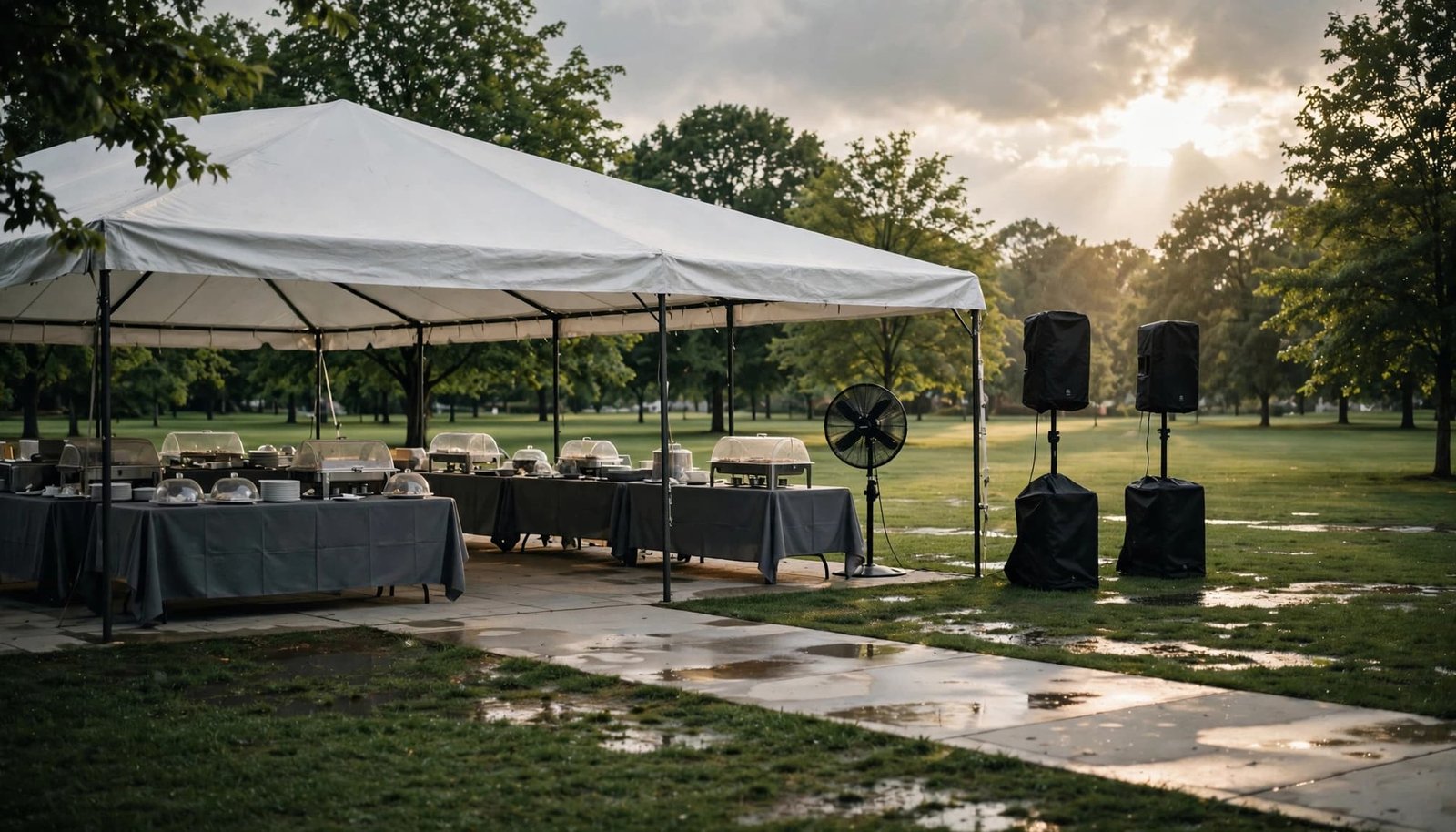
Share practical attire guidance alongside the dress code so students know what to expect in an outdoor setting. Breathable fabrics support comfort, while a shawl or light jacket helps during cooler evenings. Block heels, wedges, or flats are more practical than stilettos on grass.
Rent tents for shade and light-rain coverage, large fans for warm conditions, or professionally managed portable heaters for cool evenings. Heaters need approved placement, clearances, and supervision.
Fans don’t replace drinking water, shaded breaks, or indoor relief. The National Weather Service’s heat safety advice emphasizes shade, hydration, and limiting strenuous activity.
Provide accessible seating and a nearby supervised quiet space with softer lighting. These arrangements give students a comfortable way to rest without leaving the event’s supervision.
Plan Food Service Around Temperature Control
Food trucks, buffet-style service, and grab-and-go snack bars can all suit an outdoor prom. Keep service lines away from the Grand March route, and leave enough room for students using mobility devices.
Mocktail bars and lemonade stands add to the theme, but plain drinking water should remain easy to reach throughout the evening.
Covered food and shaded tables help protect service areas; neither replaces temperature control. Under USDA’s food temperature guidance, cold food should stay at or below 40°F and hot food at or above 140°F.
Use suitable coolers, refrigeration, or hot-holding equipment. Assigned catering staff should monitor temperatures and replenish smaller portions rather than leaving large quantities on display. Food service also needs a relocation plan.
Outdoor Prom FAQ
Which Venue Is Most Practical for a Large Group?
A school courtyard or field with nearby indoor facilities can simplify supervision and relocation. The deciding factors are approved capacity, accessible routes, restrooms, power, and enough usable space for every activity.
Do Outdoor Proms Need More Powerful Speakers?
They need a system designed for the layout and attendance. Effective placement and controlled coverage matter more than speaker size alone. Turning up an undersized system can create harsh sound near the speakers without useful coverage farther away.
Which Decorations Handle Wind and Humidity Best?
Securely installed structures, faux greenery, outdoor-rated lighting, and weighted freestanding displays are practical choices. Loose fabric, unsecured balloons, and lightweight paper decorations need more protection and restraint.
Make Preparation Part of the Celebration
An outdoor prom works best when the committee gives weather, sound, and student access the same attention as the theme. A usable indoor location and protected production setup support the entire evening.
Bring the school lead, venue team, DJ, and caterer into one coordinated plan before adding decorative extras. Clear responsibilities help the celebration remain organized, comfortable, and memorable, even when conditions require a change.