One questionable chorus can clear a middle school dance floor faster than a chaperone can reach the DJ table. A strong playlist does more than provide background music in a gym. It offers familiar, age-appropriate school dance songs, gives staff confidence, and creates a welcoming, organized party playlist.
The right mix feels age-appropriate without feeling childish. Sixth graders need an easy way to join in, while eighth graders want current hooks, strong beats, and songs their friends know.
Start with the students in the room, then build the music around their grade level and your school’s standards.
Key Takeaways
- Build the playlist around the students in the room, using familiar, upbeat songs for sixth graders and more current, energetic tracks for seventh and eighth graders.
- Review every song from start to finish and choose the exact clean version approved by your school, since a radio edit or missing Explicit label is not enough.
- Shape the event with planned tempo blocks that include high-energy sets, breathers, sing-alongs, and a strong final run.
- Collect song requests ahead of time, review them with staff and the DJ, and leave room to adjust the playlist based on the crowd.
- Test the full playlist, audio equipment, backup tracks, and chaperone plan before the dance begins.
A middle school dance playlist for every grade
A single playlist can work for grades 6 through 8, but the order matters. Younger students often respond to recognizable pop songs and group-friendly moments. Older students usually stay engaged when the music has more energy, current social-media familiarity, and a few classic hits they know by heart.
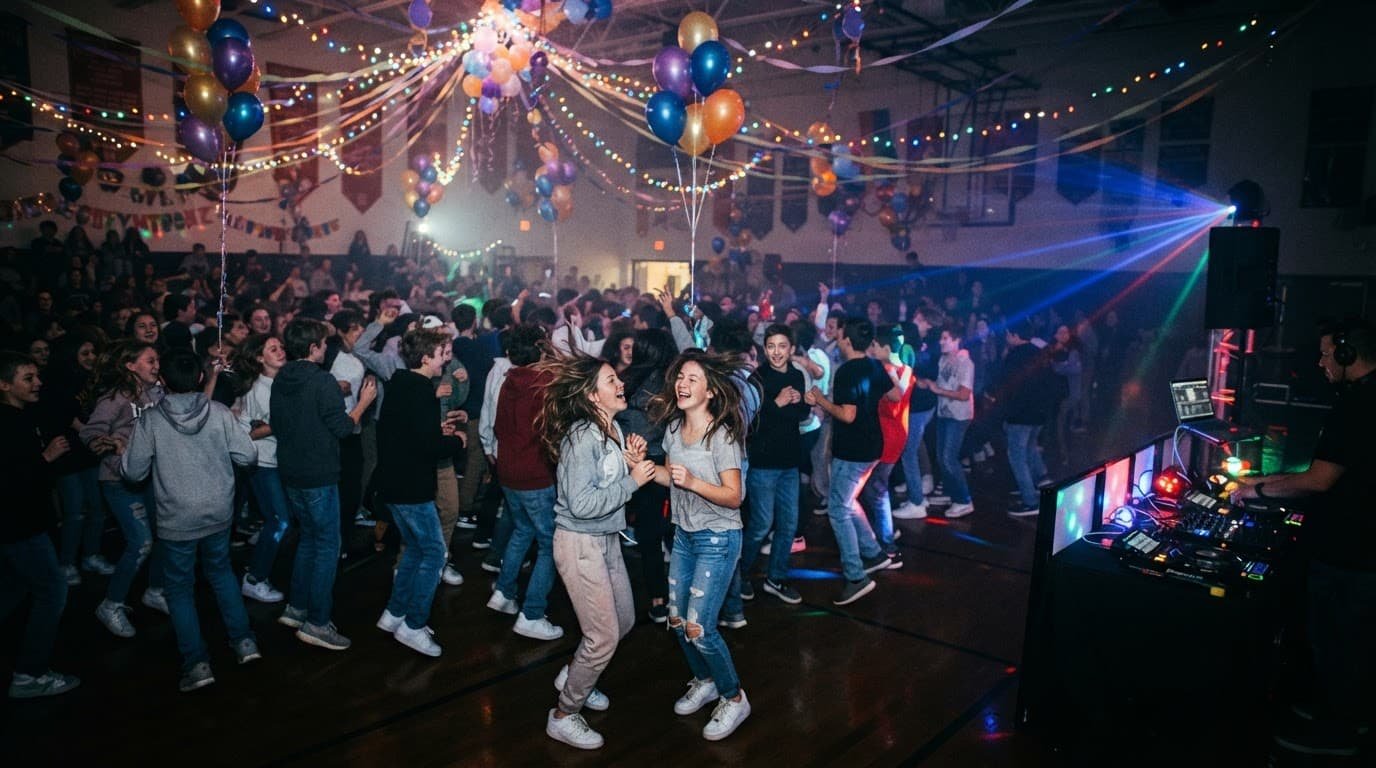
Keep the lyrics clean, the themes positive, and the music varied. A dance shouldn’t feel like a 90-minute loop of the same sound.
Grade 6: Familiar, upbeat, and easy to join
Sixth graders may arrive in groups, stay near the wall at first, and wait for a song that gives them permission to have fun. Start with pop songs that have bright choruses, clear beats, and little pressure to pair off.
These school dance songs work well for early energy, group dances, and sing-along moments:
- “Golden” by HUNTR/X brings a current soundtrack favorite with a confident, uplifting feel.
- “Dance the Night” by Dua Lipa has a polished disco-pop beat that gets groups moving.
- “Shake It Off” by Taylor Swift is familiar, clean, and built for a full-room chorus.
- “Can’t Stop the Feeling!” by Justin Timberlake keeps the mood cheerful and active.
- “Try Everything” by Shakira is a strong choice for students who want a positive message.
- “Happy” by Pharrell Williams gives hesitant dancers an easy way into the room.
- “Roar” by Katy Perry works especially well when the floor needs a confidence boost.
- “Better When I’m Dancin'” by Meghan Trainor fits a first dance or end-of-night celebration.
Keep the opening portion light. The goal is not to make every student dance immediately. It’s to make the room feel welcoming enough that they want to.
Grade 7: More current pop, more momentum
Seventh grade is often the sweet spot for a packed dance floor. Students know what is trending on TikTok, Spotify, YouTube, and in group chats, but they still respond well to familiar pop songs and clean throwbacks.
Build this part of the music playlist around polished pop, dance music, and chorus-heavy tracks:
- “Uptown Funk” by Mark Ronson featuring Bruno Mars remains a dependable school dance favorite.
- “Dynamite” by BTS adds a bright K-pop sound with an easy beat.
- “Permission to Dance” by BTS is built around movement and positive energy.
- “Cupid (Twin Version)” by FIFTY FIFTY gives the playlist a recognizable pop moment.
- “Flowers” by Miley Cyrus works well as a confident sing-along.
- “Firework” by Katy Perry can reset the room after a high-energy run.
- “What Makes You Beautiful” by One Direction is still a strong group chorus.
- “High Hopes” by Panic! At The Disco adds a lively alternative-pop change of pace.
A seventh-grade set can move more quickly between songs. Let the chorus play, let students enjoy the moment, then bring in the next recognizable hook before the energy fades.
Grade 8: Bigger beats and confident classics
Eighth graders often want a dance that feels more polished and current, especially near the end of the school year. They can handle stronger tempo changes and more electronic music. A limited, carefully screened hip hop selection can add variety alongside pop and electronic choices, and a dedicated list of hip hop clean versions makes screening faster. Keep lyrics and themes within school guidelines.
Use popular dance tracks alongside classic hits that have lasted for a reason:
- “Levitating” by Dua Lipa brings a clean disco-pop groove.
- “Don’t Start Now” by Dua Lipa keeps the energy moving without becoming too intense.
- “Shut Up and Dance” by WALK THE MOON is a reliable full-room favorite.
- “One More Time” by Daft Punk gives the dance floor a clean electronic lift.
- “Wake Me Up” by Avicii blends folk-pop familiarity with a strong dance beat.
- “The Middle” by Zedd, Maren Morris, and Grey is a useful pop-electronic transition song.
- “Dancing Queen” by ABBA proves classic disco still works with younger crowds.
- “I Wanna Dance with Somebody” by Whitney Houston creates a big, joyful chorus.
The best eighth-grade section balances new favorites with songs students recognize through family playlists, movies, and social media. That mix keeps the event feeling current without chasing every new release.
Clean music needs more than a radio edit
Clean lyrics are the starting point for evaluating school dance songs, not the entire standard. A radio edit may remove explicit words while leaving a suggestive theme, an awkward lyric, or a long silence where a word was removed. That can still feel out of place at a middle school event.
Review every song from start to finish, then select the exact clean version that will play at the dance. Check the version in the same streaming service, DJ library, or downloaded file you plan to use. A title that appears clean in one place may have a different edit elsewhere.
A track without an Explicit label is not automatically approved for a school dance.
Apple Music’s 2025 Clean Music for School album can offer ideas, but even school-focused collections need a full review. School policies vary and families may have different comfort levels, which is why a written school dance song policy keeps the standard clear for staff, students, and the DJ.
For electronic music, individual selections matter more than the artist’s name. Daft Punk, Avicii, and Zedd have school-friendly dance tracks, but no artist is a blanket approval. That same song-by-song standard applies to hip hop selections. An instrumental mix can support announcements or transitions, while carefully reviewed remix songs can work too. Neither should replace the sing-along favorites that pull students onto the dance floor.
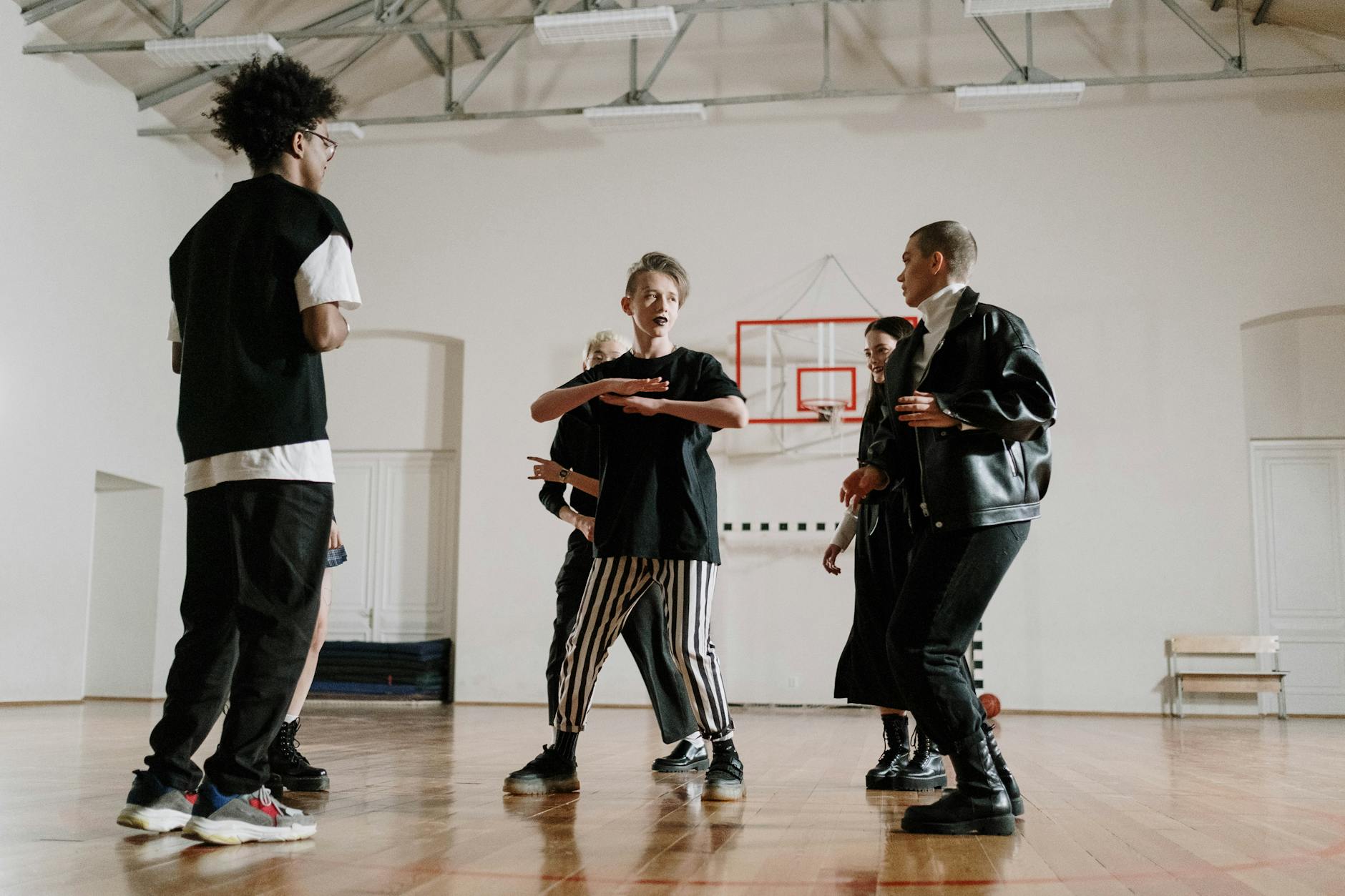
Photo by cottonbro studio
Set the energy in planned tempo blocks
A good event mix has peaks, breathers, and a confident finish. Students don’t need every song to be loud or fast, so arrange school dance songs around those shifts. They need a clear rhythm to the night, with enough variety that the same group doesn’t own the floor for 90 minutes.
By 2026, students are used to hearing song highlights quickly through TikTok music clips and a curated Spotify playlist. A quick mix often keeps attention moving, but it doesn’t mean every song should end early.
A 90-minute dance can follow a structure like this:
| Event Moment | Approximate Tempo | Music Focus |
|---|---|---|
| Arrival and check-in | 90 to 105 BPM | Familiar pop that sets a relaxed mood |
| First open-floor set | 100 to 115 BPM | Bright pop selections and group favorites |
| Main energy peak | 115 to 128 BPM | Clean EDM, pop-dance, and upbeat tracks |
| Mid-event reset | 90 to 105 BPM | Sing-alongs, older songs, and photo moments |
| Final run | 105 to 125 BPM | Biggest requests, familiar favorites, and celebratory songs |
Keep each tempo block near 15 minutes, then change the feel before students lose interest. These short tempo sets help shape DJ sets, giving the DJ clear points for transitions, crowd-energy checks, and timing. A high-energy song followed by a well-known classic hit can bring more students in than five similar songs in a row.
Manage song requests before the dance begins
Song requests help students feel heard, but an unplanned request list can quickly create problems. A student may request a song because of one viral clip without knowing the full lyrics. Another may request a remix that has never been reviewed by staff.
Collect submissions one or two weeks before the event through a student committee, a Google Form, or a paper form in the cafeteria. Ask which school dance songs students want most, along with the title, artist, and exact clean version when possible. State clearly that submitting a request does not guarantee it will play.
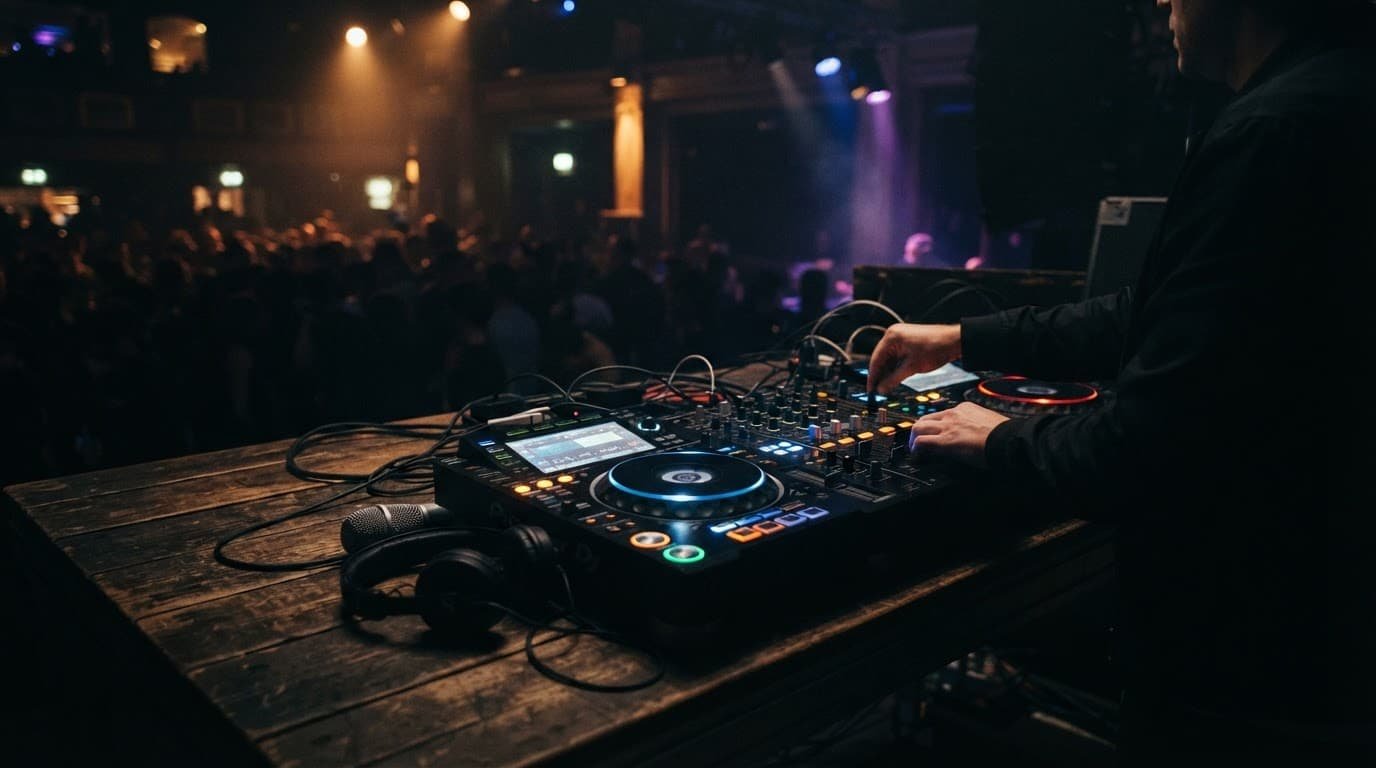
A student council adviser, teacher, or PTO volunteer can review the list with the DJ before the event. Build a pre-approved section for submitted titles into the dance, then leave room for the DJ to read the crowd and adjust the pacing.
A simple response handles declined requests without turning the moment into a debate: “That version isn’t cleared for tonight, but we have another clean song coming up.”
Finish with a final review and room plan
Play through the full middle school dance playlist before event day. Listen through the school dance songs for choppy edits, slow stretches, duplicate artists, or tracks outside school expectations.
Download approved tracks and prepare a reliable backup. Don’t depend on school Wi-Fi for every song. Test the event audio in the gym, cafeteria, or auditorium where the dance will take place. Large rooms can make bass-heavy music sound muddy.
Chaperone placement matters as much as the music set. Keep the DJ area visible and use lighting that feels fun without making the room too dark. Give staff a quick way to flag a track if concerns arise. Good preparation keeps the focus where it belongs, on students having a great time.
Frequently Asked Questions
How many songs should a middle school dance playlist include?
For a 90-minute dance, plan for enough music to cover the full event while allowing time for announcements, transitions, and requests. A mix of roughly 25 to 35 songs usually gives the DJ room to adjust pacing without rushing every track.
What makes a song appropriate for a middle school dance?
A suitable song should have clean lyrics, positive or neutral themes, and an energy level that fits the event. Review the full track and select the exact clean version your school has approved rather than relying only on its title or streaming label.
Should the playlist be different for sixth, seventh, and eighth graders?
The same core playlist can serve all three grades, but the order and balance should change. Sixth graders often respond to familiar group-friendly pop, while older students may prefer current hooks, stronger beats, electronic music, and recognizable classics.
How should schools handle student song requests?
Collect requests one or two weeks before the dance and ask students to include the title, artist, and clean version when possible. Staff should review the submissions with the DJ, pre-approve suitable songs, and explain that a request is not guaranteed to play.
How can a DJ keep the dance floor active?
Use planned tempo blocks with energetic peaks, shorter resets, sing-alongs, and a confident final run. Change the sound before students lose interest, and combine current favorites with familiar classics instead of playing several similar songs in a row.
A Dance Students Will Remember
A great school dance doesn’t need every chart hit. It needs clean dance songs, familiar hooks, smart pacing, and school dance songs for every grade level.
Once the set is reviewed and requests are managed, the music can move with the room. Students get the fun night they hoped for, and staff get the confidence they need.