When a corporate event falls behind, identify the cause, protect fixed commitments, and have one planner approve a revised schedule. Managing event schedule delays starts with clear coordination, not faster announcements or rushed presentations.
An extended keynote, delayed dinner, or technical interruption can affect speakers, catering, entertainment, and guest transportation. A calm, shared response helps the team recover time without making guests feel hurried.
Start by separating what must happen on time from what can reasonably change.
Key takeaways for a late-running event
- Give one planner or show caller authority to approve schedule changes.
- Protect safety, accessibility, meal requirements, and fixed departure times before shortening optional content.
- Share revised timings with the host, DJ, venue, catering, and AV team before announcing them.
- Use approved holding music, concise updates, and prepared backup options to keep guests comfortable.
Respond to event schedule delays with clear authority
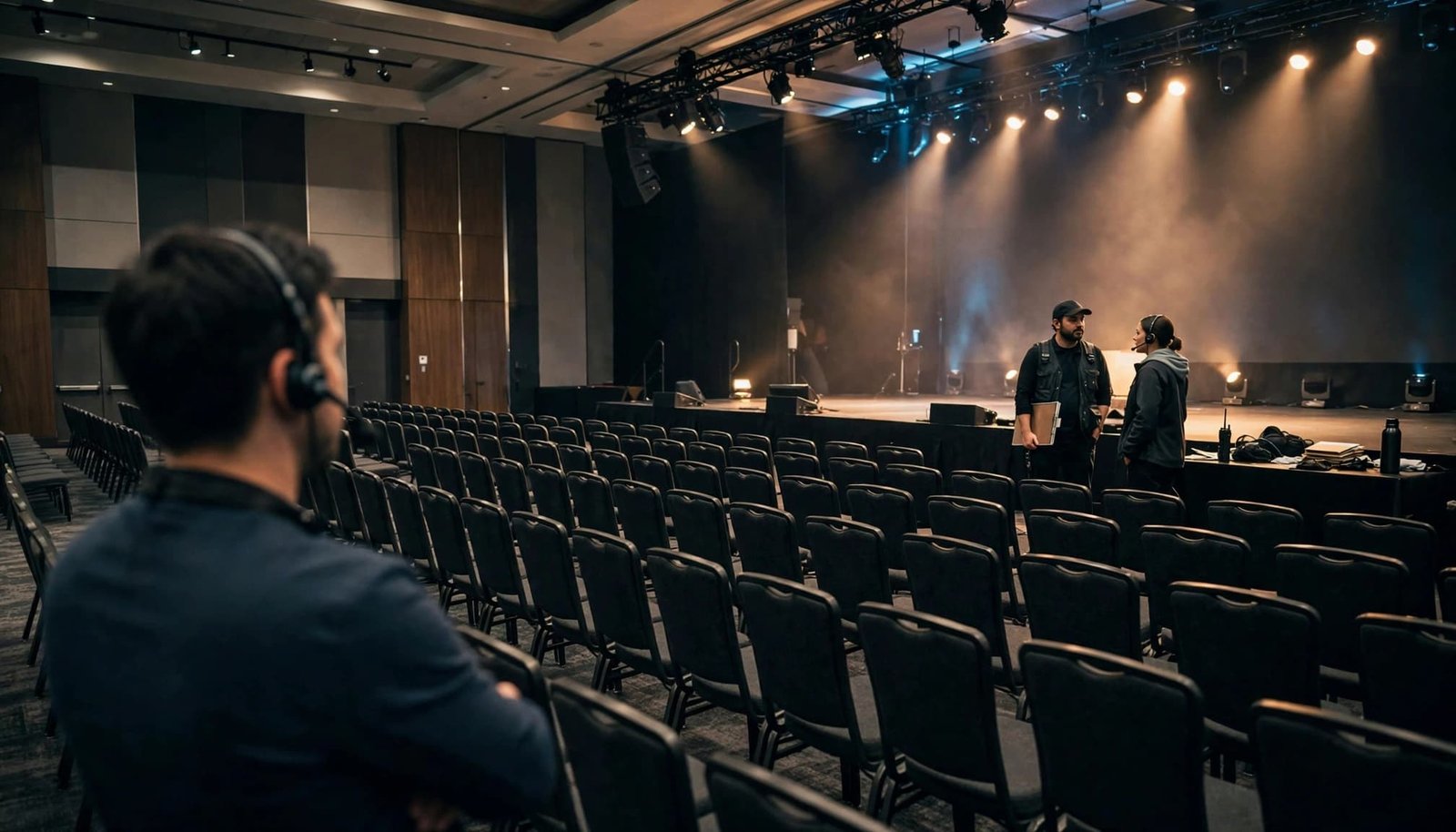
Identify the cause and its effect
Establish how far behind the program is and whether the problem is still developing. Check safety first, then assess which commitments are affected. A speaker finishing late requires a different response than a presentation system that remains unavailable.
Ask the responsible team for a usable status: what is ready, what remains blocked, and which activity can proceed safely. Separate fixed commitments from flexible ones, including food service, room conversions, transportation, and contracted service hours.
Avoid moving every remaining activity later automatically. That can turn a manageable interruption into several overlapping problems.
Put one person in charge of changes
The lead planner or show caller should approve and communicate live adjustments before the next cue. The DJ, host, venue captain, catering lead, and AV operator need direct communication, but they shouldn’t issue competing instructions.
Update one shared schedule with revised start times, shortened segments, and cue ownership. Our corporate event run-of-show template provides a practical structure for those details.
Keep the original timing visible alongside revisions so staff can distinguish approved changes from the earlier plan.
Recover time without rushing important moments
Protect the commitments that cannot move
Begin with the agreed ending time, transportation departures, venue restrictions, and any business proceedings that require their full allotted time. Include catering requirements and accessibility arrangements in that discussion.
A delayed program doesn’t automatically authorize overtime. Extensions need approval under the applicable venue and vendor agreements before anyone promises a later finish.
Don’t remove restroom access, essential meal time, or accessible movement time simply because those minutes appear flexible on paper.
Shorten optional content thoughtfully
Recover time through approved content changes rather than faster delivery. Repeated housekeeping announcements, extended introductions, and optional discussion segments often offer more flexibility than formal presentations.
These adjustments preserve the purpose of each program segment.
| Program element | Practical adjustment | What to protect |
|---|---|---|
| Speaker introductions | Use approved shorter biographies. | Names, titles, and pronunciation. |
| Audience Q&A | Reduce questions or move remaining discussion afterward. | A clear explanation of the change. |
| Awards | Shorten introductory remarks and music cues. | Recognition and safe stage movement. |
| Networking | Adjust the duration with planner approval. | Guest comfort and departure arrangements. |
The strongest recovery plan removes lower-priority minutes while keeping essential moments complete. Presenters should receive their revised speaking limits privately before taking the stage.
Communicate changes before the next cue
Brief the production team first
Send the revised order to the host, DJ, AV operator, venue captain, and catering lead. Include the next start time, who introduces the segment, and who gives the final cue.
A microphone becoming available doesn’t mean the stage is ready. Presentation playback, panel seating, and presenter access also need to be ready before the host begins.
After applause, allow the presenter to leave the microphone area before music or the next announcement starts. Assign microphone collection and chair resets rather than assuming someone will handle them.
Give guests a useful, approved update
An effective announcement states what is changing, what guests should do, and when they will hear more. Avoid naming a restart time until the planner has approved it.
Keep the explanation respectful and brief. Guests usually need direction more than a detailed account of the problem.
Our corporate event MC script examples support consistent introductions and transitions. For schedule changes, pair spoken announcements with event-app messages, screens, or text updates so guests aren’t dependent on hearing the microphone.
Background music can support a planned pause, but keep it below conversation level.
Handle transit interruptions before they affect attendance
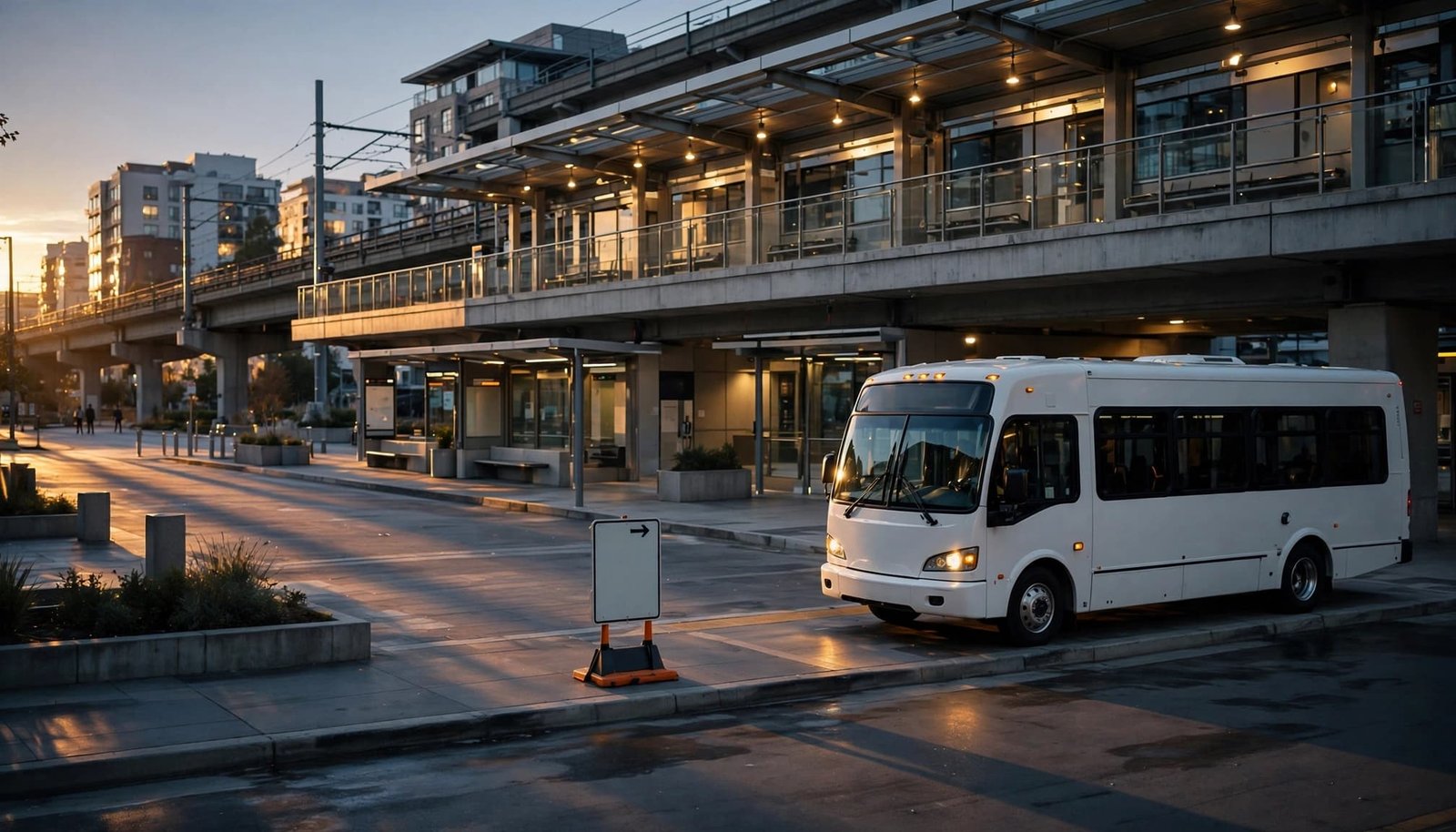
Travel disruptions can delay presenters and entire attendee groups. Keep an arrival contact separate from the person calling stage cues so transportation updates don’t interrupt production decisions.
Seattle-area Link service provides a useful example. During a light rail service disruption, Community Transit’s replacement shuttle service operates during planned maintenance or emergencies. According to Community Transit’s Link Shuttle guidance, buses are labeled “1 Line Shuttle” or “2 Line Shuttle” according to the affected rail line.
Community Transit provides Link Shuttles to impacted stations between Northgate and Lynnwood City Center, coordinating service with King County Metro. Shuttles use a transit center normally served by light rail; temporary transfer stations have special signage.
Riders should check Sound Transit service alerts for service information and allow extra travel time during interruptions. There isn’t one extra-time allowance that fits every disruption.
For your event, send affected attendees the replacement-service information and arrival instructions together. If a presenter is delayed, move an approved, ready segment forward rather than leaving the audience waiting without direction.
Keep registration available for late arrivals, with staff prepared to direct guests without interrupting the current session.
Anticipate road closures and competing city events
Major events, including sporting events, concerts, marathons, and cruise activity, can draw crowds and affect guest arrivals even when your event is running on time. A Seattle Reddit discussion requesting a disruption calendar drew 74 upvotes and 39 comments, showing demand for coordinated information.
Useful resources answer different questions. WSDOT travel alerts provide real-time road information. Climate Pledge Arena’s event calendar lists Kraken games, Storm games, and concerts. Visit Seattle’s searchable events calendar offers broader listings, though an event listing alone doesn’t describe its traffic impact. Check transit alerts alongside road information and attendee arrival updates.
Security requirements can add another delay. Ahead of a presidential rally in San Antonio, officials warned of intermittent road closures, a large law-enforcement presence, and TSA-style screening. Selfie sticks were among the prohibited items.
For corporate programs near large gatherings, include approved arrival routes, entrance locations, parking instructions, and security restrictions in attendee communications. Give vendors their loading instructions separately.
When traffic delays affect a substantial group, the planner can hold the opening or move a flexible activity forward. Base that decision on actual arrival information and the remaining program commitments.
Treat weather delays as safety decisions
The National Weather Service’s lightning guidance recommends considering postponement or cancellation when thunderstorms are forecast. Moving an activity indoors is another option when suitable space is available.
For outdoor events, severe weather precautions should include a designated safety decision-maker, shelter arrangements, and approved messages before guests arrive. Production teams shouldn’t keep an outdoor program operating simply to preserve the original timeline.
A pause may allow a program to resume; a postponed or rescheduled event needs a new date and operating plan, while event cancellations need direct notice and clear ticket instructions. Storms stopped the Offutt Air Force Base airshow, while rain and lightning interrupted Maha Music Festival performances twice before they resumed.
In Baton Rouge, impending weather prevented crews from safely proceeding with Live After Five’s Friday outdoor concert. Other Baton Rouge event changes included Night Market BTR moving its May 9 event to Saturday, May 30, 2026, from 4 p.m. to 10 p.m. in front of the State Capitol. Pre-sale and VIP tickets were honored.
Hot Art Cool Nights moved to May 15, from 6 p.m. to 10 p.m. throughout the Mid City district, with participants expected to remain the same.
For corporate postponements, publish the new date, location, admission arrangements, and transportation changes together. Ticket treatment depends on the organizer’s stated policy; one event’s decision doesn’t establish a universal rule.
Rebuild setup, staffing, catering, and production timing around the replacement date.
Frequently asked questions about schedule recovery
Should the MC interrupt a speaker who runs long?
The MC should follow the planner’s approved procedure. Agree on visible time cues and a respectful closing approach before the presentation. An unplanned interruption can embarrass the speaker and create uncertainty about who controls the program.
Can music help during an unexpected pause?
Yes, when the planner approves the pause and no safety announcement is pending. Appropriate background music supports conversation during a room reset or technical hold. It shouldn’t compete with instructions, distract from troubleshooting, or start while a presenter is still speaking.
How much flexibility should a corporate schedule include?
Where the agenda allows, reserve five to ten minutes around major transitions. Treat that as a planning recommendation, not a universal requirement. Meal service, room conversions, and multi-speaker segments need flexibility based on their actual production demands.
Keep the team coordinated and the guests comfortable
Event schedule delays are easier to manage when decision-making stays clear and each department works from the same revised plan. Protect essential commitments, shorten optional content thoughtfully, and communicate changes before the next transition begins.
Build transition buffers into the run of show, and confirm fixed departure times and vendor or venue constraints before event day. Assign one person to approve changes so the team can adjust the pace and preserve the professional atmosphere guests expect.