Prom accommodations for deaf students and students who are hard of hearing can include interpreters, live captions, assistive listening systems, clear sightlines, and accessible announcements. Effective deaf prom accommodations start with the student’s communication preferences and the actual conditions at the event.
A crowded gym, dim lighting, and overlapping conversations create different needs than a classroom. Individualized planning helps students enjoy dinner, dancing, photos, and prom traditions alongside their friends. Start by identifying the support each student wants, then coordinate those arrangements with the school, venue, and DJ.
Key Takeaways
- Collect accommodation requests privately through a designated school contact, and keep responsibility for arrangements with adults.
- Match interpreters, captions, listening equipment, and seating to the student’s preferences and the prom environment.
- Build communication access into the timeline, equipment setup, announcements, and emergency procedures rather than adding it after other decisions are complete.
Choosing Deaf Prom Accommodations Around Student Needs
Start With Communication Preferences
Students who are deaf or hard of hearing may have different communication preferences. Not every student uses American Sign Language (ASL), and students with similar hearing levels may prefer different accommodations. Ask what works for announcements, conversations, videos, and group activities.
An individualized assessment considers the student’s reported needs, relevant existing documentation, and the communication environment. The Section 504 coordinator, special education team, nurse, educational audiologist, and disability services staff can help translate those needs into practical arrangements.
ASL is a separate language with its own grammar. English proficiency doesn’t measure intelligence or academic potential, and assumptions about English skills can lead to inappropriate or insufficient support.
Understand the School’s Responsibilities
Section 504 of the Rehabilitation Act and the Americans with Disabilities Act set requirements for covered schools. Obligations depend on the school and circumstances and may include reasonable accommodations and effective communication. These obligations can extend beyond classroom instruction to school programs and activities, including prom.
Federal effective-communication guidance for schools explains that public schools must give primary consideration to the individual’s requested communication aid.
An off-campus venue doesn’t remove the district’s responsibilities. Students should help shape the plan without becoming responsible for finding providers, managing equipment, or solving access problems.
Arrange Qualified Interpreters for the Full Experience
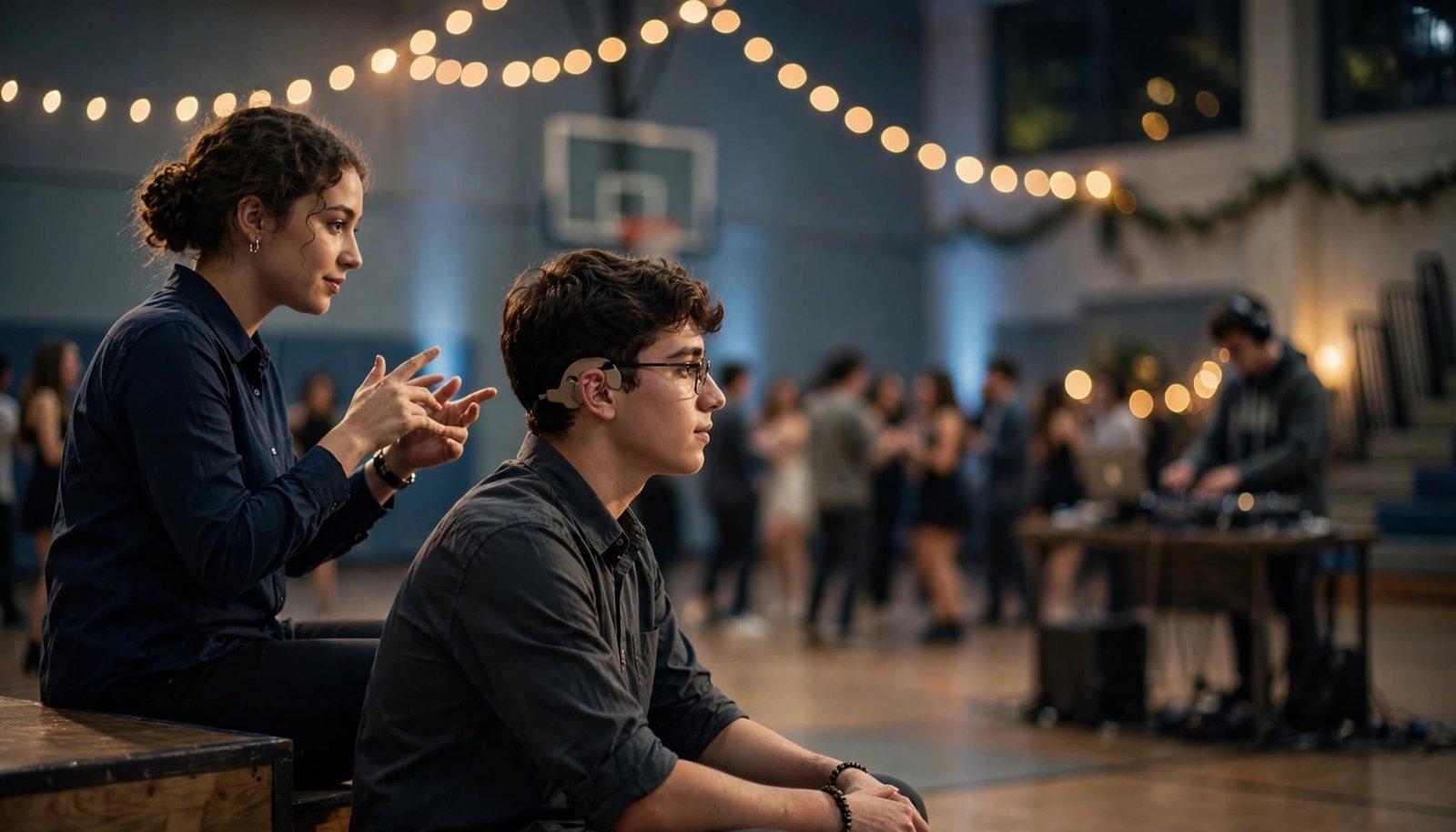
Match the Interpreter to the Student
Interpreting services include ASL interpretation, transliteration, tactile interpretation, oral transliteration, and cued speech transliteration. The appropriate modality depends on the student’s language and communication preferences.
Choose a qualified sign language interpreter or other provider based on the student’s preferred language and communication modality, rather than asking a friend, date, or family member to interpret throughout the evening. Discuss coverage for check-in, dinner, announcements, and informal conversations, not only the crowning ceremony.
Share the agenda, speaker names, prepared remarks, unfamiliar terms, and planned activities beforehand. Preparation gives interpreters useful context and supports accurate communication when the event becomes busy.
Plan Staffing, Audio, and Costs
University of Virginia event guidance identifies two or more interpreters as standard for events lasting longer than one hour. Team interpreting helps prevent mental fatigue and maintain accuracy; coverage should include breaks without leaving students unsupported.
Interpreter fees typically include two-hour minimums, travel time, and preparation time. Late cancellations and no-shows may also trigger cancellation fees, so the school should account for those terms in its budget.
At larger or outdoor events, interpreters may need an in-the-ear monitor for full auditory access. Coordinate that feed with the A/V team before students arrive.
Use Live Captions and Captioned Media Effectively
Choose the Right Speech-to-Text Service
Speech-to-text services convert spoken communication into readable text. They can support students who don’t use ASL or prefer text alongside other accommodations, including real-time captioning.
These services differ in how they present speech:
| Service | Text Approach | Prom Planning Consideration |
|---|---|---|
| CART, Communication Access Realtime Translation | Verbatim, word-for-word captions | Useful when students need the speaker’s exact wording |
| C-Print | Meaning-for-meaning text interpretation | A trained typist conveys the speaker’s meaning |
| TypeWell | Meaning-for-meaning text interpretation | A trained transcriber conveys the speaker’s meaning |
Choose a service with the student, then arrange a clear microphone feed and a readable display. Don’t assume automatic captions in a noisy ballroom are equivalent to a qualified service.
Prepare Videos and Written Information
Captioning should convey all audio content, including spoken dialogue, sound effects, music information, and speaker identification. Prepare video montages with closed captioning before prom instead of relying on captions generated during playback.
Interpreters, captions, and written information can work together. Each requires visual attention, so students may struggle to watch a speaker, follow an interpreter, and take notes at the same time.
For prom-committee meetings, support for note taking can reduce that conflict. Some educational programs use student volunteer notetakers who receive a stipend and share notes with students who have note-taking accommodations. A written prom schedule gives students an event reference without requiring them to document instructions themselves.
Match Assistive Listening Systems to Individual Devices
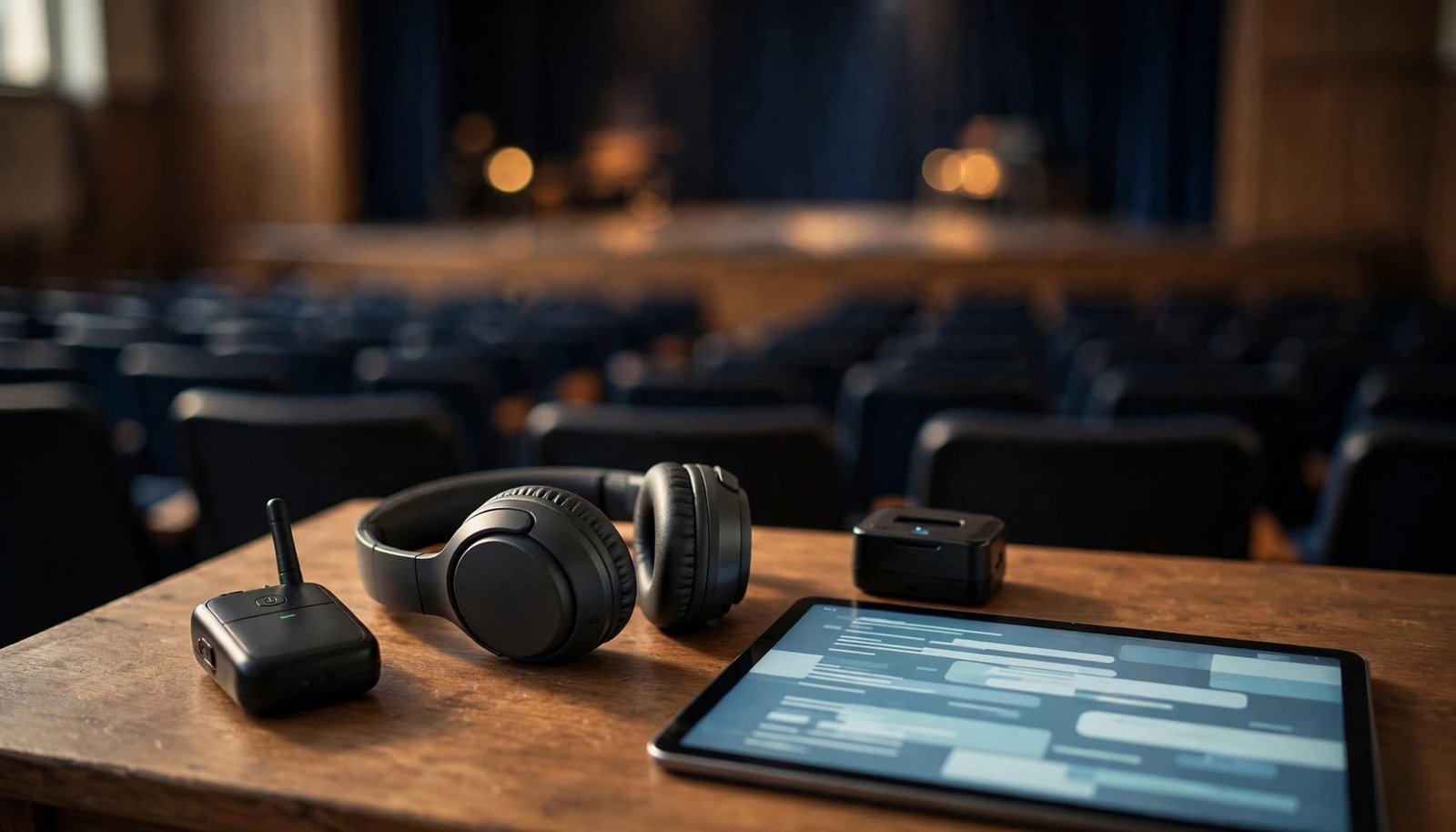
Understand the Main System Types
Assistive listening systems deliver a clearer audio signal with less interference from distance and background noise. The three main types are Frequency Modulation/Digital Modulation (FM/DM), infrared, and induction loops.
FM/DM systems transmit audio wirelessly to receivers. Infrared systems use infrared light and require suitable coverage. Induction loops transmit to compatible telecoils in hearing aids, cochlear implant processors, or dedicated receivers.
Compatibility matters. An educational audiologist can help match the planned system to a student’s equipment and listening preferences.
Separate Personal Support From Room Coverage
A personal system usually links a microphone or transmitter to an individual student through compatible assistive listening devices or a receiver. A room-based system serves a listening area through installed equipment and compatible receivers or devices.
Some venues also offer Auracast broadcast audio, but compatible equipment is necessary. Its presence alone doesn’t establish access for every attendee.
Test the complete path with the DJ’s microphone, receiver, and student’s preferred connection before doors open. More speaker volume isn’t a substitute for a clear signal, and listening equipment doesn’t replace requested interpreting or captioning.
Coordinate Sightlines, Lighting, and DJ Cues
A well-planned room supports communication without separating students from their friends. Position interpreters near speakers or presentation areas, keep them well lit, and protect unobstructed views of interpreters, caption screens, and peers.
Offer suitable seating choices rather than assigning an isolated “accessible” table. Review dining, the dance floor, photo areas, and the quiet room as part of the same plan.
Our prom sound and lighting guide helps schools connect equipment decisions with room layout and event flow. Keep communication areas readable when dance lighting changes, and provide a quieter conversation space away from speakers.
Put Communication Access on the Cue Sheet
For each formal announcement, identify the speaker, microphone, music-lowering cue, visual message, and interpreter or captioning coverage. Our prom announcement checklist provides a practical foundation for organizing those moments.
Pause between instructions and give students time to shift attention between the speaker, interpreter, and screen. Keep interpreters visible during introductions and crowning rather than darkening their area for dramatic effect.
Include Safety and Schedule Changes
Pair important spoken instructions with visible text and appropriate communication support. A school-designated adult should handle accessible emergency instructions, quiet-room notifications, and last-minute schedule changes.
An announcement isn’t accessible simply because it appears on a screen if the student cannot see that screen from the activity area.
Request and Schedule Accommodations Early
Publish a private accommodation contact on ticket information and RSVP forms. Students and families can discuss support needs with the school contact without a public explanation of a disability. School staff remain responsible for arranging and coordinating accommodations.
A simple request can say: “I’d like communication accommodations for prom. I use ASL and need interpreting for announcements and conversations. Please contact me privately to plan coverage.”
Use these steps to organize the response:
- Have the school contact discuss preferences, event activities, and existing supports with the student. Ask whether they need extended time for check-in or transitions, then account for it in the schedule.
- Reserve qualified providers and assign responsibility for payment, equipment, and venue coordination.
- Share the timeline, scripts, floor plan, arrival instructions, and technical requirements with the appropriate team members.
- Conduct a pre-event access test and give the student a clear on-site support contact.
The University of Virginia’s scheduling guidance recommends at least two weeks for short events and at least one month for longer events such as conferences. Course interpretation requires at least six weeks. These are planning benchmarks, not universal legal deadlines.
For a multi-hour prom, begin arrangements when the date and venue are established. Late requests still need a timely response, not automatic rejection.
Add access arrangements to the prom DJ planning timeline so provider arrival, sound testing, dinner, announcements, and departure stay coordinated. Share only necessary accommodation details with vendors, and keep diagnoses and personal documentation private.
Frequently Asked Questions
Can a School Charge Students for Accommodations?
A public school cannot charge a student for auxiliary aids and services required to provide effective communication. Include those costs in the school’s event budget rather than adding an interpreter or captioning surcharge to an individual ticket.
The National Association of the Deaf’s explanation of public-school obligations under Section 504 and the ADA outlines the broader responsibility to provide communication access.
Does a Classroom Accommodation Plan Automatically Cover Prom?
A classroom plan provides useful information, but prom needs its own review. Noise, lighting, movement, social conversations, and extended hours can change which supports are effective.
Discuss the actual evening with the student and school team. Identify where existing accommodations transfer well and where additional interpreting, captions, listening support, or seating arrangements are needed.
Build a Prom Plan Students Can Rely On
Successful deaf prom accommodations combine student choice with dependable adult coordination. The strongest plan connects qualified communication support, accessible room arrangements, and clear event cues.
Arrange the services early, test the setup, and keep a designated school contact available throughout the evening. With those details addressed, students can focus on the celebration and the people they came to enjoy it with.