A corporate event DJ can support a press conference with clear room sound, controlled microphones, prepared music cues, and coordinated announcements. For media briefings, speech clarity comes first; reporters, executives, and remote audiences need to hear the same complete message.
Professional preparation also accounts for camera audio, audience questions, presenter movement, and last-minute schedule changes. Start by defining those responsibilities, then build the sound and hosting plan around the briefing.
Key Takeaways
- Separate the DJ’s music role, hosting, room audio, and broadcast responsibilities in the written service scope.
- Budget for planning, microphones, technical staffing, rehearsal, setup, and breakdown, not performance time alone.
- Prepare a shared schedule with named cue owners, tested media feeds, and practical backup arrangements before reporters arrive.
Corporate Event DJ Audio Starts With Clear Speech
Press conference sound needs to support accurate listening and recording. Comfortable volume matters, but increasing the volume won’t solve poor microphone placement or an echo-heavy room.
Plan Microphones Around the Speakers
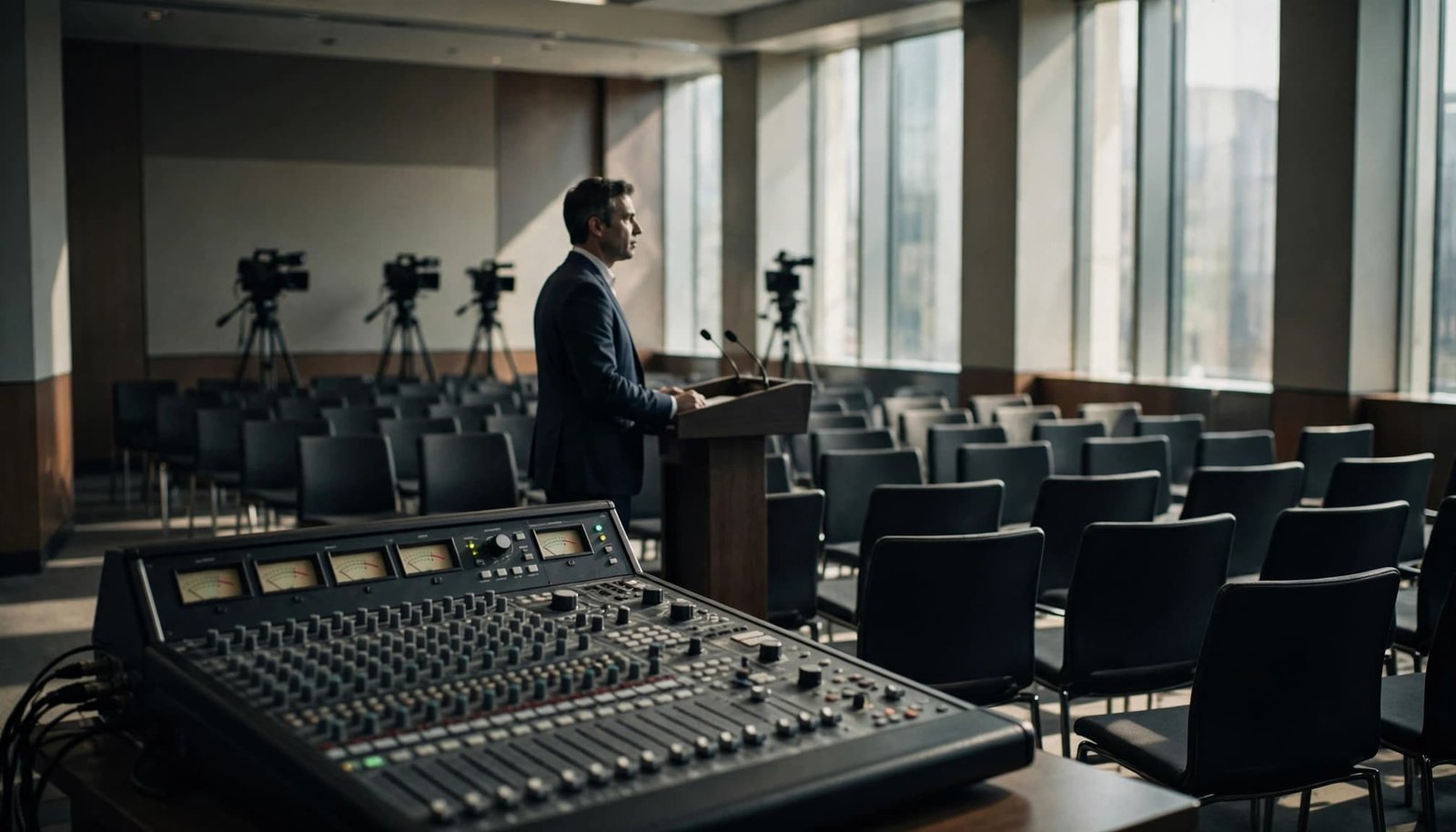
A lectern microphone suits a stationary presenter, while a handheld or wearable microphone supports different presentation styles. Panel discussions need enough microphone coverage for each participant and a controlled method for audience questions.
AVIXA’s speech intelligibility guidance addresses preserving understandable speech through a sound system. In practical terms, the back row should understand names, figures, and questions without strain.
Position speakers and microphones to reduce feedback, then test with presenters in their actual locations. A sound check from behind the DJ table doesn’t represent the audience’s listening experience.
Give Media Crews a Dedicated Audio Plan
Room speakers and recording feeds have different jobs. Camera crews need compatible connections and appropriate signal levels; a livestream needs a tested feed that includes both remarks and questions.
A press mult box distributes a shared audio source to multiple media crews. Include its supply, operation, and connection requirements in the production scope when several broadcasters need access.
Mute unused microphones, and test the recording feed separately from the room sound.
Define DJ, MC, and AV Responsibilities
A dependable production plan gives each person a clear role. Our DJ and emcee planning guidance distinguishes music and hosting duties from broader technical responsibilities.
Music Cues and Professional Hosting
The DJ can manage arrival music, opening cues, speaker walk-ups, and closing music. The emcee welcomes attendees, introduces approved speakers, explains the question format, and guides transitions.
Music fills are brief selections, usually 15 seconds to one minute, played while speakers or award presenters approach the stage. For a press briefing, use them selectively and end them before remarks begin.
Approved scripts, phonetic name spellings, and clear instructions about unscheduled announcements help protect the company’s message.
Technical Operation and Cue Ownership
The audio operator manages microphone levels and routing. Video playback, streaming, presentation slides, and recording may belong to separate AV specialists.
One person can perform several roles when the workload allows. Nufusion Productions, for example, states that each DJ can also act as MC and handle announcements and timelines.
However, simultaneous hosting, microphone mixing, and broadcast troubleshooting may require additional staffing. Assign one communications lead to authorize program changes, with each technical operator responsible for executing their own cues.
Build a Tested Setup and Backup Plan
Preparation begins with room access, equipment placement, and cable routes. AVIXA’s microphone design guidance connects microphone selection, placement, and system integration, all important parts of a dependable briefing setup.
Allow Time for Setup and Rehearsal
MyDeejay generally arrives 90 minutes before events with fewer than 250 guests for setup and sound check. Its venue requirements include a six-foot banquet table with linen and adequate power within 35 feet of the setup.
Those are provider-specific arrangements, not a universal production schedule. Multiple media connections, panels, interpretation, or streaming can require earlier access and a separate rehearsal.
Document the loading route, parking, elevators, approved power locations, camera positions, and accessible pathways before equipment arrives.
Prepare Equipment and Personnel Backups
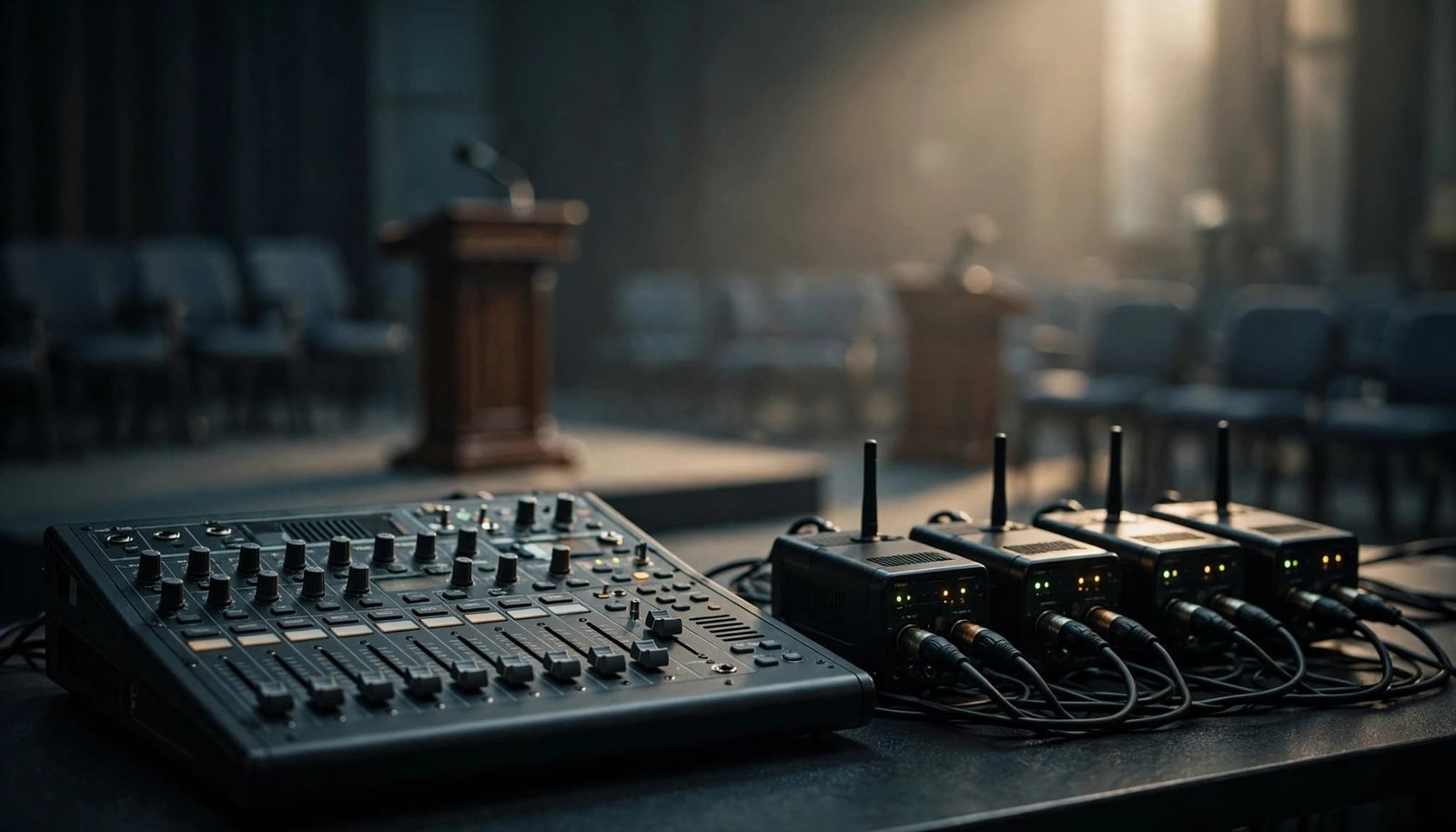
A backup plan should address spare microphones, batteries, cables, playback files, and recovery responsibilities. Wireless microphones also need frequency coordination with other wireless systems operating at the venue.
Test each microphone, video soundtrack, media connection, and first program transition. Listen through headphones to the outgoing recording feed.
Personnel coverage matters too. MyDeejay uploads DJ notes, paperwork, and custom music into its Emergency DJ System if the assigned DJ cannot attend. A replacement plan needs access to the program information as well as an available person.
A working room microphone doesn’t prove the recording feed works. Test both paths before the briefing begins.
Budget for the Complete Briefing
Corporate event DJ pricing reflects preparation, equipment, staffing, travel, and production demands. A short executive announcement can require substantial setup even when remarks last only 20 minutes.
The Bash’s corporate DJ cost estimate is approximately $920 for 3.5 hours. That entertainment benchmark doesn’t establish the price of a broadcast-ready press conference.
For preliminary calculations, a $150 to $400 allowance per performance hour provides a starting worksheet.
| Performance Time | Preliminary Allowance |
|---|---|
| One hour | $150 to $400 |
| Three hours | $450 to $1,200 |
These figures are planning allowances, not our company rates or complete media-production quotes. Minimum packages may apply because transport, preparation, and setup remain necessary.
A useful proposal separates room sound, microphone quantities, hosting duties, media distribution, streaming support, rehearsal, travel, overtime, setup, and breakdown. Additional technicians and separate reception areas increase the scope.
Payment terms also affect corporate purchasing. MyDeejay requires a 50% deposit when corporate events are booked and doesn’t extend credit or bill after the event. For corporate clients, include vendor registration, purchase orders, invoice contacts, and payment deadlines in the booking process.
Compare Corporate Providers by Service Scope
Corporate entertainment providers offer different combinations of music, hosting, equipment, and production support. Compare those capabilities against the actual briefing rather than choosing by package name.
Hank Lane offers an in-house events team and an inventory of AV equipment and party rentals, including dramatic lighting, staging, microphones, and photo booths. Epic Entertainment Boston offers photo booth rental as an addition to any package, with event lighting available separately. Compare those add-on terms among corporate DJs. Live music can add energy at a holiday party, award ceremony, gala, or launch reception. It doesn’t replace speech-focused audio planning.
Djmaestro lists mixers, networking events, dinners, holiday parties, milestone celebrations, launch parties, team-building events, awards ceremonies, corporate retreats, and charity events. It also allows website song requests and client approval before requests are played. That approval process is useful when music must follow company content standards.
Vox DJs describes training in musical and interpersonal skills, including reading a crowd, and lists local offices in Los Angeles, Orange County, San Diego, and Arizona.
MyDeejay has served Baltimore/Washington since 2003 and carries $2,000,000 in liability insurance per DJ. It also identifies the specific DJ before booking and offers direct conversations with that person.
For New Hampshire programs, our corporate event DJ services include DJ, MC, sound, lighting, and personalized music planning. The written scope should distinguish those services from any separate broadcast or streaming production.
Plan the Schedule and Hiring Conversation
An event planner can start planning corporate events three to six months ahead; large productions and popular November and December dates benefit from six to twelve months of lead time. Smaller functions often need less notice, though technical complexity can require more preparation than audience size suggests.
Our corporate DJ booking timeline covers the planning milestones behind those decisions.
Use the hiring conversation to establish practical responsibilities:
- Who supplies and operates lectern microphones, panel microphones, audience microphones, and media feeds?
- Which person owns video audio, streaming, recording, and the final technical rehearsal?
- What happens if the assigned operator, microphone, playback device, or primary connection becomes unavailable?
The final corporate event run of show should include speaker names, pronunciations, cue times, microphone assignments, and the person authorized to approve changes.
Schedule media connection testing before doors open. Keep the final speaker rehearsal separate from guest arrival whenever access allows.
Frequently Asked Questions
Does Every Press Briefing Need Music?
No. A short announcement or sensitive company update may work better without music. Product launches and scheduled media receptions may benefit from restrained arrival and closing selections.
Music should stop before formal remarks and questions. Keep it out of broadcast feeds unless its inclusion is intentional and appropriate rights are addressed.
What Should the DJ Wear?
Professional attire should match the briefing’s formality and the company’s expectations. MyDeejay identifies a conservative business suit as its usual corporate choice, with tuxedo or more casual attire available by request.
For camera-facing events, clothing and equipment placement should support a clean, unobtrusive presentation.
When Does a Room Need Sound Reinforcement?
Distance, background noise, room acoustics, and audience size all affect the decision. Shure’s sound reinforcement guidance recommends considering reinforcement when listeners are more than 25 to 30 feet from speakers.
Even a smaller room may need microphones for recording, streaming, or media distribution.
Keep the Message at the Center
A successful media briefing depends on clear responsibilities, tested audio paths, and dependable preparation. Music and hosting should support the announcement while microphones and media feeds deliver it clearly.
Build the service scope around the room, presenters, and recording requirements. When every cue has an owner and every audio path has been tested, your communications team can focus on the message.