Your wedding weekend begins before anyone finds a reception table. The right wedding welcome party music gives traveling guests an easy first conversation, gives families time to meet, and makes the room feel ready for celebration without demanding a dance floor.
That balance makes this event a relaxed prelude to the wedding reception, rather than a full dance-focused party playlist. Save the grand entrance, parent dances, and cake cutting for the main celebration. A few upbeat, familiar moments can fit, but guest comfort, clear conversation, and a relaxed atmosphere come first.
Start with the room, then involve your provider early. Ask them to shape the background music, equipment, and timeline around how guests will connect.
Key Takeaways
- Choose wedding welcome party music that supports conversation, guest comfort, and connection instead of recreating the wedding reception.
- Let the venue, guest list, timeline, and budget guide your choice between a DJ, live musicians, or a hybrid format.
- Shape the evening in gentle music blocks, keeping volume low during cocktails, dinner, and toasts while leaving the final lift optional.
- Save formal wedding moments—including the grand entrance, first dance, parent dances, cake cutting, bouquet toss, and garter toss—for the wedding day.
- Share must-play songs, preferred styles, do-not-play selections, venue rules, and backup plans with your music provider before the weekend begins.
Plan the Welcome-Party Soundtrack Around Your Guests
A welcome party may be an outdoor lobster bake, a hotel bar gathering, or a rehearsal dinner. Its soundtrack should support the setting, not recreate the wedding reception. It doesn’t need a grand entrance, parent dances, or cake cutting.
Before choosing genres, write down three words that describe the evening. Relaxed, elegant, and upbeat is a useful direction. Casual, local, and lively can work just as well. That short description gives your DJ or musicians better direction than a long, conflicting list of song ideas.
Let the Guest List Set the Tempo
Consider who is tired after travel, who hasn’t met, and whether children or older relatives will join the evening. Mixed-age groups often respond well to soul, soft rock, acoustic pop, jazz, country, and light Latin music.
One genre all night can leave part of the room behind. A varied party playlist lets guests find something familiar while keeping the atmosphere polished and easygoing.
Start Below Conversation Level
Volume is part of hospitality. Dinner music should function as background music, allowing guests to speak across a cocktail table without leaning forward or repeating themselves.
Begin below conversation level, then lift the room in small waves as guests settle in. An experienced DJ or musician can adjust when a patio fills, dinner begins, or a toast is ready.
If guests need to lean across the table to talk, the music is working against the party.
Choose a Music Format That Fits the Party
For wedding welcome party music, there isn’t one correct format. Your venue, timeline, and budget should guide the choice between live music and a recorded set. The format should fit the welcome party, rather than duplicate the wedding day’s music.
A DJ Gives You the Most Flexibility
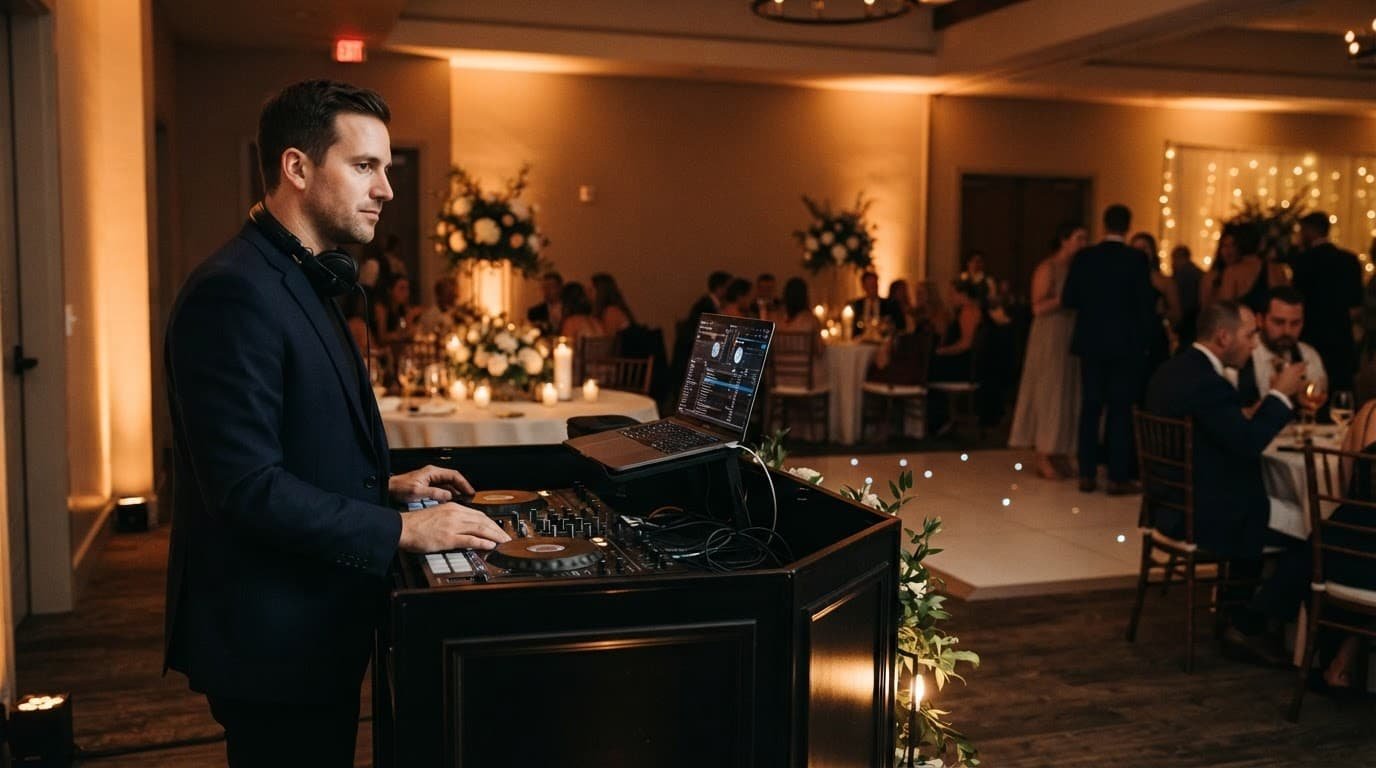
A wedding DJ works well when the party includes announcements, brief welcome remarks, requests, or a late-night lift. A live band offers a more defined performance, while live wedding bands may need more space and setup time. If that provider also handles the reception, wedding DJs can announce one set of parent dances at the wedding reception.
Ask how requests are handled and whether clean edits are reviewed. Confirm the provider’s sound equipment and flexibility when the crowd shifts. Good transitions matter more than a massive library when shaping a party playlist. A few tracks in one style, followed by a familiar change of pace, keeps the party active without overwhelming it.
At a public venue, also confirm who handles music rights. ASCAP’s licensing FAQ explains that live performances and recorded music can require public-performance permission.
Live Musicians Create a Warm Backdrop
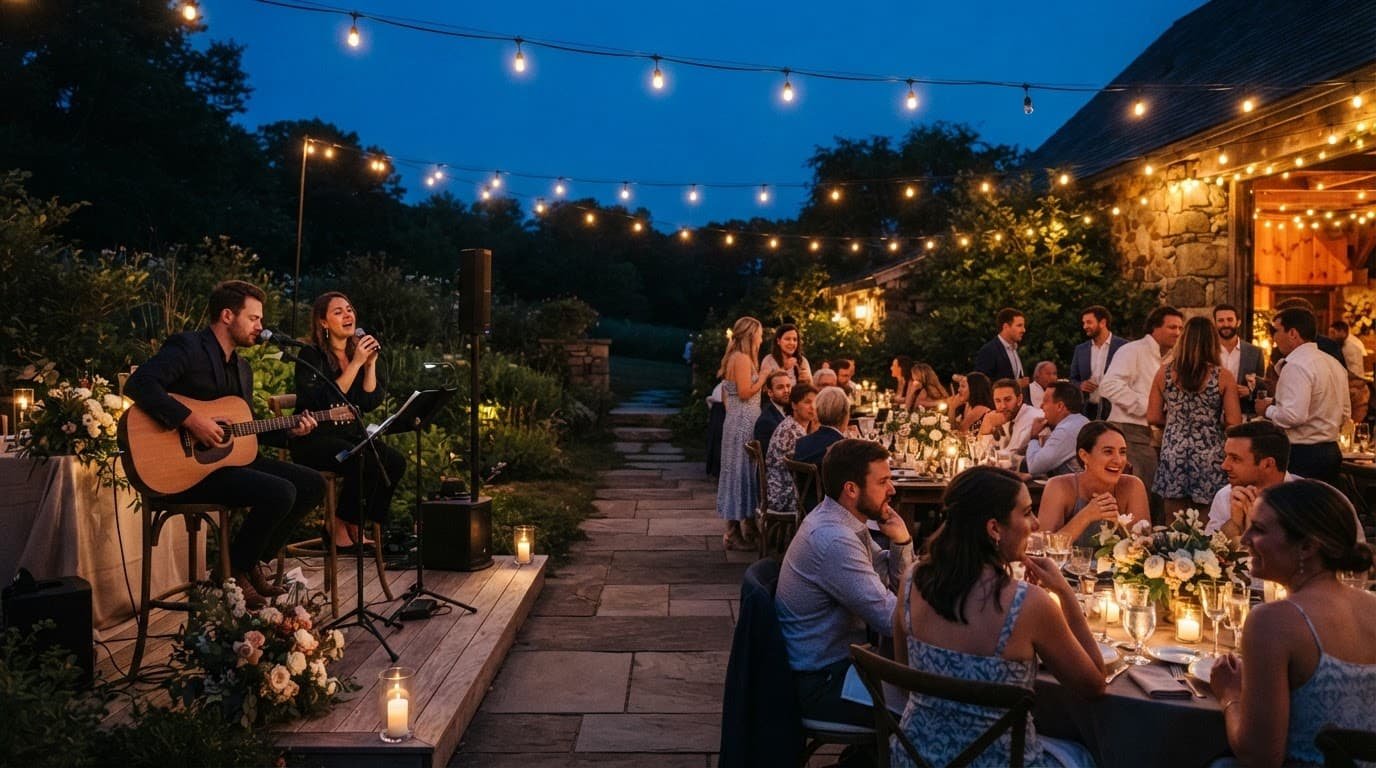
An acoustic duo, jazz trio, string quartet, saxophonist, or solo guitarist can provide a polished backdrop and background music during cocktail hour and dinner. These options work especially well when dinner music should add a little extra style without taking over conversation.
When comparing live musicians, ask about sample sets, break timing, amplification needs, rain procedures, and songs they cannot play. For a hybrid plan, live musicians can open the evening before a DJ handles toasts, a group moment, or the final hour.
Build a Welcome-Party Timeline That Breathes
A two-to-three-hour welcome event needs shape, not a rigid wedding reception schedule. It doesn’t need a full wedding reception music playlist or a reception playlist. Give each portion a clear feeling, and leave room for late arrivals, longer conversations, and a schedule that shifts by ten minutes.
Use Four Simple Music Blocks
This flow fits an evening that begins with drinks and ends before the wedding day.
| Timing | Main Purpose | Music Direction |
|---|---|---|
| First 30 minutes, cocktail hour | Welcome guests | Soul, acoustic covers, relaxed indie, and light jazz |
| Next 45 minutes | Reconnecting and cocktails | Motown, yacht rock, country-pop, and familiar 1990s or 2000s songs |
| Dinner or shared meal | Conversation and toasts | Dinner music, jazz without vocals, mellow singer-songwriter selections, and softer classics |
| Final 30 minutes | Optional lift | Broad dance-pop, singalongs, or one easy group dance |
During the meal, keep dinner music low enough for conversation and toasts. Keep first dance songs, the grand entrance, parent dances, cake cutting, bouquet toss, and garter toss for the wedding day.
The final block is optional. If guests are still talking, keep the party playlist social and leave the dance floor optional rather than forcing a dance set.
Plan Transitions Before Guests Arrive
Mark cue points for the welcome, a toast, meal service, any surprise video, and the final thank-you on the reception timeline. Protect the cake cutting cue by sharing those details with your DJ. A DJ can lower the music, bring in a wireless microphone, and return to the planned mood without dead air.
Live musicians need the same information, including when they’ll take breaks and who gives the signal for a change. Don’t schedule a high-energy track during food service simply because it’s a favorite. Timing gives familiar music its impact.
Keep Reception Milestones for the Wedding Day
The welcome party should hint at the wedding style, not duplicate the reception. Save the grand entrance, first dance, parent dances, cake cutting, bouquet toss, and garter toss, along with emotional family selections, for the wedding reception.
Create a Connection Without Repeating the Reception
Choose one shared thread instead. It could be a favorite artist, a light disco groove, a New England folk influence, or a short instrumental version of a song connected to the couple.
Keep the welcome party flexible. The wedding reception can hold the formal schedule, including cake cutting, bouquet toss, and garter toss.
Give your DJ a clear do-not-play list before the weekend begins. That protects meaningful selections from becoming casual dinner ambience and sets boundaries for the party playlist.
Protect Your Grand Entrance and First Dance
The best grand entrance songs begin quickly, have a steady beat, and fit the couple’s personality. For individual entrances, a focused 15-to-25-second clip often feels tighter than playing a full song for every person.
Choose first dance songs by story and tempo, then select one that feels right to you, not one that’s popular online. Parent dances deserve a conversation about timing and family expectations, including their length and how families want parent dances handled. Confirm whether parent dances need a gentle fade-out for guest comfort, and decide when cake cutting should happen.
If guests respond strongly to classic funk or 2000s singalongs at the welcome party, let that guide the reception playlist. Use those cues to shape reception music, while saving your wedding songs for the wedding reception. The welcome party should inform the wedding day, not take it over.
Make the Playlist Personal but Inclusive
The strongest welcome-party list complements the wedding reception instead of duplicating it. Build around the people you invited, then let your party playlist evolve with familiar doors into the room and open space for the night to change.
Mix Broad Favorites With Your Own Story
“September” by Earth, Wind & Fire, “Lovely Day” by Bill Withers, “Dancing Queen” by ABBA, and “You Make My Dreams” by Hall & Oates bring bright energy without asking guests to dance immediately.
These songs make inviting background music for cocktail hour, while dinner music later can help pace the meal.
For choices that feel less automatic, consider “Love You for a Long Time” by Maggie Rogers, “Everywhere” by Fleetwood Mac, “Put Your Records On” by Corinne Bailey Rae, or “Send Me On My Way” by Rusted Root. Treat these as song ideas, not a template; choose wedding songs with your own history and an inviting rhythm.
Set Clear Boundaries for Requests
Give your music provider three short lists:
- Include five to ten must-play songs, including custom song requests that matter to you as a couple.
- Name a few styles you want heard, such as country, old-school hip-hop, disco, or modern pop.
- Keep a concise list of songs, artists, or themes you don’t want played.
When live music replaces a recorded set, live musicians still need the same concise guidance.
Review the exact version of any song you question. A track marked “clean” can still feel too aggressive for a mixed family crowd, or include awkward gaps that interrupt the mood. Guest requests are useful, but not every one must play; not every selection needs to fill the dance floor.
Confirm Venue Rules and Build Backup Plans
Many music problems begin before the first song, so confirm logistics in writing with the venue and entertainment provider early. Cover live music, power access, and rules for outdoor, historic, or neighborhood locations. These details may also affect the wedding reception.
Ask Questions That Protect the Atmosphere
Ask about noise limits, curfews, approved load-in times, power access, speaker placement, weather options, and whether the venue supplies microphones or sound equipment. A room with hard surfaces may need lower volume and different speaker placement.
For an outdoor New Hampshire gathering, plan for covered equipment, a wind-safe microphone setup, and a weather-ready indoor location. Ask your DJ or live musicians three direct questions: Can you keep dinner music at conversation volume? Who handles breaks, weather, and schedule changes? What equipment is ready if weather changes?
Prepare for a Change Without Panic
Your plan should include downloaded music, a second playback device, spare cables, charged wireless-microphone batteries, and a contact who can approve a quick reception timeline change. If a live band is booked, confirm its backup plan, and don’t depend on venue Wi-Fi for every song.
Rules differ by location, but Texas’ venue licensing overview is a useful reminder that playlists, DJs, and band performances all belong in the licensing conversation.
Frequently Asked Questions
What kind of music works best for a wedding welcome party?
Choose familiar, relaxed styles such as soul, soft rock, acoustic pop, jazz, country, or light Latin music. A varied party playlist helps a mixed-age guest list feel included without forcing everyone onto the dance floor.
Should I hire a DJ or live musicians for the welcome party?
A DJ offers the most flexibility for requests, announcements, schedule changes, and a late-night lift. Live musicians create a warm backdrop for cocktails and dinner, while a hybrid plan can combine live music with a DJ for toasts or the final hour.
How loud should welcome party music be?
Start below conversation level so guests can speak comfortably across a cocktail table. Your DJ or musicians can raise the volume gradually once guests have settled in, but dinner music should remain low enough for conversation and toasts.
Should the welcome party include a grand entrance or first dance?
Usually, these formal moments are best saved for the wedding reception. The welcome party can share a musical thread or a few upbeat, familiar songs without duplicating the grand entrance, first dance, parent dances, or cake cutting.
What should I tell my DJ or live musicians?
Provide a short list of must-play songs, preferred styles, and songs or themes to avoid. Also confirm the timeline, request policy, venue rules, equipment needs, volume expectations, and backup plans for weather or schedule changes.
A Warm Start Makes the Whole Weekend Better
Welcome-party soundtrack doesn’t compete with the reception. It welcomes people in, supports easy conversation, and creates shared moments before the formal celebration begins.
Choose a format that fits the room, then pace the evening in gentle waves. Keep the experience relaxed, personal, and easy to enjoy.
Save the wedding songs tied to the main day’s formal moments for that celebration. Keep first dance songs, the grand entrance, parent dances, cake cutting, bouquet toss, and garter toss there.
Your guests will remember how comfortable it felt to arrive, reconnect, and celebrate together. Whether you choose live music or dinner music, let the volume and format serve your guests. Thoughtful reception music and a welcoming party playlist can make the weekend feel personal and well paced.