A wedding reception can feel completely different once dinner ends and the room begins to glow. The right light brings warmth to wood beams, depth to stone walls, and a polished finish to even the simplest reception space.
Thoughtful uplighting choices can reduce the need for additional wedding decor. Warm white, amber, or restrained blush lighting adds warmth without overwhelming the room. For New Hampshire couples, that means lighting that works with a barn in October, a ballroom in January, a tented celebration in July, or a bright spring reception near the lakes.
A strong lighting plan begins with the room itself, not a color wheel.
Key Takeaways
- Start with the reception room itself, considering usable wall space, ceiling height, architectural features, windows, doors, and the venue’s restrictions.
- Use warm white, amber, champagne, or subtle blush lighting for dinner, then introduce deeper colors such as purple or blue when dancing begins.
- Estimate fixture needs with the usable wall perimeter and spacing, then add focal-point fixtures for areas such as the sweetheart table, cake table, fireplace, or major architectural details.
- Include setup, delivery, pickup, travel, charging, programming, and venue-related requirements in the budget instead of focusing only on the per-fixture rental rate.
- Confirm weather suitability, battery runtime, access timing, cord placement, and backup plans before using uplighting outdoors or in a historic venue.
What Wedding Uplighting Changes in a Reception Room
Wedding uplighting is one layer of broader event lighting. It uses compact LED fixtures placed on the floor and aimed upward along walls, columns, drapery, fireplaces, or architectural details. Instead of lighting guests directly, it gives the perimeter a soft glow and adds dimension behind the tables.
Without uplighting, many reception rooms can look dark around the edges once daylight fades. The dance floor may be bright, while the head table, guest tables, and walls fade into the background. A thoughtful lighting design gives the room a more finished appearance while keeping the focus on the celebration.
Modern LED uplighting offers many colors without the heat of older equipment. Warm white, amber, blush, blue, purple, and custom shades can be programmed for the evening. Broad color washes create a soft, even glow, while tighter column beams add dramatic accents to beams, pillars, or stonework.
The difference is noticeable in photos, too, with color and depth behind the couple instead of a flat, dark wall. Pinspot lighting can add a focused white highlight to the cake table, sweetheart table, or floral centerpieces without changing the room’s overall color.
Wedding Uplighting Ideas for New Hampshire Venues
Every New Hampshire wedding venue has a strong sense of season. The lighting for your wedding reception should support that character, rather than overpower it. The goal is not to turn the room into a nightclub at 6:00 p.m. It is to make the setting look intentional, welcoming, and ready for the celebration ahead.
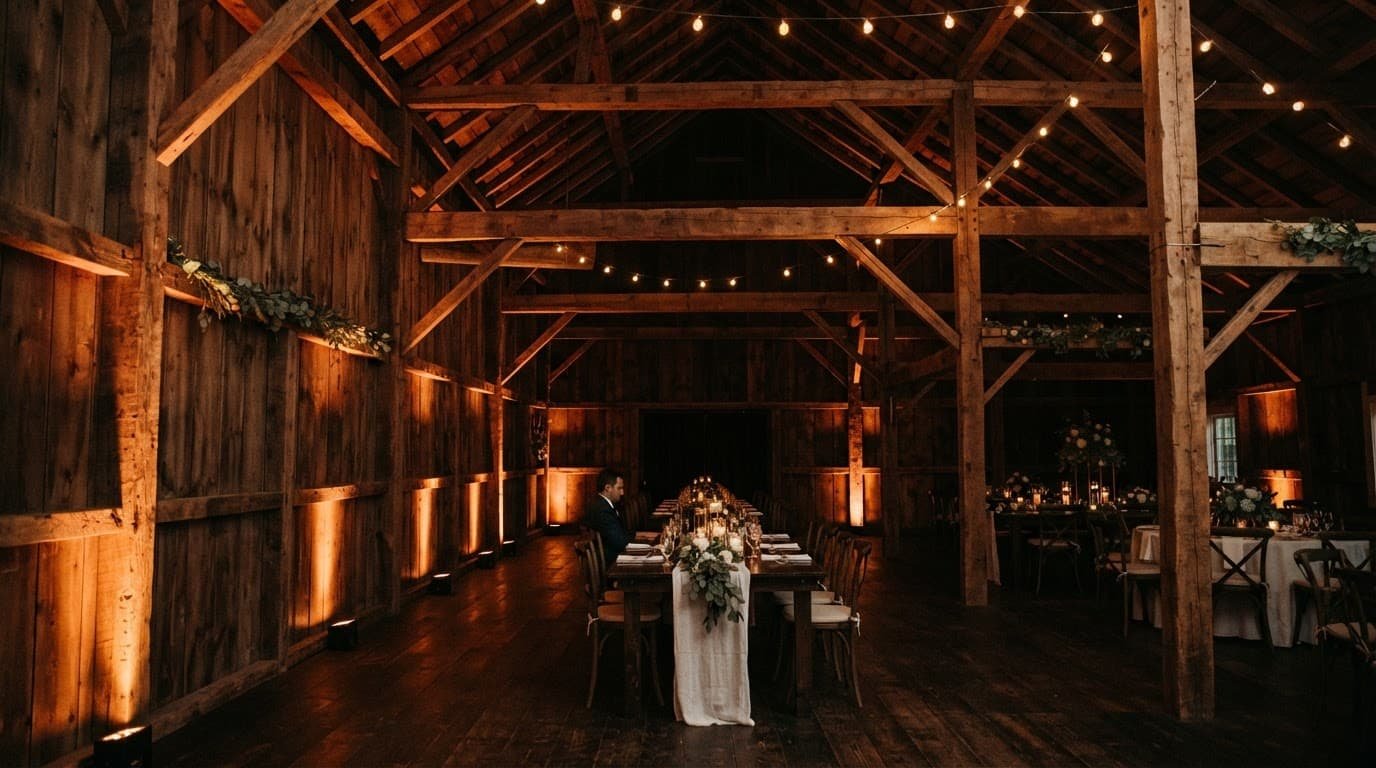
For a spring wedding, warm white uplighting with subtle blush lighting feels clean and romantic. Together, they create a romantic ambiance beside pale florals, greenery, ivory linens, and soft pastel details. Keep the blush subtle so skin tones remain natural in photos.
Summer receptions can handle a little more color, especially after sunset. Blue uplighting paired with warm white table lighting has a fresh look for a tent, ballroom, or reception room with large windows. Save deeper blue for dancing, since too much blue during dinner can make the room feel cool.
Fall celebrations are a natural fit for amber uplighting. The color brings out the warmth in timber frames, brick, stone, and darker wood floors. Pair amber with candlelight and warm white table lighting for a reception that feels rich without looking orange.
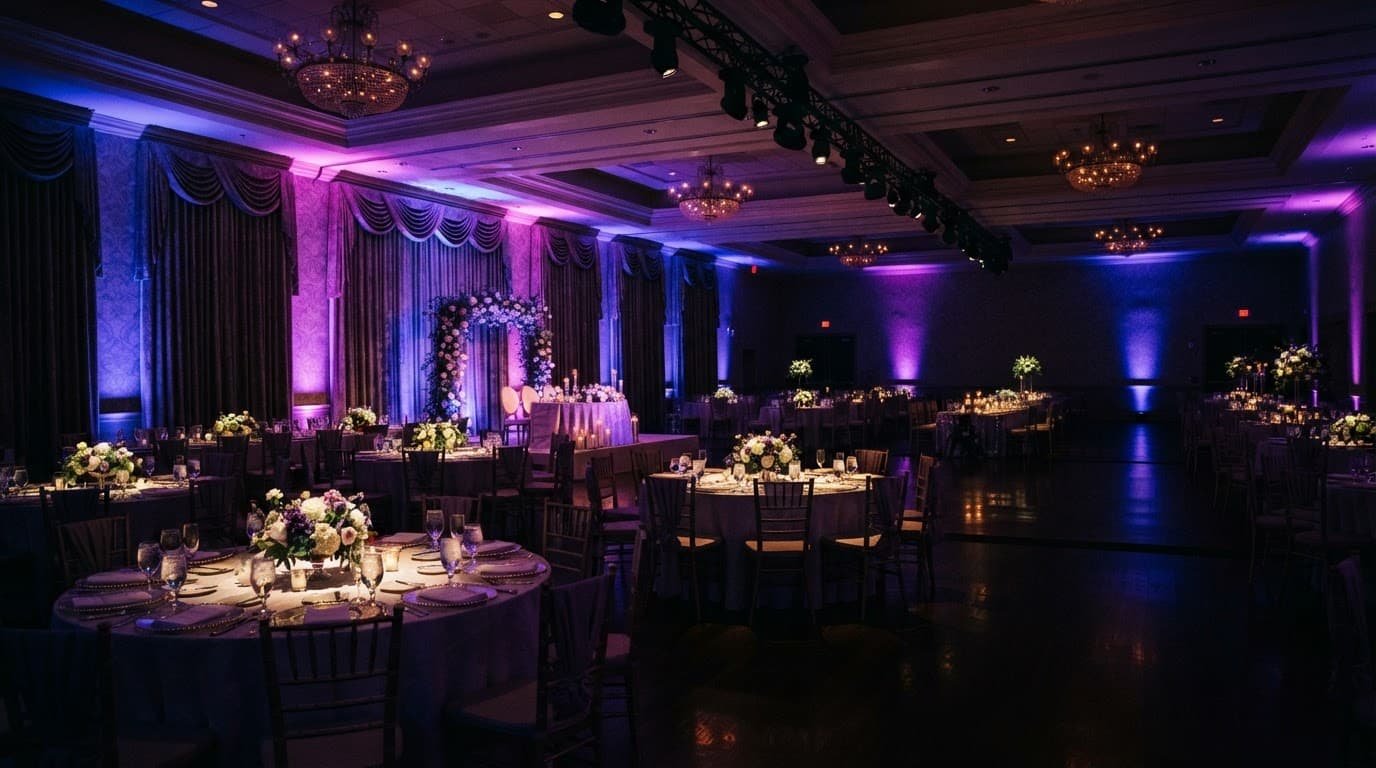
Winter weddings can go in two directions. Warm white and champagne tones create a classic, candlelit look. Deep sapphire, plum, or purple uplighting can create a more dramatic evening setting, especially when the colors are used on walls rather than directly on guests.
The strongest lighting plans usually use one main dinner color, then introduce a bolder shade once open dancing begins. Thoughtful color choices let the room shift naturally from a relaxed meal to a more energetic celebration.
Calculate How Many Uplights Your Room Needs
The number of light fixtures needed depends on usable wall space, ceiling height, doors, windows, and desired coverage. A low-ceiling room with several wall sections needs a different plan than a large room with tall beams and open walls.
Start by measuring the walls you can actually light. Skip floor-to-ceiling windows, wide doorways, service areas, and sections hidden by large furniture. Then use this planning formula:
Fixture count = round up(usable wall perimeter divided by spacing) + focal-point fixtures
Use these spacing guidelines for wide LED uplighting:
| Ceiling Height | Suggested Spacing | Planning Result |
|---|---|---|
| 8 to 10 feet | Every 8 feet | A soft, even wall wash |
| 11 to 14 feet | Every 7 feet | More consistent coverage on taller walls |
| 15 feet or higher | Every 6 feet | Better wall definition, subject to fixture output |
For example, a 50-by-40-foot room has a 180-foot perimeter. If doors and windows remove 30 feet of usable wall space, you have 150 feet to light. At 8-foot spacing, that calls for 19 uplights. Add two fixtures for a sweetheart table wall, fireplace, or major focal point, and the working estimate is 21 fixtures.
This formula is a planning tool, not a substitute for a site visit. Tall timber ceilings, dark walls, mirrors, draping, and uneven stone can change how light spreads. Ask for a walkthrough or detailed room photos before finalizing your count.
Do not place fixtures only where walls are easiest to reach. The darkest photo backgrounds and most visible architectural features should guide the plan.
Professional Lighting Rentals Versus DIY Setups
DIY uplighting can work for a small, simple room with flexible access. Individual uplighting rentals may begin around $19 per fixture, but the fixture rate isn’t the full price. A 20-light setup starts at $380 at that rate, before delivery or pickup, taxes, return deadlines, charging needs, floor-protection requirements, and setup time. Include delivery, pickup, setup, travel, and return-related charges in your wedding budget, not just the fixture rate. Larger or more complex events may benefit from a professionally managed wedding uplighting setup.
| Option | Cost Pattern | What You Handle | Best Fit |
|---|---|---|---|
| DIY uplighting rentals | Per-fixture pricing, plus rental-related charges | Pickup, charging, placement, programming, removal, and return | Small rooms with easy access and a simple color plan |
| Professional lighting | A custom quote based on fixtures, control, setup, and travel | Approving the design and venue plan | Larger receptions, historic spaces, tight timelines, or color changes |
The hidden challenge is usually timing. Many venues have a short vendor load-in window, and tables may already be in place when lighting arrives. Cords can create a safety concern. Some historic spaces restrict tape on floors or walls. Have the lighting company review access timing, cord placement, venue restrictions, and circuit sharing with catering equipment, a band, or a photo booth.
For an outdoor wedding, LED uplighting works well in tents, patios, or locations without convenient outlets when fixtures are battery powered. Confirm the expected battery runtime, recharge plan, wireless control range, and whether the fixture is suitable for damp weather. New Hampshire weather can change quickly, even during a summer reception.
A wireless uplight removes the need for an outlet. It does not make the fixture rainproof or remove the need for a weather backup plan.
Choose Colors for Dinner, Then Change the Energy
Dinner lighting should flatter people, food, and flowers. Amber, warm white, champagne, and blush lighting are reliable choices because they create warmth without overpowering the room. If your wedding color scheme includes navy, burgundy, emerald, or plum, use those shades as accents rather than flooding every wall with saturated color.
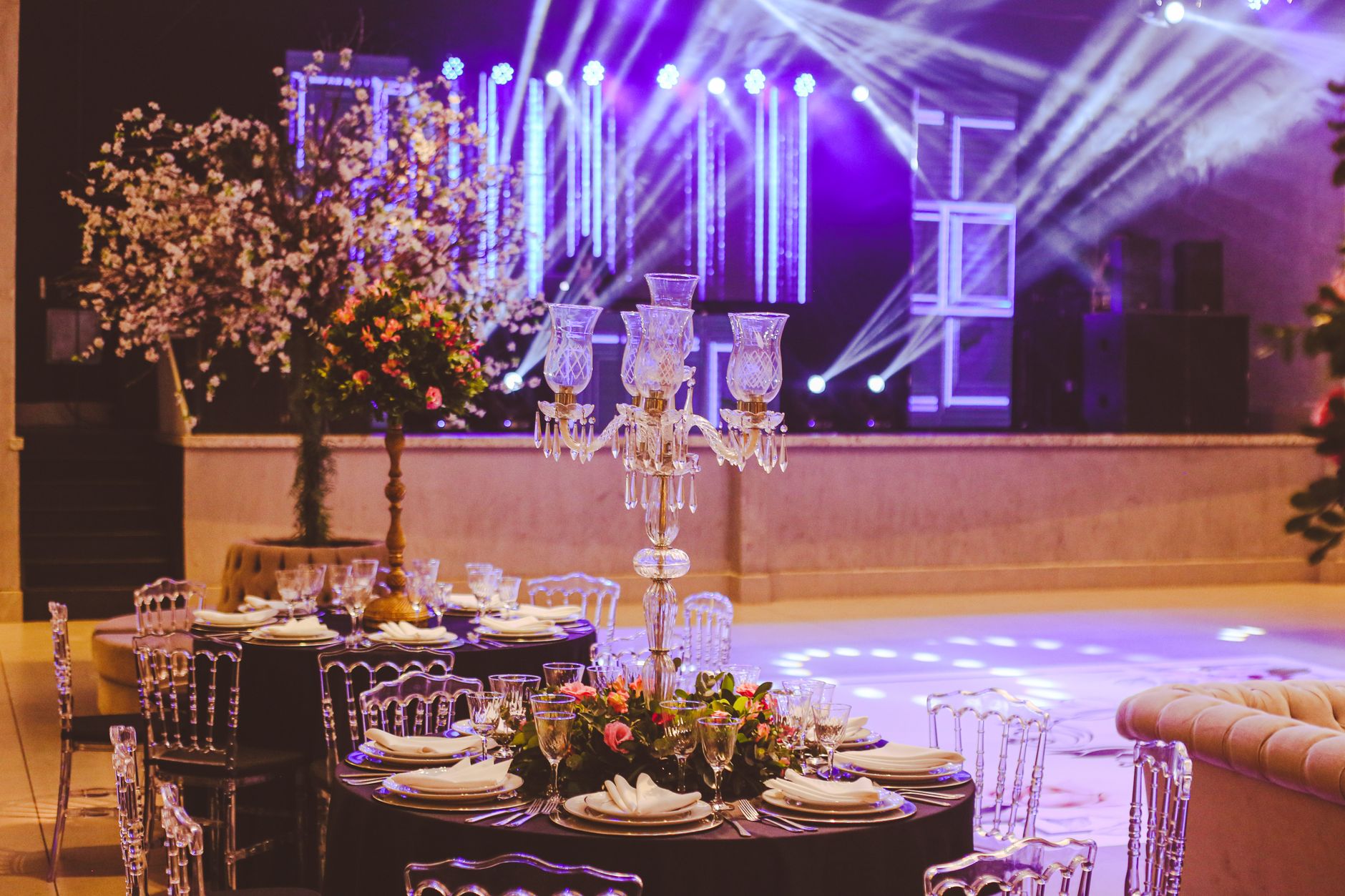
Photo by Vidal Balielo Jr.
When dancing starts, a controlled color change can signal that the party has begun. Purple uplighting, richer blue, or a coordinated mix of two colors can give the dance floor more energy while keeping the room polished. Avoid rapid color loops or flashing wall lights during dinner, speeches, and formal dances.
Pinspot lighting deserves its own place in the plan. Soft ambient lighting sets the room, while pinspots draw the eye to important details. A focused white light on the cake or sweetheart table keeps those moments visible in evening photos, even when the rest of the room shifts to purple or blue.
Questions to Bring to Your Lighting Consultation
Bring these wedding uplighting questions to your DJ, lighting professional, planner, or venue coordinator before you book:
- Can we review the room layout, usable wall space, ceiling height, and focal points together?
- How many fixtures are included, and where will each one be placed?
- Will the uplights be wireless, corded, or a combination of both?
- What rules and restrictions does the wedding venue have for cords, tape, access windows, or historic finishes?
- Can the room stay warm and neutral for dinner, then change colors for dancing?
- Do you offer custom color matching for our palette?
- Is pinspot lighting available for the cake, sweetheart table, head table, or centerpieces?
- Who will program the colors and make changes during the reception?
- What happens if a fixture loses power, needs replacement, or cannot be placed as planned?
Clear answers prevent last-minute surprises and help every vendor work from the same plan.
Frequently Asked Questions
How many uplights do I need for my wedding reception?
The number depends on usable wall space, ceiling height, spacing, and the focal points you want to highlight. Measure the walls that can actually be lit, then add fixtures for areas such as the sweetheart table, fireplace, or cake table.
What colors work best for wedding uplighting?
Warm white, amber, champagne, and subtle blush are reliable choices for dinner because they flatter guests, food, and flowers. Deeper blue, purple, or other saturated colors can be introduced when dancing begins to create more energy.
Should I rent wireless or corded uplights?
Wireless uplights can simplify placement and are useful when outlets are limited, especially for tents and outdoor receptions. Corded fixtures may work well in accessible indoor spaces, but every setup should account for cable safety, venue rules, and equipment access.
Can wedding uplighting be used outdoors?
Battery-powered LED uplights can work in tents, patios, and other outdoor areas when they have adequate runtime and wireless control range. Confirm that the fixtures are suitable for damp conditions, and create a weather backup plan because uplights are not automatically rainproof.
Is professional wedding uplighting worth the cost?
Professional lighting can be worthwhile for large receptions, historic venues, tight load-in windows, complex room layouts, or color changes during the evening. DIY rentals may suit a small, simple room, but the budget should also include pickup, charging, placement, programming, removal, and return requirements.
A Reception That Looks Finished After Dark
The right uplighting does more than add color to a wedding reception. It gives the room depth, warmth, and a stronger sense of occasion once the sun goes down.
Choose colors that fit the season, count fixtures based on the room, and decide early who will handle setup and changes throughout the night. With a reliable lighting plan, your wedding uplighting ideas become part of a polished, memorable celebration.