A tented wedding can look effortless, but clear sound takes planning long before guests take their seats. This wedding sound checklist helps connect the tent layout, power, microphones, music cues, and reception flow into one reliable plan.
The goal is simple: guests should hear the vows, enjoy dinner conversation, catch every toast, and feel the energy rise when dancing begins. Use this wedding sound checklist as one part of your broader wedding planning checklist, starting with the space and building the details around it.
Start With the Tent and Reception Layout
Wedding venue acoustics should be part of your planning from the start. A tent sits somewhere between an indoor room and an open outdoor setting. The canopy can contain sound, while sidewalls, open entrances, wind, and hard surfaces can create uneven volume or echoes.
Your audio provider needs more than the venue name. Share the tent size, guest count, floor plan, sidewall plan, dance-floor location, bar placement, and distances between the ceremony, cocktail hour, and reception.
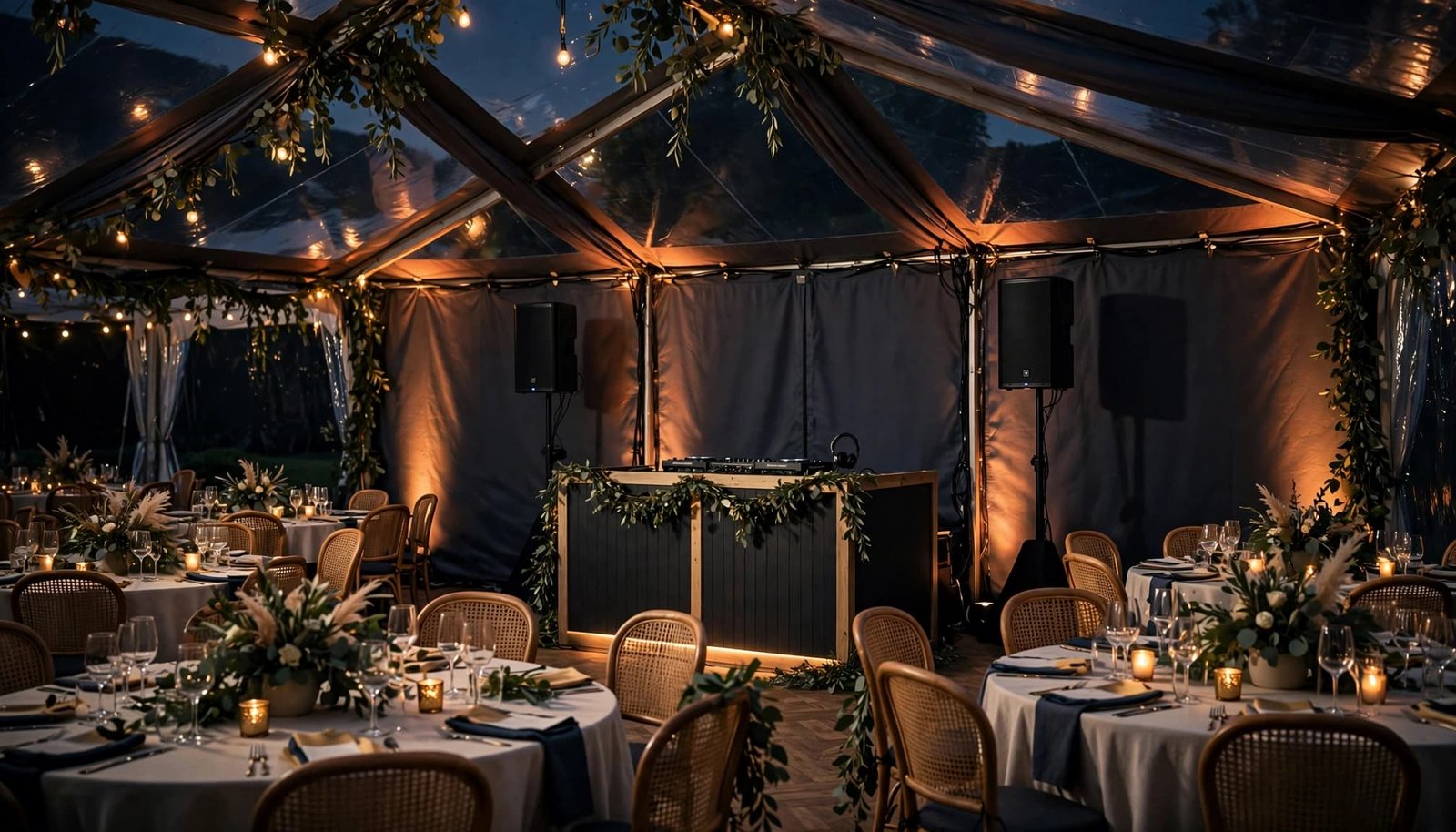
Map Each Sound Zone Before Equipment Arrives
A single tent may need several sound moods during the day. Ceremony audio needs clear spoken words. Cocktail hour music should welcome guests without taking over conversation. Dinner music stays lower, while the dance floor needs fuller, more energetic coverage.
Map the sound equipment against guest seating, tables, exits, and sightlines. Include the speaker, microphone, and DJ or band position in that plan. Speakers need room to project without blocking tables, exits, or guest views.
Plan the transition from ceremony to reception as well. Confirm whether equipment stays in place, moves during cocktail hour, or requires a second setup. If it moves, ask who handles it and how much setup time is available.
If cocktail hour happens across the lawn or on a patio, ask whether it needs its own speaker and music source. Confirm who covers that location and whether the reception setup can move there effectively.
The DJ booth should also fit the room’s flow. Keep it away from buffet lines, busy entrances, and narrow guest walkways when possible.
Confirm Power, Cables, and Weather Details
Outdoor sound problems often start with logistics, not speakers. A power source might be too far away, shared with catering equipment, or unavailable once the tent is fully installed.
Ask the venue where event power is located and whether entertainment has a dedicated circuit. Confirm generator restrictions, catering loads, and load-in access before event day. Your provider may need time to bring equipment through a long path or around the tent.
Confirm cable paths, especially where guests, staff, and wheelchairs will travel. Cables should stay along approved edges or use a venue-approved cable ramp when a crossing cannot be avoided. Keep all connections protected and away from standing water.
More volume is not always the answer. Better speaker placement often gives guests clearer sound at a more comfortable level.
Ask about sound limits, quiet hours, and neighborhood restrictions. Confirm whether the rules apply differently to a DJ and a live band, and when those limits begin.
Discuss the weather plan as well. Wind can affect microphones and send audio away from the seating area. Ask where speakers and microphones will be protected from rain, and decide when the final relocation call will be made. A covered backup location, protected equipment, and a clear decision-maker prevent last-minute confusion.
Confirm the Equipment and Backup Plan
Your sound equipment should be sized around your guest count, tent shape, coverage zones, and event timing. It isn’t about choosing the largest speaker available. It is about giving every guest comfortable, even coverage.
Ask your wedding audio vendor to explain the equipment in plain language. You don’t need to become an audio expert, but you should understand what is included and why it fits your event.
Confirm the specific provider’s responsibilities, too. A wedding DJ typically supplies playback, mixing, announcements, and cue management. A wedding band may need stage space, power, inputs, monitors, breaks, and a separate plan for recorded music between sets. An emcee needs a dependable microphone, run-of-show, and clear communication with the DJ or bandleader. Confirm these details with your specific provider.
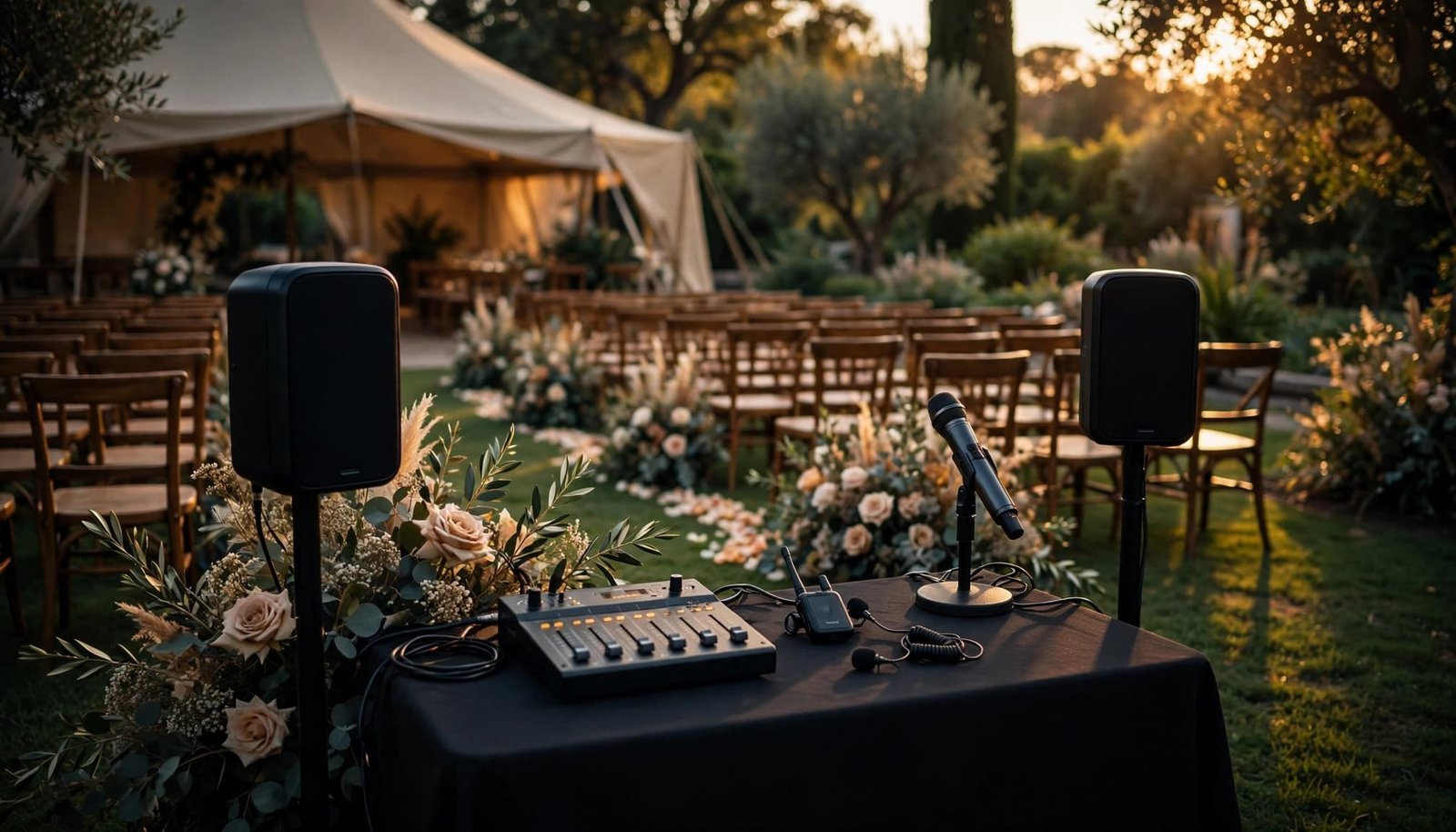
Ask What Speakers and Microphones Are Included
Request a written list of the planned speakers, microphones, stands, mixer, cables, and power accessories. You might hear a model name such as an Electro-Voice EKX-15P, but the useful question is whether the proposed system fits your actual tent and seating arrangement.
For the ceremony, ask how the officiant, readers, musicians, and couple will be heard. A lapel microphone may suit the officiant, while a separate handheld or lectern microphone may work better for readings. A wireless microphone system can be appropriate, but clothing noise, wind, battery life, and distance affect the choice.
Ask where microphones will be placed for the officiant, readers, musicians, couple, and toast speakers. The right placement helps prevent blocked sound and unnecessary handling noise.
Reception microphones matter, too. Toasts and announcements need clear coverage, especially when guests are seated far from the head table.
Know Who Is Managing Sound During the Event
Some rentals are delivered and left for a family member to operate. Others include an on-site technician who handles music cues, microphone levels, announcements, and unexpected changes. Those are very different services.
Ask whether an on-site technician will be present during the ceremony-to-reception transition, soundcheck, and dancing. If equipment must move between spaces, confirm who handles the transition and how much time it requires.
Request a written setup timeline covering load-in, soundcheck in the actual tent configuration, equipment moves, and teardown. An open-sided tent behaves differently than a fully enclosed one, and a quiet afternoon can sound much different once guests arrive.
Ask About the Backup Plan
The vows, introductions, and toasts don’t have a second take. Ask whether the provider brings backup playback, backup microphones, spare batteries, replacement cables, extra adapters, and a backup microphone.
Also ask what happens if a wireless microphone stops working during the ceremony. The answer should be practical and clear, not vague. Confirm whether the company carries liability insurance and can provide a certificate if your venue requires one.
Build a Wedding Sound Checklist Around Real Moments
Your wedding playlist should not be one long collection of favorite songs. Start with a wedding song checklist that organizes cues around each part of the day.

Give the Ceremony Its Own Music Plan
Ceremony music begins before anyone walks down the aisle. Pre-ceremony music welcomes guests and sets the tone while people find their seats. Processional music needs a clear start point, especially if parents, the bridal party, and the couple enter separately.
The ceremony plan should also include music for a unity ceremony or signing, if applicable, and a confident exit song when the ceremony ends. Give your DJ, bandleader, or emcee the exact version, starting point, fade, and expected duration. Acoustic covers, live recordings, and remastered versions can feel very different in the moment.
| Wedding moment | Music decision to make |
|---|---|
| Guest arrival | Choose pre-ceremony music and its general mood |
| Parent entrance | Assign parent entrance music, if applicable |
| Bridal party entrance | Choose processional music and confirm the walking order |
| Couple’s entrance | Confirm the exact cue and song version |
| Signing or unity moment | Decide whether background music is needed |
| Ceremony exit | Select recessional music with a clear ending |
Plan the handoff from the ceremony to the reception in advance. Confirm who triggers the exit cue, directs guests toward cocktail hour, and starts the grand entrance. This prevents confusion when the DJ, bandleader, or emcee changes locations.
A cue-based plan is more useful than chasing a fixed number of songs. Your DJ can manage transitions, timing, and volume once every important moment is identified.
Match Cocktail Hour, Dinner, and Dancing to the Mood
Cocktail hour music should be polished and relaxed. Guests are greeting family, finding drinks, and taking photos. Light pop, jazz, acoustic selections, Motown, or a personal mix can all work when the volume leaves room for conversation.
Dinner music should stay in the background. It can reflect your taste without competing with table conversation or service announcements. The energy can build after formalities, when guests are ready for the dance floor.
Reception music needs a separate plan for the grand entrance, first dance song, parent dances, cake cutting song, open dancing, and final dance song. Include the father daughter dance and mother son dance as separate selections when applicable. Keep the parent entrance cue separate from these dance choices so nobody triggers the wrong song.
A wedding band may need set breaks, live and recorded versions, stage power, and someone responsible for announcements. A DJ generally manages playback and transitions directly, but both options need clear timing and cue notes.
For a first dance, about two and a half to three minutes often feels comfortable. A longer favorite can usually fade at a natural point.
For more ideas that fit different guest groups and reception styles, browse these wedding reception song ideas.
Compare DJ Services Beyond the Package Name
Wedding DJ packages are often labeled with names that sound similar, but the included services can be very different. Compare the actual scope of work, not the title on the proposal.
A dependable quote explains whether it covers the ceremony, cocktail hour, reception, or only part of the day. It should also identify performance hours, overtime rates, travel, setup, breakdown, lighting, microphones, and sound equipment.
The package should specify whether speakers, ceremony microphones, reception microphones, stands, cabling, power distribution, lighting, and an operator are included. Confirm which items are provided by the DJ, venue, or another vendor.
Clarify Ceremony and Reception Coverage
A ceremony across the property from the tent may require separate sound coverage. Confirm setup time, load-in access, and speaker and microphone placement before booking.
Ask how equipment will move safely between locations before cocktail hour. Confirm cable crossings, weather relocation plans, venue sound limits, and the person responsible for the transition.
Ask these questions before signing:
- What are the overtime rate and soundcheck schedule?
- Is backup gear available if a microphone or speaker fails?
- Who provides power, rain protection, and weather-ready covers?
- Who remains on-site during dancing?
- How much time is needed for setup and a safe equipment transition?
Ask whether ceremony audio is priced separately or included in the same package. Confirm whether wireless microphones, ceremony music cues, speakers, and on-site coordination are part of the written quote.
Professional DJ and MC services can include ceremony music, reception entertainment, sound systems, microphones, lighting, and personalized music planning. Review the details of professional DJ and MC services before assuming every item is included.
Confirm MC Duties and Vendor Coordination
A wedding DJ often does more than play music. They may introduce the wedding party, invite guests to dinner, announce toasts, cue dances, and keep formal moments moving at a comfortable pace.
Clarify whether the wedding DJ, a live bandleader, or a separate emcee handles announcements and formal cues. Confirm who keeps the reception moving when music changes or the band takes a break.
Ask how the DJ coordinates with your planner, photographer, caterer, venue manager, and live performers. If you are adding a wedding band, ask whether it supplies microphones, a mixer, stage monitoring, instruments, power requirements, and between-set playback, or whether the DJ or venue must provide them.
Discuss inputs, timing, and sound needs with any saxophonist, violinist, percussionist, or singer before wedding week. Get each vendor’s responsibilities in writing so the reception does not depend on last-minute assumptions.
Put the Final Details in Writing
Treat the final written document as the last review of your wedding song checklist. Share one updated timeline with every key vendor, and keep a copy with a trusted wedding party member.
Provide Clear Names, Cues, and Music Versions
Give your DJ phonetic spellings for wedding party members, parents, and toast speakers. Confirm the exact artist, recording, edit, starting cue, ending cue, and pronunciation notes for every formal moment.
Label parent entrance music separately from parent dances, the bridal-party entrance, the couple’s entrance, and the recessional. Include a concise must-play list, a do-not-play list, and a few genres or artists that fit your crowd.
Avoid a rigid minute-by-minute dance playlist. An experienced DJ needs room to respond to the people actually on the floor.
Choose One Day-Of Contact
Pick one calm person who can approve minor timeline changes or answer quick questions. It may be your planner, venue coordinator, or a reliable family member.
That contact should know the ceremony-to-cocktail-hour transition, who approves a weather relocation, and where the DJ, band, or emcee will set up. They should also know how sound-limit or power questions get escalated.
You should not be handling sound questions while getting ready.
Key Takeaways for a Tented Wedding Reception
- Plan sound around the tent layout, guest count, power access, and distance between each event space.
- Treat ceremony audio, cocktail hour music, dinner music, and dancing as separate parts of one connected day.
- Ask for a written list of speakers, microphones, staffing, backup equipment, setup details, and weather preparation.
- Confirm safe cable routes, sound limits, load-in access, and power availability with the venue early.
- Use a cue-based wedding music checklist so every entrance, toast, dance, and final song has a clear plan.
For more practical planning support, explore these wedding and event planning tips.
Frequently Asked Questions
How far in advance should we plan wedding music and sound?
Start the conversation with your DJ and venue as soon as your date and location are confirmed. Final music selections and timeline details should follow the deadline set by your entertainment provider, since every company plans differently.
A final review two to four weeks before the wedding is often a practical time to confirm names, pronunciations, song versions, do-not-play requests, venue changes, and weather details.
Do we need separate sound systems for the ceremony and reception?
Not always, but you should never assume one system covers multiple locations. The answer depends on the distance between spaces, your guest count, the day’s timing, and whether equipment can move without interrupting cocktail hour or reception setup.
Ask your DJ or audio vendor to explain the proposed coverage for each area in writing.
What should happen if a microphone fails during our vows?
Your provider should have a backup plan that may include spare microphones, fresh batteries, replacement cables, and tested playback equipment. Ask about that plan before booking, especially for an outdoor ceremony where wind and distance can create added challenges.
The most important point is that the officiant, readers, DJ, and day-of contact know who is responsible for each cue.
What should we ask a wedding audio vendor before booking?
Ask who handles the ceremony-to-reception transition and whether the provider is a DJ, live band, or emcee. Confirm when setup and soundcheck happen, where speakers and microphones will be placed, and what power and cable protections are needed.
Also confirm sound limits and quiet hours, along with the weather relocation plan. Ask who responds if playback, a microphone, power, or another critical component experiences an audio equipment failure.
Final Thoughts
A tented wedding reception sounds its best when equipment, music, power, and timing are planned as one coordinated experience. Guests should remember the vows, the laughter during toasts, and the full dance floor, not the speakers.
A thoughtful wedding sound checklist gives your DJ, venue, and wedding team the details they need to keep every important moment clear and comfortable.