A reception can have beautiful music and a full dance floor, yet still feel uncomfortable if every guest hears the same volume all night. Well-planned wedding reception sound zones let guests enjoy dinner conversation, hear every toast, and step into a lively dance floor when the time is right.
The goal is not to make the room louder. It is to make each part of the celebration sound appropriate for what is happening there.
A thoughtful audio plan begins with the floor plan, the timeline, and the people you want to keep comfortable.
Map Reception Areas Before Setup
A reception is rarely one room with one purpose. It moves through dinner, announcements, toasts, special dances, open dancing, and often a lounge or patio where guests can visit away from the music.
Review the venue layout before setup. Reception coverage should follow dining, speaking, dancing, and guest-traffic patterns. Check venue restrictions, including sound limiters, as you map each zone.
Then plan sound coverage around those real moments rather than placing speakers wherever space is available.
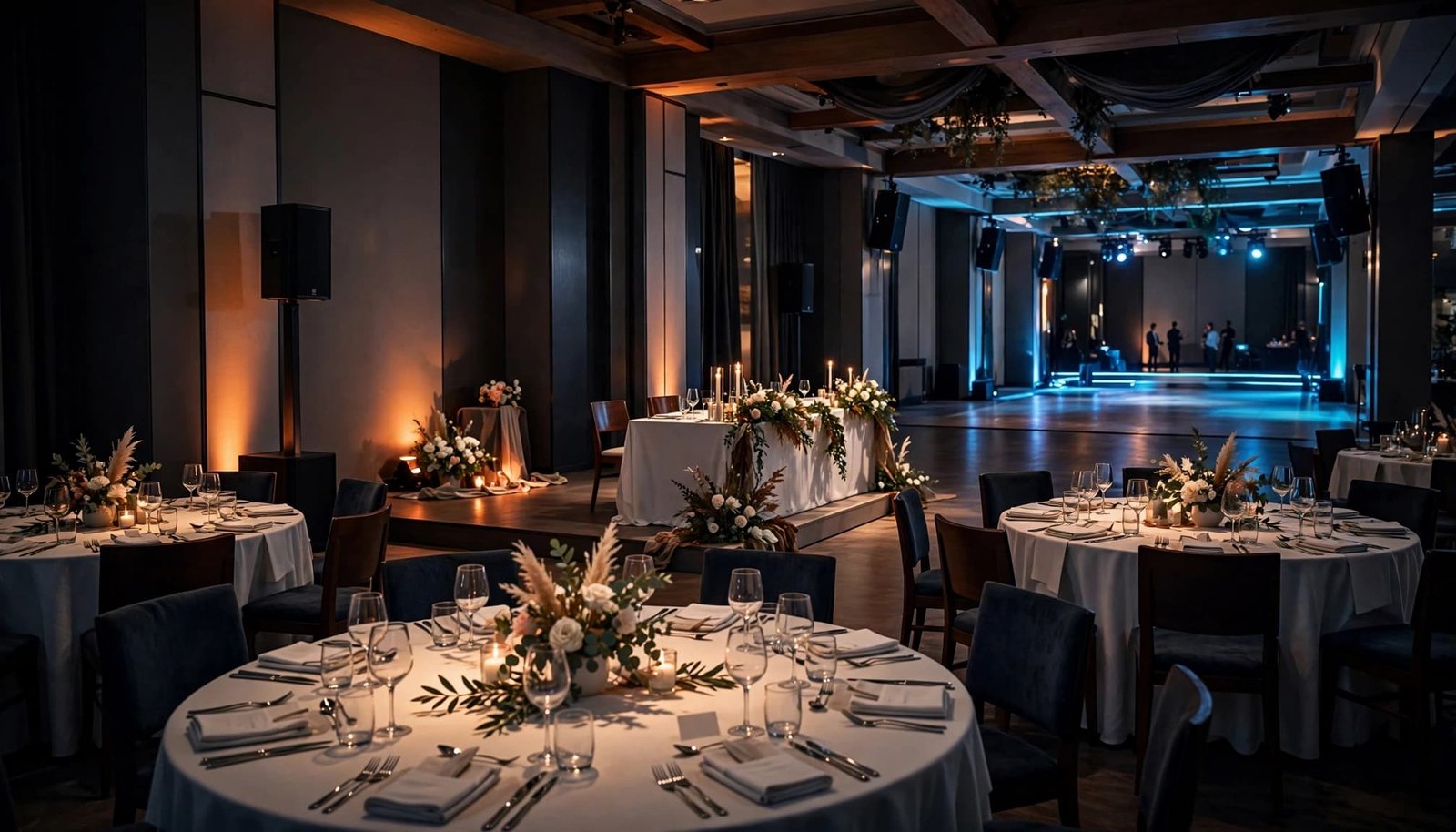
Give Dinner Its Own Comfortable Sound Level
Dinner music should fill quiet gaps without asking guests to compete with it. A full dining room already has conversation, table service, glassware, and family members catching up after months apart.
Set comfortable volume levels for the room’s purpose. In a banquet hall, a well-planned wedding sound system can support background music without overwhelming nearby tables.
Aim speakers toward the center of the room or away from tables when possible. Guests nearest the dance floor can expect more energy later, but nobody should feel like they are eating beside a concert speaker.
Avoid placing audio equipment directly beside elderly relatives, babies, guests with hearing sensitivities, food stations, or the guest book table. A quieter seating option makes the reception more welcoming for everyone.
Treat Toasts as a Separate Speech Zone
Toasts need clear speech at every table, not louder music. The DJ or audio provider should know where speakers will stand, whether the head table changes location, and how the microphone will be passed.
A toast area often works best with a handheld wireless microphone and sound coverage directed across the room. Background music should be fully lowered before the first speaker begins. That small pause gives guests a clear signal that an important moment is starting.
Let the Dance Floor Carry the Energy
The dance-floor zone can have more volume, bass, and lighting energy once formalities are complete. Powered speakers should project inward toward dancers rather than directly across dinner seating or toward nearby homes.
Thoughtful placement and appropriate levels can preserve dance-floor energy even when a venue uses sound limiters. This is where a professional system earns its value, allowing music to feel full near the dance floor while conversation areas stay more comfortable.
For couples planning ceremony audio, reception music, and hosting support together, a professional wedding dj can coordinate professional ceremony and reception DJ services around the full flow of the day.
Speaker Placement Shapes Venue Sound Quality
Speaker placement matters as much as the equipment itself. A powerful system in the wrong position creates harsh front tables, weak back tables, and a room that sounds louder without sounding clearer. Poor placement can also force unnecessary level increases when sound limiters cap the system.
Walk the venue before finalizing the layout. Look for hard walls, glass, exposed beams, high ceilings, low tent tops, kitchen doors, bar traffic, and acoustic challenges that affect venue acoustics.
Use Coverage, Not One Overworked Speaker
A banquet hall can develop dead zones when sound comes from only one DJ table or one pair of powered speakers. Turning that system up may help the furthest table, but it can overwhelm guests closest to it.
Additional sound coverage may be preferable to simply increasing the primary system. Adding powered speakers can improve sound distribution without overworking the main setup.
For a long or unusually large room, a provider may consider line array speakers, but equipment should match the venue rather than follow a standard formula. The final setup depends on guest count, ceiling height, table placement, and the distance to the last row of guests.
The best dance-floor sound does not need to dominate every chair in the room.
In a banquet hall with stone, glass, hardwood, or high ceilings, bass-heavy music can become muddy. Existing acoustic treatment may help control reflections, but careful placement and gradual adjustments usually work better than chasing volume.
Keep Speakers Behind Microphones
Feedback happens when a microphone picks up sound from a speaker and repeats it through the system. Keep microphones behind the main speakers whenever possible, and point speaker coverage away from the person speaking.
Shure recommends placing microphones closer to the intended voice source, using directional microphones, and reducing the number of open microphones to improve gain before feedback. Their guide on controlling sound-system feedback is a useful reminder that placement and microphone handling go together.
Run a sound check at every speaking position before guests arrive. Test the system against the venue’s sound limiters during setup. A microphone that sounds clear at the DJ table may behave differently near the head table or under a low tent ceiling, where sound limiters can make level problems more obvious.
Wireless Microphones Need a Clear Role
Music is important, but vows, readings, introductions, and toasts are often the moments guests remember most. A professional wedding dj can coordinate wireless microphones, introductions, and toasts so each voice has a plan before the wedding day begins.
A quality wireless system can keep the room looking polished and reduce visible cabling. Check the audio equipment, use fresh batteries, coordinate frequencies, and prepare a backup option. Test for audio interference from nearby wireless devices or venue equipment before guests arrive.
Match the Microphone to the Speaker
A discreet lavalier or headset can work well for an officiant when it is properly fitted and tested. Readers and guests giving toasts often do best with a handheld wireless microphone, because it can move easily between speakers.
One Click Events notes that wireless handheld microphones for weddings are a reliable option for readers and guest speakers when held at mouth level. Encourage speakers to keep the microphone close, rather than resting it at chest height.
A stand-mounted wired microphone can also be a practical backup for a toast area, especially when several people will speak in one place.
Fewer Open Microphones Usually Sound Better
Not every person needs an open microphone at the same time. Unused microphones can transmit background noise, and extra live microphones make feedback more likely.
Assign microphones in advance. The officiant may need one, a reader may need another, and the toast microphone should be ready before dinner ends. Anyone not speaking should have their microphone muted.
Shure’s audio-system guidance explains that each additional open microphone reduces available gain before feedback. Speech should remain intelligible even when sound limiters restrict the venue’s overall system. A simple, organized microphone plan often sounds more professional than a crowded stage setup.
Outdoor Weddings Need Independent Audio Planning
Open-air receptions behave differently from a contained banquet hall. Wind, lawn size, traffic noise, uneven ground, and distant power sources all affect the plan.
Do not assume ceremony sound, cocktail hour music, and reception dancing can share one speaker setup. Separate spaces often need independent systems because one audio setup rarely provides even coverage as guests move. Check transitions early, especially when sound limiters may affect volume changes between spaces.
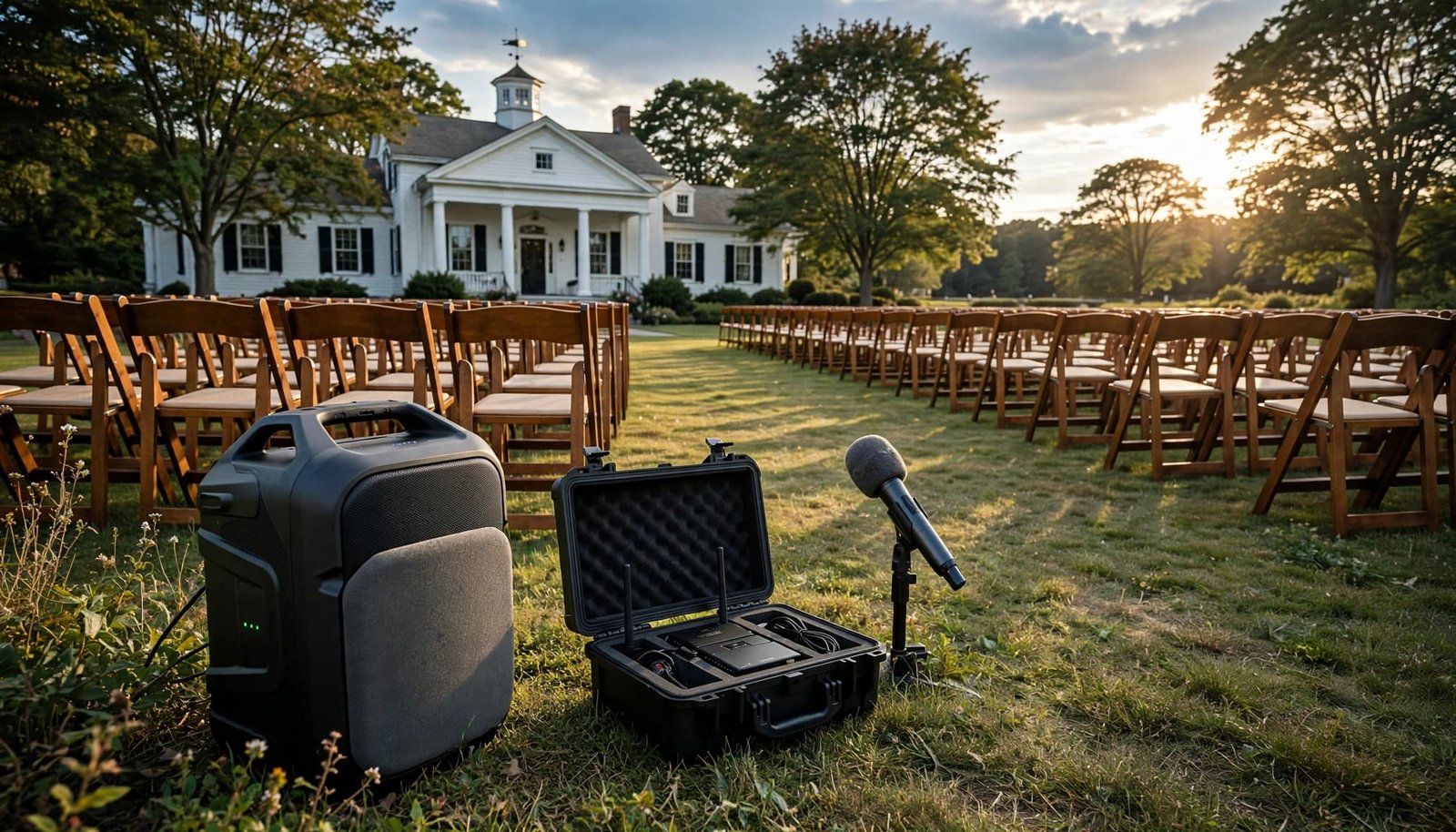
Plan for Wind, Power, and Guest Movement
Wind can affect microphone clarity and carry sound away from guests. Place powered speakers near the front of the ceremony area, aimed toward seating, to create consistent sound coverage without pushing high volume from a distant location.
If sound limiters are active, raising volume to overcome wind may not be possible. Test the system outdoors and set realistic levels before guests arrive.
Confirm the power source early. A wall outlet may share a circuit with catering, lighting, coffee service, or other vendors. Long cables also need to stay away from exits, aisles, stairs, doorways, and accessible routes.
Review venue rules for noise ordinances and decibel limits before finalizing the plan. Sound limiters may restrict output, so the team should know their settings and reset procedures.
Battery-powered equipment can be useful where power is limited, but it should be selected around the actual setup time and production needs. Outdoor equipment also needs weather protection and a plan for quick changes.
Keep Cocktail Hour Social, Not Loud
If cocktail hour takes place on a patio, lawn, or separate room, it usually needs its own low-level sound coverage. Relying on spillover from the reception rarely reaches guests evenly.
For the reception or dance floor, use powered speakers positioned for the active guest area. Sound limiters can prevent volume increases when sound spills toward nearby homes or quiet spaces.
The right level lets guests hear the music without raising their voices at the bar. Save the fuller sound and higher energy for open dancing later in the evening.
Work Around Sound Limiters and Recording Needs
Every venue has its own sound expectations. Some use sound limiters, some restrict outdoor music after a certain hour, and some limit subwoofers or speaker locations.
Ask for these rules in writing before finalizing the entertainment plan. Venue sound limiters can affect equipment choices and placement. “Keep it reasonable” isn’t a useful instruction when the DJ, venue coordinator, and couple may have different ideas of what that means.
Confirm Who Makes Volume Decisions
Find out where volume is measured, who monitors it, and who has authority to request changes. Sound limiters may be monitored by a venue manager, coordinator, property owner, or designated staff member.
Ask about curfews, nearby residences, noise ordinances, amplified music policies, and whether the rules change between indoor and outdoor areas. Ask whether outdoor sound limiters require a separate setup or earlier cutoff. If the venue limits sound, a well-positioned system can still give the dance floor energy without placing unnecessary pressure on the overall volume.
Plan Audio for the Wedding Video
A professional sound system can help videographers capture clearer ceremony audio and toasts, but video recording should be discussed early. Sound limiters can affect the main system, so confirm whether the videographer can receive clean audio feeds. Schedule a sound check to test the feed and microphone positions before formal moments.
Share the timeline with the DJ, videographer, and planner. They should know when the ceremony begins, who is speaking, when toasts start, and where formal dances take place. Good coordination reduces avoidable surprises during moments that cannot be repeated.
Build the Audio Plan Into the Wedding Timeline
Sound zones work best when the full event team follows one shared timeline. That plan should reflect the venue layout and sound limiters. Music changes should support the room rather than interrupt it.
Use a final walk-through to test the actual setup after tables, decor, and catering stations are in place. In a banquet hall, check whether a long room might benefit from line array speakers.
| Reception Moment | Audio Goal | Planning Detail |
|---|---|---|
| Cocktail hour | Relaxed social music | Cover the separate space at a conversational level |
| Dinner | Warm background music | Keep speaker output away from seated guests |
| Toasts | Clear speech for all tables | Test the microphone and speaker position |
| Dancing | Full, focused energy | Use powered speakers to aim main coverage toward the dance floor |
The most useful final checks are simple:
- Confirm speaker locations, powered speakers, power access, cable routes, and any quiet seating areas.
- Complete a final sound check for ceremony music, microphones, introductions, toast positions, and dance-floor sound.
- Review the toast order, special dances, live music needs, backup plan, and venue rules for sound limiters.
- Give one person authority to approve timing, volume levels, and plans for sound limiters.
Couples can find more practical advice from a professional wedding dj through wedding DJ and event planning tips when building the music timeline around the venue and their guests.
Key Takeaways
A well-planned reception audio approach keeps dinner conversation comfortable, toasts clear, and dancing energetic without treating every guest area the same.
Plan each space around its purpose. Check venue rules, including sound limiters, before setup, then coordinate speaker placement, microphones, and timing with the full vendor team.
A quiet lounge, clear walkways, and thoughtful seating choices help every guest enjoy the reception.
Frequently Asked Questions
How many separate audio areas does a wedding reception need?
There is no fixed number. Many weddings need separate coverage for the ceremony, cocktail hour, dinner and toasts, dance floor, and any patio or lounge area.
A smaller banquet hall may combine dinner and dancing with careful speaker placement. A large property with several rooms or outdoor areas may need more independent systems.
Where should speakers go for wedding toasts?
Place speakers so they project toward guests, not directly into microphones or beside the closest tables. The toast speaker should be able to stand comfortably without blocking service routes or formal photos.
Always test that position before guests arrive. Shure’s SM58 placement guidance also recommends testing microphone placement before a performance to reduce feedback and unwanted sound.
Can dinner music and dance music use the same system?
They can, but they should not use the same settings. A wedding sound system needs lower volume and a wider, softer feel for dinner. Dancing needs more focus and energy around the floor.
Powered speakers and the rest of the system should adapt as the event changes. Adjust them within the venue’s sound limiters and other restrictions, rather than keeping one level from introductions through the final song.
Sound That Supports Every Reception Moment
The strongest reception audio plans let guests hear the moments that matter without making the equipment the center of attention. Dinner conversations stay comfortable, toasts reach every table, and the dance floor gets the energy it deserves.
When the venue layout, microphone plan, and timeline work together, good sound feels natural.