A room flip can change the feeling of a wedding reception in minutes. One moment, guests are finishing dinner and visiting at their tables. Soon after, the lights shift, the dance floor opens, and the celebration needs a clear new direction.
Thoughtful music for the reception keeps that change from feeling rushed or confusing. With the right cues, volume, song choices, and coordination, wedding guests know where to go and feel ready to join the next part of the night.
Why a Room Flip Needs a Music Plan
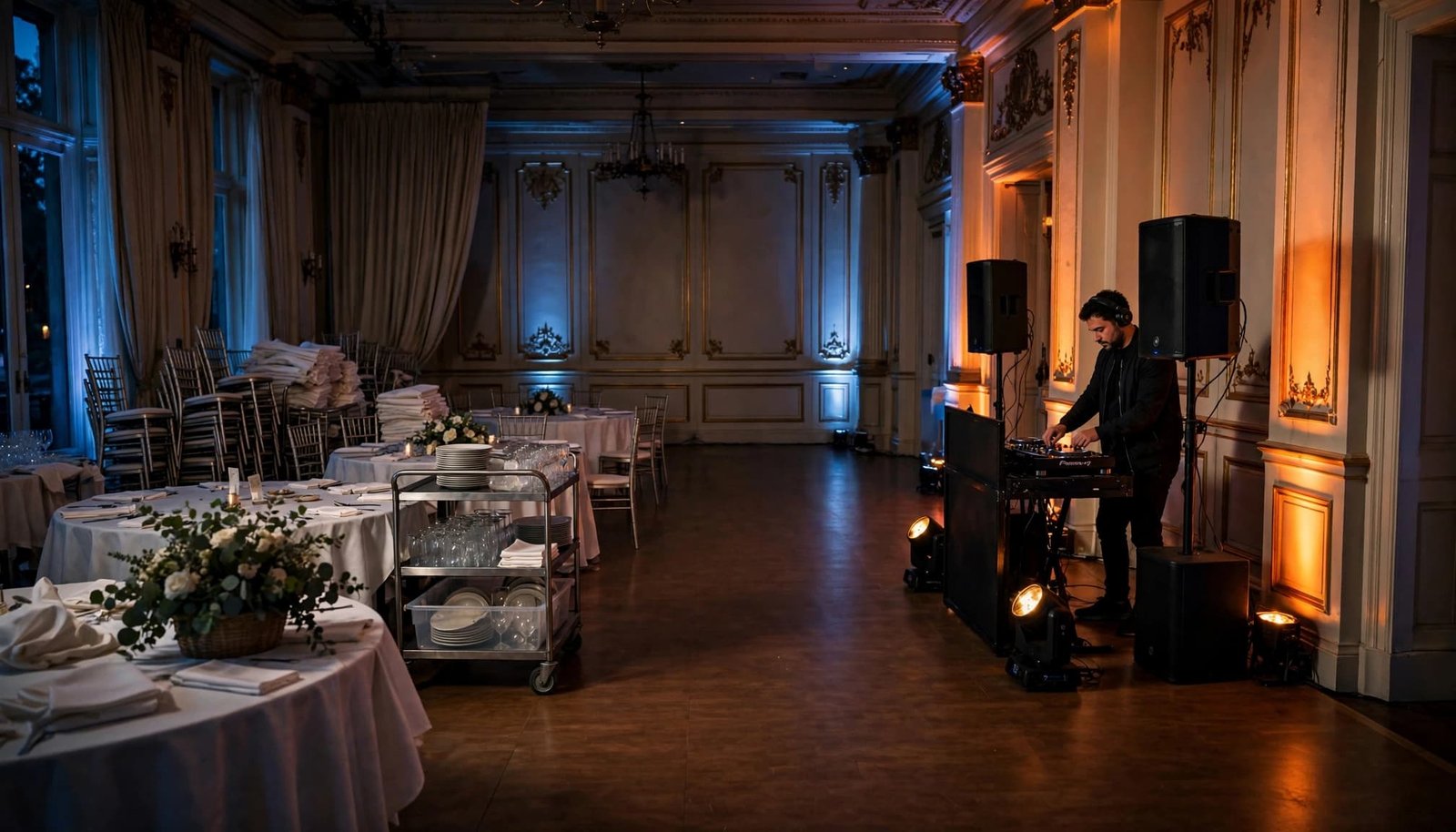
A room flip is not only a furniture change. It is a guest-flow change, a lighting change, and often a sound transition. Music gives the room a steady pulse while venue staff clear tables, vendors reset the space, and guests move toward the bar, lounge, patio, or dance floor.
Set the Cue Before the Room Changes
Talk through the hard stop for dinner with your venue coordinator, planner, photographer, caterer, and entertainment team. They should know when dinner service ends, when toasts are complete, and whether the room needs ten quiet minutes or a stronger musical lift.
Short, polished announcements help. A clear invitation to visit the bar, enjoy dessert, or gather near the dance floor gives guests something to do while the room changes around them. Silence during a room flip can make people hesitate. Purposeful music keeps the atmosphere warm and relaxed.
For a same-room flip, tables or furnishings may move while the eventual dance area remains unavailable. For a separate-room transition, guests need a clear cue to move to the new space.
Confirm Sound, Lighting, and Guest Movement
Walk the reception room before the wedding day when possible. Notice where speakers, dance lighting, cake tables, food stations, and lounge seating will sit. Confirm power access, cable paths, and any cable crossings that need tape or protective covers. Setup needs can vary by venue, so don’t assume every room offers the same sound coverage or preparation time.
A professional wedding DJ can coordinate music, announcements, microphones, lighting, and reception timing with the venue team. That preparation gives the room flip a more polished feeling, without making guests feel pushed from one moment into the next.
Build a Wedding Reception Music Timeline in Waves
The strongest reception plan isn’t one long playlist at the same energy level. Wedding reception songs should be grouped by guest activity, then arranged to guide the room toward the dance floor.
Keep Dinner Comfortable and Intentional
Dinner music should support conversation, introductions, and toasts. Low-volume soul, jazz, acoustic favorites, mellow pop, soft rock, and instrumental covers all work well when the room needs warmth without distraction.
Start settled as guests find their seats. Add slightly brighter familiar songs after food service begins. Before speeches or formal dances, return to music with clean endings and a calmer tone. Save major party songs for later, when guests can respond to them instead of trying to talk over them.
Use the Flip to Build Anticipation
Once dinner and toasts end, the music can begin to rise. A familiar mid-tempo song, a confident announcement, and a lighting change can signal that the reception is moving forward. If the featured dance comes next, choose a transition that feels intentional rather than sudden.
The music approach also depends on the layout. In a same-room flip, music covers an active reset near the eventual dancing area. In a separate-room transition, the cue should direct guests elsewhere while giving the DJ or band room to adjust volume and timing.
A practical timeline might look like this:
| Reception Moment | Music Direction | Main Goal |
|---|---|---|
| Cocktail hour | Soul, acoustic pop, light jazz, mellow classics | Welcome guests without overpowering conversation |
| Dinner and toasts | Softer classics, instrumental covers, mellow singer-songwriter selections | Keep tables comfortable and speeches clear |
| Room flip | Familiar mid-tempo selections with a gentle lift | Hold the atmosphere while the room resets |
| First dance and parent dances | Personal songs with clear cues | Focus attention on meaningful moments |
| Open dancing | Varied runs of upbeat songs across eras | Invite different groups onto the floor |
| Final set | Singalongs, favorites, or planned last dance songs | Close the celebration with purpose |
The schedule should have room to breathe. Dinner may run late, speeches may go long, and family photos can shift by a few minutes. Limited setup windows can create another delay. Good wedding reception timeline guidance gives the DJ direction without forcing every transition into a rigid minute-by-minute plan.
A room flip works best when the music rises gradually, not when a quiet dinner track suddenly gives way to the loudest song of the night.
Choose Wedding Reception Music for Every Generation
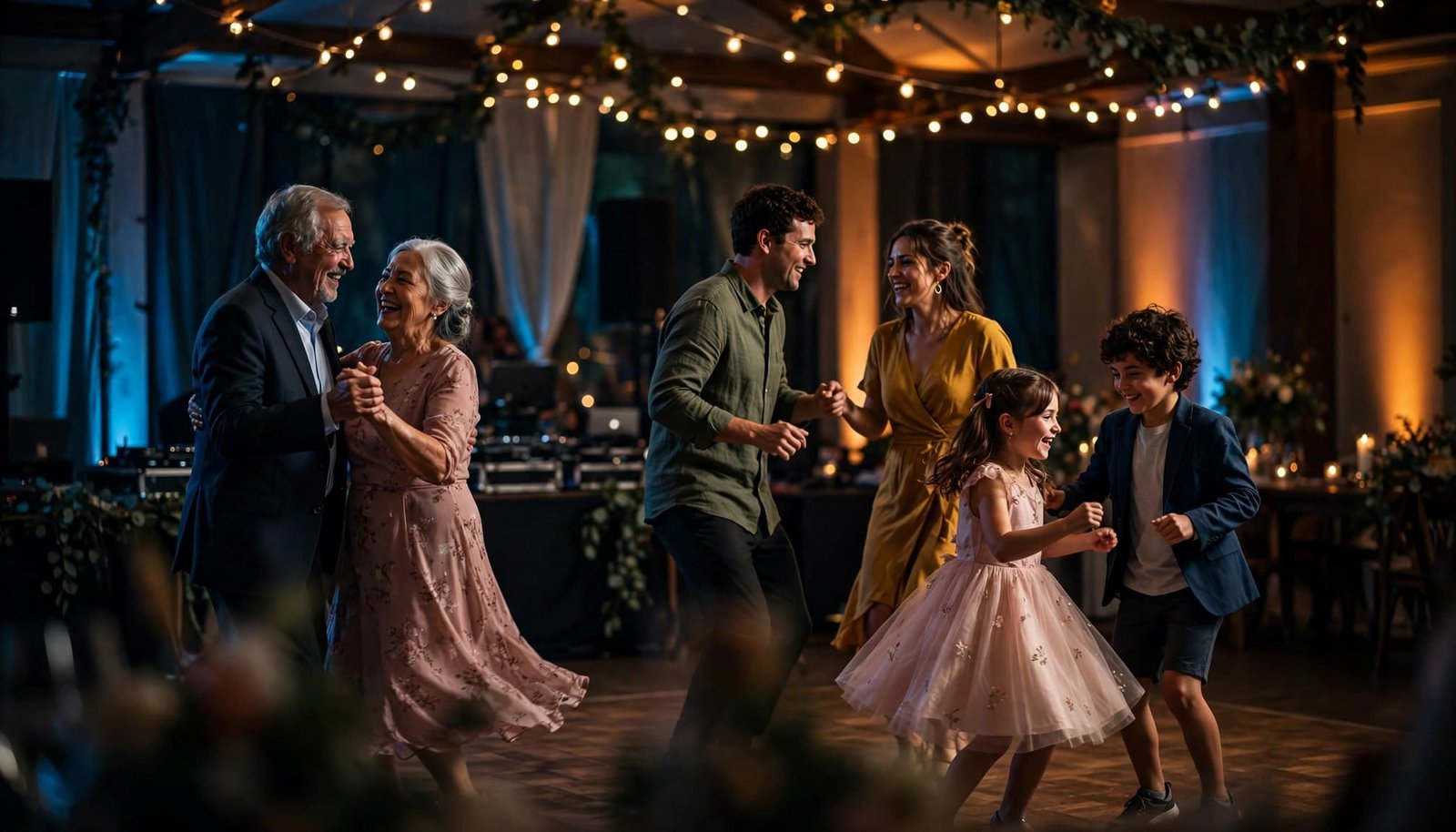
A mixed-age crowd rarely responds to one genre for an entire night. Wedding guests may include several generations of guests with different expectations. Build variety into the wedding reception songs, but make each genre change feel connected.
Begin With Familiar Classics
Early open dancing is a good time for recognizable classic songs, upbeat disco, Motown, funk, soft rock, and pop classics. Earth, Wind & Fire’s “September,” Whitney Houston’s “I Wanna Dance With Somebody,” and ABBA’s “Dancing Queen” can invite broad participation when they fit the crowd.
Short runs work better than long genre blocks. Two funk or disco songs can create momentum, then a few pop hits can refresh the room. Guests feel included when different styles appear throughout the night rather than being saved for one narrow time slot.
Bring in Throwbacks and Group Dances
As the dance floor becomes more active, upbeat wedding songs from 2000s pop and hip-hop can add another level of energy. Outkast’s “Hey Ya!,” Mark Ronson and Bruno Mars’ “Uptown Funk,” and WALK THE MOON’s “Shut Up and Dance” are familiar options for many receptions.
Line dances can offer group participation when guests need a low-pressure invitation to join. Keep line dances optional and consistent with the couple’s style, rather than including them simply because they’re expected. Together, these choices can turn different musical preferences into a shared dance party.
Give Your DJ or Band a Useful Music Brief
A wedding playlist of 100 songs can make planning harder if it has no context. Your entertainment team needs to understand the atmosphere you want, your guests’ musical tastes, and the moments that cannot be guessed.
Organize Requests Into Three Lists
Organize wedding reception songs into must-plays, flexible favorites, and do-not-play choices. Start with a short group of songs you must hear, then add songs or artists you’d enjoy if they fit the moment.
Include a clear do-not-play list for songs, artists, genres, or themes that don’t belong at your celebration. Add notes that shape the night, such as country during dinner, 2000s hits later, limited slow songs, Latin crossover, or a clean family-friendly approach. Clean edits are helpful, but an edited lyric doesn’t always change the overall theme of a song. If guest comfort matters, say so clearly.
For inspiration beyond the usual wedding standards, music communities such as r/Music can offer song recommendations and spark ideas. Keep the final list centered on your guests and your reception flow.
Share Details for Formal Moments
Give the DJ or band the exact title and artist for introductions, the featured dance, parent dances, cake cutting, and final song. Note the version you want if there’s a live recording, acoustic cover, radio edit, or custom mix.
If wedding dance lessons affect the timing or presentation of a formal dance, mention that so the DJ or band can prepare the cue. A featured dance doesn’t need to run the full length of a song. Many couples find that about two and a half to three minutes feels comfortable, and a DJ can fade a longer selection at a natural point. Couples planning a country moment can also explore country first dance song ideas that fit the size and atmosphere of the room.
Protect the Dance Floor During Transitions
The right track can still miss the moment if it arrives at the wrong time. A professional DJ protects reception energy by watching the dance floor, reading guest response, and matching the next selection to the schedule.
Bridge Styles Instead of Switching Abruptly
Move between genres through a shared element. A familiar chorus can connect pop to rock. A strong beat can connect funk to dance-pop. A recognizable throwback can lead into current music without making the change feel random.
A recognizable throwback or shared chorus can help late-night party songs connect with the preceding style instead of changing the room’s mood abruptly. Journey’s “Don’t Stop Believin'” or Bon Jovi’s “Livin’ on a Prayer” may fit a late-night singalong moment for the right crowd. They may not fit immediately after a quiet first dance. Timing matters as much as the title.
Treat Requests as Suggestions, Not Promises
Guest requests, including line dances, can be welcome when they support the couple’s preferences, guest mix, and current mood. A request that clears the floor or conflicts with the do-not-play list doesn’t need to take priority over the reception plan.
Give your DJ room to make practical adjustments. If two songs in a style land well, that may be the right time for another. If guests begin stepping away, a shift in tempo, era, or genre can bring fresh energy back without calling attention to the change.
Plan the First Dance and Final Set
Formal dances and the last song belong in the evening timeline, not afterthoughts. These moments tell guests when to watch, when to join in, and when the celebration is coming to a close.
Decide How the First Dance Opens the Floor
Some couples want a private first dance, followed by a parent dance or an invitation for guests to join them. Others prefer a shortened first dance that moves into an upbeat track within ninety seconds. Decide whether the featured dance should bring guests onto the dance floor immediately or lead into another formal moment. Both choices can work when the cue is clear.
If wedding dance lessons affect the length, entrance, or choreography, tell your DJ or band in advance. Wedding dance lessons can help couples feel more prepared, especially if they want a simple turn, dip, or comfortable rhythm. The goal is not a performance. It is confidence in a meaningful moment.
Choose an Ending That Fits Your Crowd
Last dance songs can be high-energy, sentimental, or both. “Don’t Stop Me Now” by Queen can suit a lively goodbye. “The Way You Look Tonight” can create a softer closing. Some couples prefer a private last dance after guests leave, while others want everyone gathered close for the final song.
The best choice is the one that matches the reception you created together. For more ideas as you organize the full evening, planning your wedding reception playlist can help you sort personal favorites, guest-friendly classics, and party songs by moment.
Key Takeaways for the Room Flip
- Plan music alongside the floor plan, lighting, announcements, and vendor timing.
- Keep dinner music comfortable for conversation, then raise energy in gentle waves.
- Share must-play songs, do-not-play choices, clean-music preferences, and formal dance details early.
- Mix eras and genres in short runs so different generations feel invited.
- Give your DJ flexibility to respond to the actual crowd and schedule.
Frequently Asked Questions
What music should play while the reception room is being flipped?
Choose familiar mid-tempo music that feels brighter than dinner, but does not demand immediate dancing. Soul, pop classics, mellow funk, and easy singalongs work well because they keep the room social while venue staff finish the reset.
How do we keep music from becoming too loud during dinner?
Share your dinner timeline and room layout with the DJ or band. Music should sit below conversation and drop further for toasts and announcements. A sound check in the actual reception space helps identify tables or lounge areas that may need more comfortable coverage.
Should we give the DJ a long wedding playlist?
A shorter, well-organized brief is usually more helpful. Provide must-plays, optional favorites, do-not-play selections, preferred genres, and a description of the atmosphere you want. That gives the DJ clear direction while leaving room to respond to the people on the floor.
A Reception That Changes at the Right Pace
A successful room flip does not depend on one perfect party song. It comes from clear coordination, thoughtful volume, well-timed announcements, and music that matches each part of the celebration.
When wedding reception music moves in waves, guests can talk, watch, celebrate, and dance without feeling pulled in different directions. The result is a well-paced reception that still sounds like you.