A reception can have great music, beautiful lighting, and still leave some guests struggling to participate. Wedding reception accessibility considers how the room sounds, looks, moves, and feels throughout the night.
For some guests, a speaker placed beside their table can make dinner exhausting. For others, flashing effects, dark pathways, or unclear announcements create barriers that thoughtful planning can help avoid.
The strongest reception plans build energy while helping guests stay comfortable and involved.
Key Takeaways
- Plan sound, lighting, seating, routes, exits, restrooms, and quiet areas together before the reception, then verify them during a final walk-through.
- Create different sound zones so guests can enjoy dancing without forcing every table into a loud speaker area. Set volume expectations in advance and give one trusted person authority to request adjustments.
- Use steady, comfortable lighting with clear pathways, visible steps, readable signs, and no strobes or rapid flashing effects. Give guests advance notice before major changes in music or lighting.
- Provide an accessible quiet space, flexible seating, and communication options such as captions, interpreters, assistive listening equipment, or large-print materials when requested.
- Give the DJ, lighting team, venue, caterer, planner, photographer, and family contact one shared accessibility brief, including responsibilities and backup plans.
Wedding Reception Accessibility Starts With a Room Plan
Sound and lighting decisions work best when they are part of the floor plan, not add-ons decided during setup. During one planning walk-through, review the DJ booth, speakers, dance floor, dinner tables, exits, restrooms, bar, quiet area, and any raised platforms together.
Plan enough clear space for guests using wheelchairs, walkers, canes, or other mobility devices. A 36-inch clear path is a useful planning benchmark, not a universal legal minimum for every reception arrangement. Required dimensions depend on the applicable building or accessibility standard, the venue, and the route being assessed.
Measure busy routes after tables, décor, cables, and catering equipment are installed. Routes near tables, food stations, and restrooms may need more room.
Create Sound Zones Instead of One Loud Room
A wedding reception doesn’t need the same volume everywhere. The dance floor can carry more energy while dinner seating, lounges, and family tables remain comfortable for conversation.
Place main speakers so they project toward the dance floor rather than directly at guest tables. Avoid putting speakers beside elderly relatives, guests with hearing sensitivities, babies, or anyone who has privately asked for a quieter location.
A practical layout often includes:
- A lively dance-floor zone with speakers aimed inward and away from seating.
- A conversation zone for dinner, cocktail hour, and guests who want to visit.
- A quiet space away from music, bar traffic, and flashing effects.
- Clear routes between each zone, with no cable runs across walkways.
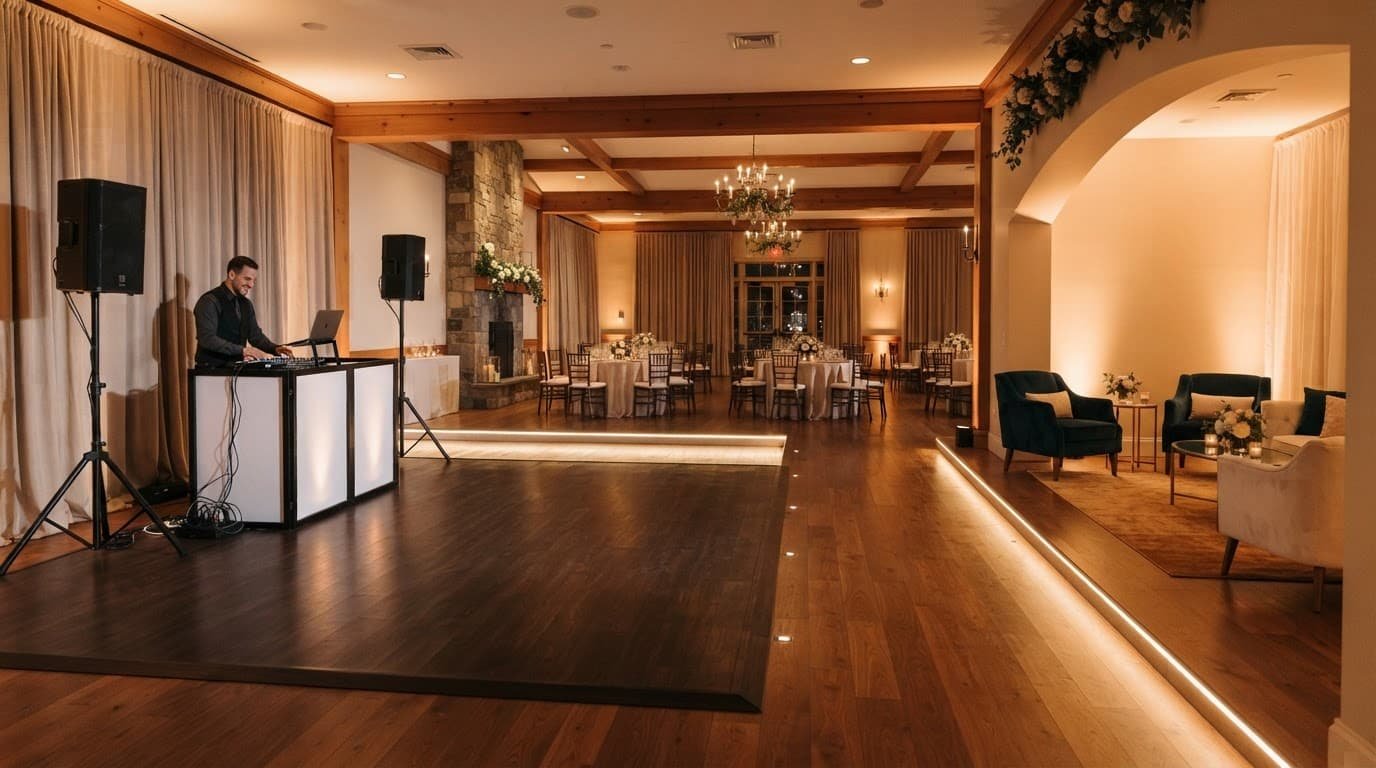
A quiet table at the edge of a loud room is not the same as a quiet space. Speaker direction, distance, and traffic flow matter.
Keep Accessible Seating Part of the Celebration
Don’t place wheelchair users or guests with mobility disabilities at an isolated table with a blocked view of speeches and dancing. Reserve flexible seating near family, with a good sightline to the dance floor and microphone area. Wheelchair access includes the route to the table, not just the table location.
If a venue uses fixed seating or has a raised stage, review routes before finalizing the layout. The 2010 ADA Standards for Accessible Design generally apply to covered public accommodations, including many commercial venues. A private wedding host should confirm the venue’s obligations and actual features with management, since a wedding itself isn’t automatically subject to ADA requirements.
Verify entrances, routes, ramps, elevators, restroom access, and emergency egress rather than relying on a venue’s marketing label.
Set a Music Volume Plan Before the Reception
“Not too loud” means something different to every person. A stronger approach is to set volume expectations, test the room, and give the DJ or sound professional clear authority to adjust levels.
Reception music should support each moment. Cocktail hour needs conversation. Dinner needs clear announcements. Open dancing can build energy without turning every corner into a speaker zone.
Use a Decibel Meter as a Planning Tool
A simple decibel meter app can help a DJ, planner, or venue manager compare levels around the room. It doesn’t replace professional measurement, but it can reveal obvious hot spots.
NIOSH uses 85 dBA averaged over eight hours as an occupational noise reference. A wedding reception isn’t an eight-hour workplace shift. This figure isn’t a reception volume limit, an ADA requirement, or a guarantee that every guest will find the room comfortable. It is still a useful reminder that higher levels call for shorter exposure and meaningful choices.
Test the system during setup with realistic music, bass, and microphone levels. Check cocktail hour, dinner, speeches, and dancing from representative guest seats. Measure the dance floor, dinner tables, bar, and proposed quiet area, then reassess once the room is occupied.
A ballroom, barn, tent, and hotel function room all respond differently. Hard surfaces can bounce sound, while outdoor spaces may tempt a team to overcompensate for wind and crowd noise.
Give the DJ Clear Volume Cues
A professional DJ needs more than a general request to “keep it comfortable.” Share the event timeline and identify the moments that need tighter control:
- Keep cocktail hour and dinner at conversation-friendly levels.
- Raise energy gradually after formal dances, rather than starting the night at peak volume.
- Lower or pause music during toasts, parent dances, special presentations, and important announcements.
- Check in after the first dance set, especially if the room has guests of different ages and access needs.
- Name one planner or venue contact who can request a volume adjustment. Guests shouldn’t need to explain a disability publicly.
A good sound system isn’t only about power. Speaker direction, even coverage, microphone clarity, and real-time judgment help keep music enjoyable across the room. They can’t eliminate every source of discomfort, so guests need meaningful choices about where and when they spend time.
Make Lighting Comfortable, Clear, and Predictable
Reception lighting should create atmosphere without turning the room into a nightclub. Guests may have migraines, epilepsy, low vision, sensory sensitivities, balance concerns, or other conditions that make sudden visual changes difficult. Others may simply need enough light to read a menu, find a restroom, or see a step.
Individual needs vary. Ask privately, record only the information needed to act, and don’t treat a diagnosis as a prerequisite for an adjustment.
Skip Strobes and Fast Flashing Effects
Strobe effects and rapid flashes aren’t required for a high-energy dance floor. Uplighting, warm wash lighting, pin spots, gentle color changes, and controlled moving effects can look polished without unpredictable bursts.
Skipping strobes, rapid flashing, and abrupt blackouts is a recommended risk-reduction practice. It isn’t a claim that every venue or wedding follows one universal lighting rule. Ask the lighting team to confirm settings in advance and provide a steady alternative for entrances or high-energy dance sets.
Advance notice also helps. A wedding website, welcome sign, or printed schedule can note when music volume rises, when lighting changes, and where the quiet space is. Guests can then take a break, step outside, or plan their departure without being caught off guard.
Reduce Glare and Improve Contrast
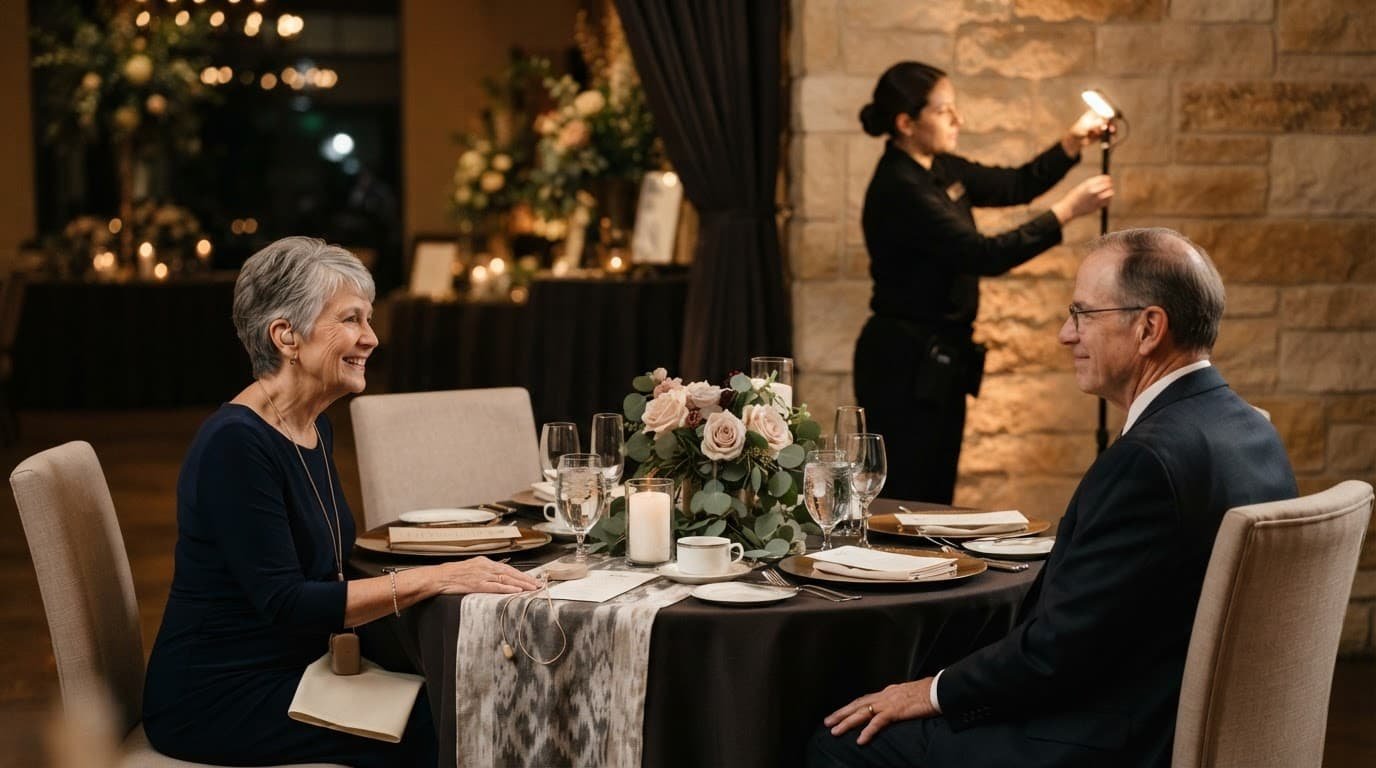
A dark room with bright spotlights can make it hard to see faces, steps, table edges, and signs. Avoid aiming fixtures directly into seated guests’ eyes. Glossy dance floors, mirrors, glass walls, and white linens can also throw light back into the room.
Use color contrast where guests need to move. Darker edges against light floors, readable restroom signs, and visible table numbers help people orient themselves. Keep aisle and pathway lighting steady during dancing, not only during dinner.
Emergency exits, ramps, steps, and restroom routes should remain visible throughout the reception. Decorative lighting should never hide a safety feature.
Build a Quiet Space Guests Can Actually Use
A quiet room is one of the most welcoming choices a couple can make. It gives guests a place to reset without leaving the celebration completely. This can be a side room, covered patio, library corner, lounge area, or section of the venue away from speakers and traffic.
The ADA National Network’s temporary-event planning guide offers useful access considerations for event organizers, including communication and listening access.
Furnish the Space With Comfort in Mind
The area doesn’t need elaborate decor. Before the reception, confirm the route and make sure guests can reach it easily. Place stable seating, water, tissues, and low-glare, steady lighting there.
Keep it away from the kitchen door, photo booth, smoking area, and loud bar crowd. Tell staff and key vendors how to direct guests discreetly, without drawing attention to anyone using the area.
Guests should be able to use the area briefly or for much of the reception. It shouldn’t function as a segregated waiting area. They should still be able to reach food, restrooms, speeches, and family activities whenever they choose.
Plan Smooth Transitions Between Reception Moments
Big transitions can be hard when they happen without warning. Tell guests before the grand entrance, first dance, cake cutting, parent dances, or open dance floor begins.
The MC can use a calm announcement such as: “In about five minutes, we’ll begin the first dance. The room lighting will dim slightly, and music volume may increase.” This gives guests time to move, find a preferred seat, or adjust hearing devices. It also lets them step into a quieter area if needed.
Keep a consistent lighting level during speeches and dinner. Sudden darkness may look dramatic, but it can interrupt conversation and make movement less comfortable. Advance notice is a recommended practice that supports guests with different sensory and mobility needs.
Support Hearing and Communication Access
Music and speeches are central to most receptions. That makes communication access part of a thoughtful entertainment plan, not an afterthought.
For a venue that is a covered public accommodation, applicable ADA assembly-area and effective-communication requirements may affect amplified announcements and fixed seating. Ask venue management what equipment, assistance, and procedures are already available, then consider optional wedding enhancements based on guest preferences. The Access Board’s assembly-area requirements offer a starting point, though they are not wedding-specific legal advice.
Offer Options Beyond a Loudspeaker
Ask guests privately whether an accommodation would help, and make clear that answering is optional. Some may prefer an ASL interpreter, real-time captioning for speeches, a written toast, a hearing loop, or an assistive listening receiver. Others may not want a special arrangement, and every reception doesn’t need every option.
Captioning isn’t a universal legal requirement for private weddings. It can still be a considerate option for a speech-heavy event, especially when a screen is already being used for photos or video.
A simple printed program can also help. Include the formal event sequence, speaker names, and approximate timing. Offer large-print copies when requested, and make the wedding website screen-reader-friendly with clear headings, descriptive link text, and accessible digital formatting.
Use Respectful, Private Communication
An RSVP form can include an optional question such as: “Is there anything that would help you enjoy the reception more comfortably?” Leave space for a private response and provide an email or phone contact.
Don’t require guests to publicly disclose a disability, diagnosis, or medical information. Ask only what the planning team needs to provide a better experience. Use identity-first or person-first language according to each person’s preference.
Give Vendors One Shared Accessibility Brief
A polished reception depends on clear coordination. The access plan should reach the DJ, lighting designer, venue manager, caterer, planner, and photographer. Share it with the designated family contact before guests arrive.
Assign each person a clear responsibility in the final timeline. The DJ handles volume changes and microphones, while the lighting designer records cues. The venue manager confirms routes, restrooms, and existing equipment. The caterer and planner protect table clearance. The photographer and family contact know how to direct guests discreetly.
Build the reception access plan into the timeline for entrances, speeches, dinner service, and dancing. Document speaker positions, lighting cues, table clearance, routes, restroom access, and the quiet area there. Don’t leave important details in a verbal conversation two weeks before the event.
Include These Details in the Final Walk-Through
Bring the whole plan into one pre-event discussion:
- Confirm speaker locations, volume zones, and the person approved to request changes.
- Test microphones from guest seating, not only beside the DJ booth.
- Review lighting looks for dinner, toasts, dancing, exits, ramps, and restrooms.
- Identify the quiet space and make sure every key vendor can direct guests to it.
- Check that cables are covered and paths remain clear after tables, decor, and equipment are installed.
- Ask the venue to confirm which restrooms, routes, and features meet applicable requirements.
- Share private accommodation details only with the people who need them to do their job.
These checks are recommended best practices, not a blanket legal guarantee. The venue, rather than the couple alone, should explain its legal responsibilities under applicable ADA requirements and identify its existing equipment.
A professional team should also have a backup plan. If a wireless microphone fails, a room becomes louder than expected, or a lighting effect is uncomfortable, someone needs to respond quickly and calmly. Name that person in advance, along with who can lower the music, stop the effect, provide an alternate microphone, or redirect guests.
Frequently Asked Questions
How can we make wedding reception music more accessible?
Create separate sound zones, keeping speakers aimed toward the dance floor and away from dinner and conversation areas. Test volume levels from guest seating and name one planner or venue contact who can request changes discreetly.
Should we avoid flashing lights at the reception?
Skipping strobes, rapid flashing, and abrupt blackouts is a recommended way to reduce discomfort and risk for guests with different sensory needs. Use steady wash lighting, gentle color changes, and advance notice before lighting changes instead.
What should an accessible quiet space include?
Choose a location away from speakers, bar traffic, kitchens, and other busy areas, with a clear route from the main reception space. Provide stable seating, water, tissues, and low-glare lighting while keeping the space connected to the celebration rather than treating it as a segregated waiting area.
How can guests request accessibility accommodations privately?
Include an optional question on the RSVP form and provide a private email or phone contact. Ask only for the information needed to provide support, and share accommodation details only with vendors or staff who need them to do their jobs.
A Reception That Feels Welcoming All Night
The best celebration is not the loudest room or darkest dance floor. It is a room where guests hear key moments, follow clear routes, rest, understand transitions, and choose how to participate.
Wedding reception accessibility comes from the couple and venue testing the plan with attending guests, communicating clearly, and offering flexible choices throughout the evening.
When music, lighting, seating, and timing work together, the reception feels more usable, polished, personal, and welcoming for the people you love.