A great wedding reception feels easy for guests because the planning behind it is clear. A thoughtful wedding guest policy gives friends and family respectful guidance on details that affect comfort, safety, timing, and the overall atmosphere, whether you’re planning a formal wedding or a relaxed celebration.
This isn’t about making your celebration feel strict. During busy wedding season, clear expectations can prevent a small question from becoming a crowded doorway, an unexpected plus-one, a missed meal accommodation, or a reception moment that doesn’t fit your wishes.
Key Takeaways
- A thoughtful wedding guest policy should feel warm and welcoming while clearly explaining RSVP timing, invited guests, children, dress code, food needs, transportation, photography, and reception expectations.
- Separate personal requests from venue requirements and safety rules, and communicate important guidelines consistently across invitations, RSVP materials, the wedding website, and vendor notes.
- Name invited guests and plus-ones clearly, apply children and extra-event policies consistently, and respond to questions or pushback with brief, respectful language.
- Coordinate guest guidance with your venue, caterer, planner, DJ, and other vendors so accessibility, food allergies, floor plans, timelines, music, and guest safety are handled properly.
- Clear expectations help guests arrive prepared and allow the couple, wedding party, and vendors to enjoy a smoother, more comfortable reception.
Build Reception Guidelines That Feel Welcoming
Your reception guidelines should sound like an invitation, not a warning. Keep the language warm, state what matters, and include only requests that support a better experience for everyone in the room.
Start with the moments when guests need a clear answer: RSVP timing, invited names, children, meal needs, the wedding dress code, transportation, photography, and music requests. A thoughtful set of guidelines works best when it is short enough to read and clear enough to follow.

Focus on the experience you want to create
Think about the room you are building. A formal wedding with a short guest list needs different guidance than a relaxed barn reception with lawn games and a late-night dance floor.
Use details that help people make good decisions before they arrive. For example:
“We are looking forward to an adults-only evening with dinner, dancing, and time to celebrate together. Please celebrate with the guests named on your invitation.”
That wording is clear, kind, and personal. It does not apologize for the boundary or invite a debate about it.
Keep your guidelines consistent
A guest should not receive one message on the invitation, another on the wedding website, and a third from a relative. Choose one final version, then repeat it across your invitation, RSVP materials, wedding website, email reminders, and planner notes.
Consistency also helps your closest friends and family. They can answer simple questions with confidence instead of guessing what you meant.
Separate Requests, Venue Requirements, and Safety Rules
Not every instruction carries the same weight. Couples can make personal requests. A wedding venue may set operating requirements. Safety and legal rules aren’t optional, even when a guest is disappointed.
Personal requests should be presented with care
A request is a choice the couple makes for the tone of the day. It may include an unplugged ceremony, a preferred dress code, no social-media posting before the ceremony, or a request for guests to avoid bringing wrapped gifts to the reception.
Try wording such as:
“We invite you to be fully present during our ceremony. Please keep phones and cameras tucked away until the reception.”
Guests may not love every request, but most will respect it when they understand the purpose. A brief explanation often helps without adding too much detail.
Venue requirements need a firm response
The wedding venue may set requirements for capacity, parking, candles, exits, smoking, alcohol service, pets, décor, noise limits, and outside food. These are not matters for a family vote. Confirm the rules in writing with your coordinator before you communicate them.
Safety-related wedding guest rules deserve the most direct language. Keep emergency exits, stairways, doorways, and accessible routes clear throughout the event. If your DJ or lighting team needs a cable crossing, use a venue-approved low-profile cable ramp in a busy walkway. Tape may hold a thin lead in a low-risk area, but it isn’t the right protection for heavy guest traffic.
A beautiful reception layout is only successful when guests, staff, and emergency personnel can move through it safely.
For health and food-service questions, follow the caterer’s process and your venue’s guidance. The USDA’s wedding food-safety guidance also recommends giving caterers a list of known guest allergies.
Put Important Details on the Invitation and RSVP
The wedding invitation is where guests learn who is invited, when to respond, and how formal the event will be. A formal wedding may communicate its level of formality through the invitation and RSVP materials. Your site can hold the fuller version of the policy, including travel notes and frequently asked questions.
Make RSVP deadlines meaningful
Your caterer, rental company, venue, and seating plan all depend on a reliable count. Set an RSVP date that gives you time to follow up before final numbers are due.
A clear message is better than a vague reminder:
“Please reply by May 10 so we can finalize seating and meal selections with our venue.”
Ask guests to respond for every person named on the invitation and included on your wedding guest list, even if they cannot attend. A quiet non-response creates extra work and can affect the meal count, table assignments, and transportation plan.
For guests, wedding guest etiquette is simple and helpful here. Reply promptly, use the requested method, and do not add names that were not included.
Give guests a safe way to share food needs
Severe allergies are not a casual preference. Include a field on your RSVP card or wedding website for food allergies and dietary restrictions, then pass the final list directly to your caterer.
Use wording like:
“Please share any food allergy or dietary restriction by the RSVP date. We will provide the information to our catering team, but cannot promise an allergen-free environment.”
The FDA’s food allergy information explains why allergen hazards require careful handling. Guests with serious allergies should also speak with the couple early and confirm their needs with catering staff at the reception.
A guest does not need to feel uncomfortable asking. The allergy-friendly wedding planning guide from Spokin offers helpful ideas for collecting restrictions respectfully.
Set Boundaries for Plus-Ones, Children, and Extra Events
A wedding guest list is both personal and practical. Every added chair affects the room layout, meal count, bar package, transportation, and wedding budget. Clear wording keeps the decision from feeling personal.
Let the invitation name the invited guests
The names on the envelope, wedding invitation, and RSVP form define the guest list. If a person has a plus-one, make that clear by naming the guest or writing “and guest.” If children are included, list their names as well.
Good plus one etiquette means following the named-invitee or plus-one policy without treating the boundary as personal.
Avoid phrases such as “no extra guests, please.” They can sound sharp. A better option is:
“Due to venue capacity, we are able to accommodate only the guests named on each invitation.”
You do not need to explain every family decision. Some couples invite children, while others plan an adults-only reception. Many make limited exceptions for immediate family or the wedding party. The important part is applying your decision consistently.
Clarify welcome parties and rehearsal dinners
The main invitation does not automatically include every pre-wedding event. A rehearsal dinner is usually for the wedding party, immediate family, and selected guests. A welcome party may be open to everyone, or it may be limited by space.
State the plan directly on the event invitation or website. Guests should not assume they are included because they are attending the wedding. Hosts should also avoid vague comments that create false expectations.
Match Attire and Reception Expectations
The right wedding dress code gives guests confidence and helps clarify wedding guest attire. It also supports your venue, weather plan, ceremony setting, and photographs without turning clothing into a stressful guessing game.
Explain the dress code in plain language
Terms such as black tie, formal, cocktail attire, semi-formal, beach formal, and casual wedding attire can mean different things to different people. Add a short explanation and a few helpful examples to your wedding website, so guests understand the wedding dress code.
| Dress Code | A Helpful Guest Guide |
|---|---|
| Black tie | Tuxedos or formal evening wear, with polished accessories |
| Formal | Suits, long dresses, dressy separates, and refined footwear |
| Cocktail | Dressy suits, midi dresses, jumpsuits, and festive evening looks |
| Semi-formal | A step below cocktail, but still neat, dressy, and event-ready |
| Casual | Comfortable clothing that still looks appropriate for a wedding celebration |
For a formal wedding, guests generally choose polished fabrics, structured outfits, and refined accessories. For a semi-formal wedding, guests can wear lighter fabrics and less formal accessories than they would for a cocktail event. A black tie wedding is more formal than cocktail attire. A formal wedding usually calls for a polished evening look, while a cocktail reception allows a little more flexibility.
Black is widely accepted at modern weddings, especially for evening celebrations. White, ivory, and dresses that could be mistaken for bridal attire are still best avoided unless the couple requests an all-white look.
Help guests avoid unnecessary spending
Guests don’t need to buy a new outfit simply because a dress code appears on the invitation. Encourage them to use wedding guest attire they already own, such as wedding guest dresses, separates, or suits. They can borrow from a friend, rent formalwear, or choose one adaptable piece.
Add practical notes when they matter, especially during wedding season. Grass may call for block heels or flats, while a beach wedding may be breezy. A historic setting may have stairs. Those details are more useful than a vague instruction to “dress appropriately.”
Coordinate Your Policy With the Venue and Vendors
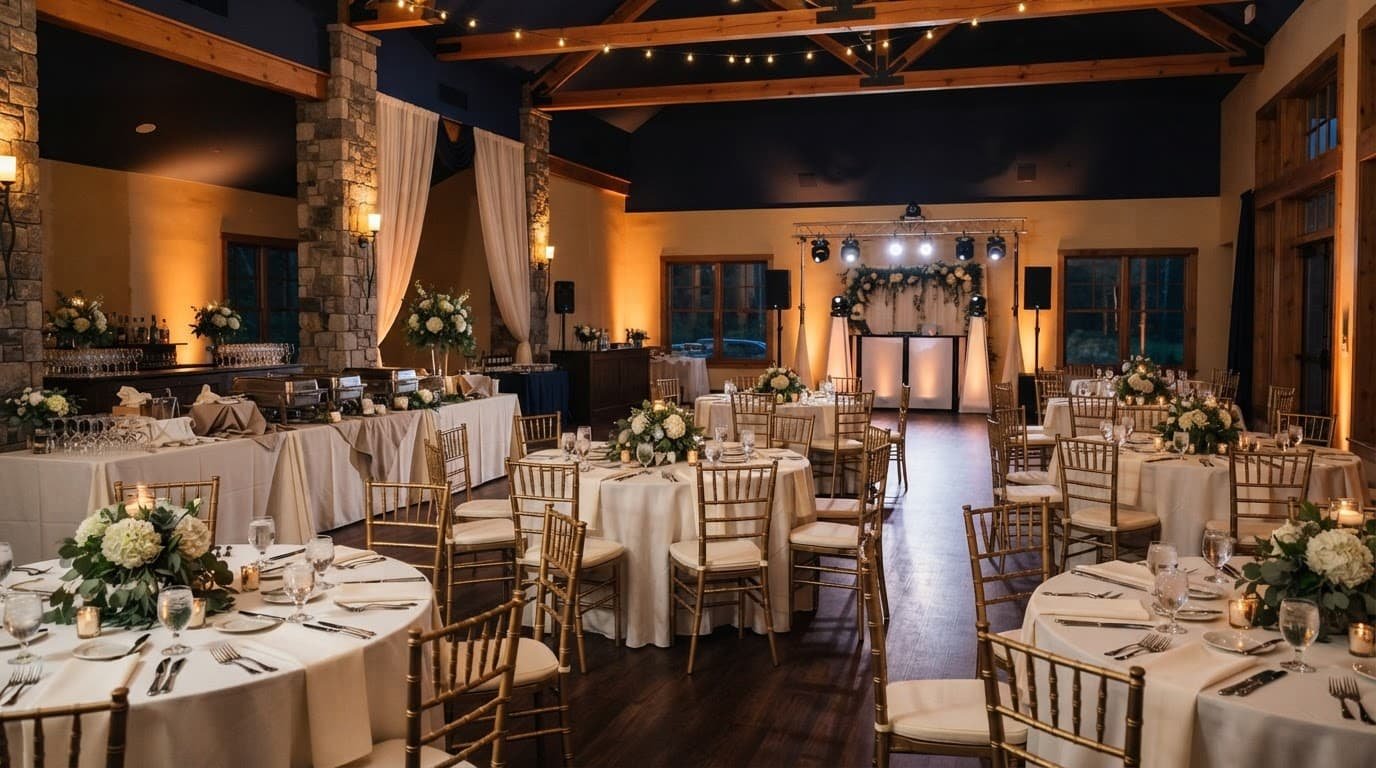
A strong wedding reception plan connects the people responsible for different parts of the day. Your wedding venue coordinator, caterer, wedding planner, photographer, DJ, transportation provider, and wedding party should know the requests that affect their work.
Confirm logistics before guests arrive
Review the floor plan during your final walkthrough. Check accessible seating, clear aisles, exits, vendor load-in areas, gift-table placement, and transportation pickup points.
Your DJ should receive the timeline, introduction names, pronunciation notes, music preferences, and do-not-play list in advance. Give one person final authority for schedule or music changes. Guest requests can be welcome, but they should remain suggestions rather than promises.
A professional entertainment team can adjust to the room while protecting the reception flow, sound level, and your preferred atmosphere. Loud music is not automatically better music. Guests should be able to enjoy the dance floor and still hear important announcements.
Use a short implementation checklist
Before sending invitations, confirm these points with your venue and vendors:
- Decide which items are personal requests and which are venue, safety, or service requirements.
- Put RSVP timing, invited names, dress code, and food-allergy instructions in writing.
- Verify accessible paths, exits, parking, and vendor cable routes during the final walkthrough.
- Give your caterer the final meal count and allergy list by their required deadline.
- Share the final reception timeline, music guidance, and contact person with your DJ and designated contacts.
Handle Questions and Pushback With Grace
Even a well-written policy may bring questions. A guest may ask to bring a child, request another plus-one, or challenge the dress code. Answer once, calmly, and without offering a long defense.
For a plus-one request, say:
“We would love to include everyone, but our guest count is set by the space and our reception plan. We hope you can still join us.”
For an adults-only event, say:
“We understand childcare can be difficult. We have planned an adults-only reception, and we will miss you if you are unable to attend.”
Do not let relatives negotiate your policy on your behalf. Tell your wedding party to direct questions back to one host, planner, or coordinator. A polite, united response protects relationships and keeps the planning process manageable.
Wedding gift etiquette can also be handled with a simple wedding registry link. Gifts are optional and never an admission fee. Guests who cannot attend may send a gift later, but hosts don’t need to set a spending minimum or chase presents.
Frequently Asked Questions
What should a wedding guest policy include?
A wedding guest policy should cover the details guests need before arriving, such as RSVP deadlines, invited names, plus-ones, children, dress code, food allergies, photography, transportation, and reception expectations. Keep the wording concise, kind, and easy to find on the invitation or wedding website.
How should couples communicate an adults-only wedding?
State the policy clearly and apply it consistently to everyone on the guest list. A message such as, “We have planned an adults-only reception, and we will miss you if you are unable to attend,” sets the boundary without inviting a debate.
How can couples handle plus-one requests?
The names on the invitation and RSVP form should define who is invited, with “and guest” used when a plus-one is included. If someone asks for an additional guest, explain that the guest count is limited by the venue and reception plan, then respond politely without offering a lengthy defense.
What is the best way to share dress code guidance?
List the dress code on the invitation and add plain-language examples on the wedding website. Practical notes about weather, grass, stairs, or a beach setting can help guests choose comfortable attire without requiring them to purchase something new.
How should food allergies be handled at a wedding reception?
Include a clear RSVP field for food allergies and dietary restrictions, then give the final list directly to the caterer. Guests with serious allergies should also speak with the couple and catering staff early, since hosts cannot promise an entirely allergen-free environment.
A Reception That Feels Considered, Not Controlled
A well-written wedding guest policy gives people the information they need to arrive prepared, comfortable, and ready to celebrate. It protects what matters, from guest safety and meal service to family boundaries and the flow of your wedding reception.
Clear expectations create room for a more relaxed celebration. Guests know what to do, vendors can coordinate confidently, and hosts can enjoy the wedding day with the people who came to share it.