A packed dance floor is great, but it shouldn’t come at the cost of hearing a song you both can’t stand. A thoughtful wedding do not play list sets boundaries for your wedding reception music while leaving room for a fun, guest-friendly celebration.
The goal isn’t to police every beat of the night. It’s to give your DJ or band practical guidance about what does not belong in your story, your room, or your family gathering. Start with the atmosphere you want, then turn those preferences into clear direction.
Key Takeaways
- Build your wedding do not play list around the atmosphere, crowd, and personal meaning you want your reception to have.
- Separate non-negotiable bans from songs you would prefer to skip, and explain any important boundaries clearly.
- Balance restrictions with favorite artists, genres, decades, clean edits, and dance floor songs your DJ or band can use instead.
- Share the list in writing early, including instructions for guest requests and any exceptions to your music guidelines.
- Leave room for your entertainment professional to read the room while still respecting the songs, artists, and styles you do not want played.
Build Your Wedding Do Not Play List Around the Reception You Want
Before naming songs, picture your wedding reception. Is it an elegant dinner with a high-energy dance party later? A relaxed celebration with country favorites and classic rock? A mixed-age crowd where grandparents, coworkers, and college friends will all share the same floor?
Your music should support that atmosphere. This list is not only about “cheesy wedding songs.” It also helps you avoid sudden mood shifts, awkward lyrics, and songs that pull attention away from the moment.
Talk together about these questions:
- Are there genres that neither of you enjoys, such as heavy metal, modern country, EDM, or explicit hip-hop?
- Do certain songs bring up a breakup, a difficult family memory, or an ex-partner?
- Will young children, grandparents, religious relatives, or conservative coworkers be present?
- Do you want participation songs and line dances, or would you rather keep the celebration open and spontaneous?
- Are there artists whose behavior or public history makes their music uncomfortable for you?
A clear list has a reason behind it. “No songs with explicit lyrics during dinner” gives your entertainment professional a clear boundary. “No songs by this artist” is equally clear. “Nothing weird” is harder to interpret and can create confusion in the middle of a busy reception.
Your wedding DJ can read the room best when they understand the reason behind a boundary, not only the title of a song.
Common Songs Couples Put on a Do Not Play List
Some overplayed songs are so common at weddings that guests can predict these wedding songs before the opening notes. That does not make them bad songs. It only means they may not fit your crowd, your taste, or the type of party you want.
Overplayed Reception Favorites
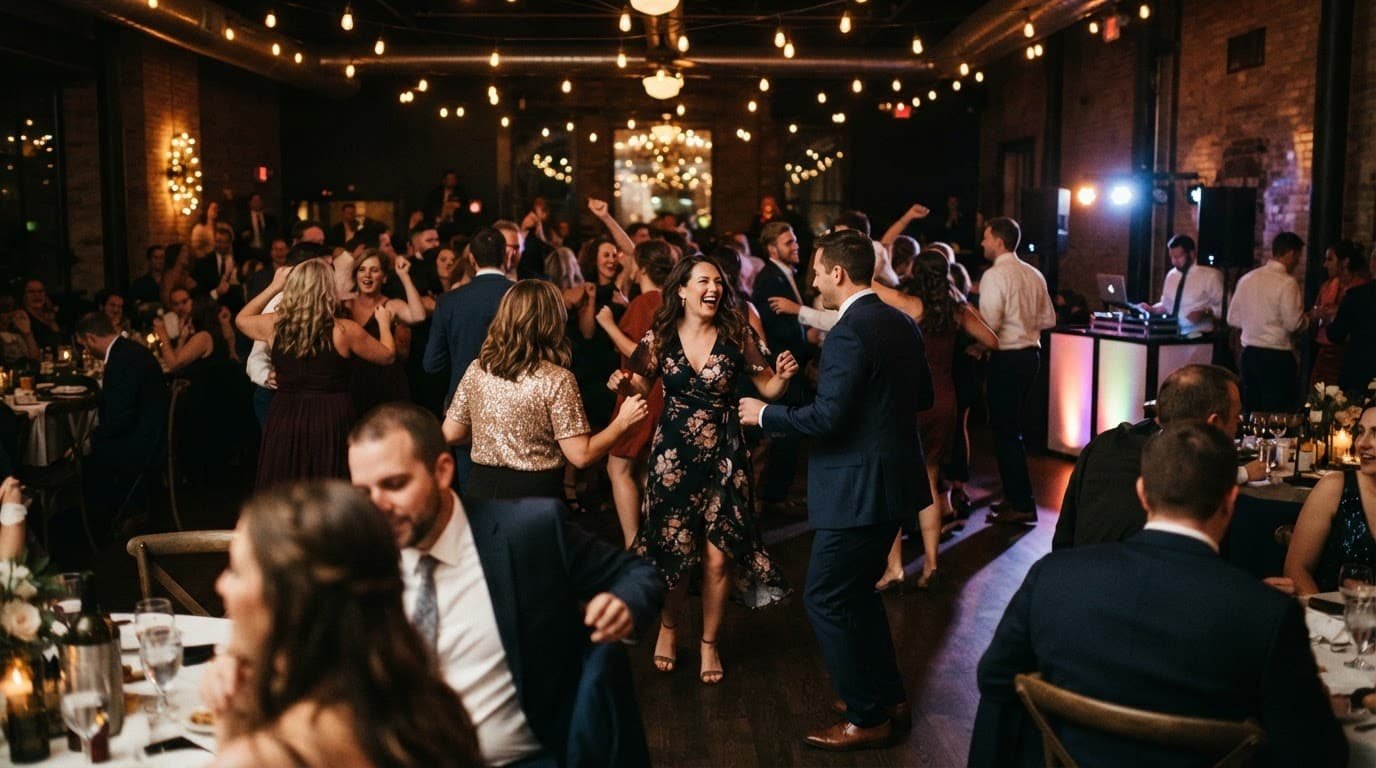
“Chicken Dance,” “Macarena,” “YMCA,” “Cha Cha Slide,” “Cupid Shuffle,” “Cotton Eye Joe,” “Wobble,” “Electric Slide,” “Party Rock Anthem,” and “Gangnam Style” are frequent entries on these lists. Couples may describe them as cheesy wedding songs, but other guests love them and will happily join in.
“Sweet Caroline” often gets banned because the familiar “so good, so good” chant can take over the room. It may feel more like a stadium singalong than a reception. “Happy” by Pharrell Williams, “Can’t Stop the Feeling” by Justin Timberlake, “Uptown Funk” by Mark Ronson featuring Bruno Mars, and “Shut Up and Dance” by Walk the Moon can land in the same category. They are upbeat, recognizable, and common at celebrations, which is precisely why some couples are tired of hearing them.
Beyonce’s “Single Ladies” can also feel out of place when it is played as an automatic bouquet-toss selection. If you are skipping that tradition, or if the song’s message does not fit the moment, there is no reason to include it.
Line Dances Are a Choice, Not a Requirement
Traditional line dances can fill a dance floor in seconds. “Electric Slide,” “Wobble,” “Cha Cha Slide,” and “Cupid Shuffle” give guests simple instructions and a shared reason to participate. That can be helpful at a reception with many guests who do not know each other.
Still, these group numbers can also clear the floor if your crowd does not enjoy them. They may interrupt the music flow, especially when your guests prefer dancing freely to pop, Motown, country, disco, or current hits.
There is a middle ground. A couple might skip “Cotton Eye Joe” but tell the DJ, “No group dances unless the floor needs a reset later in the night.” That gives the DJ flexibility without making any familiar group number a guaranteed part of the evening.
Songs That Do Not Belong in Your Personal Story
Personal associations deserve as much weight as musical taste. A first dance song from a previous relationship, a track tied to a loss, or a song that played during an unhappy chapter should not be heard unexpectedly on your wedding day.
The same applies to artists you prefer not to support. You do not owe guests a debate or a detailed explanation. A simple instruction such as “Please do not play any Chris Brown songs” is enough. Your reception should feel comfortable for both of you.
Family appropriateness also matters. You might love “Baby Got Back” or another song with explicit lyrics when you are out with friends, but not want it during cocktail hour or while young nieces and nephews are nearby. Your list can set different standards for different parts of the night.
Keep the List Clear Without Making It Too Long
A long do not play list can accidentally limit a skilled DJ or band. If it includes hundreds of songs, whole artists, multiple genres, and every well-known party hit, there may be little left that fits a mixed crowd.
Focus first on non-negotiables. These are songs, artists, genres, or lyric standards that would genuinely affect your enjoyment. Then add a shorter list of songs you strongly dislike.
A practical format could look like this:
- Do not play any songs by named artists you both want to avoid.
- Skip specific tracks with personal history, explicit lyrics, or a message that feels wrong for your celebration.
- Avoid broad categories, such as country music or group dances, only if you truly mean all of them.
- List overplayed songs as “avoid if possible” when you are open to a professional judgment call.
- Pair restrictions with favorite artists, preferred decades, clean edits, genres, and dance floor favorites you would love to hear.
That last point matters. A wedding playlist works best when it gives your DJ direction in both directions. If you ban entire categories or popular tracks but never mention what you do enjoy, your entertainment team has to guess.
For example, a couple who wants no group dances could request 1980s pop, funk, 1990s hip-hop edits, disco, and upbeat country instead. A couple avoiding explicit music could ask for Motown, early-2000s pop, classic rock, and clean Top 40 tracks. Those preferences offer a much stronger musical path.
Share the List With Your Wedding DJ or Wedding Band Early
Give your list to your entertainment professional before the final planning meeting. A professional DJ will use it alongside your timeline, requested songs, special dances, and key announcements. The band can use it to shape its set list and decide which songs should never appear during breaks.
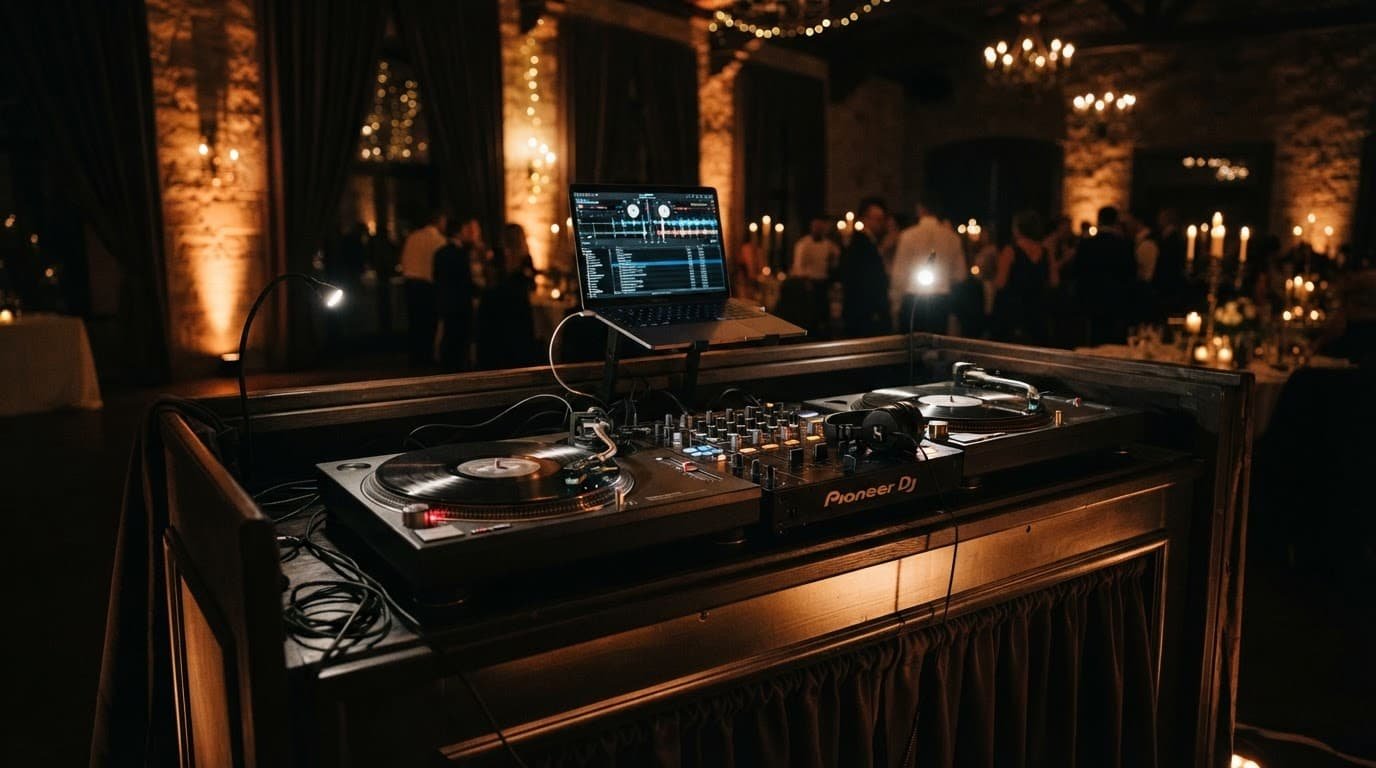
Put your instructions in writing, even if you have already talked through them. A shared planning form, email, or music worksheet gives everyone one reliable reference point. Separate your notes into three simple groups:
- Must not play: Personal triggers, banned artists, unsuitable lyrics, and songs you never want to hear.
- Prefer not to play: Overplayed tracks or styles you would rather skip unless the DJ believes they fit the moment.
- Guest requests: Clear instructions for how your DJ or band should handle them.
Mention any exceptions. Maybe “Sweet Caroline” is off limits, but Neil Diamond’s “September Morn” is welcome during dinner. Specific details help a professional make good choices without stopping you for approval every few songs.
Your music planning meeting is also the right time to discuss clean versions, dinner music, cocktail-hour playlists, and the last song of the night. These details make the celebration feel coordinated rather than random.
Decide How to Handle Guest Requests
Guest requests are part of many celebrations. Some can bring a great surprise to the dance floor. Others, such as a request for “Shout,” may ignore your preferences completely.
Tell your DJ or band who has final say. In most cases, that means the couple has final approval, and the entertainment professional politely declines requests that conflict with the list. There is no need to announce that a song is banned or embarrass the guest who asked.
A simple direction works well: “Please take requests that fit the room and our music guidelines, but skip anything on our list.” Your DJ can say the song is unavailable, suggest another option, or move on without making it a moment.
Leave reasonable flexibility for crowd reading. If the room needs an easy, familiar song, an experienced DJ may choose a clean, widely loved alternative that matches your taste. You hired them for their music knowledge, timing, and ability to keep the celebration moving.
Frequently Asked Questions
What should go on a wedding do not play list?
Include songs, artists, genres, or lyric standards that would genuinely affect your enjoyment of the reception. Personal triggers, unsuitable lyrics, overplayed songs, and music that does not fit your crowd are all reasonable choices.
How long should a wedding do not play list be?
Keep the list focused on your true non-negotiables and the songs you strongly dislike. A list that is too long can limit your DJ or band and leave little room for professional judgment.
Should I ban entire genres or artists?
You can, but only if you truly want to avoid the entire category or artist. Otherwise, name specific songs and explain whether the restriction is firm or simply a preference.
When should I give the list to my DJ or wedding band?
Share it in writing before the final planning meeting so your entertainment professional can use it with your timeline and requested songs. This also gives you time to discuss clean edits, special dances, dinner music, and guest requests.
How should my DJ handle guest requests?
Tell your DJ or band that requests are welcome only when they fit your music guidelines. They can politely decline a banned song, suggest an alternative, or move on without embarrassing the guest who asked.
Let Your Music Sound Like Your Marriage
Your reception does not need all the traditional wedding songs to feel festive. It needs music that feels comfortable, personal, and enjoyable for the people in the room.
Clear music boundaries protect the moments you care about and give your DJ or band useful direction. Familiar songs like “Happy” and “Can’t Stop the Feeling” may still feel wrong for your celebration. Choose firm boundaries, share your favorite sounds, and leave room for experienced judgment.
The best reception playlist feels less like a rulebook and more like a celebration that could only belong to you.