Few reception decisions create more last-minute uncertainty than a tip envelope. Wedding DJ tipping is optional, but many New Hampshire couples want a clear way to thank the professional who handles announcements, reads the room, and keeps the celebration moving.
The best approach to wedding DJ tipping depends on your contract, the service provided, and how the night comes together. Your budget matters, too. A meaningful thank-you should never create financial stress after the wedding.
Here is a practical way to decide early, handle the tip smoothly, and focus on enjoying your wedding reception.
Key Takeaways
- Wedding DJ tipping is optional, but it is a thoughtful way to recognize excellent service and extra responsibilities.
- A practical New Hampshire DJ tip range is $50 to $150, with up to $200 appropriate for exceptional or complex service.
- Review your contract for included gratuity, service charges, or staff fees before deciding on an additional tip.
- Prepare the tip in advance and arrange a calm handoff near the end of the reception through a trusted person.
- If cash tipping is not comfortable, a sincere note, honest review, or referral can still be a meaningful thank-you.
Wedding DJ Tipping: What Is Expected, and What Isn’t
A wedding DJ tip is not mandatory. Your signed agreement should cover the DJ’s time, planning, equipment, music, travel, and event responsibilities.
Still, a cash tip is a customary way to recognize excellent service. It is most appropriate when your DJ is prepared, responsive, professional, and engaged with the evening’s flow. Great DJs do more than play a playlist. They make clear introductions, adjust music for the crowd, manage timeline changes, and keep guests comfortable on the dance floor.
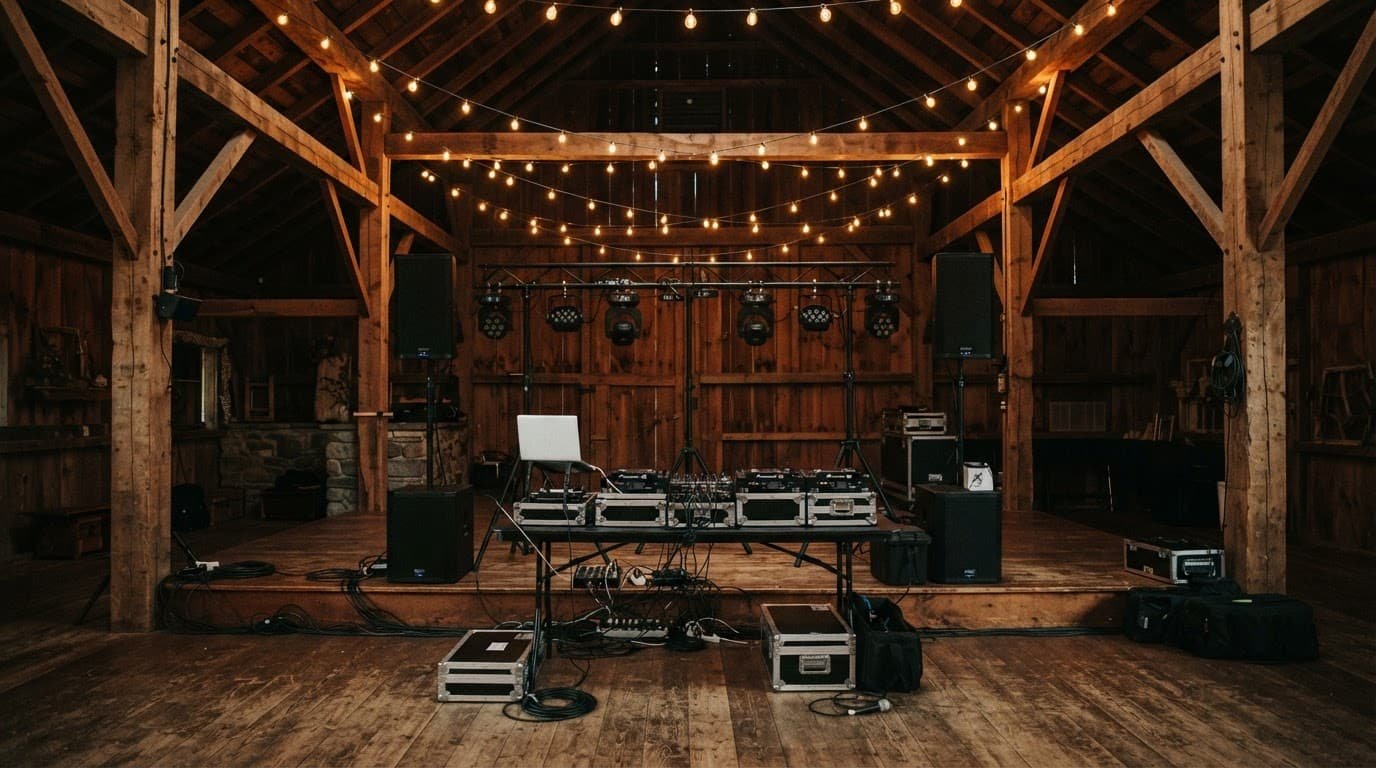
The usual etiquette is performance-based, not automatic. If your DJ handled a rain-plan ceremony change, coordinated with your wedding coordinator, kept speeches on track, and turned a schedule delay into a packed dance floor, a tip is a thoughtful gesture.
For a broader look at vendor gratuities, The Knot’s vendor tipping guide also describes DJ tips as optional but appreciated when service is strong.
Your DJ’s package price covers the booked service. A gratuity is a separate thank-you for the care and effort you feel they brought to your celebration.
The business structure matters, but it does not need to complicate the decision. Traditional etiquette says a business owner is not automatically expected to receive a tip because they set their own rates. However, owner-operators often handle planning calls, music preparation, setup, hosting, and breakdown themselves. If that service felt exceptional, a tip is still welcome.
When you hire through a larger entertainment company, do not assume the DJ receives the full package price. Company pricing can cover office support, insurance, equipment, music licensing, staff scheduling, and other overhead. A flat rate tip lets you thank the person who worked your wedding without guessing about payroll details.
How Much Should You Tip a Wedding DJ in New Hampshire?
For most weddings, a DJ tip budget of $50 to $150 is reasonable. Couples who want more flexibility can set aside up to $200 for a DJ who provided exceptional service or covered extra responsibilities.
A percentage tip can work, but a flat amount is often easier. A 10% to 15% tip may feel appropriate for a smaller DJ package, yet it can become unexpectedly high for a premium package with elaborate lighting or multiple sound systems. The current Zola wedding vendor tipping guide places DJs in a $50 to $200 range when gratuity is not already included.
Use this quick guide as a starting point:
| Wedding DJ Situation | Practical Tip Range |
|---|---|
| One DJ, standard reception coverage | $50 to $100 |
| DJ also provides polished emcee work and detailed planning | $100 to $150 |
| Complex event with ceremony audio, multiple spaces, or extensive coordination | $150 to $200 |
| DJ assistant or sound technician | $20 to $50 per person |
A high-priced package does not automatically require a high percentage tip. Consider the actual work involved. A single-room reception at a Concord ballroom has different demands than a late-fall Lakes Region wedding with ceremony audio, cocktail-hour music, reception coverage, uplighting, and several room changes.
The wedding venue, season, travel distance, guest count, and service level can all affect wedding DJ cost. Tip based on your experience, not on a formula that leaves no room in your wedding budget.
If a tip is not financially comfortable, you do not need to stretch your budget. Pay the contracted amount on time, offer sincere thanks, and leave a strong review afterward.
Read Your Contract Before Adding a Tip
Before you decide on a number, review your wedding vendor contracts. Look for phrases such as “gratuity included in contract,” “service charge,” “administrative fee,” or “staff fee.”
Those phrases do not always mean the same thing. A service charge may support company operations and may not go directly to your DJ. A line item called gratuity may be intended for the DJ or crew. The simplest answer is to ask before the wedding week.
Send a brief email with three questions:
- Is gratuity already included in our agreement?
- If it is included, does it cover the lead DJ and any assistant?
- Do you have a preferred method for an additional thank-you?
This quick check prevents duplicate tipping and removes awkward guesswork. It also gives your DJ time to tell you whether cash, a digital payment, or a mailed check is preferred.
If you are organizing a bartender tip alongside tips for the wedding photographer, catering staff, a hair and makeup team that includes a makeup artist, and transportation providers, keep each vendor category separate. General guidance, such as Marryment’s wedding vendor tipping overview, can help you plan the larger gratuity budget without treating every vendor the same way.
When and How to Give Your DJ a Tip
The best time to give a DJ gratuity is near the end of the reception, after the main dancing and formal events are complete. Your DJ is still working during breakdown, but the end of the night is usually the easiest moment for a quick, personal thank-you.

Prepare the cash envelopes before the wedding day, labeling the DJ’s envelope separately. Give it to your wedding coordinator, best man, maid of honor, parent, or another trusted person. Let them know when it should be handed over, so you are not looking for an envelope while greeting guests or enjoying your last dance.
Cash is traditional, but it is not the only option. Many DJs are comfortable with:
- Venmo, PayPal, or Zelle sent after the reception
- A check mailed after the wedding
- An additional payment through the DJ company’s approved payment method
Always confirm the preferred method with the DJ first. Some professionals prefer cash at the event. Others prefer a digital payment or check for easier recordkeeping.
Do not hand over the envelope during ceremony setup, dinner announcements, or a busy dance-floor moment. A calm handoff near the final song, after the final guest send-off, or in a post-wedding message feels professional and relaxed.
Match the Thank-You to the Service You Received
The strongest reason to tip is not that a chart told you to do it. It is that your DJ delivered the dependable, personalized service you hoped for.
Think about the full experience. Did they respond quickly during planning? Did they honor your must-play and do-not-play lists? Were announcements clear? Did the sound stay balanced for both speeches and dancing? Did the DJ work well with the venue, photographer, catering staff, and coordinator?
When a Larger Tip Makes Sense
A higher tip is fitting when the DJ went above and beyond the expected music role. Perhaps they calmly adjusted the timeline after a delayed ceremony, made guests of different ages feel included, or kept the energy up during a slow stretch of the evening.
A second DJ, assistant, or sound technician should be considered separately. If those team members were present and helpful, a $20 to $50 envelope per person is a fair thank-you.
A tip should recognize good work, not pressure you to reward service that fell short of your agreement.
If service was poor, you are not required to tip. Being late, ignoring key music requests, using unprofessional announcements, or failing to communicate about serious issues are reasonable concerns. Address them calmly with the DJ or company after the wedding, while details are still fresh.
Appreciation That Does Not Require Cash
Sincere thank-you notes and honest online reviews can mean a great deal to a wedding professional. Reviews help future couples find reliable entertainment, especially when they mention details such as music selection, crowd engagement, communication, or ceremony audio.
Your card can be short and personal:
“Thank you for keeping our reception organized, fun, and full of energy. Our guests are still talking about the dance floor.”
That message, paired with a review or referral, is a meaningful way to show appreciation when cash tipping is not possible.
Frequently Asked Questions
Do I have to tip my wedding DJ?
No, a wedding DJ tip is not mandatory. It is an optional thank-you for dependable, professional, or exceptional service.
How much should I tip a wedding DJ in New Hampshire?
Most couples can consider $50 to $150, while $150 to $200 may fit a complex event or service that went well beyond expectations. Tip based on the DJ’s responsibilities and your budget rather than a fixed percentage.
Is gratuity already included in the DJ’s contract?
It may be, so review your agreement for terms such as “gratuity included,” “service charge,” or “staff fee.” Ask the DJ or company whether any amount goes directly to the lead DJ or assistants before adding a tip.
When should I give my DJ a tip?
The end of the reception, after the main formalities and dancing, is usually the easiest time. Prepare the envelope ahead of time and have a coordinator, wedding party member, or trusted guest handle the handoff.
What if I cannot afford to tip my wedding DJ?
You do not need to stretch your budget to provide a gratuity. Paying the contracted amount on time, writing a personal thank-you, leaving a detailed review, or offering a referral can still show genuine appreciation.
A Confident Final Decision
Deciding whether to tip your DJ should feel like a choice, not another wedding bill you did not expect. Review the contract, set aside $50 to $150 if your budget allows, and adjust upward only when the service and responsibilities truly warrant it.
The best approach is thoughtful appreciation. Plan the envelope or payment method ahead of time, delegate the handoff, and let your DJ know their work helped make the celebration feel smooth, personal, and memorable.