A wedding reception needs a music plan, not a 200-song command sheet. The right wedding DJ song requests give your DJ clear direction, while the DJ selects many songs throughout the wedding reception. The ideal number depends on the reception length, guest count, and preferred styles.
For most couples, a focused song list, a broader wedding playlist guide, and songs to avoid create the right balance. Your favorite tracks stay part of the wedding music, while the DJ keeps the wedding reception responsive and the dance floor flexible. Ceremony selections belong to the wedding ceremony, and planning differs when you choose a DJ instead of a live band. The DJ can shape much of the wedding reception in real time, rather than simply playing every title you name.
Key Takeaways
- Keep your must-play list focused, often around 15 to 25 songs that truly matter to you. Plan wedding ceremony music separately from the reception.
- Plan roughly 15 to 20 tracks per hour of active dance floor time, but treat that as a flexible range. A longer wedding reception, larger guest list, or broader tastes may require a larger pool, and songs won’t all play in full.
- Give wedding guests an organized way to suggest songs, such as request cards, while letting your DJ decide what fits the wedding reception.
- Set boundaries with a clear do-not-play list, including artists, genres, explicit music rules, and personal deal-breakers. Highly specific limits may require more advance discussion.
- Share your final music details before the final planning meeting, not during a busy week leading up to the wedding reception.
How Many Wedding DJ Song Requests Are Enough?
A typical four-hour wedding reception may need a working pool of 60 to 75 tracks, plus 15 to 20 flexible options. This estimate describes a wedding playlist in motion, not a mandatory list you must hand-pick. The pool can cover dinner, formal moments, and open dancing.
The useful number changes with reception length, guest count, musical style, and whether a live band handles part of the event. The estimate can also change when wedding music covers the wedding ceremony and cocktail hour. Detailed required and avoid lists can narrow the pool.
Most dance songs play for two or three minutes during a wedding reception, keeping the energy moving. That gives more people a chance to enjoy the dance floor.
Keep Must-Play Songs Personal
Your must-play list should include songs you’d hate to miss, such as first dance songs and the grand entrance track. Add meaningful songs, family favorites, and party choices that fit your style. DJ-selected tracks fill out the rest of the wedding reception and dance floor.
Around 15 to 25 must-plays is usually enough for the key moments. A list of 75 required songs can leave little room to adjust when dinner runs late, toasts take longer, or the room favors another style.
Give Your DJ a Bigger Pool of Ideas
A broader request list can be much longer because it is not a demand. Add artists, music genres, decades, and songs you enjoy if they fit the moment. You might like country during dinner, 2000s pop later in the evening, and a classic sing-along near the end.
A professional DJ uses those ideas to shape the rest of the wedding reception around timing and crowd energy. Not every song will play, so explore these best wedding reception songs for ideas that feel personal without becoming overly restrictive.
Set a Clear Policy for Guest Requests
Guest song requests can bring unexpected life to a wedding reception. A favorite aunt’s request may bring wedding guests onto the dance floor. A late-night request from the wedding party can give the wedding reception a needed boost.
Still, not every request belongs in the moment. Guests can suggest songs, but the DJ decides what fits your boundaries, the timing, and the current room. Your music preferences, wedding playlist, and required wedding music remain your call on the wedding day.
Choose the Level of Freedom You Want
There are three practical ways to manage requests at a wedding reception:
- Accept appropriate requests that match your preferred music genres and do-not-play list.
- Let the DJ use discretion, with no promise that every request will be played.
- Decline guest requests altogether if you want a tightly controlled celebration.
The middle option works well for many couples. It keeps the wedding reception welcoming while protecting the atmosphere you planned.
Use One Simple Request Method
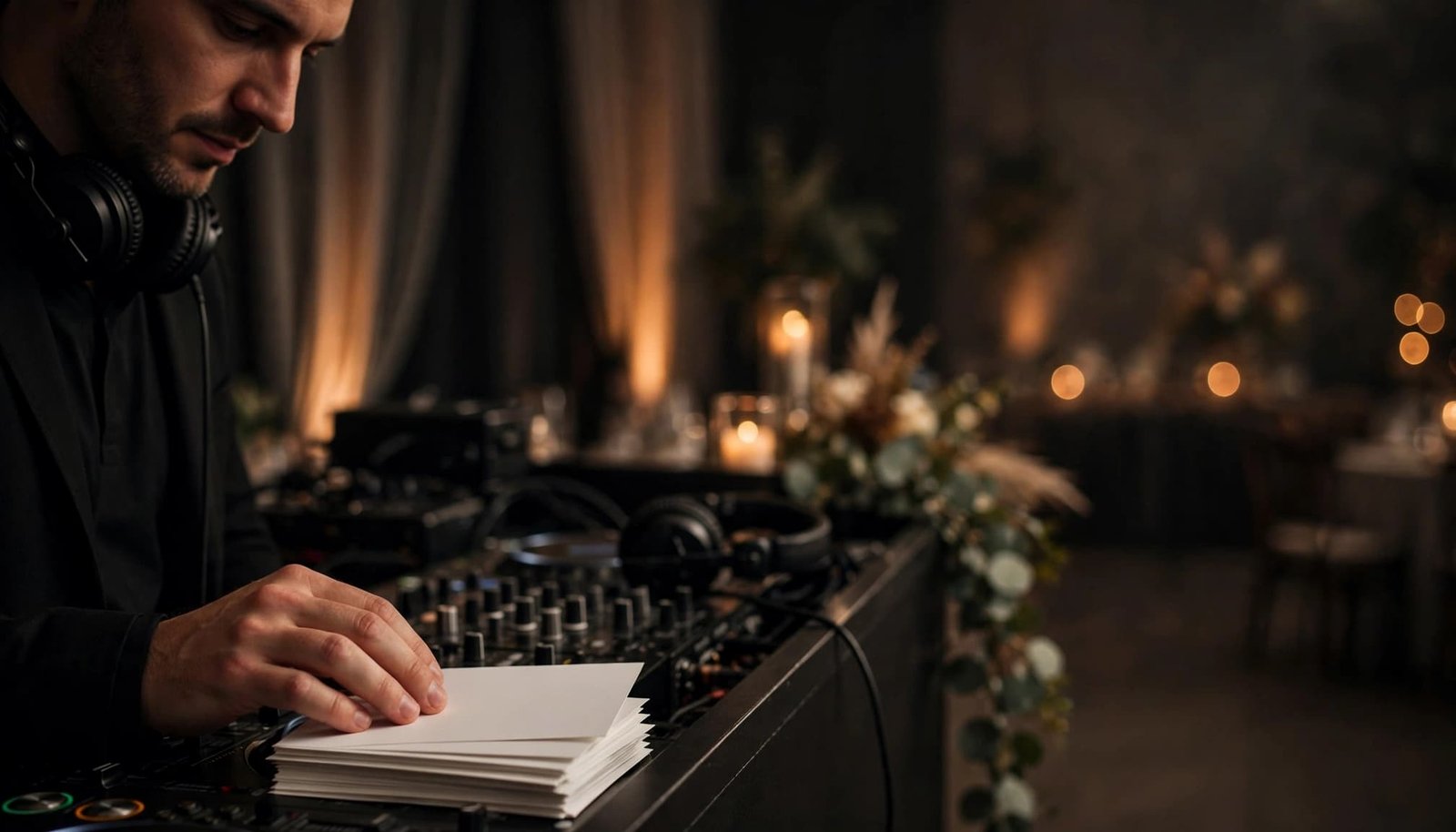
Request cards near the guest book, bar, or lounge area can work well. A short online form or QR code can also help, especially when guests submit ideas before the event. Ask for one song title and artist name, then use request cards, forms, or a QR code to keep submissions manageable. The same policy applies when a DJ shares entertainment duties with a live band.
Don’t let guests crowd the DJ booth, hand over phones, or send multiple people with the same request. Your DJ needs to focus on transitions, announcements, and keeping the room moving.
A request is feedback, not a promise. It may be perfect later in the evening, or it may not fit the celebration at all.
Build Three Lists Before the Final Meeting
Your music planning should cover more than a few reception songs. A clear system gives your DJ useful details for wedding ceremony music and the wedding reception. It prevents the wedding reception from becoming a playlist played in order.
Your Must-Play List
List the songs the couple specifically wants played. Include the grand entrance, first dance songs, father-daughter dance, mother-son dance, and cultural selections. Note how the wedding ceremony hands off to the wedding reception, and label each transition clearly.
If a song needs a certain version, starting point, or fade point, mention it. Those details matter for introductions and special moments during the wedding reception.
Your Play-If-It-Fits and Do-Not-Play Lists
The play-if-it-fits list is where you can share songs you enjoy without creating obligations. It can shape your wedding playlist without promising that every song will play in order. Your do-not-play list should set firm boundaries around difficult memories, disliked genres, explicit music, or songs outside your music preferences.
Your DJ event planner or planning contact should receive the details before the wedding day. During that conversation, New Hampshire wedding DJ services can help test special versions, timing, announcements, and music you don’t want played.
These lists also help coordinate wedding music when entertainment includes both a live band and a DJ.
Let the DJ Protect the Flow of the Night
A familiar song can still be the wrong choice at a wedding reception. Unlike a wedding ceremony, formal moments are protected, while the wedding reception can shift quickly once dancing begins. “uptown funk,” “dancing queen,” “Mr. Brightside,” and “I Wanna Dance with Somebody” may be familiar reception songs, but timing and audience matter as much as the title.
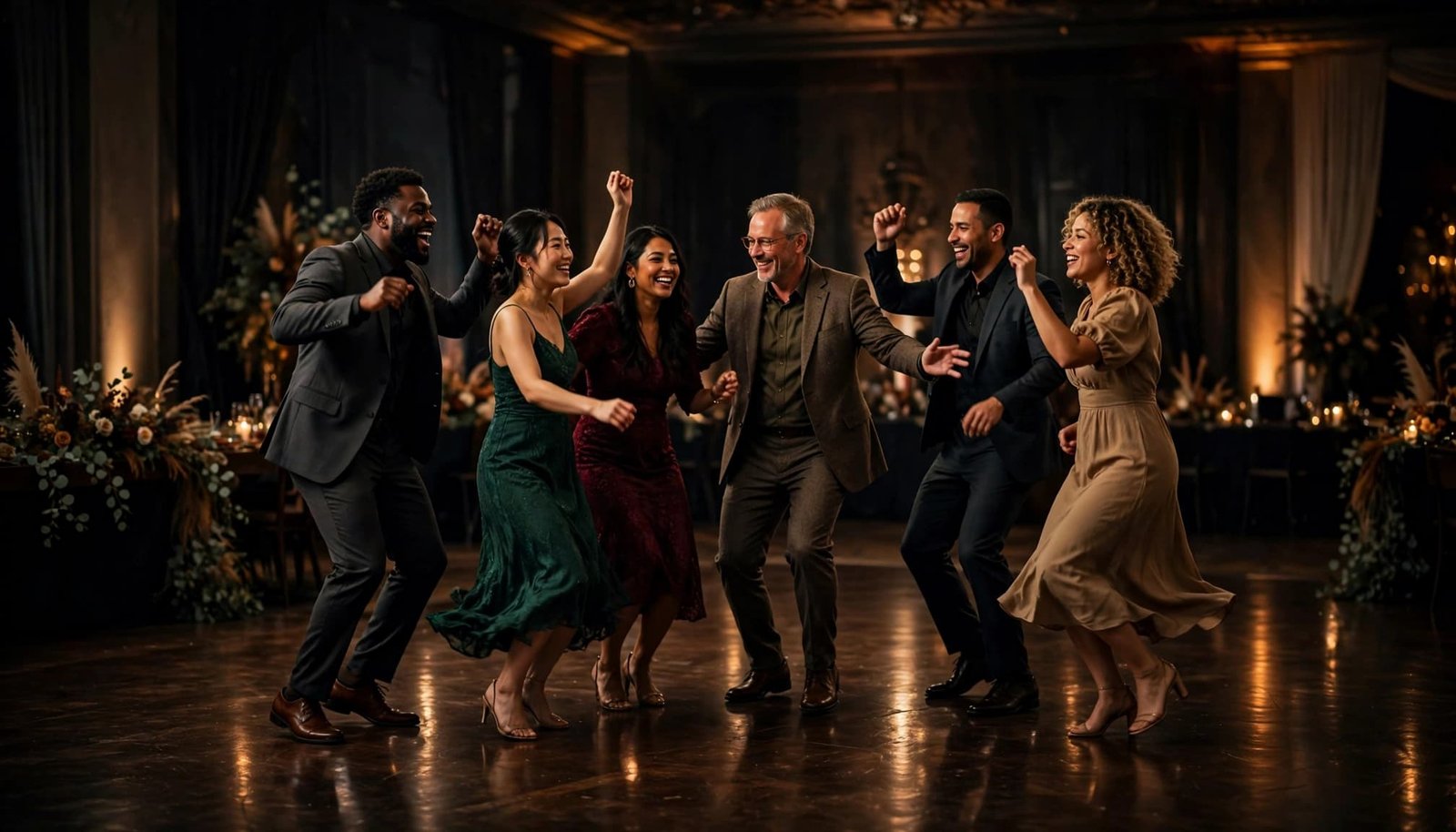
A professional DJ reads the room, noting crowd energy, which songs bring wedding guests to the dance floor, and when a new style will help. Wedding music should keep the wedding reception moving rather than letting one group take over. Unlike a live band, a DJ can change songs immediately. Two or three songs in one style may work well, but a long run can leave others waiting for a change.
If a guest makes an inappropriate, repetitive, or drunken request, the DJ can stay polite and brief: “Thanks, I’ll keep that in mind for later,” or, “We’re keeping the music aligned with the couple’s preferences tonight.” At a wedding reception, that boundary protects the room without embarrassing anyone, and you shouldn’t have to negotiate song choices on your wedding day.
Frequently Asked Questions
Should our DJ play every guest request?
No. A guest suggestion isn’t a required song from the couple. Your DJ should evaluate guest song requests against your music preferences, lyrics, and the room. Whether the wedding reception has a DJ, a live band, or both, the couple’s selected reception songs should guide the set.
When should guests be allowed to request songs?
Open dancing is usually the best time to make requests on the dance floor. Let wedding guests use request cards then, not during protected formal moments. Keep the wedding ceremony, dinner, toasts, grand entrance, and special dances protected so unexpected songs don’t interrupt the wedding reception flow.
When should we send our final list?
Send your final song choices and exclusions at least one week before the final planning meeting. This gives you time to confirm clean edits, special timing, request policies, and the overall wedding reception timeline.
Keep the Music Personal, Not Prescribed
The best wedding DJ song requests give your celebration personality while leaving control with the people guiding the night. Identify the wedding music and reception songs you specifically want, then trust the DJ to choose additional music throughout the wedding reception based on timing and how wedding guests respond on the dance floor.
A thoughtful plan protects your must-play moments and personal priorities while allowing the DJ to shape the wedding reception as the night unfolds. On your wedding day, plan your last dance songs for the wedding reception, but leave room for the DJ’s judgment, just as you would with a live band.