A ceremony delay doesn’t have to become a reception delay. With the right wedding DJ planning, your music, announcements, and key moments can adjust while guests still feel cared for.
The challenge is deciding what changes before everyone starts making separate decisions. A clear contact person, a flexible timeline, and a DJ who knows the backup plan can keep the celebration moving. Start with the decisions that matter most.
What a Ceremony Delay Changes for Your DJ
A late ceremony affects more than its opening song. Cocktail hour may start later, portraits may overlap with guest arrivals, and dinner service may have a fixed window. Your DJ needs to know which moments can move and which deadlines cannot.
The DJ can adjust music and announcements, but shouldn’t have to decide whether an outdoor ceremony is safe or whether the kitchen can delay dinner. Those calls belong with the couple’s designated decision-maker and the appropriate venue staff.
One updated timeline is better than several well-meaning guesses. After approval, the decision-maker should send the same update to all wedding vendors: the DJ, photographer, caterer, and venue coordinator. That prevents an entrance announcement before the wedding party is ready or a toast while dinner is still being served.
Wedding DJ Planning Starts With a Delay Plan
The most useful backup plan is a short wedding DJ checklist you can use on the wedding day. Before the celebration, agree on who makes the call, how vendors will hear about it, and what guests should be told.

Name One Person Who Can Approve Changes
Choose a wedding planner, venue coordinator, or trusted family member to collect updates and communicate decisions. They can check with the officiant, while the wedding venue coordinator confirms the ceremony space is ready and relays any approved change to the DJ. The couple shouldn’t have to field calls while preparing to walk down the aisle.
Agree on the wording for a guest announcement, too. For example: “We’ll begin the ceremony shortly. Please remain nearby, and we’ll share an update when the space is ready.” It gives guests direction without promising a start time that may change again.
Separate Weather Decisions From Music Decisions
For an outdoor New Hampshire wedding, ask the venue when it will move the ceremony indoors and who can approve the change. Check the National Weather Service’s regional Weather Story during wedding week, then follow the venue’s safety and room-change guidance on the day.
Rain isn’t the only concern. Wind can affect microphones, and the venue should decide whether unsafe weather requires guests and equipment to move. Once the venue confirms the location, the DJ can prepare the right sound setup and music cues for that space.
Choose a DJ Who Can Adjust Without Taking Over
A professional wedding DJ brings more than a reception playlist. Depending on the agreement, services may include ceremony audio, cocktail hour music, introductions, microphones, dinner music, dance floor lighting, and master of ceremonies (MC) services. Confirm what’s included in your wedding package rather than assuming every package covers every location.
DJ Steve Neff Entertainment LLC lists ceremony and reception music, wireless microphones, MC services, and vendor coordination among its New Hampshire wedding DJ services. When comparing providers, ask how those services would work at your venue if the schedule shifts.
Ask Who Will Be There and Who Calls the Cues
Find out who will DJ your wedding and whether that person also handles MC announcements. Ask how they receive updates from the coordinator and when they’ll check with the photographer before introductions, toasts, and dances.
A DJ can guide reception flow; a DJ isn’t automatically your day-of coordinator. That distinction matters when a late ceremony requires changes to meals, transportation, or room access.
Listen for a Practical Backup Answer
During interviews, ask: What happens if ceremony sound fails? Is there a backup microphone or music source? Can the setup move indoors, and how much advance notice is needed? What if the assigned DJ cannot perform?
Clear answers should match the venue layout and your written agreement. When you’re ready to discuss your date, location, timeline, and sound needs, you can start a wedding DJ booking conversation with those details in hand.
Confirm Sound for Every Ceremony Location
An outdoor ceremony, indoor backup room, and separate cocktail area may each need a different audio plan. A speaker that works well for a small ceremony space may not cover a distant patio. Moving one system between spaces also takes time.
Walk Through the Alternate Space
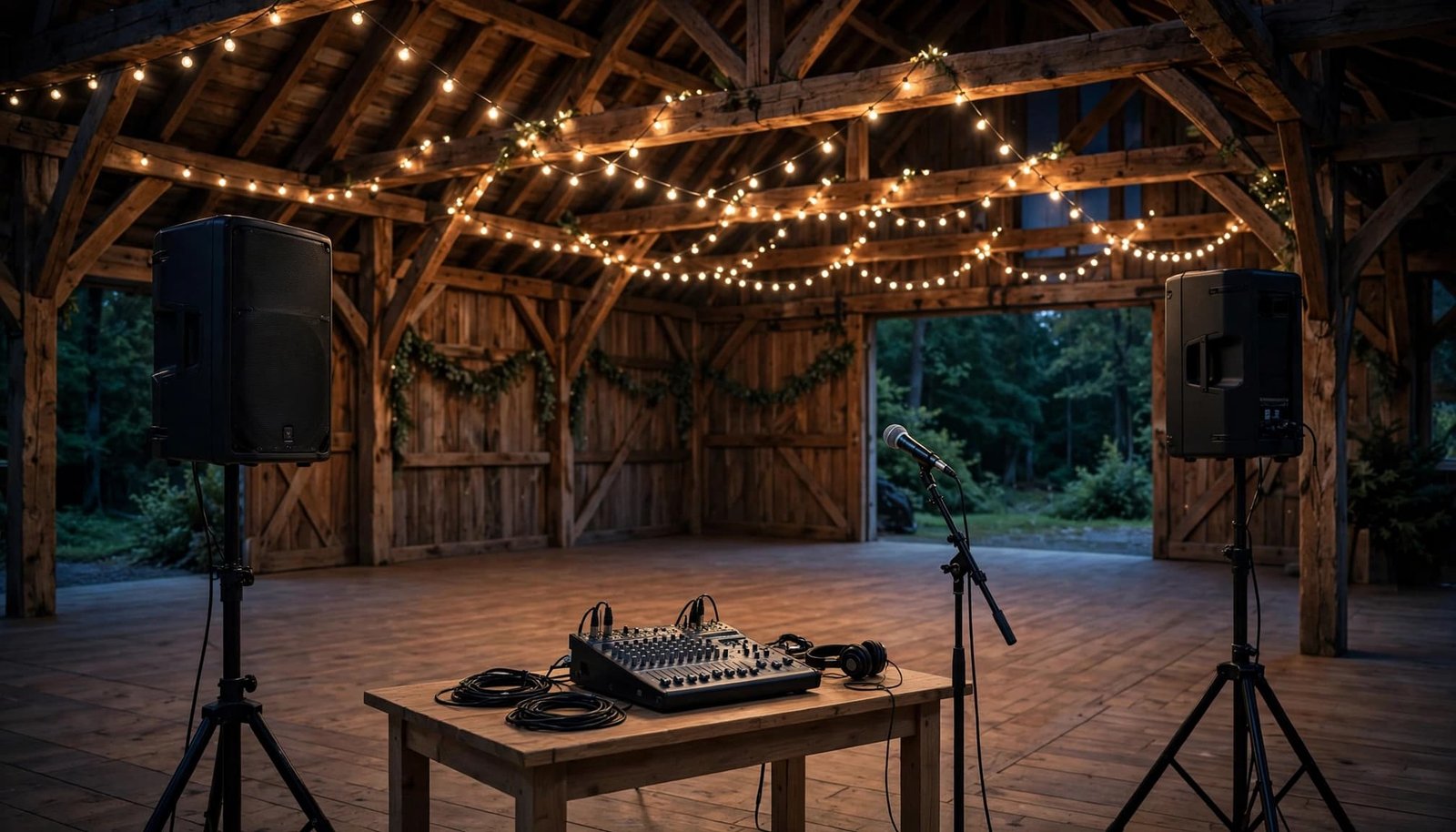
Ask where speakers and a microphone would go if the ceremony moves. Confirm power access, a safe route for cables, weather protection, and when the DJ can test the room. In a barn or other reflective space, a sound check helps the DJ set speech levels so guests can hear the vows clearly.
Also confirm whether the officiant and any readers need a wireless microphone. If ceremony and reception spaces are far apart, ask whether separate setups are part of the quote. Don’t build a timeline around equipment moving instantly.
Plan for Playback Problems
Ask whether ceremony songs can play without venue Wi-Fi, what backup equipment is available, and who has the final versions. Give the DJ clear cues for the processional, recessional, and any readings with music. A printed cue sheet and the coordinator’s contact number remain useful if a phone loses service.
If you choose not to hire a DJ, assign one person to operate the music and another to make announcements. Test the speakers and microphones in both possible ceremony spaces; an unattended playlist can’t respond when the officiant is ready early or the ceremony moves inside.
Keep the Reception Timeline Flexible
A delayed ceremony doesn’t mean every reception moment must be pushed back by the same amount. Some events can shorten, while others depend on the caterer, photographer, or venue closing time. Build the revised wedding reception timeline with those vendors, then let the DJ work from the approved version.
These choices show how a delay might be handled; the right call depends on your venue and priorities.
| Reception element | Possible adjustment | Confirm with |
|---|---|---|
| Cocktail hour | Shorten it, or keep cocktail hour music going while portraits finish. | Venue and photographer |
| Grand entrance | Wait until the wedding party and photographer are in place. | Coordinator and photographer |
| Dinner and toasts | Follow meal service rather than an outdated clock time. | Caterer and MC |
| Open dancing | Protect as much dancing time as the venue’s end time allows. | Venue and DJ |
The aim isn’t to preserve every minute of the original schedule. It’s to give important moments the attention they need without surprising another vendor.
Protect the Moments That Cannot Move Easily
Ask about the venue’s amplified-sound cutoff, contracted end time, and any transportation departure. Share those limits with the DJ before wedding day. If guests travel between ceremony and reception locations in New Hampshire, allow for seasonal weather and travel time before announcing an entrance. Confirm arrival timing with the venue and photographer. Reception travel coordination tips can help when the two sites aren’t on the same property.
Give the DJ a Revised Cue, Not Just a New Time
“Start introductions at 6:30” isn’t enough if portraits are still underway. A better cue is: “Begin once the wedding party is lined up, the photographer is in place, and the coordinator gives approval.” The DJ can keep cocktail hour music comfortable until all three conditions are met.
Make the Music Plan Easy to Adjust
Ceremony music is usually tied to a precise cue, while reception music has more room to breathe. Give your DJ the songs and traditions that matter most, then leave space for changes in timing or guest energy.
Keep Song Lists Focused
Identify exact versions of processional songs, first dance songs, and any parent dances. For the reception, provide a short must-play list, a clear do not play list, and boundaries for song requests. A wedding music playlist guided by preferred music genres can be more helpful than a song-by-song reception playlist for the entire night.
If cocktail hour runs long, the DJ can extend music that supports conversation. During dancing, an experienced DJ can watch how guests respond and handle song requests within your boundaries. A flexible mixing style lets the DJ move between familiar favorites and your personal selections. That flexibility keeps a late start from sounding like a rushed playlist.
Decide Which Formalities Can Move
Talk through whether the first dance follows the entrance or happens later. Decide if cake cutting needs an announcement and whether a special tradition requires family members to be present. Share those preferences, along with your final do not play list, with the coordinator as well as the DJ.
A delayed ceremony is easier to manage when the DJ knows your priorities. Moving a dance is a different decision from dropping it altogether.
Put Coverage and Contingencies in Writing
Before signing, compare DJ quotes with your wedding budget and the services you need, not just the total. Confirm ceremony and reception coverage, setup and breakdown, travel, lighting, MC duties, and any additional sound system equipment. If you’re considering a live band, compare the full service scope and timing requirements rather than assuming both options cover the same parts of the day.
Review contract details, including the payment schedule, cancellation and postponement terms, weather arrangements, and overtime rate. Ask what happens if the ceremony moves indoors or the reception starts late. The agreement should state when paid coverage ends and who can authorize extra time. Additional coverage isn’t guaranteed.
Several weeks before the wedding, hold a final planning conversation with your DJ and coordinator. Confirm names and pronunciations, key songs, vendor contacts, the indoor backup location, and the latest timeline. Bring a printed copy of the final cues on wedding day.
Key Takeaways
- Choose one person to approve timeline changes and share them with every vendor.
- Confirm sound, power, and setup time for both the planned ceremony space and its backup.
- Give your DJ priority songs and clear cues, while leaving room to adjust reception music.
- Check coverage hours and overtime terms before a delay puts them to the test.
Frequently Asked Questions
When Should We Book a New Hampshire Wedding DJ?
Start contacting DJs after you’ve confirmed your venue and date. Popular Saturdays and fall dates may have less availability, so an early inquiry gives you more choice. You can book the date before choosing every song; the detailed music plan can come later.
What If the Ceremony Delay Is Caused by Severe Weather?
Follow the venue’s safety instructions and the designated decision-maker’s call. Use the National Weather Service to check current forecasts and alerts. Once the location and timing are confirmed, the DJ can adjust announcements and music. Never ask the DJ to treat an unsafe outdoor setup as a scheduling problem.
Can We Handle Music Without a Professional DJ?
Yes, but someone needs to manage each cue, microphone, and announcement. Download music for offline playback, test the equipment and any wireless microphone needed for announcements, and name a backup operator. If the ceremony moves or starts late, that person needs the updated plan and a way to handle song requests.
Will a DJ Automatically Stay Later If the Ceremony Runs Late?
Don’t assume so. Coverage hours and overtime depend on the contract, the DJ’s availability, and the venue’s end time. Ask in advance who can approve extra time and what it would cost.
A Better Plan Leaves Room for Change
A late ceremony doesn’t have to set the tone for the rest of your wedding. Clear decisions give your DJ the information needed to keep guests informed, protect meaningful moments, and adjust the music without rushing the celebration.
Plan the alternate location, name the person who can change the timeline, and confirm the coverage you’ve booked. Then, if the ceremony starts later than expected, everyone knows what happens next.