A wedding DJ provides reception entertainment beyond playing a list of favorite songs. A professional wedding DJ manages announcements, keeps the event moving, supports key moments, and helps guests feel comfortable from arrival through the final dance.
When comparing wedding DJ packages, focus on what each option includes, not its label. One company’s “Gold” package may include ceremony music and announcement support, while another may cover only a four-hour reception.
The labels can sound appealing, but coverage, equipment, planning, and coordination reveal the full scope.
Key Takeaways
- Compare wedding DJ packages by coverage, equipment, planning, coordination, and assigned performer—not by labels such as basic, premium, or all inclusive.
- Build your event timeline before choosing a service level, and confirm whether the package covers the ceremony, cocktail hour, reception, and any additional locations.
- Ask what MC services include, including announcements, introductions, special dances, timeline adjustments, and coordination with other wedding vendors.
- Wedding DJ prices reflect more than playing time; date, travel, venue logistics, equipment, production, and overtime can all affect the final quote.
- Review the contract for setup, breakdown, travel, insurance, backup equipment, ceremony audio, music planning, overtime, and other fees before booking.
Compare Wedding DJ Packages by Inclusions, Not Names
Package names aren’t standardized across the industry, so wedding DJ packages can vary widely between companies, venues, and event lengths.
Basic, premium, and all inclusive package names are marketing labels, not promises about what you’ll receive. Even a luxury wedding package can include fewer services than expected, so compare the actual inclusions.
A clear proposal should list coverage hours, locations, equipment, planning meetings, a wedding music consultation, timeline coordination, and added production. It should also name the performer, distinguishing an associate DJ from the professional wedding DJ assigned to your event.
Start With the Event Timeline
Before comparing DJ package tiers, build a simple outline of your day. Use an online wedding planner to map the ceremony, cocktail hour, and reception. Add introductions, dinner, toasts, formal dances, open dancing, and the scheduled end time.
A five-hour reception package may be a great fit for one wedding and too short for another. If the DJ is also providing ceremony audio and cocktail-hour music, the total service window can be much longer than the reception itself.
Ask What “MC Service” Really Means
Master of ceremonies refers to the person who makes concise announcements, guides guests toward key moments, works with the photographer and venue staff, and keeps the timeline clear.
Ask whether MC services include coordinating introductions, cueing toasts, announcing special dances, and adjusting when dinner service runs late. These details help the evening feel organized instead of rushed.
What Basic, Enhanced, and Premium Service Levels Usually Cover
Most wedding DJ packages fit into three broad service levels. These are estimates, not universal categories, but they make proposals easier to compare side by side.
| Service Level | Common Coverage | Often Includes | May Cost Extra |
|---|---|---|---|
| Basic wedding DJ package | Four to six hours of reception entertainment | DJ, MC service, sound system, dance floor lighting, planning | Ceremony sound, cocktail hour, extra time |
| Enhanced wedding package | Ceremony through reception | Ceremony audio coverage, cocktail-hour music, wireless microphones, wider lighting options | Photo booth, monogram, extra speaker zones |
| Premium wedding DJ package | Full-day and multi-location coverage | Ceremony audio, cocktail hour, wedding uplighting, photo booth services, custom monograms | Specialty effects, live musician support |
The important takeaway is simple: a higher package should solve a real need, not only add a fancier name.
Basic Reception DJ Coverage
A basic reception package often includes a DJ for four to six reception hours, a sound system sized for the room, a microphone for toasts, and music planning before the event. It may also include modest dance-floor lighting.
This level works well when the ceremony and cocktail hour have separate providers, or when both take place in a space with existing venue audio. It’s often the most practical choice for a reception that’s straightforward, well-timed, and held in one room.
Current wedding DJ cost estimates vary by source and market. WeddingWire’s DJ cost guide lists an average around $1,000, with many couples spending between $780 and $1,495. Those figures are examples rather than universal rates; wedding DJ prices vary by region, date, and service level.
Enhanced and Premium Coverage
Enhanced packages often add ceremony audio, cocktail-hour music, uplighting, additional microphones, and more detailed timeline planning. A mid-tier option may cover more of the day, including cocktail hour audio, while DJ package tiers vary in hours, equipment, and coordination. An all inclusive package can combine ceremony, cocktail-hour, and reception coverage, but that label varies by company.
Premium options may include a larger lighting design, specialty effects, and support for a live musician. That difference shows why couples should compare scope before averages. A current 2026 wedding DJ pricing guide places basic, mid-tier, and premium packages in much higher bands, providing another market example rather than a universal rate. A professional wedding DJ may quote more for planning, multiple sound systems, and full-day coordination, not playing time alone.
What Changes Wedding DJ Prices
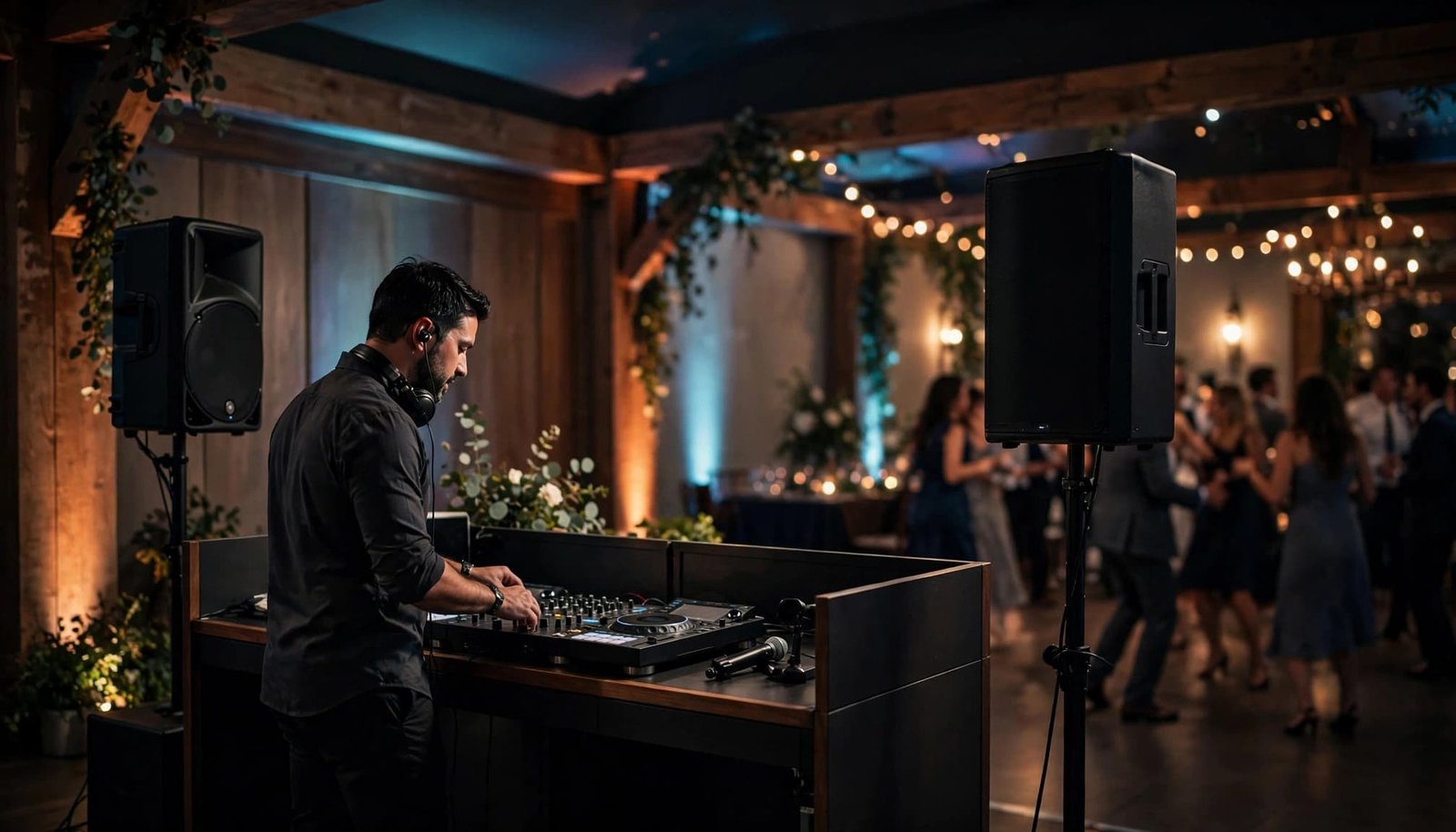
Wedding DJ prices depend on more than the number of songs played, with base rates shaped by date, geography, and production needs. A higher quote from a professional wedding DJ may reflect planning, travel, equipment, and responsibility, not just playing time. Compare the full event scope with your entertainment budget, rather than choosing solely by hourly price.
For New Hampshire couples, a Saturday wedding during peak fall foliage season may have different availability and pricing than a Friday celebration in January. A venue in the White Mountains may also require more travel time and detailed load-in planning than a ballroom close to Concord.
Time, Date, and Overtime
Confirm how many performance hours are included and when that clock begins. Some proposals include setup and breakdown outside the coverage window. Others count the full time that the DJ is on-site.
Ask for the hourly overtime rate in writing. Current market examples often place additional time around $150 to $250 per hour, but each company sets its own rate. Delayed dinners, extended speeches, venue access, or a packed dance floor can require timeline coordination and extend service.
Weekday weddings, Sunday celebrations, and winter dates may offer more flexibility. Ask whether off-season discounts or a shorter service window would change the price, though savings vary.
Venue Logistics and Travel
A venue with a long walk from the loading area, several staircases, limited parking, or separate ceremony and reception spaces requires more planning. Outdoor weddings also need weather protection, safe power access, and a backup location.
Regional differences are part of wedding DJ pricing, especially near major cities. For context, a Massachusetts wedding DJ cost comparison lists $1,800 to $3,500 for DJ service with ceremony and cocktail-hour coverage. Treat that as a nearby-market example, not a fixed New Hampshire rate.
Ceremony Audio Is Often a Separate Service
Don’t assume ceremony music is part of every package. Reception-only bookings are common, even when the ceremony is at the same venue, so ceremony audio coverage may require separate planning.
Ceremony audio can include prelude music, processional songs, wireless microphones for the officiant and anyone giving readings, and speakers placed so guests can hear clearly. Cocktail hour audio may need its own speaker or music source when guests move away from the ceremony area. The right setup depends on the ceremony size, location, wind conditions, and whether the space has built-in sound.
One Room and Two Locations Are Different Jobs
A ceremony in the same ballroom may need only a small additional setup. Cocktail hour in an adjacent space may still require a speaker that carries music without overpowering conversation.
A ceremony on a lawn followed by a reception indoors may need an entirely separate sound system.
That is why a quote may list “second audio setup,” “ceremony system,” or “separate location coverage” as an add-on. It is not necessarily a hidden charge. It covers additional equipment, setup time, and planning.
A microphone is only useful when guests can hear it clearly. The ceremony setup should be planned for the actual location, not added as an afterthought.
Sound Quality, Power, and Safe Placement
Good sound should feel full without forcing guests to shout across the table. Low ceilings can make bass muddy, while glass, stone, and bare walls can create distracting echoes. A professional wedding DJ should adjust speaker placement and volume for the room, not simply turn up the system.
Power and cable routes also need attention. Audio and power cables should follow approved room edges whenever possible. They should never cross exits, stairs, doorways, or accessible paths. If a cable must cross a busy walkway, a venue-approved cable ramp is the safer choice.
Popular Add-Ons That Can Change the Atmosphere
Add-ons are where a standard reception can become more personalized, but not every feature belongs at every wedding. Choose options that fit your venue, guest count, schedule, and priorities. These enhancements can shape the atmosphere without being required reception entertainment.
Uplighting and Dance-Floor Lighting
Wedding uplighting places color along walls, columns, draping, or architectural features. It can warm a large ballroom or soften a plain room. It can also match wedding colors or support projections with initials, dates, and custom monograms.
Dance floor lighting serves a different purpose. Its job is to build energy when open dancing begins. Ask whether the dance-floor lighting is static, music-responsive, or adjustable throughout the evening. In a small room, too much lighting can feel cluttered. In a large hall, a thoughtful design can make the dance floor feel inviting.
Photo Booths and Live Music Integration
Photo booth services can give guests something to enjoy during cocktail hour, dinner, or breaks from dancing. Compare booth hours, attendant service, print options, backdrop choices, digital gallery delivery, and setup space.
Live music integration is another popular option. A saxophonist, percussionist, or violinist can add energy to a DJ-led reception. Plan song choices, microphone needs, performance windows, and breaks in advance.

Photo by Rene Terp
Read the Contract for Costs That Are Easy to Miss
The proposal from your wedding DJ services should clearly explain what’s included before you sign. If a line item is vague, ask for plain-language clarification.
Common details to review include travel, parking, lodging for distant venues, setup and breakdown, timeline coordination, ceremony equipment, extra sound systems, uplighting, photo booth time, and overtime. Also ask whether a deposit is refundable, when the final payment is due, and what happens if the date changes.
Backup Equipment and Insurance Matter
Reliable DJs should prepare for equipment problems. Ask whether the DJ brings backup music playback, spare cables, batteries, adapters, microphones, and a backup sound system. It may not always be set up beside the main system, but there should be a plan to keep the celebration moving if a critical component fails.
Confirm that the company carries liability insurance and can provide a certificate of insurance if your venue requires one. Don’t assume insurance, backup equipment, or venue coordination is included because a package has a premium name.
Music Planning Should Be Included
A quality package should include a wedding music consultation covering your must play list, do not play list, special dances, preferred styles, and guest requests. An online wedding planner can store the questionnaire, deadlines, and finalized preferences for everyone to review.
A reliable DJ uses your music preferences as a guide while still reading the room. Guests may request songs that don’t fit the moment, the crowd, or your preferences. The DJ should adjust the order, save a song for later, or decline a request that conflicts with your plan.
Questions to Ask Before You Book
A professional conversation before booking can prevent most package surprises. Bring your venue details, guest count, timeline, and a basic idea of the atmosphere you want. If you use an online wedding planner, bring its shared timeline and vendor details too.
Use this wedding DJ checklist during interviews. Ask these questions when comparing wedding DJ services:
- What part of the day does your quote cover: the ceremony, cocktail hour, reception, or only part of the day?
- How many hours are included, and what is the written overtime rate?
- If our ceremony and reception are in different locations, what ceremony audio coverage is included?
- What speakers, wireless microphones, and lighting are included for our guest count and venue?
- Do you bring backup playback equipment, spare cables, and a backup microphone?
- Are setup, breakdown, travel, parking, and insurance included in the price?
- Which services and fees are included before we compare quotes against our entertainment budget?
- How do you coordinate with our venue, photographer, caterer, planner, and preferred wedding vendors?
- How do you handle live music integration with a saxophonist, percussionist, violinist, or other performer?
- Will you provide MC services for announcements and reception flow, and who will serve as the master of ceremonies?
- How do you handle our music preferences and do not play list?
- What happens if weather, timing, or venue access changes on the wedding day?
Also ask who will be your actual DJ. The answer should match the contract. Personality, experience, organization, and communication are part of the service you’re booking.
Frequently Asked Questions
What should I compare when reviewing wedding DJ packages?
Compare the actual inclusions rather than the package name. Review coverage hours, locations, equipment, MC services, planning, ceremony audio, lighting, backup support, and the DJ assigned to your wedding.
Is ceremony music included in a wedding DJ package?
Not always. Many reception-only packages exclude ceremony audio, so confirm whether microphones, speakers, processional music, and separate location coverage are included or priced as add-ons.
What does wedding DJ MC service usually include?
MC service typically includes concise announcements, introductions, special-dance cues, and guidance through the reception timeline. Ask whether the DJ also coordinates with the photographer, venue staff, caterer, and other wedding vendors.
Why do wedding DJ prices vary so much?
Prices can change based on the date, location, service hours, travel, venue logistics, equipment, production, and planning required. A higher quote may reflect ceremony coverage, multiple sound systems, lighting, or full-day coordination rather than playing time alone.
What should be included in the contract?
The contract should clearly state coverage hours, services, equipment, setup and breakdown, overtime, travel, payment terms, cancellation policies, insurance, and backup plans. It should also identify the actual DJ and explain any ceremony audio, lighting, photo booth, or live music add-ons.
Choose the Package That Matches Your Real Day
The best wedding DJ packages are not always the largest. Choose coverage for your actual locations, timeline, guest experience, and support needs, not the most impressive label.
Start with the essentials: dependable MC services, appropriate sound, thoughtful music planning, and a clear wedding DJ checklist. A professional wedding DJ should provide dependable execution, clear coordination, and a written backup plan. Add ceremony music, lighting, photo booth service, or live music integration when they suit your guests, priorities, and entertainment budget.
A clear contract and confident conversation reveal what wedding DJ services include and how support will work. Choose the service level that delivers reliable coverage, clear expectations, and a smooth event flow, with reception entertainment that suits your guests.