A ceremony at one venue and a reception at another can feel elegant and personal, but it adds real moving parts to the day. Wedding DJ logistics cover more than a playlist. Ceremony audio, timing, transportation, and venue rules must connect the ceremony, cocktail hour, and wedding reception.
The goal is simple: wedding guests should hear every vow, enjoy a relaxed break, and enter a reception ready for introductions, dinner, and dancing. A clear plan helps keep the wedding day calm and makes that possible.
Key Takeaways for a Two-Venue Wedding
- Plan audio, music, and entertainment as separate services, even when one wedding DJ manages the full celebration.
- Confirm access times, power, parking, floor plans, noise limits, and weather plans with both venues before signing an entertainment agreement. Align access and transitions with the wedding timeline.
- Decide early whether the DJ will use two complete setups or move one system between locations. Consider travel distance, setup windows, and available staff.
- Give one person authority to call timing changes and oversee event coordination. That person may be your wedding planner or venue coordinator.
- Compare the full wedding package, including coverage, equipment, travel, lighting, planning support, and MC services, rather than the base price alone.
Why Two Venues Change Wedding DJ Logistics
Separate locations create separate production needs. A church ceremony followed by a ballroom reception across town is not the same as a ceremony and reception held in neighboring rooms at one property.
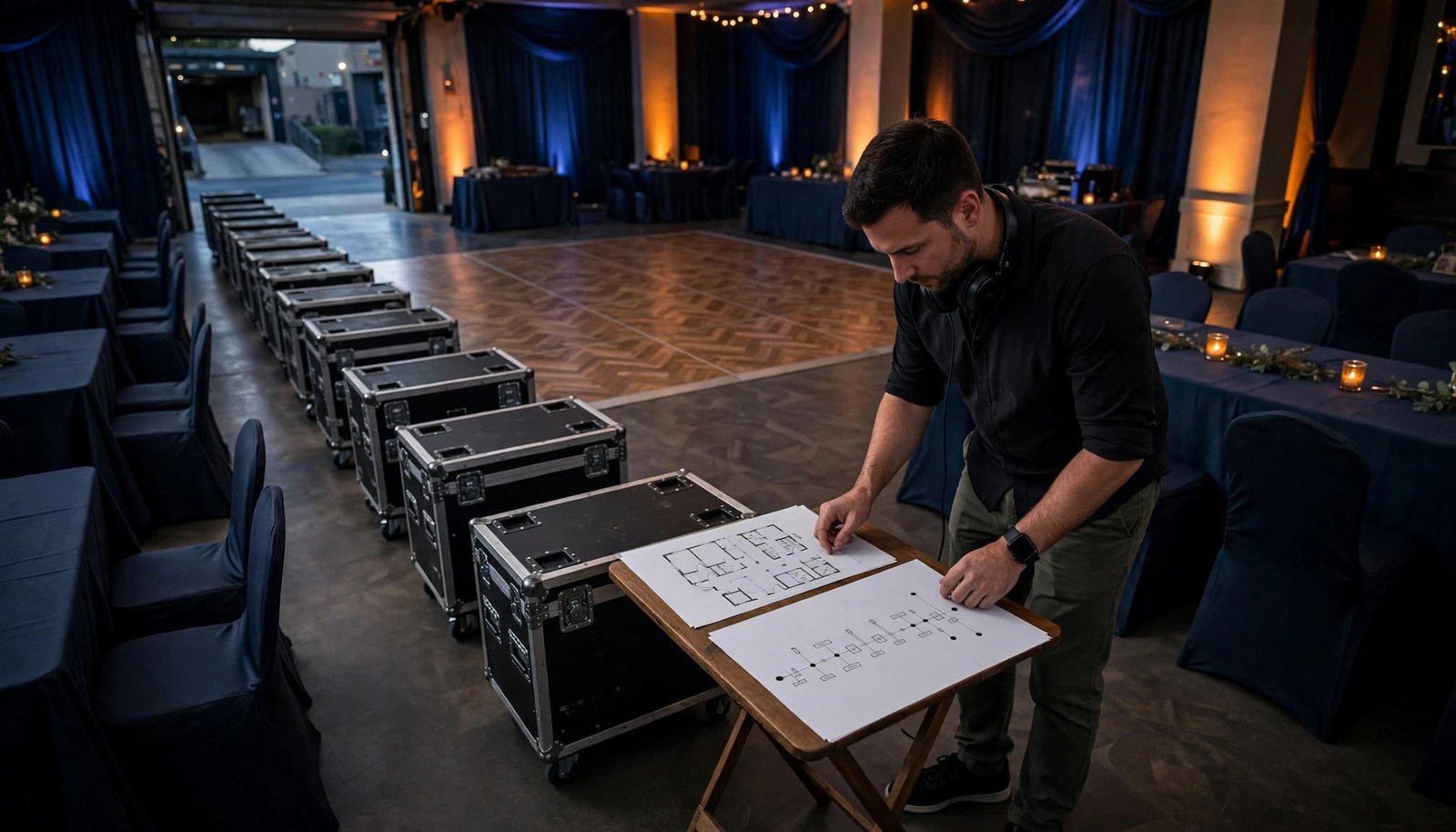
The wedding DJ may need to load in twice, complete two sound checks, and travel between venues. The couple and venue teams should agree on load-in, travel, setup, and load-out responsibilities. The reception setup may need to be ready before wedding guests leave the ceremony, especially during cocktail hour.
Separate Access, Power, and Venue Rules
Ask each venue where the DJ can unload, park, and set up. Some locations allow early access, while others restrict vendor entry until a certain time. A beautiful historic building may also have narrow doorways, limited outlets, strict volume rules, or restrictions on cables and speakers.
Request the floor plan and identify the DJ location, dancing area, bar, buffet, guest tables, and exits. Sound equipment should never block accessible routes, stairways, or doorways. If a cable must cross a walkway, it should be secured with a venue-approved cable ramp.
One System or Two?
A single movable sound system can work when the ceremony and reception are close together, the schedule allows enough transition time, and there is reliable access at both locations. It is less practical when guests move directly to cocktail hour while the DJ is expected to reset equipment elsewhere.
For venues that are far apart, two complete setups are often more dependable. The ceremony system can focus on clear speech and music cues, while the reception equipment is already in place for dinner and dancing.
A second setup may require additional speakers, microphones, power access, and a second technician or DJ, depending on the schedule.
A second setup is not simply an extra speaker. It can involve additional microphones, power access, setup time, and a separate sound check.
Confirm Venue Details Before You Book
The venue contract should answer more than capacity and catering questions. Audio and entertainment details belong in the conversation early, especially when the ceremony is outdoors or the reception has strict timing.
A professional DJ should be comfortable reviewing those details with you, your planner, and each venue contact, either individually or during a planning meeting. New Hampshire wedding DJ services can include ceremony audio, reception music, wireless microphones, lighting, and MC support, but the exact package should match your locations and schedule.
Questions for Both Locations
Bring these questions to each venue tour:
- Where can the DJ set up, and how much space is available for speakers, lighting, and a DJ table?
- Is dedicated power available near the setup area, rather than a shared outlet used by catering equipment or bar service?
- Are there indoor volume limits, outdoor sound curfews, or restrictions on lighting effects?
- Does the venue require liability insurance, approved-vendor paperwork, or advance equipment details?
- What is the rain plan, and does the backup ceremony location have room, power, and good audio coverage?
Dedicated power matters because DJ equipment, lighting, and sound systems need a consistent source of electricity. Sharing a circuit with high-demand catering equipment can increase the risk of a tripped breaker during an important moment.
Put the Handoff Plan in Writing
Confirm the earliest arrival time, the required breakdown deadline, and the event-day contact at both venues. You or your wedding planner should confirm which venue coordinator can approve access, power changes, and a rain-plan move.
Ask who permits breakdown, where equipment can wait, and who releases the DJ at each location. If your reception ends late, ask whether equipment can remain in place until guests depart or must be removed immediately.
Share a final list of wedding vendors and event details one to two weeks before the wedding. The DJ, planner, on-site venue contact, transportation provider, caterer, photographer, and videographer should receive the relevant contact information and timing details. This written event coordination plan doesn’t need identical notes for everyone, but each person should know who is calling the major cues.
Build the Wedding Timeline Backward
A strong wedding timeline starts with guest arrival, not the first dance. Work backward from ceremony arrival, allowing time for two load-ins, sound checks, travel, photography, and a reset between venues.
The wedding DJ often holds music cues, announcements, and formal reception timing together. The couple or planner approves the master timeline, while the DJ controls music and announcement cues.
Start With Ceremony Guest Arrival
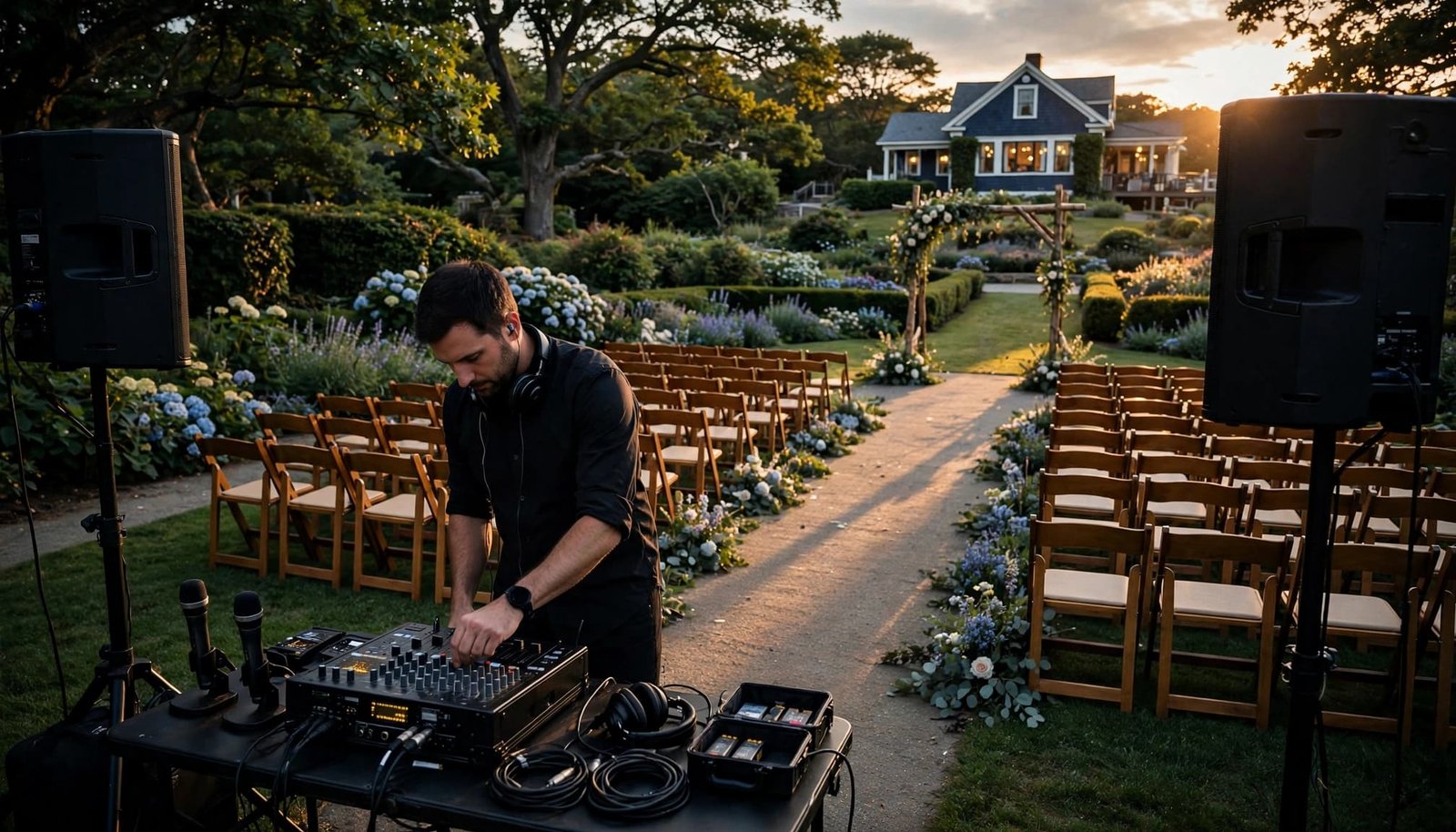
Ceremony equipment should be fully tested before the first guest sits down. Check processional music, recessional music, microphones, speaker placement, and any live musician connection.
Give the DJ the exact wedding party order, music selections, and cue points. Confirm who will signal that the processional is ready. A planner or coordinator should make that call after checking the photographer, officiant, and wedding party.
Plan the Travel and Reception Reset
If the venues are separate, build realistic travel time for the DJ and vendors moving with the group. Protect cocktail hour when calculating the transfer between locations.
On a busy wedding day, a short drive can take longer than expected. Parking, unloading, venue access, traffic, and wedding guests moving between spaces all require a buffer. Allow for a possible delayed departure instead of relying only on drive-time estimates. The transportation provider manages vehicle timing.
The reception room should be ready before introductions. Venue teams confirm room readiness, while the DJ tests microphones, reviews pronunciations, checks the entrance route, and coordinates with the caterer and photographer.
A printed cue sheet supports the reception timeline, even when everyone has a digital schedule. Include the introduction order, toast speakers, first dance, parent dances, cake cutting, meal timing, and the person approved to make changes.
Give Ceremony Audio Its Own Plan
Ceremony sound is about clarity, not concert-level volume. Guests should hear the officiant, vows, readings, and music without feeling seated beside a speaker.
Outdoor ceremonies add wind, distance, uneven ground, and limited power. Indoor ceremonies can bring echoes, high ceilings, and strict placement rules. The ceremony sound system should be speech-focused, unlike the fuller setup used for the reception.
Microphones and Speaker Placement
Ask whether the ceremony plan includes wireless microphones for the officiant, readers, and any live musicians. The officiant should confirm which microphone is needed, while a lavalier microphone may work well if secured against clothing noise and wind.
Speakers should face guests and remain positioned away from the officiant and couple when possible. The front row should be comfortable, while guests seated farther back can still hear every important word.
The venue coordinator confirms power access and cable rules. The couple supplies the processional and recessional cues, and the wedding DJ performs the final sound check.
A tested backup music source, spare cables, replacement microphones, and backup equipment help resolve technical issues quickly. Those details may never be visible, which is exactly the point.
Weather, Power, and Safe Cables
Don’t rely on a nearby outlet without confirming it works and is available for vendor use. If power is limited, ask whether protected or battery-powered equipment is appropriate for the ceremony site.
The rain plan needs more than a tent on a diagram. Confirm that the venue coordinator makes the move decision, how equipment will be protected, and how quickly the alternate setup can be tested. The alternate space also needs safe power and room for guests.
Keep the Reception Moving Naturally
Once the reception begins, the wedding DJ’s role expands. Music matters, but so do introductions, announcements, dinner pacing, toasts, special dances, and a dance floor that builds energy at the right time.
An experienced DJ reads the room while staying connected to the timeline. The right music at the wrong moment can still interrupt dinner service, photography, or an important family tradition.
Coordinate Cues With Other Vendors
Before the grand entrance, coordinate the wedding party, photographer, and caterer cues with the reception timeline. Confirm that the wedding party is lined up and the photographer is in position. Give each entrance song a clear cue point. Wedding party introductions often use only 20 to 45 seconds of a track, and these wedding reception entrance music tips can help couples choose songs with a strong opening.
The venue or caterer should communicate when music needs to lower for dinner service. Confirm the toast order and encourage speakers to keep remarks focused. Long, unplanned speeches can delay the meal and push dances later than expected.
Match Volume to the Moment
During cocktail hour and dinner, background music should support conversation. Guests need to greet family, find seats, and enjoy the meal without speaking over the speakers.
Once formalities are complete, the DJ can raise the energy for open dancing. Speaker placement matters as much as volume. Sound should feel full near the dance floor without overwhelming guests seated farther away.
The couple should supply a must-play list, a do-not-play list, and any song requests in advance. The DJ interprets those preferences, shaping each music selection around pacing and guest response. For playlist ideas that consider pacing and guest response, review how to plan reception music.
Budget for Coverage, Not Just Hours
Wedding DJ pricing varies by market, date, guest count, travel, production needs, and the amount of coverage included. A reception-only package may look less expensive until ceremony sound, pre-reception music, lighting, travel, and additional setup time are added separately.
Zola reports that wedding music costs average $1,567 nationally, with most couples spending between $1,300 and $1,900. Use that wedding DJ cost and budget guide as a starting point, not a fixed local quote.
What a Two-Venue Quote Should Include
Ask for a written breakdown that identifies ceremony sound, reception sound, microphones, MC services, lighting, travel, planning meetings, setup time, and overtime. Confirm whether uplighting is included, powered separately, or priced as an add-on.
Ask whether the ceremony, reception, and any third location need separate speakers or music sources. A second sound system may also require additional labor, transportation, setup, and breakdown time. Confirm power requirements and whether a second DJ or technician is needed.
Compare the complete wedding package rather than hourly rates alone. The quote should also show travel buffers, setup and breakdown windows, overtime rates, and any charges for extended coverage.
Equipment also has real value. A 2026 wedding sound-system cost guide estimates complete rental setups commonly fall between $700 and $1,500, depending on the system. A DJ package includes more than equipment, but that figure helps explain why separate-location coverage changes the price.
Book Before Your Date Is Competing With Others
Popular Saturdays fill early, especially during peak wedding months. Miami Vibes DJ recommends booking nine to 12 months ahead, and its 2026 wedding DJ hiring guide places many DJ packages between $1,000 and $2,500 before higher-end market pricing and expanded production needs.
Book after your date and venues are confirmed. Then provide the same information to every DJ you contact: guest count, ceremony location, reception location, travel distance, desired hours, and expected timeline. This makes it easier to compare wedding entertainment, staffing, and coverage fairly.
Frequently Asked Questions
Can one wedding DJ handle a ceremony and reception at different venues?
Yes, when the DJ has a realistic equipment and travel plan. One DJ may manage both locations with two systems and an early setup at the wedding reception. A second trained professional may be needed when travel time, venue access, or overlapping schedules make one-person coverage unrealistic.
What does a wedding DJ do besides play music?
A DJ may provide announcements, formal introductions, microphone support, music planning, timeline coordination, lighting, and dance-floor music. The master of ceremonies guides guests through transitions and announcements. The couple or designated coordinator should approve any timing changes.
Do we need a separate setup for cocktail hour?
It depends on the location. If cocktail hour is far from both the ceremony and reception setup, it may need its own speaker or music source. Ask where the DJ will be during that part of the day and how background music will continue in each space.
How should we choose a DJ for a two-venue wedding?
Look for clear answers, detailed planning, dependable backup equipment, and a written agreement that matches your schedule. Ask about transportation, venue access, power, setup windows, insurance, and backup plans. Share a written must-play list and do-not-play list, then confirm how the DJ supports your wedding entertainment needs. DJ Steve Neff Entertainment LLC has provided Professional DJ Entertainment Since 1999, with DJ, MC, sound, lighting, and event entertainment designed around each celebration.
A Smooth Day Starts With a Clear Plan
The best wedding DJ logistics are mostly invisible to your guests. They hear the vows, find the reception ready, enjoy the announcements, and move naturally toward the dance floor.
When ceremony and reception venues are separate, preparation keeps the wedding day connected. Choose a DJ who understands the technical details and event flow, then give the couple, venue contact, transportation provider, DJ, and every vendor one clear plan.