A reception can lose momentum in one awkward pause. The right wedding reception games fill a natural opening in the schedule, give guests an easy reason to laugh together, and lead cleanly back to music.
The best interactive wedding games are short, optional, age-appropriate, and tailored to the people in the room. They should never feel like a test, a surprise performance, or an interruption to dinner. With a clear plan, your DJ can host a polished activity without pulling attention away from the celebration.
Start by choosing the moments when guests are ready to watch, relax, or join in.
Key Takeaways
- Choose one or two short, optional wedding reception games that fit your guests, venue, and reception style.
- Schedule hosted activities after dinner or toasts, never during active meal service or once the dance floor is fully established.
- Keep questions, instructions, music cues, and participation expectations clear so guests can join in—or comfortably watch.
- Brief your DJ on approved prompts, accessibility needs, sensitive topics, exact names, hard stops, and the transition back to dancing.
Wedding DJ Games Need a Place in the Reception Timeline
A game works best as a brief bridge, not the main event. Ask your DJ to coordinate each activity around dinner, toasts, cake cutting, photos, and the first open-dance set. A reliable schedule also leaves room for a late photo session, a speech that runs long, or guests who need a breather.
Pick a low-pressure window
Self-guided outdoor activities can run during cocktail hour, but a hosted activity should wait until the couple and most guests are present. The most dependable window is after dinner plates are cleared and before the dance floor becomes established.
Many couples reach the same conclusion in this WeddingWire discussion of shoe game timing: a short activity works well as dinner winds down, not while guests are still eating.
| Reception Moment | Activity That Fits | DJ Direction |
|---|---|---|
| Cocktail hour | Self-guided outdoor activity | Keep it self-guided with background music. |
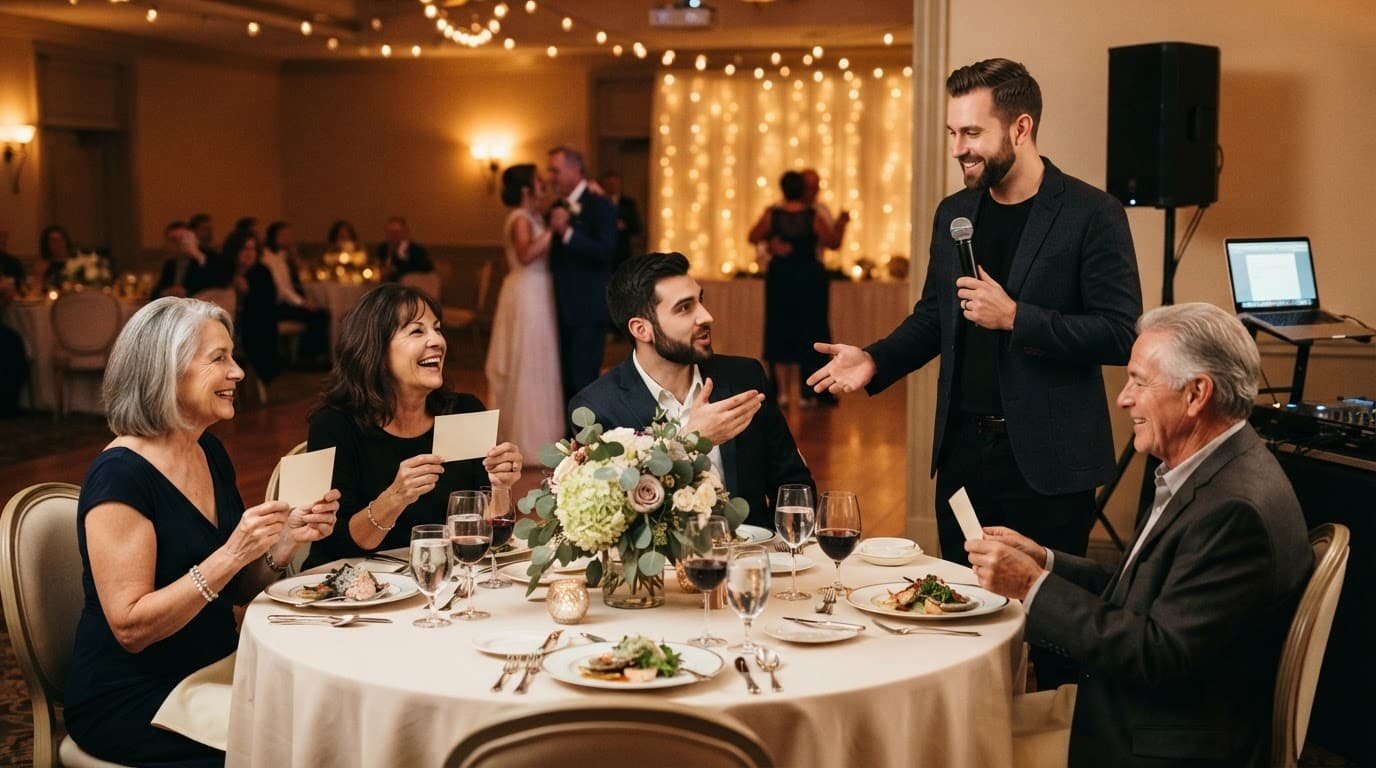
| Dinner plate clearing | Table prompts or a short card activity | Limit it to five minutes. |
| After toasts | Brief couple Q&A | Keep the microphone portion under seven minutes. |
| First open-dance set | No game | Let the floor build naturally. |
Use an announced hard stop
Your DJ should know the exact ending point before the game begins. A short introduction, one clear set of rules, and a fast exit keep the room comfortable.
“Before we open the dance floor, we have five quick questions for our newlyweds. Cheer them on, and stay comfortable right where you are.”
A 10-second musical sting can close the moment, followed by the next formal event or a familiar dance-floor track. Long explanations and extra rounds are where good ideas start to drag.
DJ-Led Games Guests Will Actually Want to Join
The strongest reception games don’t require costumes, drinking, running across the room, or putting guests on the spot. They create a shared moment while leaving everyone free to participate at their own comfort level.
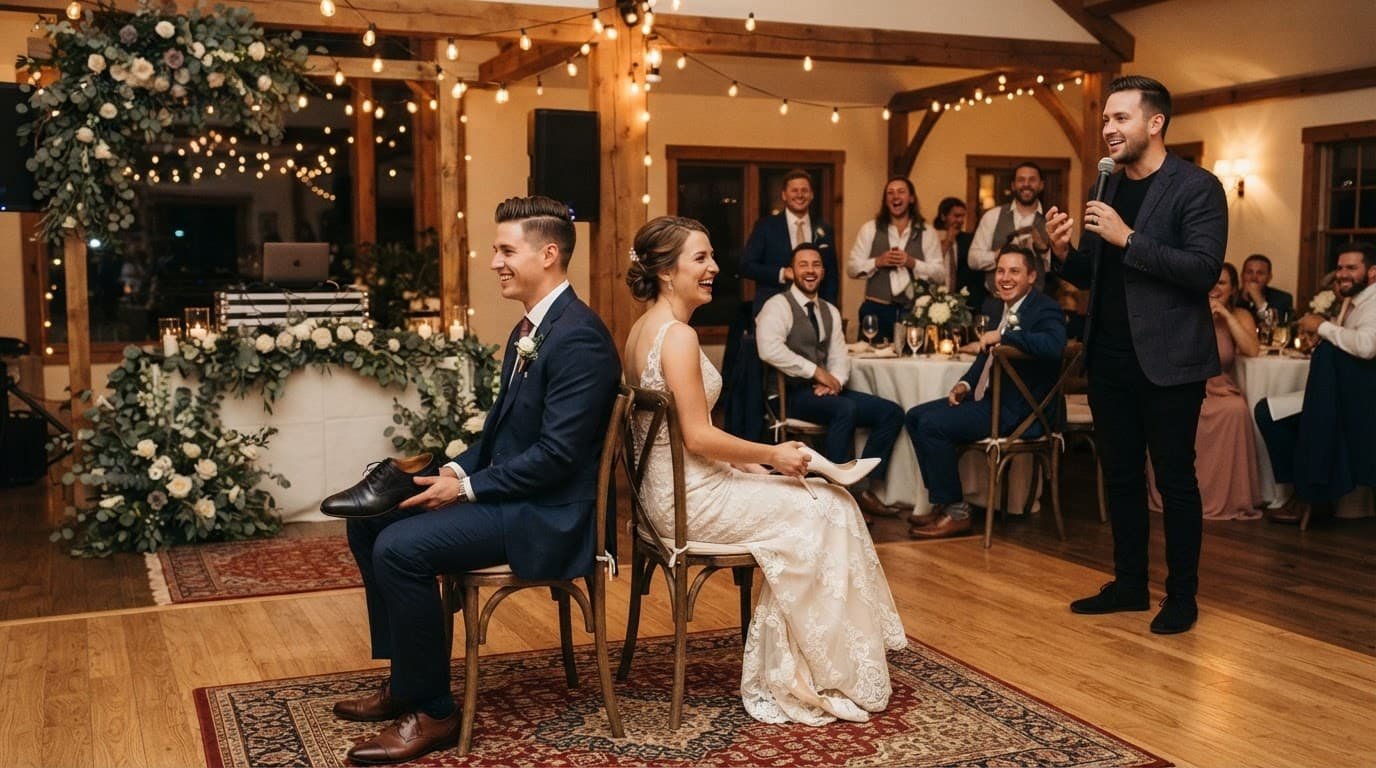
Keep the wedding shoe game quick and personal
The wedding shoe game remains popular as a couple-centered newlywed game, with guests enjoying answers from the couple. The newlyweds sit back-to-back, each holding one of their own shoes and one of their partner’s shoes. The DJ reads a question, and each person raises the shoe that matches their answer.
For this newlywed game, plan eight to 10 pre-approved questions. “Who said ‘I love you’ first?” and “Who is more likely to plan a weekend trip?” are light, familiar choices. Skip questions about money, former relationships, intimate details, or anything that could embarrass either person.
The Knot’s collection of wedding shoe game prompts can help couples sort through ideas, but the final list should sound like them. Use soft instrumental music underneath, and end the wedding shoe game while the room still wants one more question.
Use table trivia or wedding bingo during dinner
Table games offer friendly competition and easy wedding icebreakers. These low-pressure icebreaker games suit guests who don’t want a microphone.
Create two short rounds, one with couple-related questions and another with broad music, movie, or wedding trivia. The first can be a trivia game, while the second shouldn’t require knowing the newlyweds well.
Wedding bingo can work in the same window. Song bingo is especially easy, since guests can listen for a song clip instead of writing answers or leaving their seats. Keep wedding bingo cards simple and offer a small prize, such as a dessert upgrade or a wedding favor.
Your DJ can read the questions between courses or after plates are cleared. Avoid starting a round while servers are carrying hot meals or guests are focused on a toast.
Cocktail-Hour Games and Better Toss Alternatives
Not every activity needs a microphone. Flexible wedding activities can provide low-key cocktail hour entertainment between conversations, photos, and drinks.
Let wedding lawn games stay casual
Cornhole and giant jenga are dependable outdoor wedding games during cocktail hour. These wedding lawn games give guests something to do without asking everyone to stop what they are doing. Set them where players have room, but keep cornhole away from catering paths, ceremony seating, and the photographer’s planned family-photo area.
A DJ can make one friendly announcement, then return to the cocktail playlist. A full tournament often takes more coordination than couples expect, especially when the wedding party is still taking photos. Let the games be there for guests who want them.
A photo scavenger hunt can also work when it is fully optional. Keep the prompts light, such as a favorite dance move, a family laugh, or a candid moment with the couple. Don’t require public social posting, and provide a paper option for guests who don’t use smartphones.
Replace spotlight traditions with shared moments
The bouquet toss and garter toss are optional, not required reception traditions. An anniversary dance is a more inclusive alternative for many couples. Invite interested married couples and partners to the floor, then gently narrow the group by years together if that feels right for the crowd. Explain the anniversary dance format beforehand so guests know they can opt out at any point.
Another simple choice is to skip the toss entirely and invite all guests onto the floor after cake cutting. For an energetic crowd, a brief dance-off can be an optional alternative, as long as it’s opt-in and non-eliminating. That transition feels natural and doesn’t separate people by relationship status.
A money dance or dollar dance may carry real meaning in some families and communities. If you include a money dance, make it clearly optional, set a defined time limit, and explain it to your DJ before the wedding day.
Keep Participation Comfortable for Every Guest
Even well-planned reception activities can fall flat if guests feel pressured. The goal is engagement, not compliance.
Treat participation as an invitation
Don’t ask unwilling guests to come forward, call out names without permission, or build a game around drinking, dating, mobility, or personal history. Clear instructions help, especially when they are given both verbally and on a simple printed card.
Guests with hearing differences may prefer visual response cards. Older relatives may appreciate larger print and a seated option. Children should be able to watch without being asked adult questions. These details make a reception feel welcoming without turning the activity into a major production.
Concerns about uncomfortable traditions come up often in couples’ discussions about reception games, particularly around garter traditions and the money dance. If a game needs a long explanation or an apology afterward, it isn’t the right choice.
Protect dinner service and the dance floor
Your wedding DJ and catering captain should agree on the game window before guests arrive. The DJ should wait until service is complete, lower the music slightly, and keep the activity brief. A loud announcement while servers carry dinner plates makes the room feel disorganized.
Once a strong group is dancing, don’t stop the floor for a contest. Music should build in waves, with familiar favorites held back for the moments that need them most. Save a shared song like “I Gotta Feeling” for the return to dancing, rather than using it under a trivia round.

Photo by Lilen Diaz
Brief Your DJ Before the Wedding Day
A professional wedding DJ can host games with confidence when the details are settled before the final timeline meeting. The best wedding DJ games are planned like any other reception moment, with clear responsibilities, music cues, and a backup plan.
Give your DJ more than a game title
A simple one-page game brief prevents last-minute confusion. Include:
- The activity you want, plus a backup if weather, space, or timing changes.
- The approved questions, printed materials, and prize details. For a newlywed game, add a clear list of people who may be called forward.
- Exact names, preferred pronunciations, and anyone who should not be called forward.
- Participation language that makes the game optional.
- The hard stop, the next reception event, and who can approve a change.
Tell your DJ about family traditions, sensitive topics, accessibility needs, or guest groups that need extra consideration. For a money dance, share the preferred announcement and participation language. That information supports a more personalized, comfortable experience.
Plan the music cue and the exit
Choose three to five words that describe the reception atmosphere, such as “warm, polished, celebratory, and fun.” That gives your DJ better direction than a random list of songs.
Use short music cues for games, not full tracks. A clean instrumental opening can introduce the shoe game, while a quick celebratory chorus can announce a trivia winner. Review the exact version of any requested song, because a radio edit doesn’t always fit every family event.
A strong final announcement can be simple: “Let’s hear it for our newlyweds, and now it is time to fill this dance floor.” The room understands what happens next, and the party keeps moving.
Frequently Asked Questions
When is the best time to play a wedding DJ game?
The most dependable window is after dinner plates are cleared and before the open dance floor becomes established. Short activities can also work after toasts, as long as they do not interrupt dinner service or delay the next formal event.
How long should a wedding reception game last?
Most hosted games should take about five to 10 minutes, with a clear hard stop planned in advance. A brief introduction, simple rules, and a quick transition back to music help maintain the reception’s momentum.
What are the best low-pressure wedding DJ games?
The wedding shoe game, table trivia, wedding bingo, song bingo, and optional lawn games are all guest-friendly choices. They create shared entertainment without requiring guests to speak into a microphone, perform, or leave their seats.
How can couples make wedding games comfortable for every guest?
Make participation clearly optional and avoid questions or activities involving drinking, dating, mobility, money, or personal history unless they are appropriate for the group. Offer seated and visual options, use accessible instructions, and tell your DJ about any sensitive topics or guests who should not be called forward.
A Reception Guests Will Remember
Good games don’t need a big production. They need the right timing, a willing audience, and a DJ who knows when to move into the next moment.
Choose one or two wedding reception games that fit your guests and your style. Keep the rules clear, give shy guests an easy way to watch, and protect dinner service and dance-floor momentum.
When the activity ends on time, the reception feels organized, personal, and ready for the next great song.