The right ceremony music can make a wedding ceremony feel familiar, personal, and completely your own before anyone says a word. It doesn’t need to follow one tradition or sound like every celebration you have attended.
Your wedding ceremony music can include classical music, acoustic covers, modern pop, cultural selections, sacred music, or a mix that feels natural to both of you. The goal isn’t to build the longest wedding playlist. Choose meaningful wedding music that supports each moment with confidence and care on your wedding day.
Key Takeaways
- Start by choosing three to five words that describe how you want the ceremony to feel, then use them to guide your music choices.
- Plan music for each key moment, including the prelude, processional, main entrance, unity ceremony or signing, and recessional.
- Match processional songs to the aisle length and timeline, and rehearse entrances so musicians or audio operators know the right cue points.
- Include cultural and religious music thoughtfully by confirming requirements with your officiant, venue, house of worship, or registrar.
- Protect the ceremony with a tested audio plan, offline playlists, backup equipment, and clear responsibility for cues and volume.
Start With the Feeling You Want Guests to Remember
Before choosing titles, talk about how you want the ceremony to feel. Formal and timeless, like a traditional wedding? Warm and relaxed? Joyful, reflective, energetic, or rooted in family tradition?
A few clear words make decisions easier when you’re comparing songs that you both enjoy. Your music should support the atmosphere, not compete with it.
Choose Three Words That Describe Your Ceremony
Write down three to five words together. A garden ceremony might be “romantic, light, and welcoming.” A church wedding may feel “reverent, traditional, and joyful.” A smaller celebration could be “intimate, modern, and relaxed,” with modern songs chosen to feel intentional and personal.
Those words become a practical filter. If a song is meaningful but its mood feels too heavy for the entrance, it may work better during the signing or at the reception.
Look Beyond “Your Song”
A couple’s song can be a beautiful choice, but love songs aren’t the only source of inspiration. Think about artists you played on road trips, songs heard at a concert, music connected to your family, or a melody that reflects your cultural background.
You may also choose a song for its feeling rather than its lyrics. A gentle piano version of a favorite pop song can carry the same memory while fitting a formal setting.
A ceremony song does not have to explain your relationship. It only has to feel right when that moment arrives.
Wedding Ceremony Songs for Every Meaningful Moment
Most traditional ceremonies need a small set of planned cues, plus a longer arrival playlist. You may need aisle music for the attendants, one entrance song, one or two selections for a unity ceremony or signing, and one recessional. Guest seating music usually runs for 20 to 30 minutes while guests arrive.
This simple guide keeps the music plan organized without making it feel overproduced.
| Ceremony Moment | Music Purpose | Practical Approach |
|---|---|---|
| Prelude | Welcome guests and set the tone | Prepare a continuous playlist with gentle energy |
| Wedding party processional | Create anticipation | Use one song or a clean transition between two |
| Main entrance | Give the principal arrival its own feeling | Start at a strong musical moment, not the beginning |
| Unity ceremony or signing | Fill a quiet activity naturally | Choose one or two songs with a calm, steady mood |
| Recessional | Celebrate the marriage | Pick an upbeat song with a clear opening |
The strongest selections give each part of the service its own emotional direction, while still sounding connected as a whole.
Prelude Music Welcomes Guests Without Taking Over
Prelude music should feel inviting, not like a concert before the ceremony begins. Instrumental piano, acoustic guitar, strings, soft jazz, and relaxed indie selections all work well as guests greet one another and find their seats.
For a classic sound, consider arrangements by Bach, Debussy, or a gentle version of Pachelbel’s “Canon in D.” For a modern touch, choose an acoustic cover or instrumental version of a song you both love, especially for piano or strings.
Keep the volume comfortable. Guests should hear the music, but they shouldn’t need to raise their voices to talk with family members.
Processional Songs Build the Moment
The processional often includes parents, grandparents, attendants, and sometimes children. Wedding processional songs can use one arrangement for the wedding party and another for the main entrance.
Popular choices include “A Thousand Years” by Christina Perri, “Can’t Help Falling in Love” made famous by Elvis Presley, and “Lover” by Taylor Swift. Each has a romantic theme, but an acoustic or string arrangement may better suit the ceremony space.
There is no rule that says both partners need separate entrances. Some couples make a grand entrance together at the ceremony. Others use one song for attendants and another for a partner walking down the aisle. Choose the format that feels comfortable for you and gives the ceremony entrance its own feeling.
Match Processional Songs to the Aisle and Timeline
A beautiful song can feel awkward if it starts too early or ends before the entrance is complete. The timing of walking down the aisle depends on the route, aisle length, pauses, and emotional pace.
Walk the route during a rehearsal if possible. Include the pauses, bouquet adjustments, hugs, and changes in pace that happen naturally when people feel emotional.
Start at the Best Part of the Song
Many songs have long introductions that work for listening but not for an entrance. A wedding DJ, musician, or audio operator can begin at the exact point where the melody opens up.
The wedding party may need only 45 seconds to 90 seconds. A bride or partner entrance may take longer, especially with a long aisle or a pause at the front. There is no need to play a full three-minute song if the moment only needs part of it.
Share these details with the person running your music:
- The order of every entrance, including parents, wedding party, and children.
- The exact cue point for the ceremony entrance and how quickly the music should fade.
- Whether the song should continue softly after the final person reaches the front.
- A backup choice in case the ceremony begins early or a reader needs extra time.
Build in Room for Real Moments
Ceremonies are not performances with perfect marks on the floor. Someone may walk more slowly. A flower child may stop halfway down the aisle. A parent may need an extra hug.
Choose music with enough room to breathe. A skilled musician or audio operator can keep background music quiet while a flower child or family member takes extra time. They can extend a section, repeat a passage, or lower the volume naturally until the officiant is ready to begin.
Give the Unity Ceremony and Signing Their Own Space
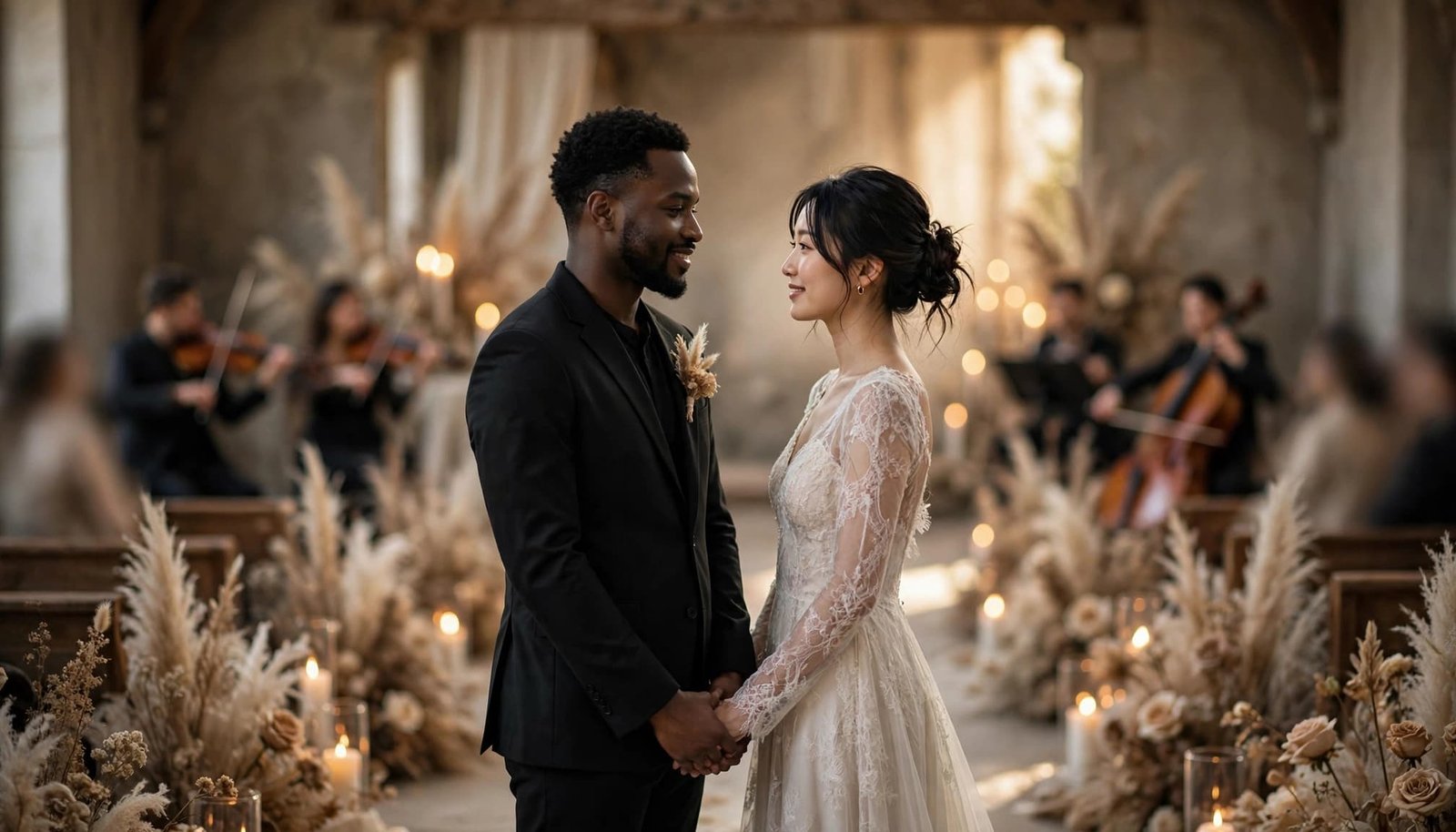
A unity candle, sand ceremony, handfasting, tea ceremony, or other meaningful tradition often creates a short quiet window. Unity ceremony songs can keep that space comfortable while allowing guests to focus on what is happening.
Choose something warm and steady. The song should support the tradition without turning attention away from it.
Include Cultural and Religious Music With Care
Cultural and religious selections can be among the most personal parts of a ceremony. A family hymn, a traditional instrumental piece, a live vocalist, or music connected to a heritage can bring generations together in a meaningful way.
Talk with your officiant, house of worship, and family members early. Some faith communities require sacred music that fits the service, while others give couples more flexibility. For an example of how detailed church policies can be, review St. Veronica’s wedding guidelines and Saint Philip Neri’s marriage booklet.
A civil ceremony may also have restrictions. Rules vary by location, so don’t assume a song is permitted because it’s popular at weddings. Couples marrying in England and Wales should review the current discussion of religious content in civil ceremonies and confirm local requirements directly with their registrar.
Choose Music for the Signing or Interlude
If your ceremony includes the signing of the register or marriage license, set aside music for that moment. A softer acoustic cover or instrumental version can suit the interlude better than a prominent vocal arrangement.
Prepare one or two complete selections for the signing of the register. This gives musicians or your coordinator clear timing and allows the moment to feel unhurried. A favorite love songs playlist might include a song that feels too lyrical during the vows.
An indie couple might choose a mellow arrangement by The Lumineers, Iron & Wine, or The Paper Kites. A traditional wedding may lean toward harp, piano, or classical strings. The feeling matters more than the genre label.
Live Musicians or Recorded Music?
Both options can create polished wedding ceremony music. The best choice depends on your venue, budget, guest count, timeline, and desired atmosphere.
A live ensemble brings flexibility and visual presence. A string quartet, solo violinist, guitarist, pianist, or vocalist can adjust to the pace of an entrance and respond to last-minute timing changes. Performers can also turn familiar modern songs into an instrumental version that suits a formal ceremony.
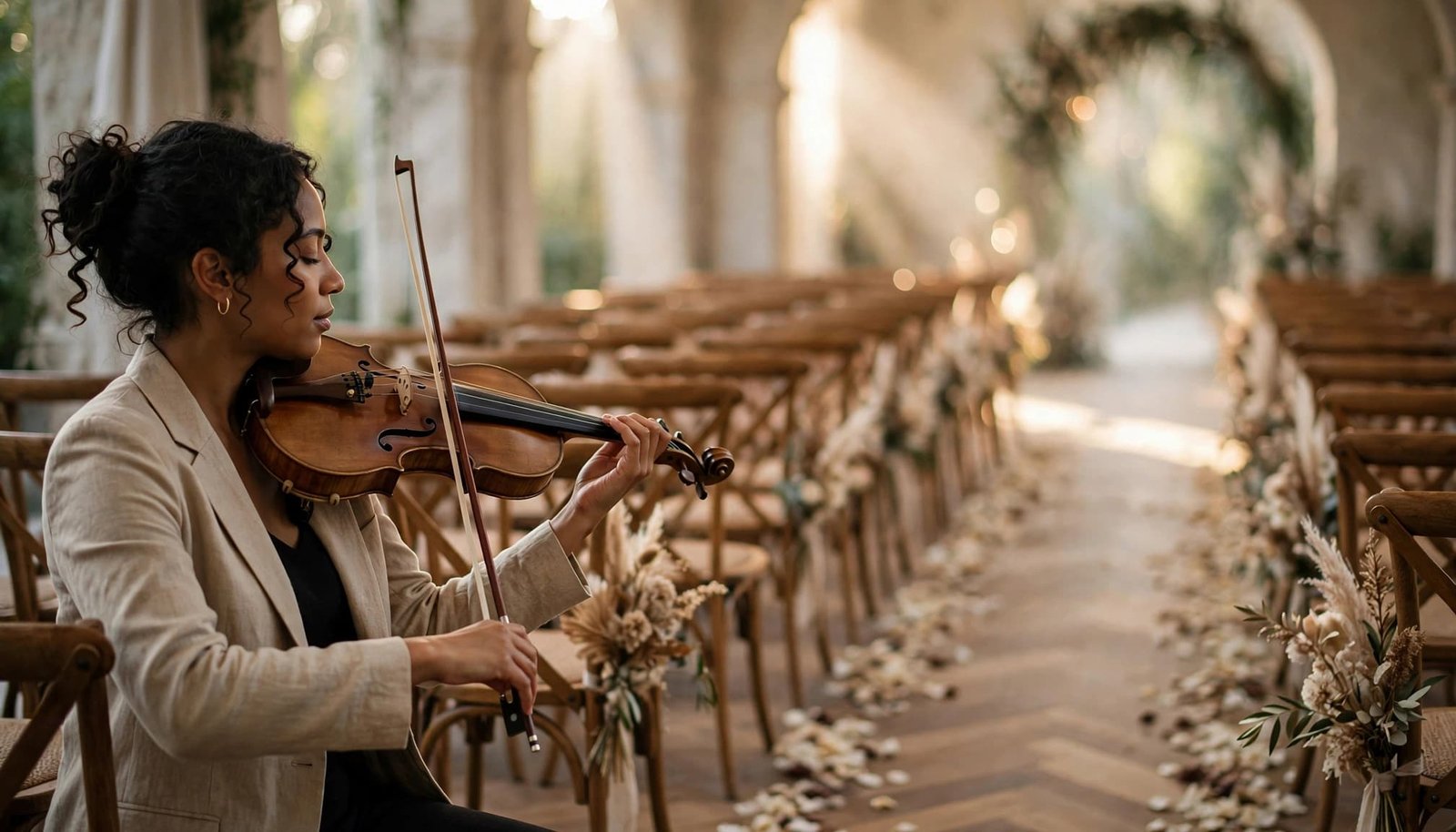
Recorded music gives you a wider selection and can be practical for many weddings. It works especially well when the ceremony has professional sound, a prepared operator, and clear cue notes.
A Professional Audio Plan Protects the Moment
A personal phone and a Spotify playlist may seem easy, but ceremony music has no room for ads, weak Wi-Fi, missed cues, or accidental shuffle. Keep the approved wedding playlist downloaded or stored offline, with a second device ready as backup.
A reliable setup includes tested speakers, microphones for the officiant and readers, spare cables, and backup playback. A wedding DJ or another assigned operator should follow the schedule and know when to start each cue, lower the volume for vows, and switch quickly if something changes.
Photo by Rene Terp
Plan for Venue Sound, Power, and Restrictions
Outdoor vows beside a lake or under a tent may need more sound support than you expect. Wind can carry music away, while traffic, water, and guest conversation can make an unamplified officiant hard to hear.
Indoor venues have their own challenges. High ceilings, hard floors, windows, and stone walls can create echoes that blur spoken words. A sound check in the actual ceremony location is always better than assuming a setup will work.
Ask These Questions Before Finalizing Music
Confirm the venue’s sound limits, curfew, available power, rain plan, and setup time. Ask where speakers can be placed so guests in the back hear the vows without the first row feeling overwhelmed.
Cables should run around approved room edges whenever possible. They should never block exits, doorways, stairways, or accessible paths. If a cable must cross a busy walkway, use a proper venue-approved cable ramp.
Also ask who has final approval over volume and music choices, and who will coordinate sound, cue timing, and venue restrictions. The wedding DJ, venue coordinator, officiant, planner, or family member may need to make a quick decision during the ceremony. Knowing that contact in advance keeps the event organized and calm.
Let the Recessional Sound Like a Celebration
Once you are officially married, the mood can lift. Recessional songs should feel bright, confident, and easy to recognize, even if guests hear only the first minute of your wedding exit.
“Signed, Sealed, Delivered (I’m Yours)” by Stevie Wonder, “You Make My Dreams” by Hall & Oates, and “This Will Be (An Everlasting Love)” by Natalie Cole are upbeat favorites with an immediate sense of celebration. Couples who prefer a more current sound may choose modern songs from the pop or rock genres that fit their personality.
The recessional is also a natural moment for a stronger volume level, followed by a smooth transition into post-ceremony photos or cocktail hour. It should feel like a release after the quieter, more emotional parts of the wedding day.
Frequently Asked Questions
How many songs are needed for a wedding ceremony?
Most ceremonies need music for the prelude, wedding party processional, main entrance, unity ceremony or signing, and recessional. Prepare one or two selections for quieter moments and a longer playlist for guest seating.
Can modern songs be used during a formal ceremony?
Yes. Acoustic covers, instrumental arrangements, piano, strings, or gentle vocal versions can make modern songs feel appropriate for a formal setting while preserving their personal meaning.
Should we choose live musicians or recorded music?
Both options can work well, depending on your venue, budget, timeline, and desired atmosphere. Live musicians offer flexibility for changing entrances, while recorded music provides a wider selection when the sound system and cues are carefully managed.
How can we make sure the processional music is timed correctly?
Walk the aisle during the rehearsal and note the order of entrances, pauses, and approximate timing. Give the musician, DJ, or audio operator clear cue points, fade instructions, and a backup song in case the ceremony schedule changes.
What should we check with the venue before finalizing ceremony music?
Confirm sound limits, curfew, available power, setup time, speaker placement, and any restrictions from the venue or officiant. Also assign someone to manage cues, volume, microphones, cables, and backup playback during the ceremony.
A Personal Soundtrack Makes the Ceremony Feel Complete
The strongest wedding ceremony music plan balances your story, your guests, your ceremony style, and practical details.
Choose songs that feel honest, rehearse key entrances, and confirm every venue and officiant requirement before your wedding day. Thoughtful planning and dependable audio support let wedding ceremony songs turn formal moments into a celebration that feels unmistakably yours.