A busy aisle doesn’t always create a productive booth. The right booth entertainment gives people a comfortable reason to stop, listen, and begin a real conversation with your team.
For New Hampshire exhibitors, the goal isn’t to turn a convention hall into a nightclub or recreate after dark parties. A measured approach supports networking events and an entertainment conference, where industry professionals need a comfortable setting for conversation. Keep the energy controlled and brand-appropriate, rather than relying on party-style volume.
A thoughtful entertainment plan starts with the experience you want guests to have at your booth.
Key Takeaways
- Build the trade show DJ plan around a measurable business goal, such as product demonstrations, consultations, or qualified leads.
- Use short energy windows and timed music cues instead of constant volume, keeping the booth comfortable for conversation.
- Match the DJ setup, sound coverage, and lighting to the booth size without blocking aisles or crowding staff and visitors.
- Confirm sound limits, power requirements, booth rules, and music permissions in writing before the event.
- Give the DJ and booth team a shared run-of-show so entertainment supports the brand and creates more opportunities for meaningful conversations.
Build a Trade Show DJ Plan Around One Clear Goal
Music is most effective when it supports a purpose. For a DJ trade show activation, define the business outcome before choosing the music or setup. Success may mean more product demonstrations, scheduled consultations, qualified leads, or a stronger introduction for a new service.
The entertainment can help shape that flow, but music should never become the main attraction at the expense of your business. A DJ conference may welcome technical or performance-focused content. An exhibitor booth should stay controlled and conversational, not become a club DJ set.
Pick an Outcome Your Team Can Measure
A packed booth is useful only when visitors have a next step. If your goal is lead collection at networking events, use music to make the space feel welcoming. Staff can then start conversations. If you’re launching a product or hosting educational seminars, use a short music cue before each scheduled reveal or session.
Keep the direction simple. A company working in music technology or music production may want tracks that feel modern and polished. A local tourism business may prefer upbeat, familiar songs that feel friendly and relaxed. A family-focused service business should avoid tracks with aggressive lyrics or themes that conflict with its message.
Lighting, signage, and equipment should also follow the event’s requirements. Review trade show display safety and compliance guidance before finalizing your booth design.
Use Short Energy Windows Instead of Constant Volume
The strongest booth music moves in waves. Start with polished background music as attendees arrive. Raise the energy briefly before a demonstration, giveaway, or product announcement. Then bring the volume back down so your staff can speak comfortably.
This approach feels organized and professional. It also gives the DJ clear cues instead of asking for “something fun” all day.
A one-page music brief helps. Include three to five words that describe your brand, any genres you like, music to avoid, planned demo times, and one person with final approval. Review the exact versions that will play, not only the song titles. A radio edit can still contain themes that don’t fit your event, or awkward gaps that interrupt the atmosphere.
Match DJ Entertainment to Your Booth Size
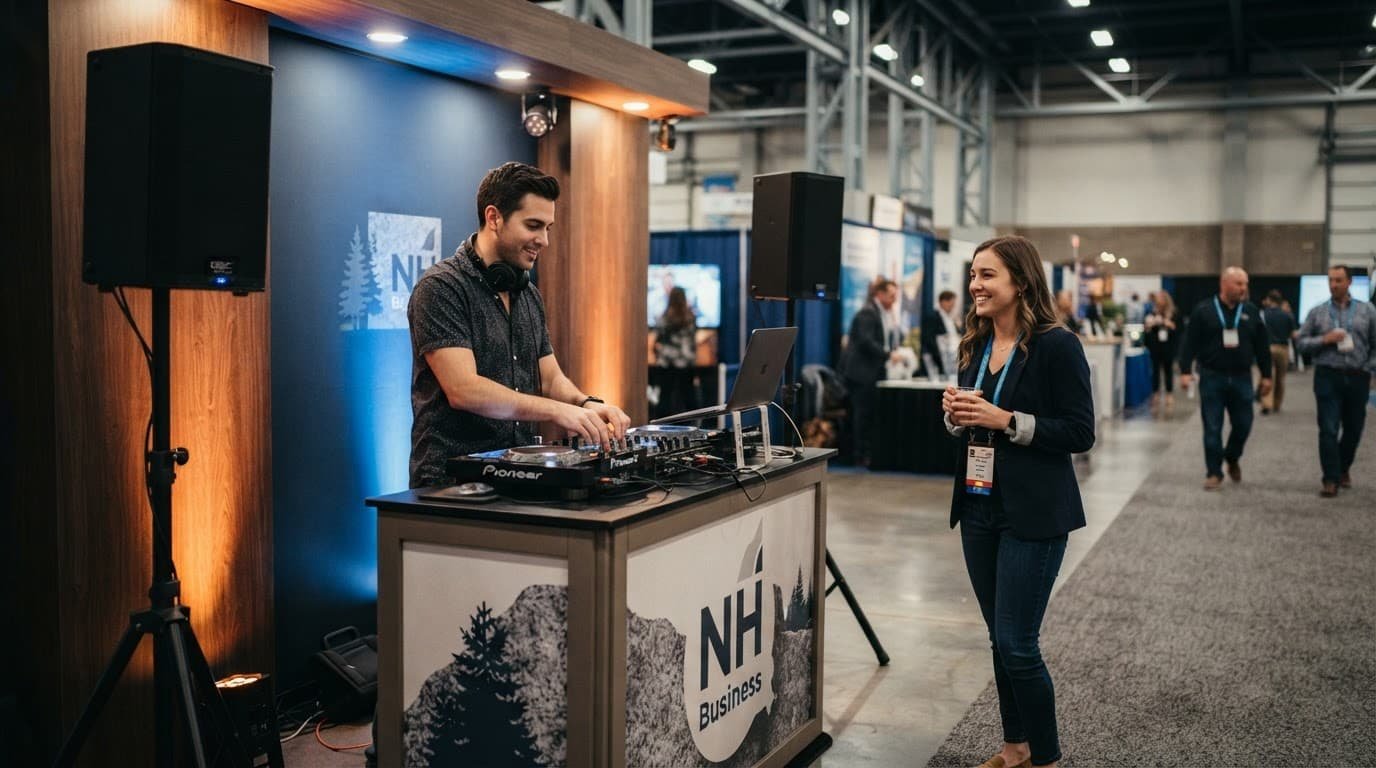
A smaller exhibit needs a different approach than a large activation space. The best setup leaves room for conversations, product displays, and staff movement. It should not block aisles or make neighboring exhibitors feel like they are competing with your speakers.
These same footprint principles apply to a DJ expo, where exhibit space may need to support demonstrations and attendee interaction. They also fit a photo booth expo, where equipment must share space with demonstrations and guest flow.
Use these formats as starting points. At a DJ conference, confirm event-specific booth dimensions and technical rules before booking equipment.
| Booth Size and Goal | DJ Entertainment Idea | Best Use |
|---|---|---|
| 10-by-10-foot booth | Curated background music, compact uplighting, and short demo cues | One-on-one conversations and lead capture |
| 10-by-20-foot booth | Rear-wall DJ station, low-profile sound, and timed product moments | Demonstrations and stronger booth traffic |
| 20-by-20-foot booth or larger | Defined activation area, hosted demonstrations, and scheduled music moments | Product launches, hospitality, and brand awareness |
The larger the footprint, the more room you have to separate music, demonstrations, and conversations. A Las Vegas convention may have a large activation area and heavy traffic, but that doesn’t justify excessive volume. Bigger is not always better. A modest sound system with clear coverage inside your booth often works better than a large setup that spills into the aisle.
Keep Small Booths Focused and Comfortable
For a 10-by-10-foot booth, treat a mobile DJ as part of the atmosphere, not a featured performer. A compact controller, small Pioneer DJ unit, and minimal DJ gear can create a polished feel without crowding the floor. If venue rules allow, a portable PA system and restrained lighting FX can replace bulkier equipment.
Place the DJ station along the back wall or side wall, and keep the entrance open. Manage cables cleanly and keep cases out of traffic paths. Your staff should be able to greet someone, show a product, and collect contact information without navigating around equipment.
For larger lighting fixtures or audio equipment requiring 220-volt service, ask whether the venue requires an electrician for final connections. Those electrical safety requirements at expo venues are common and can affect your budget and load-in plan.
Turn Music Into Better Booth Conversations
A professional DJ reads the room, but your staff still directs the message. Give both teams a shared run-of-show so the entertainment supports your sales goals instead of creating random activity. The same cue discipline helps even at a DJ conference, where a performance-oriented atmosphere can distract from your message.
Music can open the door. Your booth team should take it from there.
Create Simple, Timed Moments
A recognizable instrumental cue can signal that a two-minute product demo is about to begin. A brief music change can also bring attention back after a busy conversation period.
A booth cue is a support element, not a full live performance. Avoid long announcements or constant microphone use. In many exhibit halls, a quiet and confident booth experience is more effective than trying to speak over the entire showroom floor. If the show permits a microphone, keep remarks short, clear, and directly tied to the visitor’s benefit.
For example, a Concord-area home service company could schedule three product demonstrations each afternoon. The DJ begins a 30-second music cue, a team member welcomes visitors, and the demonstration starts on time. Afterward, the music returns to a comfortable level while staff members meet with interested guests.
Give Visitors a Reason to Stay for One More Minute
Small interactive moments can work well when they feel connected to your business. Consider a scheduled prize drawing, a quick product trivia question, a photo moment, or a consultation giveaway. Keep every activity inside your contracted booth space and follow the organizer’s rules for prizes and attendee data.
At networking events, music can provide a soft transition between conversation periods without interrupting attendees. The DJ should never pressure visitors into dancing, shouting, or joining a game they did not ask for. The better approach is warm and inviting. Music creates a little momentum, then your staff offers a useful reason to engage.
The best booth entertainment gives your team more openings for conversation. It does not make visitors work harder to hear them.
Control Sound, Power, and Music Permissions
Trade show entertainment has practical limits. Sound rules, power service, lighting restrictions, and music permissions can vary by organizer, venue, booth location, and neighboring exhibitors.
A DJ conference may have different sound, microphone, or demonstration policies than a standard exhibitor event. A rule from an Atlantic City convention venue may not apply to a New Hampshire show.
Get every important answer in writing before event day.
Confirm Sound Rules Before Building the Setup
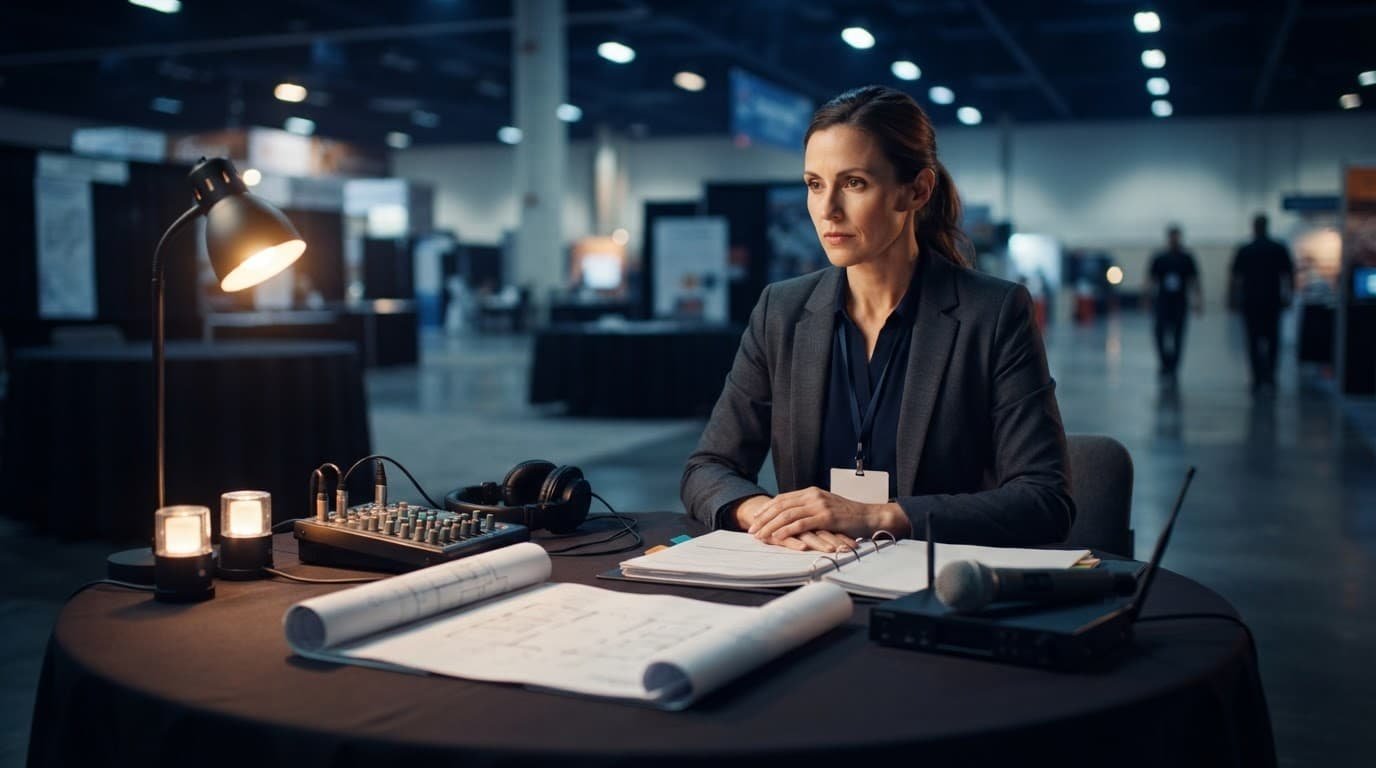
Do not assume a speaker system used at a corporate party suits a trade show. Some New Hampshire events require advance approval for amplified sound. Others prohibit microphones, loudspeakers, or PA systems used to attract people walking past a booth.
Before ordering a sound system, confirm the permitted level, measurement point, speaker direction, and whether continuous play is allowed.
Sound limits can also be strict, and policies are event-specific. The 2026 ASTRO booth audio policy limits sound to 75 decibels and requires audio to stay directed into the booth. Another event’s 80-decibel sound rule shows why you should verify the current limit for your show.
Keep speakers away from the aisle and test the system at a realistic volume before doors open.
Check Power and Music Use Separately
Electric service is often an add-on, not part of the booth fee. Inventory your DJ gear, lighting, laptop, and charging needs before booking power. As an event-specific example, the 2026 NH Outdoor Expo lists standard electricity and Wi-Fi at $95, including 5-amp, 120-volt power. Verify current pricing and capacity, then confirm audio equipment wattage, outlet placement, and load-in requirements.
Music use also needs its own review. A personal Spotify or Apple Music subscription isn’t automatically a commercial event license. Ask the venue and organizer what public-performance coverage applies to your booth, then keep that confirmation with your event records.
If you plan to use music in a livestream, event recap, social clip, or promotional video, review each use separately. Permission for in-room playback doesn’t automatically cover music paired with video.
A Practical Pre-Show Entertainment Checklist
A few early decisions prevent expensive changes during load-in. Use this checklist during your final event planning call with the DJ, event coordinator, and booth lead.
- Send the DJ a floor plan, booth dimensions, show hours, and the location of the nearest electrical service. Confirm what the mobile DJ is supplying, including footprint, arrival time, power needs, and cable paths.
- Confirm in writing whether amplified music, microphones, screens, uplighting, giveaways, and demonstrations need approval.
- Order the correct electrical service early. Some events require exhibitors to reserve power in advance, as shown in these 2026 trade show power-ordering rules.
- Ask for the sound limit, measurement point, speaker-placement rules, and the process if a neighboring exhibitor raises a concern.
- Have the booth lead document controller and mixer models, including any Pioneer DJ units, and verify rental compatibility.
- If the booking is for a DJ conference, adapt this checklist to its booth rules and technical expectations.
- Create a short run-of-show with demo times, music changes, staff introductions, and closing announcements.
- Name one person who can approve songs, edits, guest requests, and any do-not-play selections.
- Test the sound system in the actual booth location, with nearby booths active, before the show opens.
- Bring a backup music source, spare cables, and a clear plan for reducing sound quickly if show management requests it.
Frequently Asked Questions
How loud should trade show DJ music be?
The permitted volume depends on the organizer, venue, booth location, and event rules. Confirm the sound limit and measurement point in writing, direct speakers into the booth, and test at a realistic volume before the show opens.
What equipment works best for a small trade show booth?
A compact controller, small Pioneer DJ unit, low-profile PA system, and restrained lighting can create a polished atmosphere without crowding a 10-by-10-foot booth. Place the DJ station along a back or side wall, keep the entrance open, and manage cables carefully.
Does a personal Spotify or Apple Music subscription cover booth playback?
Not automatically, since a personal subscription is not necessarily a commercial event license. Ask the venue and organizer what public-performance coverage applies, and review music permissions separately if the event will be livestreamed or recorded for promotional use.
How can music help booth staff start conversations?
Use polished background music during normal traffic and short, recognizable cues before demonstrations, giveaways, or product announcements. Lower the volume afterward so staff can speak comfortably and guide visitors toward a useful next step.
Create an Atmosphere That Supports Your Brand
The right trade show DJ setup is not about the loudest speaker or the biggest light show. It is about creating a professional atmosphere that makes visitors feel comfortable stopping at your booth.
Choose a format that fits your space and schedule music around meaningful moments. The same disciplined approach can support networking events and a DJ conference, with right-sized equipment, planned cues, and clear sound limits. Thoughtful entertainment gives New Hampshire exhibitors a stronger presence while keeping the focus where it belongs, on the conversations that move business forward.