A packed dance floor at 10:30 p.m. doesn’t have to mean guests are shouting over the music. A silent disco wedding lets each guest choose a comfortable listening level while keeping the energy high, even when your venue has a firm sound cutoff.
With thoughtful wedding planning, the right equipment, a clear music plan, and event-day coordination, this format can feel polished rather than confusing. It can also be a flexible form of wedding entertainment, giving guests more choices, comfort, and reasons to stay late.
The best receptions treat the headphones as one memorable part of a well-planned celebration, not a last-minute novelty.
Key Takeaways
- Confirm the venue’s sound, power, outdoor, equipment, and teardown rules before booking a silent disco rental.
- Keep dinner, speeches, toasts, and formal dances on the main sound system, then make a clear handoff to headphones for open dancing.
- Build music channels around your guests’ preferences, with one familiar crowd-pleasing channel and consistent colors throughout the night.
- Make pickup and returns easy with a staffed station, brief instructions, spare headphones, and a visible return bin.
- Test the full setup before guests arrive, including transmitter range, every channel, outdoor areas, backup equipment, and weather protection.
How a Headphone-Based Reception Works
This headphone-based reception uses wireless headphones instead of large speakers for the dancing portion. Each headset receives audio from a transmitter connected to a DJ, playlist device, or another music source.
Most systems offer two or three music channels. Guests press a button on their headphones to select their preferred channel, and the headset lights up in a matching color. Blue might play disco music and dance classics, red might carry current pop and hip-hop, and green might feature country, rock, or throwbacks.
Individual volume control is a major reason this format works so well. One guest can enjoy the full dance experience, while another can lower the sound or step aside to chat without competing with speaker volume.
This format doesn’t mean the entire wedding reception has to be silent. You’ll still want a professional sound system for the ceremony, introductions, speeches, toasts, and announcements everyone needs to hear. For most couples, the headphone portion begins after dinner and formal dances, when the open dance floor is ready for a different kind of energy.
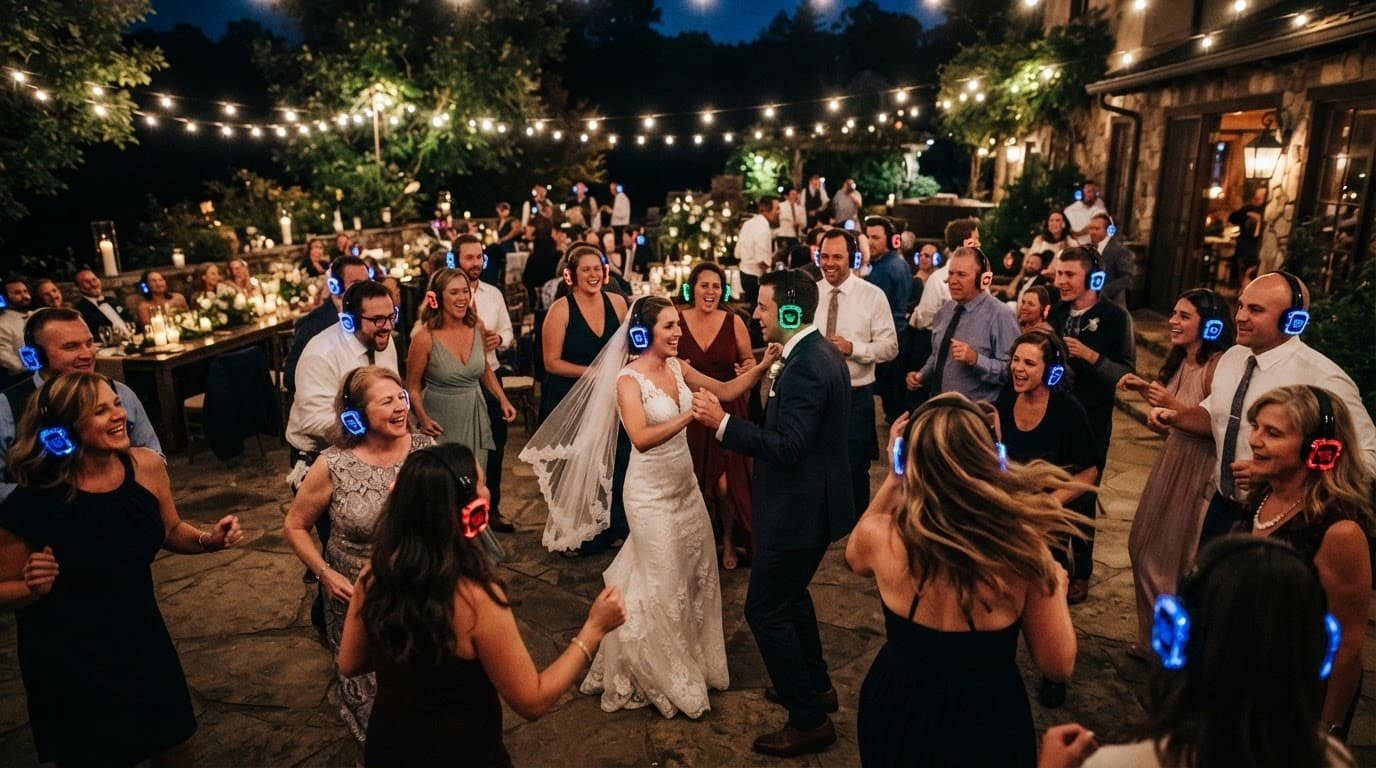
Without the music in their ears, onlookers may hear people singing every word, laughing, and cheering each other on. That’s part of the fun. The dance floor looks lively, but nearby guests can still carry on a normal conversation.
Confirm Venue Rules Before You Rent Equipment
Silent disco headphones can help with noise ordinances and venue curfews, but they are not a free pass around every rule. A venue may still limit amplified announcements, require approved vendors, restrict late-night outdoor activity, or prohibit equipment in certain spaces.
Have this conversation before signing an equipment rental agreement. Ask your coordinator to get written answers from the reception venue about:
- The venue’s amplified sound cutoff, decibel policy, and outdoor music rules.
- Whether wireless headphones, transmitters, LED lighting, and a DJ table are permitted.
- Available power outlets, dedicated circuits, and the location of the protected setup area.
- Load-in times, parking, vendor insurance requirements, and end-of-night breakdown rules.
- A rain plan for outdoor events, including covered power and dry equipment storage.
If your event is at a private home, check town rules and any homeowners association requirements as well. A headphone system reduces speaker noise, but guests arriving, leaving, and gathering outdoors can still affect neighbors.
Silent discos are often a practical fit for waterfront venues, patios, hotels, historic properties, and locations close to residential areas. This noise-restricted wedding account shows why clear communication matters when a celebration takes place in a quiet setting.
A silent disco works best when the venue approves the complete setup, not only the headphones. Confirm announcements, power, lighting, and teardown in the same conversation.
Ask your rental provider about transmitter range and have the team test the actual event layout. Stone walls, separate rooms, long patios, and a distant bar can affect where guests receive a clear signal. A quick walk-through during setup can prevent a frustrating surprise once the event opens.
Plan the Shift From Dinner Music to Headphones
The transition is where a silent disco reception either feels exciting or feels abrupt. Dinner guests should not be handed silent disco headphones without context, and formal moments should not compete with three separate music channels.
Keep the early evening reception familiar. Cocktail hour and dinner are usually better with warm background music through the venue system or a DJ’s speakers at a conversational level. Guests can talk, find their seats, enjoy speeches, and catch up with family members without wearing headphones at the table.
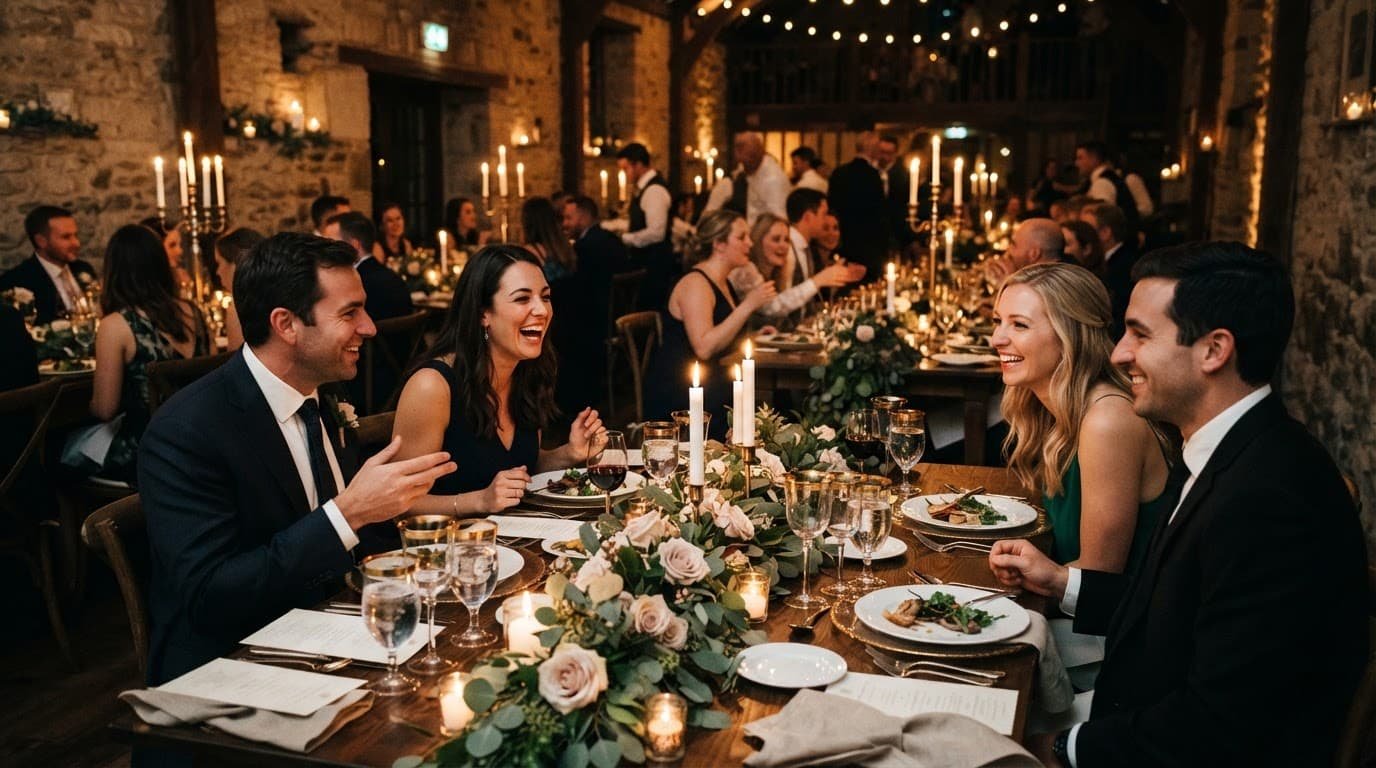
A dependable wedding reception flow often looks like this:
- Use regular background music for cocktail hour and dinner. Keep the sound appropriate for conversation, then reserve your bigger dance music for after the meal.
- Handle announcements, toasts, and spotlight dances through the main sound system. Everyone hears the same message, including guests who may not want to use headphones.
- Build a clear handoff after formal dances. Your live DJ or host can invite guests to the open dance floor, explain the channel colors, and demonstrate the controls in less than a minute.
- Begin the silent disco before the venue’s speaker cutoff. If amplified music must stop at 10:00 p.m., start distribution 10 to 15 minutes earlier so the party does not pause at the deadline.
A good transition needs one clear announcement. Try something simple: “Our late-night dance party is ready. Pick up a headset, choose your color, and find your music.” Guests understand the idea quickly when they can see others wearing the headphones and changing channel colors.
Don’t place headsets on every dinner chair hours ahead of time. They can become table clutter, get misplaced, and drain battery life before the silent disco begins. A staffed distribution point near the dancing area creates more anticipation and gives your team better control of the inventory.
Headphone Reception Costs and Equipment Rental Details
Your final price depends on guest count, channel count, delivery distance, staffing, and whether a DJ runs the system. The basic rental cost is usually charged per headset, with transmitters and support services added.
Current published rates provide a useful starting point. Quiet Events’ 2026 rental pricing lists $7 per headphone for the first day. Another silent disco rental cost guide places many basic headset rentals in the $5 to $10 per-person range.
Use these planning numbers when setting a wedding budget, then compare each proposal by what it includes:
| Rental Item | Typical Planning Range | Confirm Before Booking |
|---|---|---|
| Headsets | $5 to $10 per guest | Headset count, spare units, charging, cleaning, and replacement fees |
| Two or three transmitters | About $75 to $100 each | Channel count and source connections |
| Delivery or shipping | Varies by provider | Arrival date, return process, tracking, and weather protection |
| DJ or technical support | Varies by service level | Setup, announcements, live mixing, staffing, and teardown |
For 120 guests, headsets alone may run about $600 to $1,200 before transmitters, delivery, and service. Some regional packages begin at lower entry points, such as this Bronx silent wedding rental listing, but headcount and location will change the quote quickly.
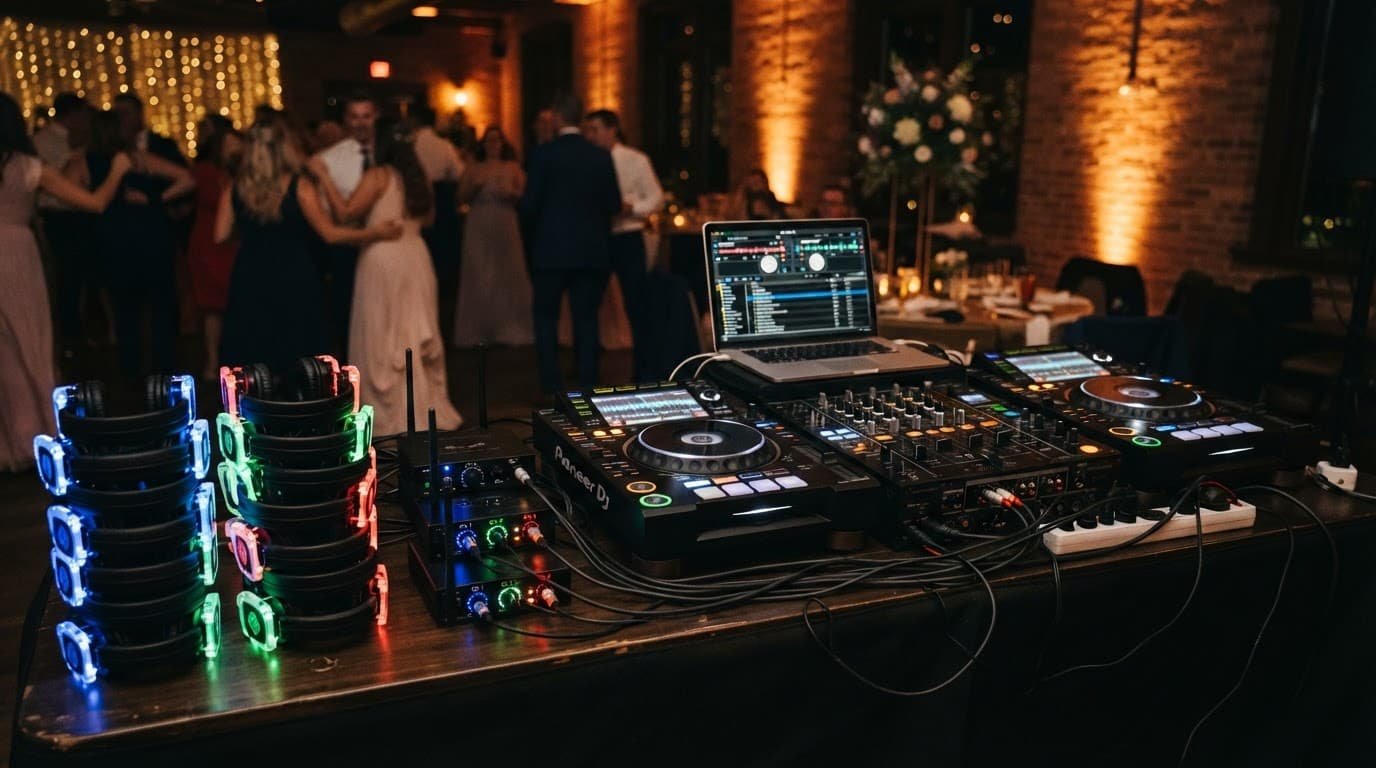
Do you still need a wedding DJ? Not always. A rental provider can supply equipment for couples who want to run pre-made playlists. However, playlists do not make announcements, adjust to the crowd, manage requests, or solve a technical issue while you are greeting relatives.
A live DJ adds value when you want professional hosting, music changes based on the crowd, coordinated formalities, and someone responsible for the equipment. Review a silent disco versus DJ cost comparison with care, checking whether the proposal covers audio equipment, delivery, setup, staffing, and teardown. Compare the full package instead of focusing on the lowest headline price.
Build Music Channels That Bring Different Guests Together
Playlist curation should begin with your guest list and guests’ musical preferences, not with three random genres. The goal is to give people music options while still creating shared moments as they dance.
One channel should be the common ground. Fill it with familiar wedding favorites, upbeat singalongs, and music that works for several generations. This is the channel most likely to pull grandparents, college friends, coworkers, and the wedding party into the same room.
A second channel can carry current Top 40, hip-hop, EDM, or dance-pop. The third can reflect your personal style, perhaps country, rock, Latin music, oldies, or a decade-focused mix. You do not need every genre. Pick the music your group will genuinely enjoy.
The channel colors should stay consistent all night. If red means country at the beginning, it should not become club music later. Guests make quick choices based on the color they already associate with their favorite sound.
If every channel reaches its biggest moment at the same time, guests split apart. Stagger the energy so each channel has a reason to keep people dancing.
A professional wedding DJ can read which channel is drawing a crowd and adjust the next set. If you are using playlists, build them with a similar rhythm. Start each channel with recognizable music, add higher-energy songs after the first few minutes, and save your strongest closing selections for later.
Prepare music for offline playback whenever possible. Do not rely on venue Wi-Fi for a major part of your reception. Ask whether your DJ or provider can send one shared song to every channel for a final moment. It is a simple way to bring the whole room together before the night ends.
Make Headphone Pickup Easy and Prevent Losses
Guests usually understand the headsets after one quick demonstration. The problem is not the technology. The problem is a crowded pickup table with no direction, missing headsets, and nobody assigned to help.
Mention your late-night plan to use silent disco headphones on your wedding website or in a pre-event email. Guests will arrive curious instead of confused, which improves the guest experience and lets them decide when to join. Older relatives and guests with noise sensitivity can choose when to participate, so nobody feels pressured to wear a headset all night.
At the handoff, your DJ or host should show guests how to choose a channel, adjust the volume, and return the headset when they leave. Keep the explanation upbeat and brief:
- Pick the color that matches the music you want to hear.
- Start at a lower volume, then adjust it to your comfort.
- Bring the headset back to the return station before leaving the reception.
Rent a small buffer of extra headphones if the provider allows it. Count the units when they arrive, assign one reliable person to the station, and use a simple tally for pickups and returns. Numbered headphones make it easier to identify a missing unit without slowing down the party.
Set up a clearly visible return bin near the exit and keep spare units behind the DJ table. A guest with a dead battery or a headset problem should receive a quick replacement, not a long explanation. Wipe down ear pads between users if headsets will be shared during the evening.
Keep the Party Reliable After the Switch
Before guests arrive, the live DJ or technician should test every channel, check the transmitter connections, and walk the main reception areas while wearing a headset. Test the bar, patio, and any lounge space where guests may wander.
Keep a small service area near the DJ table with spare headphones, charging equipment, cables, and a clear place for units that need attention. If one headset has no audio, replace it first and inspect it later. If a channel goes quiet, the issue is likely at the music source or transmitter. Your technical team can address it quickly.
Maintain the main sound system for important announcements and keep a backup plan ready. A microphone may still be needed for a final thank-you, transportation instructions, or an unexpected schedule change. Your venue should know where that speaker system will be placed and when it will be used.
Outdoor weddings need extra care. Keep transmitters, power connections, and the DJ table dry and covered. High winds, rain, and late-night temperature changes are not details to sort out after guests have started dancing.
Frequently Asked Questions
Do I still need a wedding DJ for a silent disco wedding?
Not always. A rental provider can supply the equipment for couples using prepared playlists, but a live DJ can manage announcements, requests, crowd energy, channel changes, and technical problems.
When should the silent disco begin during the reception?
The headphone portion usually works best after dinner, speeches, formal dances, and other shared moments. Begin distributing headsets 10 to 15 minutes before the venue’s speaker cutoff so the transition does not interrupt the party.
How many music channels should a wedding silent disco have?
Most systems offer two or three channels. One should provide familiar wedding favorites, while the others can reflect different guest preferences such as current pop, hip-hop, country, rock, Latin music, or throwbacks.
How much does a silent disco wedding cost?
Headset rentals commonly run about $5 to $10 per guest, before transmitters, delivery, staffing, and DJ services. For 120 guests, the headphones alone may cost approximately $600 to $1,200, so compare complete package quotes rather than headline prices.
Are silent disco headphones suitable for outdoor weddings?
They can work well outdoors, especially at venues with noise restrictions, but the complete setup still needs venue approval. Protect transmitters, power connections, and the DJ table from rain and wind, and confirm the system’s range across patios, bars, and other event areas.
A Reception That Lets Every Guest Find Their Music
A silent disco wedding is most successful when it fits into a clear reception plan. The headphones create excitement, while reliable timing, equipment, and thoughtful song choices keep the evening moving.
Confirm venue rules, plan the handoff from dinner to dancing, and make it easy for guests to choose their sound. Your late-night celebration can stay memorable, personal, and full of movement without asking everyone to enjoy music at the same volume.