A school dance should feel like an invitation, not a competitive dance audition or a test of who can tolerate a loud gym, flashing lights, and a crowded dance floor. A well-planned event gives students room to enjoy music, friendship, movement, and celebration in ways that feel comfortable to them.
Students may have sensory processing challenges, developmental disabilities, anxiety, mobility differences, or simply a lower tolerance for noise and crowds. When choices are built into the event, more students can take part on their own terms. This includes students described by their families as having special needs, without treating that phrase as a one-size-fits-all label.
Planning a Sensory-Friendly School Dance Around Real Needs
The strongest plans start with listening. Avoid guessing what students with autism spectrum disorder, ADHD, developmental disabilities, communication differences, or other support needs will prefer. Students with the same diagnosis may still experience sound, touch, lights, food, and busy rooms differently.
Send families and students a short, optional survey before the event, inviting neurodiverse children and families to help shape it. Ask about preferred music volume and lighting, plus sensory sensitivities involving sound, touch, food, or crowds. Include quiet-break needs, mobility access, food allergies, and communication supports. Also ask whether a student would like a parent, guardian, or familiar staff member nearby.
Some students identify as autistic, while others prefer person-first language. Families may use the phrase special needs or prefer different identity-first terms. Follow the language a student and family use for themselves, and respect their participation choices. A student may dance for an hour, sit near the wall, visit the quiet room, or decide not to attend at all. Every option is valid.
Before the event, meet with special educators, school counselors, nurses, and the student support team. If a student works with an occupational therapist, that professional may offer helpful guidance about sensory regulation, movement breaks, or items that support comfort. Clinical recommendations should stay private and should never become a public announcement.
A quiet space is not a place to send students who are “having a problem.” It is a normal part of the dance, available to anyone who wants a break.
Clear communication also reduces uncertainty. Share the start and end time, arrival plan, dress expectations, food options, venue map, and quiet-break expectations. A simple event description and photos of the entrance, gym, quiet area, and restrooms can help students know what to expect.
Create a Comfortable Room With Flexible Sound and Lighting
A gymnasium can change quickly once the bass starts and the crowd arrives. For a sensory friendly dance, give the DJ and event team a plan for gradual volume changes, predictable lighting, clean music, and a playlist that doesn’t rely on constant high-energy songs.
Avoid strobe lights, fast flashing effects, fog machines, confetti cannons, and surprise sound effects. These elements may look exciting to some students, but they can cause real distress for others. Use steady LED uplighting, warm lamp light, or a modest wash of color instead.
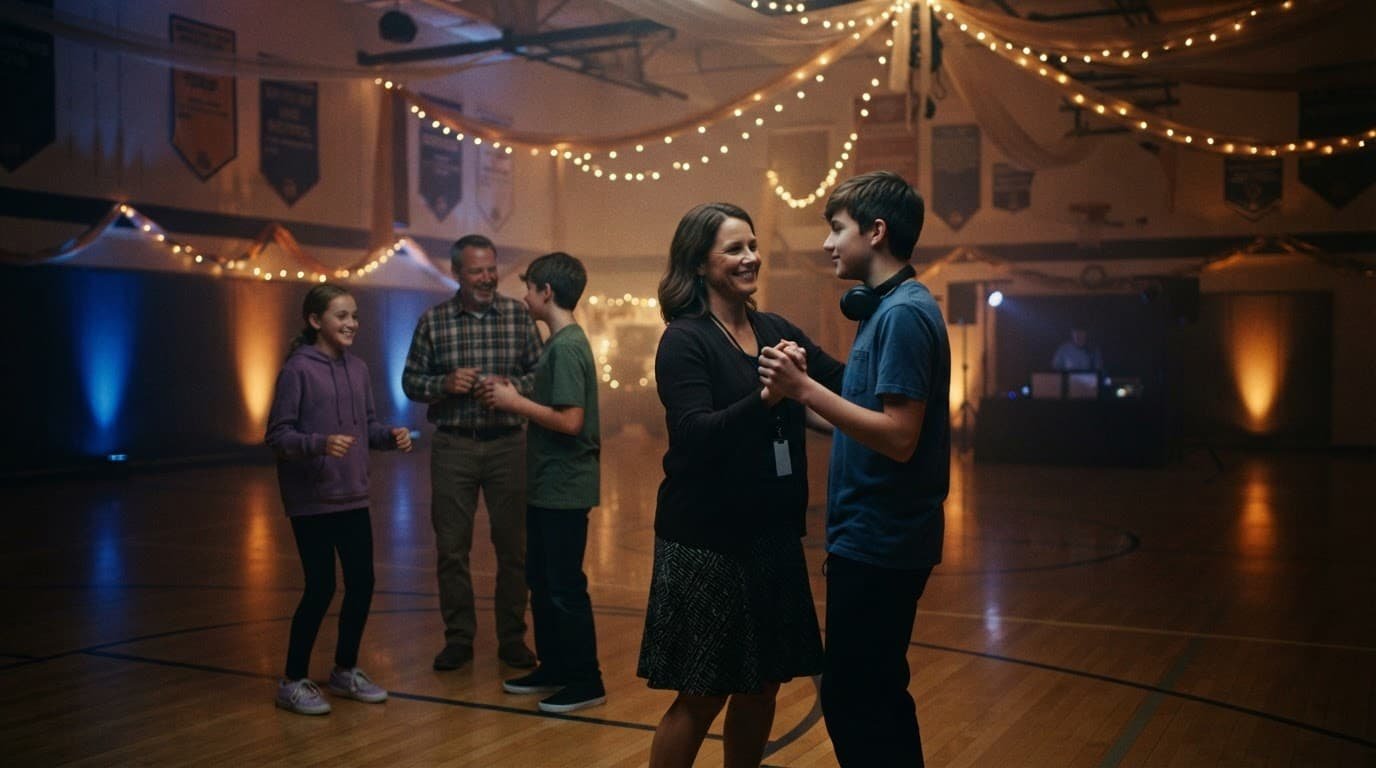
A professional DJ can support this atmosphere with calm announcements, gradual volume changes, and close attention to the room’s energy. Use a visible volume limit, or communicate the limit clearly to staff and families. Lower the sound when students or staff request it.
Keep paths clear, and use a calm transition plan between songs and activities. The event can borrow the low-surprise principles of relaxed performances without presenting itself as a performance. Music should support the event, not take over the room.
The following options can fit different budgets and school spaces.
| Need | Low-cost option | More complete accommodation |
|---|---|---|
| Loud music | Keep the volume moderate and offer earplugs. | Use volume monitoring and provide noise-reducing headphones. |
| Bright lighting | Turn off some overhead fixtures. | Use dimmable lights and eliminate flashing effects. |
| Crowds | Open a side area with chairs. | Schedule staggered arrival times and use a larger venue. |
| Overwhelm | Reserve a calm classroom nearby. | Staff a quiet room with soft seating and sensory tools. |
A nearby dance studio and local community programs may offer practical ideas about accessibility, equipment, or referrals.
Even a few thoughtful changes can make a major difference. Parsons Dance sensory-friendly workshops show how an open environment can support rhythm and movement. Qualified providers may also offer adaptive dance programs, including adaptive ballet, but those services don’t replace school accommodations. A school event can carry that same welcoming spirit without turning the dance into a formal class.
Build Inclusive Dance Activities Without Pressure
No student needs prior dance instruction, competitive dance experience, or ballet technique to attend a school dance. A recital costume is never required. The goal is a fun, safe social event with flexible ways to participate, not perfect timing or performance quality.
Start with familiar songs and easy group activities that don’t require physical contact. A simple line dance, follow-the-leader movement, seated rhythm and music game, or open dance floor can all work well. Students can dance, sit, observe, or take breaks, choosing small or larger movements based on their movement abilities. For students with motor delays, extra time, seated options, visual modeling, or simplified movements may help. Keep directions brief, and show rather than explain when possible.
A visual schedule near the entrance can also help. It might show arrival, music and dancing, snack time, quiet-break access, final song, and pick-up. Keep the language simple, and avoid announcing unexpected changes over a loud speaker.
Some students enjoy props such as scarves, glow bracelets, or hand drums. Others may dislike the texture, lights, or extra movement around them. Offer props as an option, and keep a clear area for students who prefer to move without them.
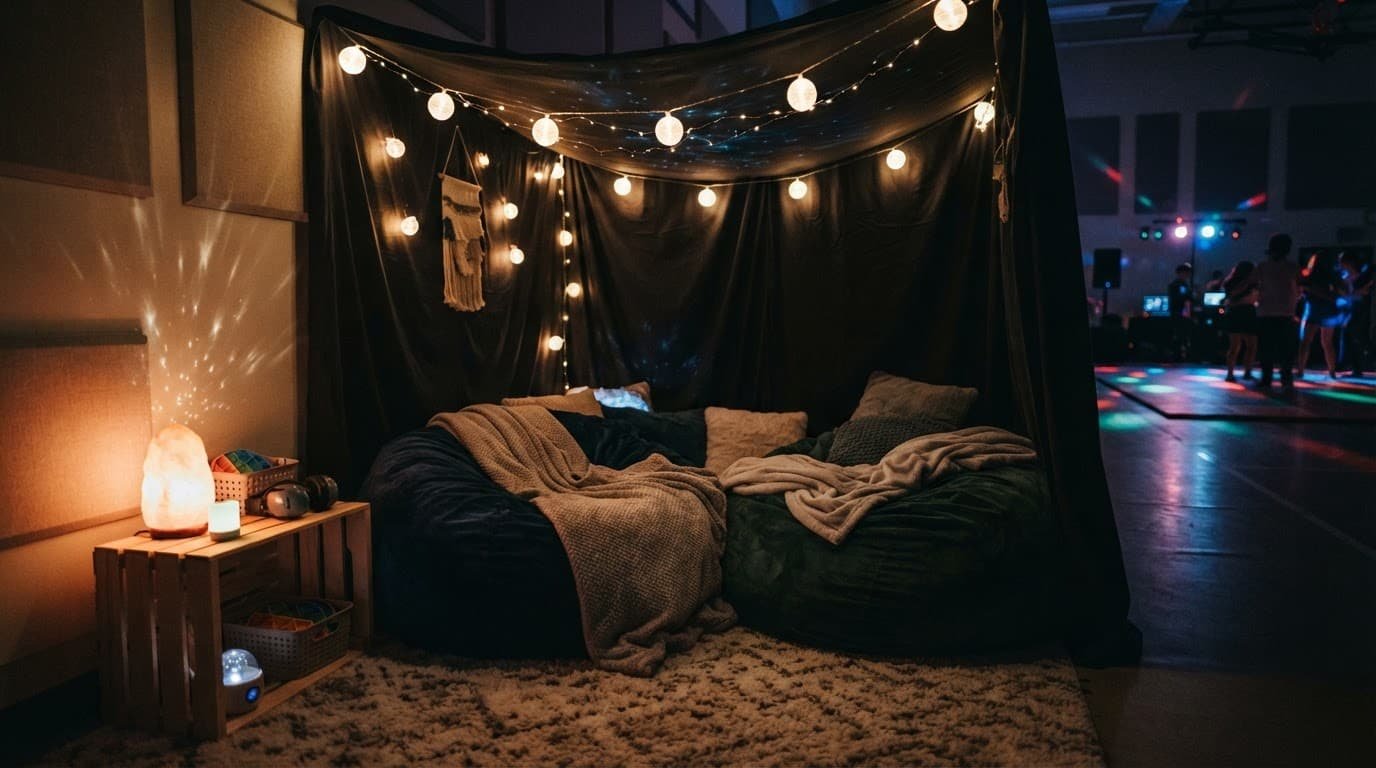
A quiet zone should be close enough to access easily but far enough from speakers and heavy traffic. Soft seating, coloring pages, water, fidget items, and lower lighting can work well. Keep the exit visible, and allow students to come and go without needing permission or an explanation.
The Mark Morris Dance Group’s adaptive and sensory-friendly classes are designed for students with disabilities. An inclusive dance class or adaptive ballet offering at a dance studio can inspire accessible activity design. The school event is recreational dance education, not dance therapy. This approach reminds school planners that movement can be social, creative, seated, standing, structured, or completely self-directed.
Give Staff and Families a Clear Support Plan
Good preparation lets staff respond calmly when a student needs help. Hold a brief meeting before doors open, and assign adults to the entrance, dance floor, quiet zone, food table, restrooms, and accessible exits. Name an event lead and backup contact, with a simple escalation path for medical, safety, or access concerns. Staff should know whom to call first and when to involve the backup.
Students should never be forced to dance, remove headphones, join a group activity, make eye contact, or remain in a crowded space. Adults should treat the event as shared recreation, not competitive dance, and never judge, audition, compare, surround, or publicly correct students. Offer choices, use respectful language, and ask before providing physical assistance. If a student needs a break, a familiar adult can walk with them to the quiet area or a calmer hallway.
Safety planning matters as much as music planning, so keep accessible exits free of decorations, bags, chairs, and extension cords. Have a clear supervision plan for students who may leave the room unexpectedly. Use allergy-aware food planning, label ingredients, and avoid making snacks the center of the event.
For registration, use an online form or paper option. Ask for practical details only, including emergency contacts, accessibility arrangements, pick-up instructions, and parent or guardian attendance plans. Use each family’s preferred language, including “special needs” if they choose, without requiring a diagnosis or more disclosure; some families may remain in the room, while others may prefer a nearby viewing area.
Be upfront about costs. Most school dances only need a ticket fee, but families should know about optional expenses for food, theme accessories, transportation, or photos. Don’t require a recital costume or special clothing; comfortable clothes and familiar shoes are usually the best dress code.
A Concise Sensory-Friendly School Dance Checklist
Use this final review before opening the doors:
- Ask students and families about preferences, support needs, and communication choices early.
- Confirm sound and lighting limits with the DJ, including no strobe lights or surprise effects.
- Identify a quiet area with comfortable seating, water, and a trained adult nearby.
- Protect accessible exits, restrooms, and walking paths throughout the event.
- Label allergy-aware refreshments and make ingredient information easy to find.
- Affirm that students may participate, observe, take breaks, arrive late, leave early, or skip the event without pressure.
Frequently Asked Questions
What makes a school dance sensory-friendly?
A sensory-friendly school dance offers flexible sound and lighting, a quiet area, clear expectations, and multiple ways to participate. Students can dance, observe, take breaks, or leave early without pressure.
Should a sensory-friendly dance use headphones or earplugs?
Yes, noise-reducing headphones and earplugs can help students manage music and crowd noise. Offer them as optional supports, and keep the volume moderate rather than expecting students to rely on protective equipment alone.
What should go in the quiet area?
Provide comfortable seating, lower lighting, water, coloring pages, and optional fidget items in a space away from speakers and heavy traffic. Students should be able to come and go without asking permission or explaining why they need a break.
How can staff support students during the dance?
Staff should offer choices, avoid forcing participation, and ask before providing physical assistance. Assign adults to key areas, including the entrance, dance floor, quiet zone, food table, restrooms, and accessible exits, so support remains calm and predictable.
Do students need a special outfit or dance experience?
No. Comfortable clothes and familiar shoes are appropriate, and students do not need dance instruction, ballet technique, or a recital costume to attend.
A School Dance Where Students Can Be Themselves
A thoughtful school celebration is not a watered-down experience. It is a better-planned event, with more choices, clearer communication, and room for every student to feel comfortable.
When music, lighting, activities, and supervision reflect real student needs, the dance floor becomes more welcoming. Belonging can mean dancing in the center of the gym, resting in a quiet corner, observing from the sidelines, or simply knowing a comfortable option exists.
No one is being evaluated in a competitive dance showcase, and no ballet technique is required to belong. Schools can also share optional movement resources, such as dance classes online, for students who want continued participation after the event.