Practical school dance planning ideas start with choosing a format that fits students’ ages, supervision needs, and interests. Effective school dance planning brings approvals, music, activities, and event-day responsibilities into one shared plan.
Younger students may need family support and shorter activities, while older students may want more independence and input. Begin with the school’s requirements, then shape an experience where every grade has comfortable ways to participate.
Key Takeaways
- Secure school approval, establish the budget, and assign adult decision-makers before promoting the dance.
- Choose shared or separate sessions based on student needs, with inclusive invitations and optional activities.
- Coordinate supervision, arrival, music, announcements, and cleanup through one written event plan.
Start School Dance Planning With Approval
Build the Team Around School Leadership
Contact the school principal first, and involve the school council when available. Include the facilities contact, faculty adviser, student representatives, and parent volunteers so room access, school expectations, and responsibilities are addressed together.
If the school doesn’t have a council, the principal can help establish a volunteer committee with a designated adult lead. Students can contribute themes, requests, and promotion ideas; authorized adults should handle contracts, spending, supervision, and policy decisions.
Assign responsibilities rather than asking everyone to help with everything. Admission, refreshments, activities, vendor communication, and cleanup each need a named lead.
Establish Costs Before Announcing Admission
Build the budget around entertainment, custodial support, required staffing, decorations, refreshments, payment-processing charges, and an allowance for unexpected expenses. Separate essential expenses from optional additions.
Funding can be a barrier, especially without an established council or fundraising support. Keep decorations manageable, prioritize safe supervision and dependable entertainment, and base admission income on realistic attendance expectations.
Facilitron’s school event planning checklist provides a useful framework for organizing facilities, schedules, check-in, and post-event duties. Decide whether the event must cover costs or support fundraising before setting ticket prices.
Choose a Format That Works Across Grades
Decide Between Shared and Separate Sessions
A shared dance can be a community-building experience when students enjoy compatible activities and the room supports clear supervision. Gather input from every grade to reflect the school community, rather than letting the oldest or most vocal students shape the event.
Separate sessions may work better when bedtimes, independence, music preferences, or attendance expectations differ substantially. Each session needs its own admission, supervision, and departure arrangements.
A primary school dance may need a shorter session and more family support. Older students may benefit from greater independence.
Older students can volunteer in approved roles, but they shouldn’t become substitutes for adult chaperones. Their participation should remain voluntary.
Make Invitations Welcoming and Clear
An inclusive dance welcomes students and families without requiring gendered pairings such as a Daddy-Daughter dance, which may not fit every family. Names like “Family Dance” or “School Spirit Celebration” make participation straightforward for different households.
Explain whether the open school dance is student-only or family-attended. If an accompanying adult must stay, state that clearly so families don’t assume drop-off childcare is available.
Share clothing expectations, admission costs, optional purchases, accessibility arrangements, and start and end times together.
Match Music and Activities to the Students
Review Exact Songs, Not Just Song Titles
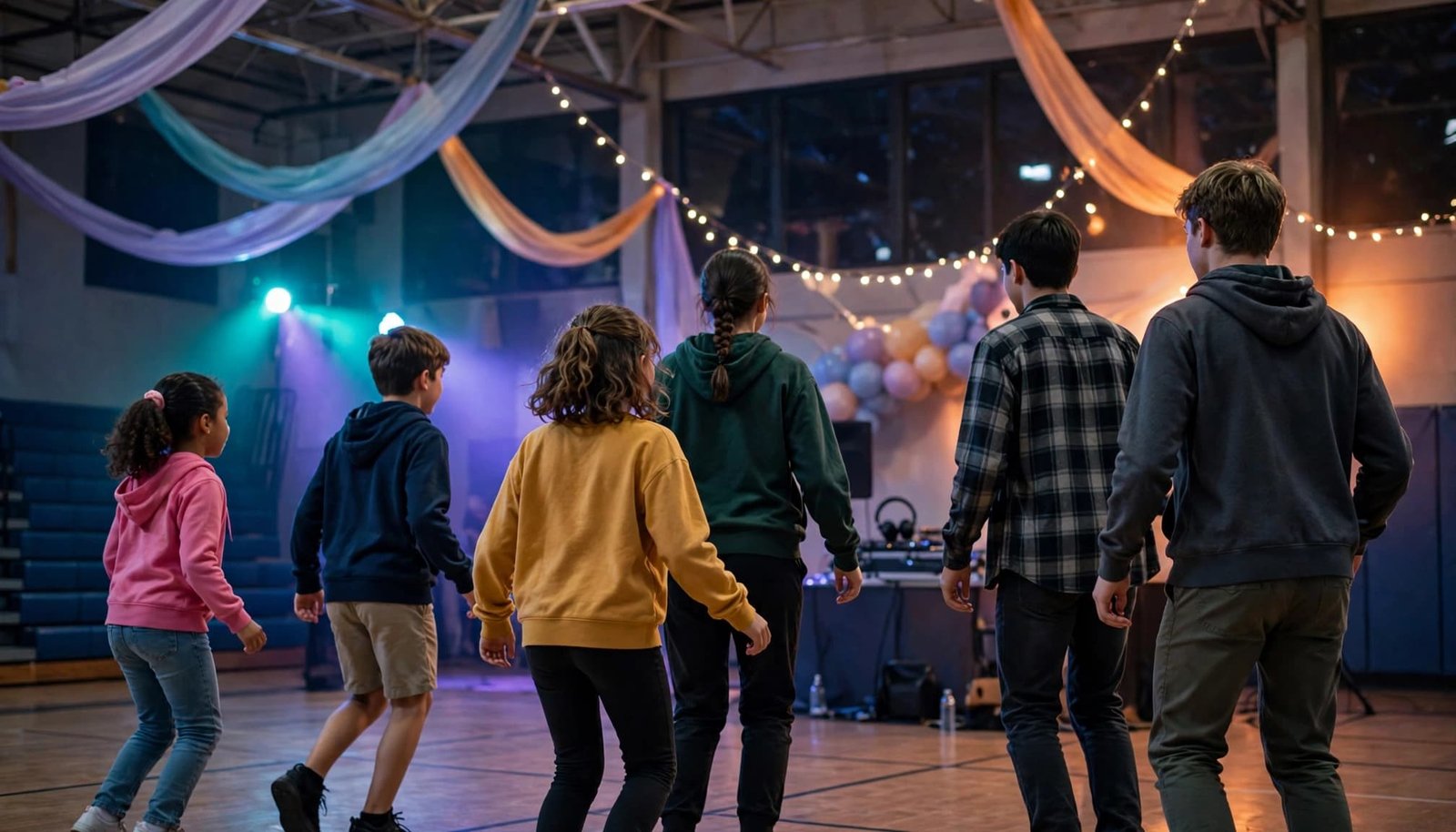
For a primary school dance, prioritize familiar, age-appropriate songs and simple activities younger students can follow. Collect requests across grade levels, then review them with the school and DJ. Familiar group songs, current favorites, and appropriate older selections can give different students a reason to participate.
A radio edit doesn’t automatically meet school standards. Review the exact version, including its themes, and establish a do-not-play list and request policy before the event.
Our school dance and prom services combine clean music options, professional sound, lighting, and MC support. Clear guidance about grade levels, school culture, and featured moments helps us tailor those elements to the event.
Offer Participation Beyond the Dance Floor
Keep games and group activities simple, optional, and easy to join without a partner. A follow-the-leader activity, seated rhythm game, photo area, or conversation space can provide alternatives.
Avoid public judging, forced partners, or announcements that call reluctant students onto the floor by name. Students should be comfortable dancing, watching, or taking a break.
Choose one manageable theme rather than several grade-specific installations. School colors or a seasonal celebration can create a coordinated atmosphere without expensive clothing requirements.
Plan Supervision, Accessibility, and Admission Together
Give Adults Defined Coverage Areas
Chaperone coverage depends on school policy, student ages, attendance, room layout, and the number of activity spaces. There isn’t a universal staffing ratio that suits every dance.
Position adults at admission, the dance floor, refreshments, restrooms, the quiet area, and departure points. The school remains responsible for student supervision and policy enforcement.
Use the school’s emergency procedures as the foundation. SchoolSafety.gov’s emergency-planning guidance supports school administrators’ broader preparation. Staff should know evacuation routes, medical contacts, meeting points, and who can pause or end the event.
Make Arrival Predictable and Accessible
Provide online registration and a paper alternative. Collect necessary emergency contacts, departure instructions, and practical support needs without requesting unnecessary medical details.
Plan guest arrival and registration with one attendance list, a clear check-in process, and accessible routes. The entrance team should resolve registration questions away from the main line and distribute permitted wristbands or activity information. Raptor Technologies’ school event safety checklist addresses visitor traffic and admission preparation.
Maintain accessible routes and seating away from speakers. Provide a supervised quiet space, clearly communicated lighting limits, and ingredient information for refreshments. Explain photo practices and opt-out arrangements before attendance.
Put Setup and Vendor Coordination in One Plan
Name One Day-of Coordinator
The day-of coordinator is the central contact for event coordination, aligning the school’s plan with vendors, performers, and volunteers. This may be an authorized school employee, committee lead, or professional coordinator working with the school’s decision-maker.
Share one written plan covering building access, venue setup, layout, equipment, accessible paths, deliveries, admission, announcements, activities, closing, and cleanup. Include the agreed early morning setup window, and keep a printed copy available.
Caterers, sound technicians, entertainers and performers, and volunteer leads should receive the same schedule and technical details. Identify who approves changes and how updates reach everyone affected. Our music, MC, sound, and lighting planning guidance explains the entertainment details worth settling before event day.
Complete Setup Before Guests Arrive
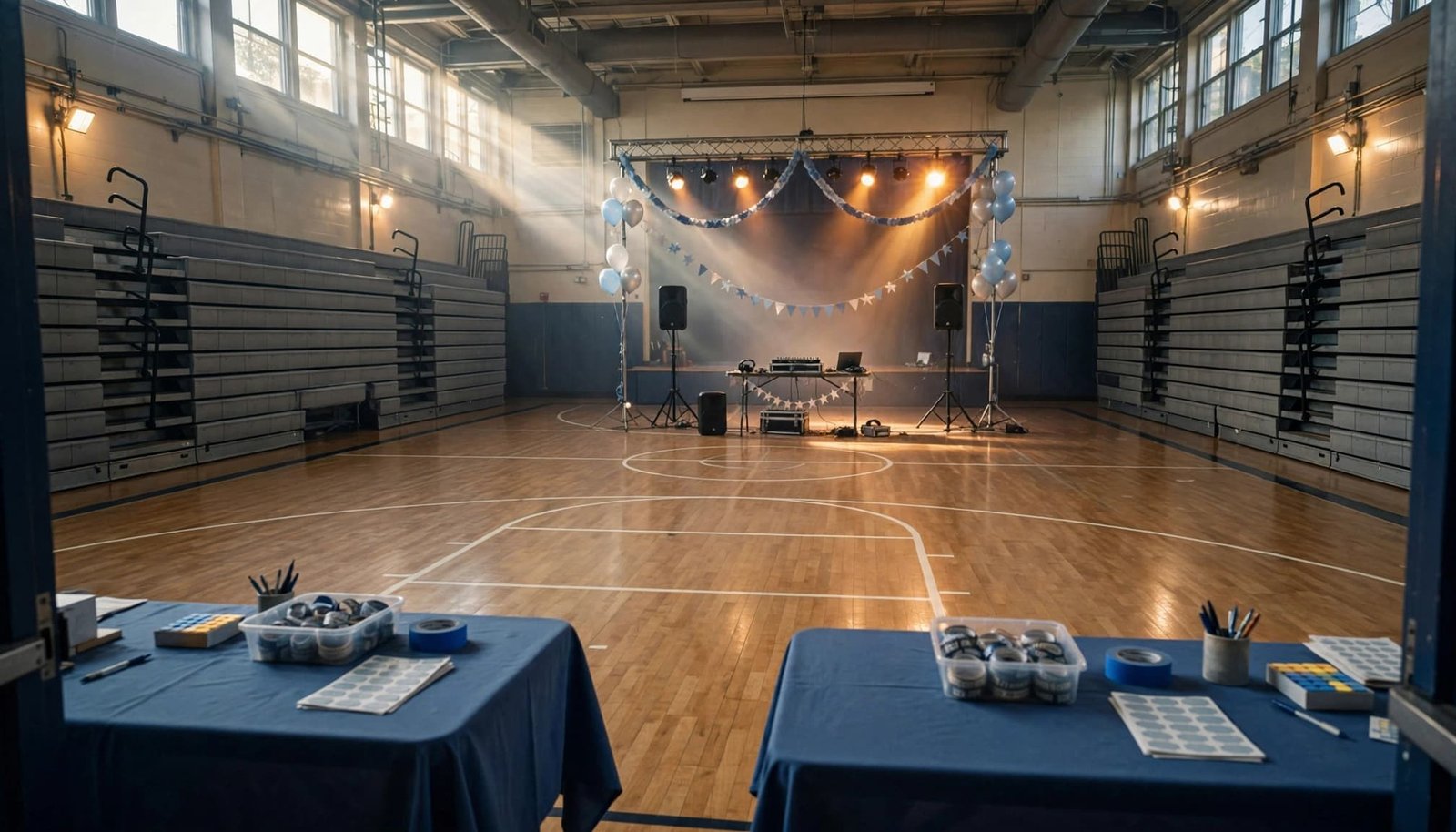
If building access allows early morning setup, use that window to arrange tables, place decorations, and prepare activity areas. Position decorations and lighting so exits and accessible routes remain clear.
Test lighting, stage arrangements, sound, and announcement microphones before admission. Keep equipment areas restricted and refreshments away from electrical equipment.
Finish with a volunteer briefing covering assignments, communications, emergency procedures, and departure duties. A prepared entrance team and tested announcement system help the event begin calmly.
Keep Transitions and Unexpected Changes Under Control
Plan the opening around arrival patterns. Tell the coordinator and affected teams about changes to facilities access or early morning setup.
Moderate-volume background music gives families and students space to check in, find activities, and settle into the room.
Use a brief welcome to explain activity locations, support options, and expectations. The coordinator should cue the MC before inviting guests onto the dance floor, introducing a performance, or beginning scheduled speeches and announcements.
Keep formal moments together where practical so the music isn’t repeatedly interrupted. Share pronunciation notes and approved announcement wording in advance.
When a featured moment moves, update admission, activities, and entertainment together. Changing only the DJ’s schedule can leave other teams working from the original plan.
For equipment interruptions, late performers, or room problems, the coordinator should assess the issue and authorize a suitable adjustment. Safety concerns belong with school leadership immediately; entertainment can pause while staff respond.
Finish With an Orderly Farewell and Venue Reset
Coordinate teardown and farewell by announcing the approaching closing time before the final song. Assigned adults should oversee approved pickup or departure procedures and remain in place until their duties are complete.
Begin teardown after students have cleared the relevant areas. Remove decorations, collect rubbish, pack equipment, return borrowed materials, and restore tables and furniture to the approved layout.
Protect equipment-loading routes so cleanup volunteers and departing families don’t cross unnecessarily. The facilities contact should handle the final building handoff, while the committee reconciles admission records and notes improvements for the next event.
Frequently Asked Questions
Should Every Grade Have Its Own Playlist?
Each grade should have input, but separate playlists aren’t always necessary. A shared music plan can include familiar songs and varied energy levels while staying within school-approved content standards.
If sessions are separate, tailor each session to its students rather than repeating the same sequence.
Who Should Photograph or Film the Dance?
Assign school-approved photographers and videographers who understand the school’s consent, privacy, and publication rules. Give them the schedule for performances, group moments, and other planned highlights.
Communicate photo opt-outs discreetly, and keep cameras out of quiet spaces. Any student media participation should follow school supervision requirements.
Do School Dances Need an ASCAP License?
ASCAP states that it generally doesn’t offer performance licenses directly to elementary or secondary schools for events including school dances. Its music-licensing FAQs explain that position.
That statement isn’t a blanket conclusion about every music use, event arrangement, recording, or publication. Keep photography and video-sharing decisions separate from playlist approval.
Build a Dance That Fits the Whole School
A successful multi-grade dance depends on clear coordination and comfortable choices. The format, entertainment, supervision, and activities should reflect the students attending rather than a single idea of how everyone should participate.
Start with your school council or principal, then bring the approved decisions into one shared plan. When adults have clear responsibilities, students have more room to enjoy the celebration.