A school dance can feel effortless to students because adults handle difficult details early. A strong school dance emergency plan gives administrators, chaperones, vendors, and facilities staff clear direction when a medical concern, weather alert, security issue, or evacuation interrupts the night.
The goal is not to make prom or homecoming feel tense. It is to support emergency preparedness through visible support, clear communication, and practical safety and security measures. Start with the school’s existing emergency procedures, then adapt them to the venue, schedule, student flow, and applicable district policies.
Key Takeaways for a Safer Event Night
New Hampshire school safety planning applies to dances just as it does during the regular school day. Under RSA 189:64, requirements for qualifying schools may include a site-specific emergency operations plan aligned with the Incident Command System and National Incident Management System. Applicability and submission details depend on current New Hampshire Department of Education guidance, so confirm them with district leadership.
Before doors open, your event team should be ready to:
- Assign one lead administrator with final authority for emergency decisions, early release, behavior concerns, and cancellation.
- Give every chaperone a specific zone, a nearby backup person, and a dependable way to contact the event lead.
- Keep exits, accessible routes, restrooms, equipment areas, and student pickup paths clear throughout the night.
- Review the district’s adopted General Response Protocol and approved actions, including evacuation, lockdown, reverse evacuation, shelter-in-place, and drop, cover, hold. If the district uses the label hard lockdown, staff should understand that terminology.
- Confirm how student attendance will be tracked if the dance moves outside, relocates, or ends early.
A reliable plan gives staff confidence, which helps students enjoy the music, friends, and school spirit for the right reasons.
Build the Plan Around the Actual Dance Venue
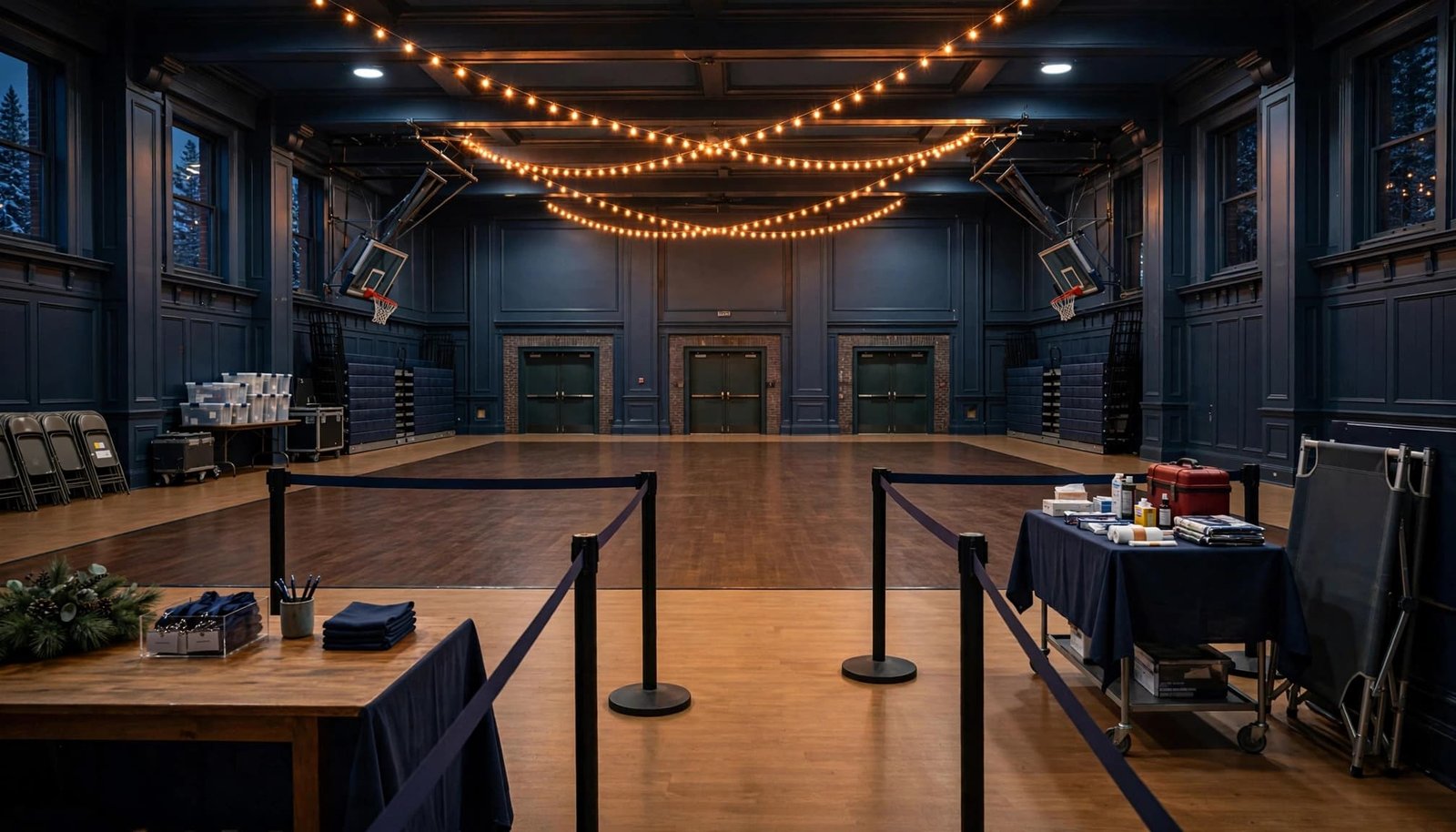
A gym, cafeteria, ballroom, lodge, or hotel function room can host a successful dance. Each space has different entrances, exit routes, alarm systems, parking areas, and locations needing adult coverage.
Start With the School’s Emergency Operations Plan
Your dance-specific emergency action plan should support the school’s approved emergency operations plan, not replace it. New Hampshire’s required all-hazard planning approach includes fires, threats, medical incidents, hazardous materials, floods, and severe weather.
Review the school’s response language before the event. New Hampshire school safety materials identify actions such as Lockdown, Evacuation, Reverse Evacuation, shelter-in-place, Drop/Cover/Hold, and Scan. Staff should use the district’s adopted wording. Map the General Response Protocol to the venue, rather than replacing it with an event-specific system.
Check terminology before the event. Don’t import labels such as hard lockdown from another organization. Staff and students should follow the language already adopted by the district.
At least four required fire evacuation drills must be all-hazard response drills, including one armed-assailant response drill. A dance night isn’t the time to introduce unfamiliar terms or create an unofficial procedure.
Add Dance-Specific Details Before Doors Open
A school dance has movement patterns that a regular school day doesn’t. Students arrive in a short window, gather near check-in, move between the dance floor and hallways, then leave at the same time.
Walk the site with the administrator, facilities representative, adviser, and venue manager. Identify each primary evacuation route and secondary evacuation route. Locate restrooms, accessible routes, a quiet area, the first aid kit, AED, alarm controls, and meeting points. Note weather-related access changes and any route that may become difficult to use.
For off-campus proms, confirm the venue’s capacity, emergency exits, alarm procedures, cable placement, protected equipment areas, and open pathways. Coordinate with the venue liaison, performing arts organizations, or other community partners. The liaison should guide first responders to the correct entrance when emergency medical services are requested. School dance and prom event coordination should also include a clear equipment plan and a secondary meeting location.
Assign Clear Roles Before Students Arrive
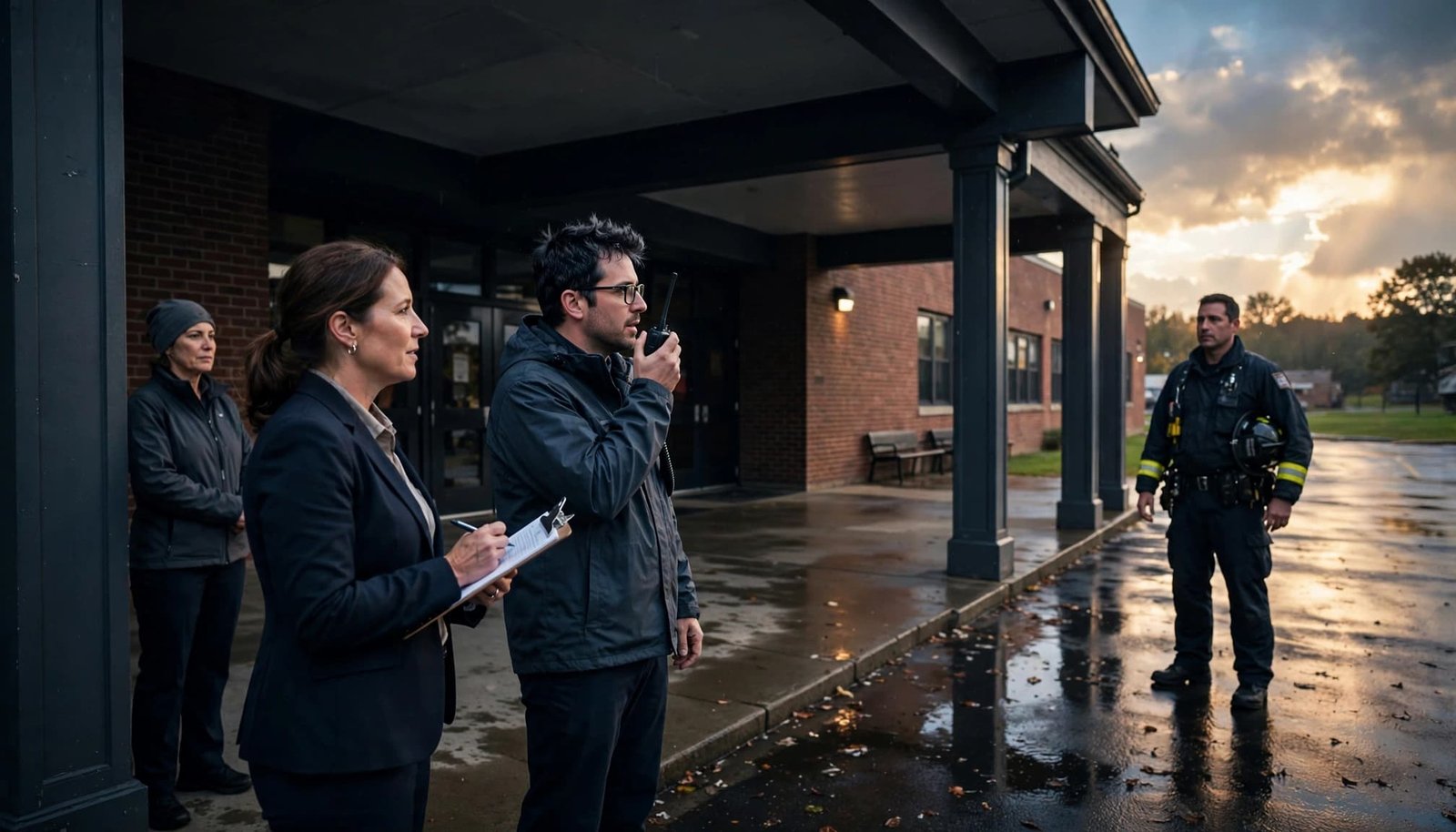
A well-run response depends on people knowing their responsibilities before a problem begins. A chaperone assignment should name a location, communication method, backup, and person to contact.
Set Up an Event Response Team
Create a Building Response Team to coordinate the lead administrator, event adviser, medical contact, facilities representative, security lead, and accountability lead. Include the DJ, venue manager, dance instructor, or activity leader when applicable.
Include outside partners, such as performing arts organizations, in the pre-event briefing when they support the venue or production. Assign one school liaison, while designated school staff retain emergency decision-making authority.
Review safety protocols, communication steps, and approved announcements during the briefing. Use the term hard lockdown only if it appears in the district’s adopted plan.
Professional DJ and MC services can support approved announcements, timing changes, and calm crowd communication. They shouldn’t manage discipline, searches, medical decisions, or security interventions.
Give staff a printed contact sheet and keep a copy near check-in and the DJ area. Include the emergency contact, backups, and communication methods. Phones can lose battery, service can be inconsistent, and a paper backup remains useful.
Place Adults Where They Can Help
The right number of chaperones depends on school policy, attendance, student age, room layout, guest rules, and separate activity areas. There is no single ratio that fits every New Hampshire dance.
Assign adults to specific zones, including entry doors, exits, hallways, restroom approaches, seating areas, food stations, parking areas, pickup locations, and dance floor edges. Name backups so no zone is left unattended during breaks or response needs.
Adults should remain visible without surrounding students or making normal social activity feel over-policed. Use a clear reporting procedure for conduct concerns, medical needs, and missing students.
Restroom supervision works best when adults monitor nearby entrances and hallways, not when they invade student privacy inside the restroom.
Review check-in, prohibited items, re-entry rules, bags, substances, phone expectations, pickup procedures, and the reporting line for conduct concerns. Middle school students often need more reminders about transitions, pickup, and where to find an adult when they need help.
Emergency Response Actions for a School Dance
A school dance emergency plan should give staff simple actions that work in a loud, crowded room. Staff should follow the district’s approved actions in its General Response Protocol. Use plain-language announcements whenever possible. The U.S. Department of Education’s crisis planning guidance recommends direct terms such as “evacuate” rather than coded language.
Evacuation for Fire, Smoke, or Building Hazards
When evacuation is ordered, direct students through the nearest safe exit and away from the building. Keep exits clear, and bring attendance information only when doing so won’t delay evacuation.
At the designated assembly point, chaperones account for the students assigned to their area and report missing, extra, or injured students to the event lead. If the primary meeting location is unsafe, move to the secondary location identified during the walkthrough.
Do not allow students to leave with friends, walk to cars, or return for personal items until the administrator or first responders give direction. Don’t permit unsafe re-entry, even if the alarm stops or conditions appear better.
Lockdown and Direct Threats
A lockdown may be needed when an active threat is inside or close to the building. Follow the district’s lockdown procedure, secure doors when possible, move students out of view, keep the group quiet, and wait for instructions from administration or law enforcement.
Schools sometimes use terms such as “hard lockdown” and “soft lockdown.” Those labels aren’t standardized New Hampshire categories. The local General Response Protocol controls their meaning, so staff must follow the district’s written instructions rather than assuming another school’s definition applies.
If an erratic person is near the venue, staff should notify the event lead and call 911 when there is an immediate threat. Keep students away from the area, and don’t send untrained adults into a confrontation.
Shelter-in-Place and Reverse Evacuation
Shelter-in-place is used when the safest action is remaining indoors, often because of weather, an environmental issue, or an outside concern. Depending on the threat, staff may need to close windows and curtains, check exterior doors, and move students away from glass.
During a shelter-in-place response, staff should keep students together and wait for direction from administration or emergency officials. The district’s written plan should explain when to end the response.
Reverse evacuation means bringing students inside quickly when they’re outdoors, such as during arrival, photos, or an outdoor activity. A hold response may restrict movement within the building, but each district should define that term in its local plan.
Handle Medical Concerns and Severe Weather Calmly
A student may feel ill, experience an allergic reaction, suffer an injury, or need emotional support. New Hampshire weather can also disrupt travel, parking, and building access, especially during winter formals and spring proms.
Respond to a Serious Injury
For a serious medical emergency, call 911 and follow school protocol and relevant student health plans. Send a staff member to meet first responders and emergency medical services at the entrance. Another adult should keep the area clear and support the student until trained help arrives.
Do not move an injured student unless there is immediate danger. For allergies, injuries, or emotional distress, follow the student’s plan and school procedures. Avoid crowding the student, posting about the incident, or asking other students for public details. Document what happened after immediate medical needs are addressed, including an incident report.
Keep a first aid kit in a known location, identify the AED, and maintain a clear emergency access route. Make sure staff know which trained personnel to contact and where relevant student health plans are available.
Prepare for Weather, Heat, and Travel Disruptions
Check forecasts before the event and review parking, arrival, and dismissal plans with the venue. Snow, ice, lightning, severe weather, extreme heat, power loss, or travel disruptions can change the safest entrance or require an early end to the event.
For heat-related illness concerns, provide water, use ventilation when available, and increase supervision. Escalate concerns to trained medical personnel under school policy. If weather affects an outdoor arrival line or photo area, use reverse evacuation to bring students inside. If conditions require a shelter-in-place response, follow approved procedures and keep students away from windows when directed.
Review current guidance from New Hampshire emergency-management officials and the National Weather Service before event night. Ready.gov preparedness resources can also help families and schools plan alerts, emergency contacts, and weather readiness.
Plan for Family Communication and Reunification
An evacuation or relocation is only the first part of an emergency response. Administrators must know where students are, how families will receive accurate updates, and who has authority to release a student.
Account for Every Student
Use check-in records, guest approvals, chaperone-zone counts, and relocation lists to account for every student. Don’t rely on a general headcount when names are available.
If the dance relocates or ends early, follow this accountability and reunification checklist:
- Reconcile check-in records with guest approvals and chaperone-zone counts.
- Compare the results with any relocation or alternate pickup lists.
- Use authorized-adult release procedures before dismissing a student.
- Tell families what identification is required for pickup.
- Protect student privacy during all updates and release decisions.
- Provide the time of the next family update, even when no new details are available.
The event lead should coordinate student status with first responders and district leadership before information is shared publicly.
A continuity plan should address early closure, relocation, alternate pickup, and the transition back to normal operations. This is a recommended planning practice, not a universal statutory requirement in New Hampshire. Reunification planning remains highly recommended because it helps account for every student and limits releases to authorized adults.
Give Families One Reliable Source
Parents and guardians need clear information, not rumors from student group chats. Choose one approved parent communication channel for closure, relocation, delayed pickup, or reunification updates.
Keep messages brief and factual. State where families should go, what identification or pickup process may apply, and when another update will be issued. Avoid sharing student names, injuries, or unconfirmed details.
Venue staff, production partners, and performing arts organizations should route public information through the designated school or district communicator. For larger events, school event planning resources can also help teams coordinate entrance timing, pickup flow, grand march schedules, and after-prom transitions.
Review the Night After It Ends
The best time to improve the plan is while details are still fresh. Even a dance without an emergency can reveal problems with blocked pathways, radio coverage, announcements, vendor access, late pickup, or hallway coverage.
Conduct a Short After-Action Review
For an effective emergency response, meet with the lead administrator, advisers, chaperones, facilities staff, venue contact, and DJ after the event. Invite feedback from first responders if they participated, along with performing arts organizations or other outside partners involved in production.
Ask what worked, what created confusion, and what should change before the next dance. Record concerns such as blocked pathways, unclear announcements, missing contact information, late vendor access, or weak hallway coverage.
Assign an owner and deadline for each corrective action. Small changes made early can prevent larger problems later.
Update the Plan, Not Just the Notes
Complete an incident report with the facts, times, actions taken, notifications made, and follow-up required by school policy. Keep student information private, and store or route the incident report through the district’s established reporting process.
Update the dance-specific plan before the next event. A new venue, larger guest list, altered entrance, or different event schedule may require a new walkthrough and revised assignments. Confirm that each corrective action is complete before students arrive.
Frequently Asked Questions
What should every dance chaperone know before doors open?
Every chaperone should know their zone, backup person, communication method, event lead, exit routes, restroom approach, medical contact, and student pickup process. They should also understand how to report a concern without leaving their assigned area uncovered.
How should staff respond to a fight or disruptive student?
Approach calmly when it is safe, use published school rules, and bring in the administrator or security lead early. Move nearby students away from the area, avoid public arguments, and document significant concerns after the situation is under control.
Can the DJ make emergency announcements?
A DJ can make approved announcements when directed by the lead administrator. The school should provide the exact wording in advance when possible, and the DJ shouldn’t be responsible for deciding which emergency action to take.
How should chaperones understand a hard lockdown?
Use that phrase only as defined in the district’s adopted plan, not as a universal New Hampshire category. Follow the local written procedure, stay within your assigned responsibilities, and seek administrator or law-enforcement direction when appropriate.
A Prepared Plan Lets Students Enjoy the Night
The strongest event plan is clear, location-specific, and practiced by the adults responsible for the event. It protects what matters most: student accountability, calm communication, accessible routes, and coordinated action when plans change.
Students remember the music, friends, and energy of the night. Prepared adults make that possible.