Before the first song plays, a prepared school dance chaperone helps students feel relaxed, welcomed, and safe without making the event feel tense or over-policed.
The goal is not to eliminate every awkward dance move, hallway detour, or last-minute song request. It is to create clear boundaries, visible adult support, and a reliable plan when something needs attention. Good preparation lets the night stay focused on music, connection, and school spirit.
Key Takeaways
- Brief every chaperone before doors open with assigned zones, reporting lines, communication methods, and emergency procedures.
- Keep adults visible and spread throughout the dance floor, entrances, hallways, restrooms, seating areas, and exits.
- Address routine behavior calmly and privately, describe what was observed, apply published rules consistently, and document significant concerns.
- Protect student privacy while monitoring bathrooms and side areas, and involve the event lead or emergency response team when a situation exceeds routine supervision.
- Coordinate music, lighting, accessibility support, pickup procedures, and staff communication so students can enjoy a welcoming and well-organized event.
Chaperone Duties Begin Before Doors Open
A successful team knows where to stand, who to call, and what rules apply before students arrive. Every adult needs both an assigned area and a clear reporting line. When adults are uncertain, students notice it quickly.
The core role is simple: maintain order, protect student safety, and address conduct concerns through the school’s process. Published chaperone duties and responsibilities provide a baseline, but chaperone guidelines must translate those duties into zones, reporting lines, and decision authority.
Hold a short staff briefing before doors open. New parent volunteers should never be asked to figure things out in the middle of a crowded gym. Use this meeting for essential chaperone training and a review of safety protocols. For an “eighth grade” event, brief adults on the needs and likely questions of “middle schoolers.” New York’s school safety planning guidance highlights the need for adequate staffing, communication procedures, training, and visitor processes. Those basics matter just as much at a two-hour dance as they do at any other school event.
Use this pre-dance checklist to give every chaperone a confident starting point:
- Confirm which administrator has final authority for behavior decisions, early pickup, medical concerns, and event cancellation.
- Walk the venue together and identify entrances, exits, restrooms, quiet areas, first-aid supplies, the AED location, and the evacuation meeting point.
- Review the school’s published school dance rules for dancing, phones, bags, outside access, substances, re-entry, and student pickup.
- Review the relevant student dress code and any appearance expectations for the event.
- Give each adult a zone, a partner or nearby backup, and a working communication method.
- Check that volunteers have signed in, received visitor identification if required, and know where to report concerns.
- Decide who will stay after the music ends to support an orderly pickup and clear the building.
A teacher chaperone may be assigned as part of a school duty, while a parent chaperone may be volunteering. Requirements, compensation, and time expectations for a volunteer chaperone vary by district, contract, and school policy. The assignment may also differ from a school trip because this event is part of broader extracurricular activities. School staff should confirm those details early, rather than learning about a required Friday-night assignment the week of the event.
Build a Crowd-Control Layout That Keeps Adults Visible
Crowd control works best when adults spread out with purpose. Four chaperones standing together near the snack table may feel staffed, but they cover only one small corner of the room.
Effective “student supervision” means circulating through the space, making positive contact with students, scanning for concerns, and keeping sightlines open. Chaperones should circulate rather than stay planted in chairs or gather around the DJ booth. A friendly presence near the dance floor often prevents problems before anyone needs a consequence.
Use the room layout to assign coverage based on risk and traffic flow:
| Zone | Smaller Multipurpose Room | Gymnasium or Cafeteria |
|---|---|---|
| Entry and check-in | Keep one adult near the door and sign-in point. | Use a clear check-in lane with adults at the door and nearby hallway. |
| Dance floor | Walk the perimeter and watch the center without blocking students. | Divide the perimeter into sections so adults can circulate without clustering. |
| Restroom hallway | Keep an adult visible in the adjacent hall. | Cover both the hallway approach and the main return route. |
| Refreshments and seating | Watch for congestion, spills, and students lingering out of sight. | Keep tables, trash, and seating visible from more than one point. |
| Exits and side doors | Confirm which doors remain closed or supervised. | Keep exterior access controlled and routes clear for emergencies. |
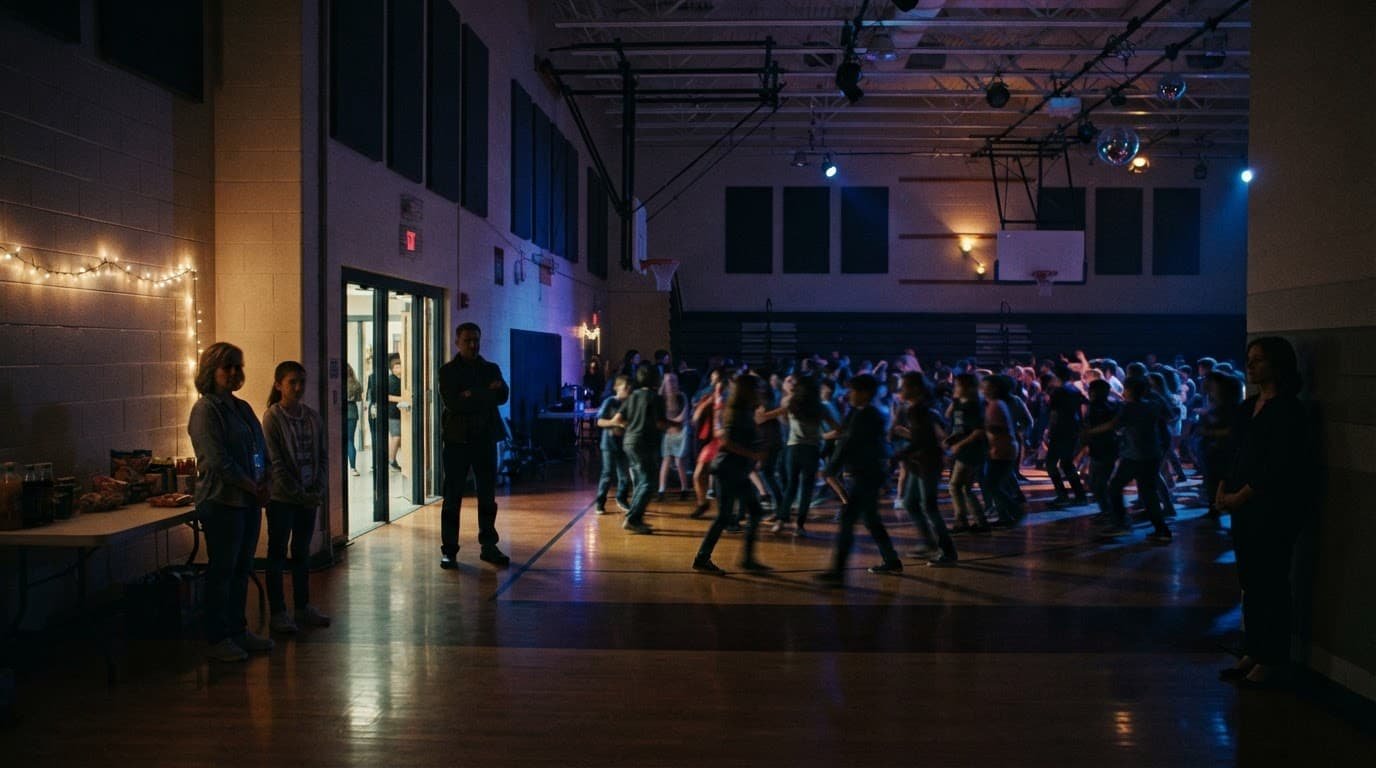
Do not borrow a supervision ratio from another district and assume it fits your event. Staffing needs depend on student age, attendance, room layout, accessibility needs, number of exits, and whether the event has separate activity areas. A middle school dance with 150 eighth grade students in a gym needs a different plan than a high school semi-formal in a ballroom.
Middle schoolers may move between activity areas, so each transition needs visible coverage.
A chaperone assignment is not “watch the dance.” It is a real location, a real responsibility, and a real person to contact when help is needed.
Monitor Bathrooms, Exits, and Hallways With Respect
Bathrooms and side hallways need attention because they are outside the main room, not because every student using them is doing something wrong. Respectful bathroom monitoring keeps adults visible near entrances and adjacent hallways without invading student privacy.
Position a chaperone outside the restroom area or at the hallway approach, following local school and safeguarding procedures. Watch for a crowd gathering, students repeatedly entering and leaving, or someone who appears upset or unwell. Do not create a privacy-invasive routine that goes beyond school policy.
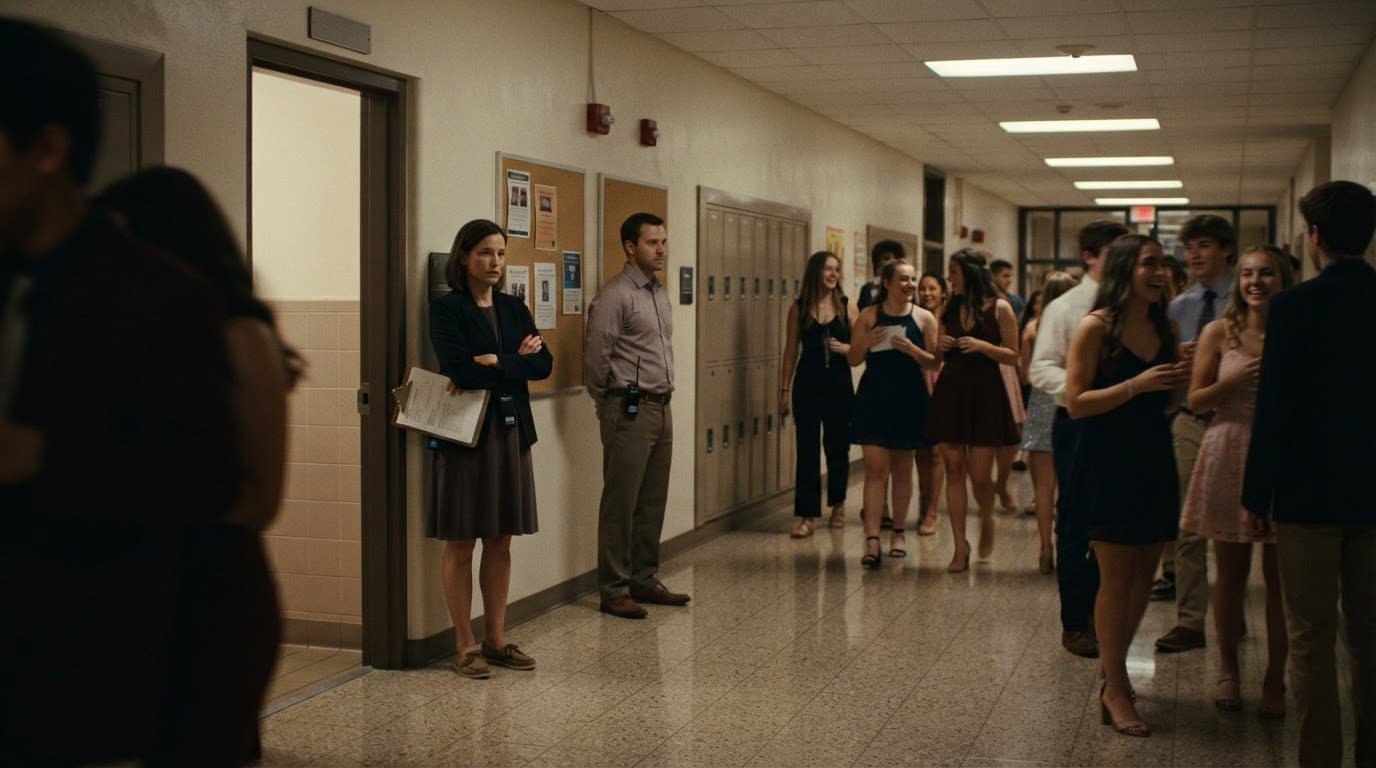
Exit control matters, too. Students should know whether they can leave early, whether a parent must meet them at the door, and whether re-entry is allowed. Once those rules are published, apply them consistently. A student leaving to “grab something from the car” can become a supervision gap if adults are not prepared.
Most awkward situations involve routine issues and ordinary adolescent behavior, such as unsafe dancing, students pushing boundaries with physical contact, horseplay, arguments, or groups drifting into off-limits areas. More serious concerns can include suspected substance use, a fight, a medical issue, a missing student, or a student who feels unsafe.
Use a calm response sequence:
- For routine behavior, approach with another adult nearby and give a direct reminder of the rule.
- Describe what you observed instead of making assumptions about intent or character.
- Move the conversation away from the crowd when possible, then involve the event lead for next steps.
- For an emergency, contact the administrator or designated response team immediately and follow local emergency procedures.
Do not physically intervene unless trained personnel are present and school policy permits it. Keeping space, calling for support, and directing nearby students away from the area is usually the right first move.
Use Calm Words and Consistent Enforcement
A loud public correction can turn a small issue into a performance for the room. Students respond better when adults are clear, calm, and steady. The message should be firm without being humiliating.
For a dance-floor issue, try: “That style of dancing doesn’t meet tonight’s school rules. Please give each other more space, or take a short break from the floor.” For an argument, try: “I can see this is upsetting. Step to the side with me so we can sort it out without an audience.”
Address student behavior, not the student. Avoid labels such as “troublemaker” or “dramatic.” Record the time, location, students involved, observed behavior, staff response, and administrator follow-up. Factual notes help distinguish routine corrections from disciplinary problems. They also help the school handle parent communication and later decisions fairly.
Consistency also includes accessibility. A student may need a quieter place because of sensory overload, anxiety, a medical need, or a disability-related accommodation. Identify that option before the event begins. A quiet supervised space can help a student reset, but it shouldn’t become an unsupervised hangout area.
The same published rules should apply to everyone, with accommodations handled through the appropriate school process. Fair doesn’t mean treating every situation identically. It means using clear expectations and appropriate support.
Coordinate Music, Lighting, and Chaperone Communication
Music and lighting shape student behavior more than people expect. A room that is too dark makes supervision harder. A room that is too bright or too quiet may keep students pressed against the walls. The right balance keeps the atmosphere fun while adults can still see faces, exits, and movement around the room.
The designated chaperone contact should have a quick way to reach the DJ or staff liaison if a track raises concerns. Clean lyrics are only the starting point. An edited song can still have suggestive themes, awkward gaps, or repeated phrases that don’t fit the school’s standards.
Collect student requests one or two weeks before the event, then let an adviser or administrator review the list with the DJ. Make it clear that a request is a vote, not a guarantee. A well-paced dance party can build energy in waves. Mix current pop, throwbacks, clean hip-hop, dance-pop, and group songs without letting one student hijack the night.
Keep one staff contact near the DJ area, but don’t crowd the booth. That person can handle announcements, flag a concern, confirm timing for special moments, and keep communication clear. Test sound in the actual room before students arrive, because a gym can make bass-heavy tracks sound muddy or far louder than expected.
A practical school event safety checklist can also help organizers review visitor traffic, entry procedures, communication, and emergency preparation before the event begins.
Frequently Asked Questions
What are the main responsibilities of a school dance chaperone?
A school dance chaperone helps maintain order, protect student safety, and respond to conduct concerns according to school policy. The role also includes staying in an assigned zone, communicating with other adults, and supporting an orderly pickup.
How should chaperones monitor bathrooms and hallways?
Chaperones should remain visible near restroom entrances and hallway approaches without invading student privacy. They should watch for crowding, repeated entry and exit, unsafe behavior, or students who appear upset or unwell.
What should a chaperone do when a student breaks a dance rule?
Approach calmly, describe the observed behavior, and give a clear reminder of the rule. When possible, move the conversation away from the crowd and involve the event lead if further action is needed.
How can chaperones handle emergencies at a school dance?
Contact the administrator or designated response team immediately and follow the school’s emergency procedures. Chaperones should avoid physical intervention unless they are trained and school policy permits it, while directing nearby students away from the area.
A Well-Run Dance Feels Easy to Students
The best events feel fun because adults have already handled the details. Clear rules, visible supervision, respectful attention near restrooms, and fast communication give students room to enjoy the night without guessing where the boundaries are.
A prepared chaperone team does not need to hover over every conversation. It needs to stay present, work together, and respond with calm consistency when the room needs direction.
When students leave safely, pickups run smoothly, and the dance floor stays welcoming, the planning has done its job.