A restaurant may already have the venue vibe you want for your wedding reception. The harder question is how to add music, announcements, and dancing without making dinner feel like a crowded nightclub. A thoughtful sound plan matters as much as the playlist.
Hiring a restaurant wedding DJ can take those moving parts off your plate, but a professional isn’t the right answer for every celebration. Start with what your room and schedule need to support.
Do You Need a DJ or Will a Playlist Work?
The choice depends less on guest count than on what you expect to happen during the reception. A seated dinner with a few toasts has different needs than an evening with introductions, special dances, and an open dance floor.
When a Playlist May Be Enough
This option can work well when music stays in the background and the restaurant has an approved system that covers the dining room. Someone still needs to manage the playlist, adjust the volume, and pause it for speeches. Choose a designated person who won’t mind taking responsibility throughout the event.
Ask your wedding venue how a device connects to its sound system, whether you can test it in advance, and what happens if the connection fails. Prepare separate playlists for cocktails, dinner, and later in the evening; one long shuffle can put a dance track under a toast.
What a Professional DJ Takes On
A professional DJ can cue an entrance, hand off a microphone, announce dinner, and adjust the music when guests are ready to dance. That matters when no one in your wedding party wants to operate the sound system or watch the clock.
For a reception with several formal moments, ask what wedding DJ and MC services include. Confirm whether ceremony audio, cocktail music, microphones, and lighting are part of the same proposal or separate services.
Build a Sound Plan for the Restaurant
A restaurant sound system may be designed for background music rather than vows, toasts, and dancing. Before choosing equipment, share the floor plan, guest count, and event schedule with your DJ.
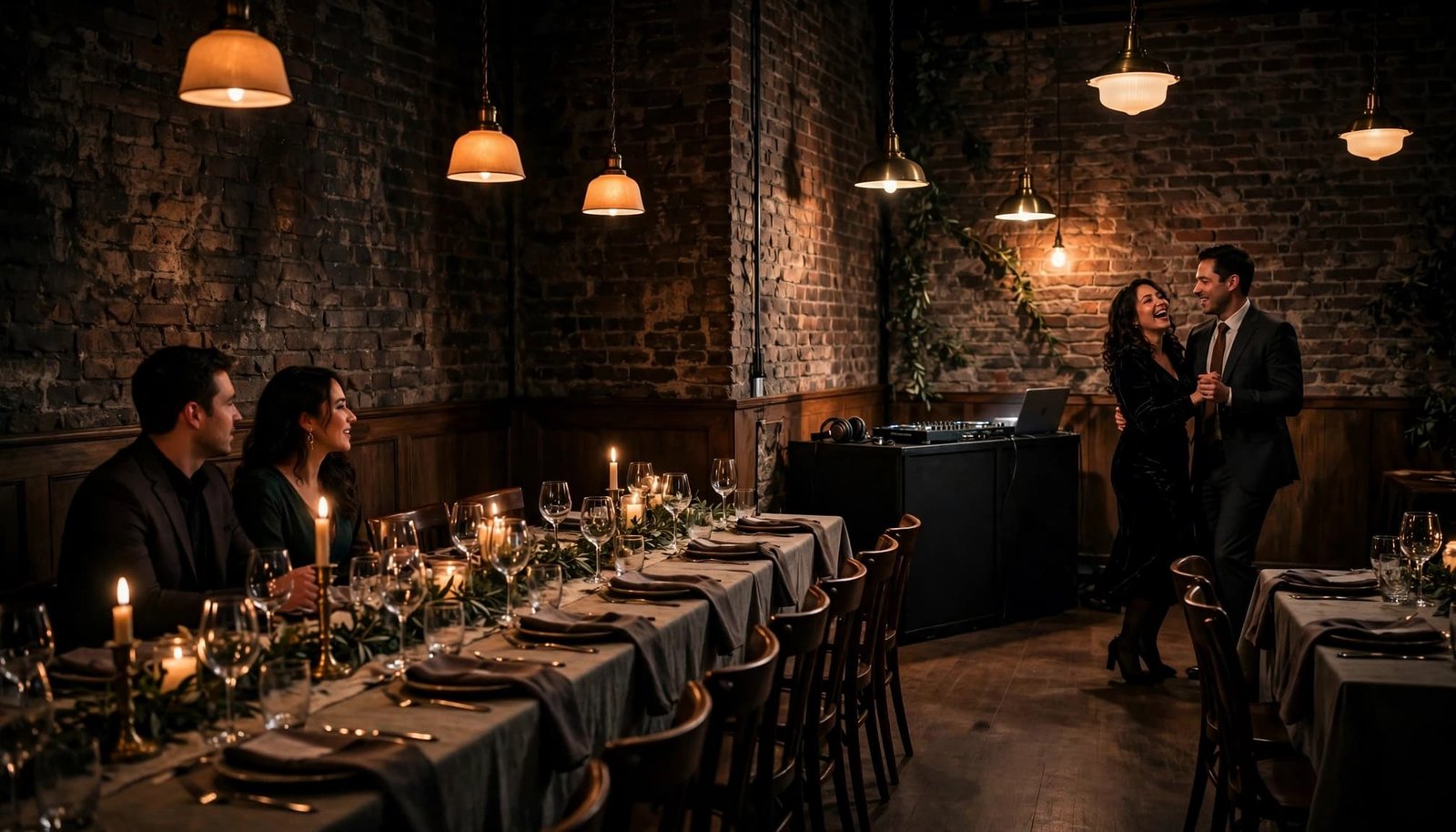
Place Speakers for Comfortable Coverage
In an intimate venue, bigger equipment isn’t automatically better. A compact speaker setup can provide even coverage at a comfortable volume without large speaker stacks. Ask the DJ how guests at the farthest table will hear toasts without putting the nearest table beside a loudspeaker.
Hard surfaces, glass, and low ceilings can change how music sounds. A sound check in the actual room helps the DJ set levels for speech and music. Shure’s guidance on controlling feedback also highlights microphone placement, speaker placement, and sound-system settings as important considerations.
Treat Each Event Space Separately
If your ceremony is on a patio, cocktails are in a bar, and dinner is in a private room, don’t assume one system reaches all three. Plan ceremony audio separately so guests can hear the officiant and music cues clearly. Cocktail music should support conversation; reception sound must also handle introductions and dancing.
Ask whether the DJ can provide separate setups where needed, or whether one system can cover adjacent spaces. The answer depends on distance, walls, power, and setup time. Confirm who will operate music in each area during transitions.
Make Room for Dancing and Conversation
A restaurant buyout doesn’t guarantee a useful dance floor. In an intimate venue, tables, servers, and restroom routes still need space after décor and DJ equipment arrive.
Review the Finished Floor Plan
Ask the restaurant for the layout it expects to use on your wedding day. Mark the DJ position, speakers, bar, food service, exits, and space left for dancing. Then consider how guests and staff will move when chairs are occupied.
If dancing is important, ask when tables can move and who will move them. Build the room flip into the timeline. If tables must stay put, a smaller dancing area may suit the reception better than a layout that blocks service.
Give Guests a Quieter Place to Sit
Dinner conversation and dance music need different volume levels. Where possible, point the main speakers toward the dancing area, not directly at seated guests. Keep a table or lounge away from speakers and bright dance lighting for anyone who wants to visit.
A restaurant wedding DJ should be comfortable adjusting the room’s energy as the evening changes. During dinner, clear speech and comfortable conversation come first. Later, the volume can rise without making every seat feel like part of the dance floor.
Plan the DJ Load-In Before Wedding Day
Restaurants have working kitchens, service schedules, and limited storage. A tight vendor entrance can affect setup more than the size of the reception room.
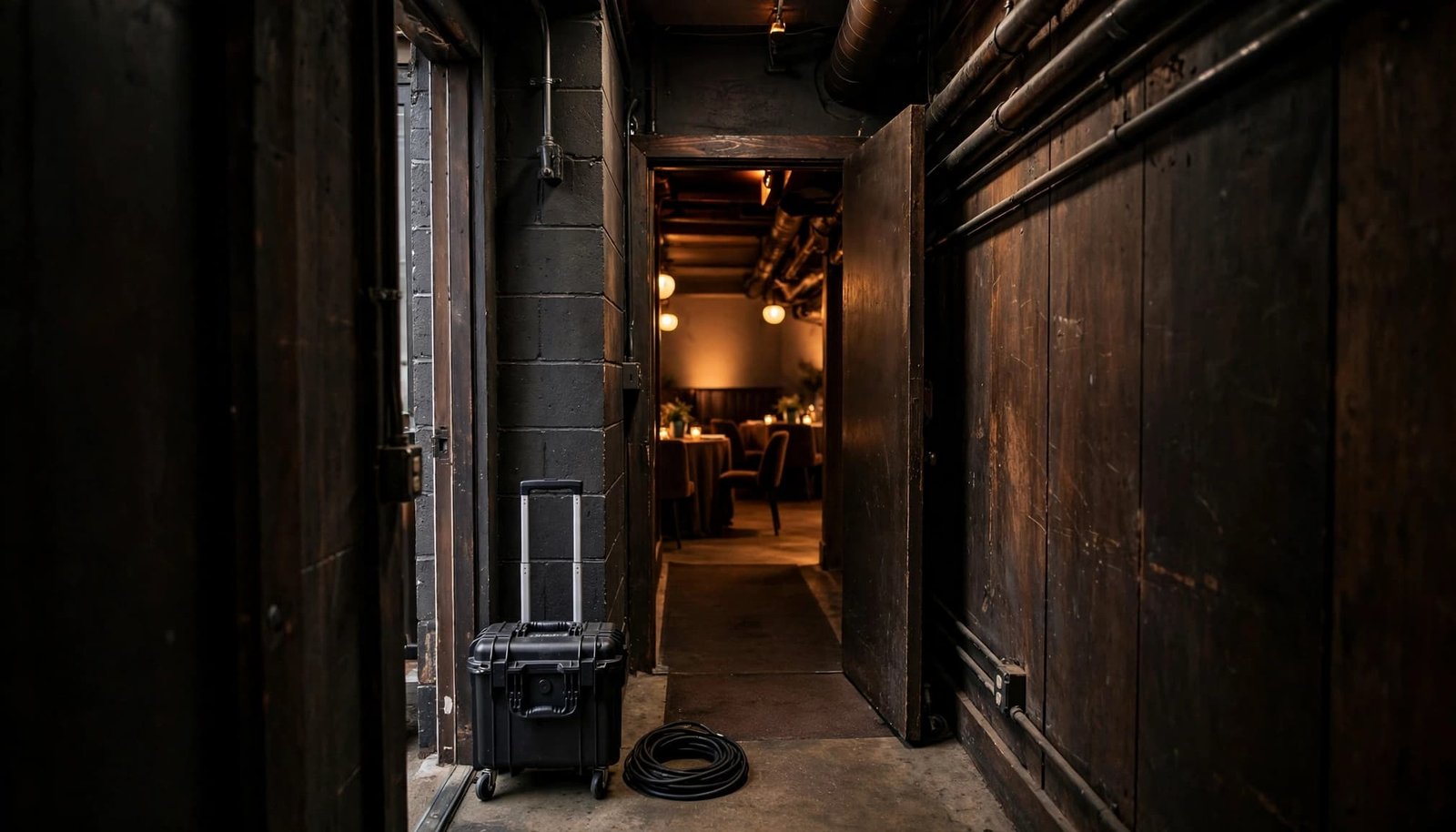
Confirm Access and Setup Times
Ask where the DJ can park, unload, and bring equipment inside. Check for stairs, narrow doors, elevators, long carries, and shared access with caterers or other vendors. A photo of an unusual entrance can help the DJ plan what sound equipment to bring and how much setup time to request.
The restaurant may need the room for lunch service or a layout change before your reception. Get the earliest access time, sound-check window, and breakdown deadline in writing. Your DJ can then plan around the venue’s schedule rather than setting up while guests arrive.
Check Power and Keep Routes Clear
Show the DJ the approved outlets near the proposed setup. Ask the restaurant whether its music system can accept an outside audio source and whether it has rules about speakers, microphones, or lighting.
Power and audio cables should stay out of doorways, exits, stairs, and accessible routes. If a crossing is unavoidable, ask the venue and DJ how it will be protected. Agreeing on the setup location early helps avoid last-minute moves around busy service paths.
Set a Reception Timeline That Fits the Room
A restaurant wedding reception often feels best when formal moments are clear, with minimal announcements. Guests should know what’s happening without hearing an update between every course.
Keep the MC Style Personal
Give the DJ a wedding reception timeline for introductions, cocktail hour, dinner, toasts, special dances, and the final song. Identify who can approve a change if food service runs late. The DJ should coordinate with the venue manager or planner before announcing a moment that isn’t ready.
Discuss how you’d like to be introduced and how much microphone time feels right. In a small room, a warm welcome and a few well-timed announcements can be more effective than a constant running commentary. Ask where speakers can stand for toasts so guests can hear them comfortably.
Give Music Direction Without Scripting Every Song
Share must-play wedding songs, a short do-not-play list, and the style you want for cocktails, dinner, and dancing. For an entrance or first dance, include the exact artist and recording; songs with the same title can have different versions and lengths.
Guest requests can add personality, but your preferences should guide the DJ’s selections from their music library. A DJ can adjust the pace when guests linger over dinner or head toward the dance floor. If you’re still building the schedule, wedding reception music and timeline advice can help you identify the moments that need a music cue.
Compare DJs and Quotes on the Same Details
A good restaurant wedding DJ understands the venue vibe as well as the playlist. Ask how they’ll tailor music entertainment to a conversational dinner, handle speeches, and work within a modest dance area.
Ask Questions That Reveal the Plan
Describe the layout of your wedding venue and ask where the DJ would set up. How will guests hear toasts across the room? Who will cue ceremony music if the ceremony is elsewhere? What happens if a microphone stops working?
If wireless microphones are part of the proposal, ask which moments they’ll cover and how the DJ will check them before guests arrive. Shure’s wireless microphone guide explains some of the choices behind these systems; you don’t need to select the equipment yourself, but you should know who is responsible for it.
Request a Quote That Matches the Schedule
When comparing event entertainment, focus on what each written proposal includes, not just the package name. Check the performance hours, arrival and breakdown times, MC services, microphones, ceremony and cocktail coverage, lighting, travel, and any additional setup.
There isn’t one useful price for every restaurant reception. Multiple rooms, limited access, and a longer schedule can change what’s required. When you request a personalized wedding DJ package, provide the restaurant’s location and access rules along with your timeline. That gives the DJ a clearer basis for the quote.
Key Takeaways for Restaurant Reception Planning
- Decide whether you need background music only or someone to manage formal moments, essential announcements, and dancing with minimal announcements.
- Review the finished floor plan before committing to a DJ position or dance floor.
- Plan ceremony, cocktail, and reception sound according to where each event takes place.
- Confirm access, power, venue rules, and the setup window before finalizing the entertainment agreement.
Restaurant Wedding DJ FAQ
How Many Months Ahead Should We Book?
There isn’t a booking deadline that fits every restaurant wedding. Once you have a date and a likely venue, ask DJs about availability, especially if your reception needs ceremony audio or coverage in several rooms. Share the venue details before signing so the proposed service matches the space.
Can We Use the Restaurant’s Existing Speakers?
Possibly, but confirm what the sound system is designed to cover and whether outside equipment can connect to it. Background speakers may suit dinner music while leaving toasts difficult to hear. Arrange a test with the venue and DJ before relying on the system for important moments.
Does a Small Reception Need Space for Dancing?
Only if dancing is part of your plans. Even a modest area needs a clear route around tables and service stations. Ask to see the seated layout, then decide whether the available space supports the kind of evening you want.
Can One DJ Handle the Ceremony, Cocktails, and Reception?
Yes, one DJ may manage music across the day, but each location needs its own coverage plan. Separate rooms or an outdoor ceremony may require additional equipment and setup time. Confirm what’s included, where the DJ will be during each transition, and who gives the cue to begin each formal moment.
A Good Reception Starts With the Room
The restaurant may provide the atmosphere, but the sound and schedule determine how comfortably guests experience it. Match the entertainment plan to the layout, give each part of the day the coverage it needs, and settle access details before wedding day.
Whether you choose a playlist or a professional DJ, clear coordination lets dinner feel like dinner and the celebration feel like yours.