A New Hampshire rehearsal dinner begins the wedding weekend with conversation, not a miniature reception. Thoughtful rehearsal dinner music sets a welcoming tone while leaving room for introductions, stories, and connection.
This is a conversation-first evening, unlike the ceremony or wedding reception. It isn’t the place to plan processional music or a first dance, and it doesn’t need a packed dance floor or formal production schedule.
Adapt the opening mood to the setting, whether it’s a restaurant, barn, lakeside property, or private home. Let the sound support the room, then give important moments the attention they deserve.
How Rehearsal Dinner Music Sets the Tone
Your dinner soundtrack should feel like an opening chapter, not a smaller version of the main celebration. Guests may be meeting relatives for the first time, reconnecting with friends, or settling in after travel. The right music makes those moments feel comfortable.
Keep Conversation at the Center
Dinner music should support the room, not take it over. A balanced sound system spreads audio around the space instead of aiming one loud speaker at nearby guests. If people at the far end of a table are leaning forward to hear each other, the volume is too high, especially in indoor New Hampshire rooms with stone, glass, or high ceilings, and in echoing barns.
Start lower than you think you need. A DJ or musician should monitor the room and make gradual changes instead of following a fixed volume level. Outdoors, wind can carry sound toward nearby residences, so speaker placement and restraint matter as much as volume.
The best rehearsal dinner soundtrack is often the one guests remember as a feeling, not a list of songs played too loudly.
Let the Energy Build Gradually
A calm start gives guests time to arrive and settle in. After dinner, the music can become slightly brighter without turning into reception-style dancing.
Think in gentle waves. Acoustic folk, jazz, soft rock, and classic soul make comfortable background tunes early in the evening. Familiar Motown, upbeat classic rock, and feel-good pop can arrive later, especially if the group plans to linger over dessert or gather at the bar.
Build a Time-Blocked Rehearsal Dinner Playlist
Use dinner music across the full scheduled window, then add at least 30 to 45 minutes of extra selections. Unlike a wedding playlist built for ceremony cues and reception peaks, this plan needs more flexibility. Dinner service can run long, transportation can be delayed, docking may take longer, and an extended toast can shift the timeline.
This simple timeline keeps the energy appropriate as the night moves forward.
| Part of the Evening | Music Direction | Volume Goal |
|---|---|---|
| Guest arrival | Acoustic, light jazz, soft pop | Low and welcoming |
| Cocktails and dinner | Familiar favorites, folk, relaxed classics | Comfortable for conversation |
| Toasts and dessert | Brief music cues, warm favorites | Lower before every speech |
| Closing drinks or send-off | Brighter classics and upbeat singalongs | Lively, still controlled |
The main takeaway is simple: save the biggest music moments for the wedding reception.
Arrival and Cocktail Hour
Use this time for familiar songs that feel welcoming without demanding attention. Jack Johnson’s “Better Together,” Norah Jones’ “Come Away With Me,” and mellow acoustic covers can create an easy beginning.
For a lobster bake, backyard gathering, or lakeside dinner, folk, Americana, and mellow favorites often feel natural. A restaurant setting may call for jazz, bossa nova, or sophisticated soul at a lower level.
Dinner and Conversation
Dinner is the heart of the night. Keep dinner music at a relaxed tempo, with recognizable melodies and few sudden volume changes. Van Morrison’s “Moondance,” Frank Sinatra’s “The Way You Look Tonight,” and classic Stevie Wonder tracks are strong choices. They feel celebratory without interrupting a toast or table conversation.
Don’t stack too many slow romantic selections in a row. The mood can become heavy. Blend those choices with easygoing favorites so the room stays warm and social.
Toasts and the Final Hour
Before anyone speaks, lower the volume. Have the music provider ready the microphone, confirm the toast order, and fade down before every toast. Don’t rely on venue staff to manage last-minute changes.
After dessert, bring in a little more energy. A few familiar songs can keep people talking, laughing, and staying longer. If the dinner ends with a casual bar gathering, this is the right place for brighter classics or guest-requested favorites.
Song Ideas for a Mixed-Generation Guest List
The strongest song choices share one quality: guests can recognize the mood even when they aren’t actively listening. Build your selections around musical genres that cross generations, then add songs that feel personal to you.
Classic Rock and Motown Favorites
These familiar favorites work well because they bring instant recognition without requiring a dance floor. Stevie Wonder’s “Signed, Sealed, Delivered I’m Yours” adds joyful energy later in the evening. The Temptations, The Supremes, Fleetwood Mac, James Taylor, and The Eagles can also fit naturally into your selections.
Use related styles in short runs, rather than long blocks of one genre. Three or four songs in one style can feel intentional. Then shift into soft rock or soul before the sound becomes too predictable.
Acoustic and Folk Selections
Acoustic songs are a comfortable fit for a farmhouse dinner, a private home, or an outdoor gathering. Consider artists such as Jack Johnson, The Lumineers, The Head and the Heart, or Brandi Carlile. Instrumental versions of meaningful songs also work well when lyrics might distract from conversation.
Keep personal songs in moderation, and let ceremony processional music or reception-specific moments remain separate. A rehearsal dinner is a wonderful place for a favorite artist or meaningful track, but not every song needs to tell the couple’s full love story.
Jazz, Soft Pop, and Love Songs
Jazz and soft pop bring a more refined feel to restaurants, inns, and hotel private rooms. Sinatra, Ella Fitzgerald, Louis Armstrong, and modern jazz interpretations can work alongside Adele, John Mayer, or Colbie Caillat.
A helpful music selection method is to create three short lists: songs you must hear, songs you’d enjoy if they fit the moment, and artists or songs you don’t want played. This three-list method gives your DJ or musicians clear boundaries without micromanaging every transition. It can also guide the broader wedding playlist while keeping each part of the celebration distinct.
Choose the Music Format That Fits Your Dinner
The right format depends on guest count, venue acoustics, budget, setup space, and hosting needs. A playlist suits a small dinner with reliable speakers and few announcements. A professional provider offers flexible timing, while live music can add atmosphere. A small ensemble may suit a quiet dinner music plan when the room and budget allow.

When a Curated Playlist Is Enough
A curated playlist works well for a small private room with balanced acoustics, a built-in sound system, and no formal announcements. Download it for offline use, bring a backup copy, and assign one reliable person to manage volume and pause the playlist for toasts.
It keeps costs predictable, but it can’t react if dinner runs behind schedule or announcements change. Does the audio setup quote include speakers, microphones, stands, and teardown, and cover overtime, travel, deposits, power, and load-in distance?
DJ, String Quartet, Jazz Band, or Acoustic Trio
A DJ is a strong choice for a larger guest list, changing genres, clear microphone support for toasts, or detailed timing. An experienced New Hampshire wedding DJ can adjust music in real time and provide polished announcements without making the dinner feel over-scripted.
Ask how overtime and travel fees affect the final budget before signing.
A formal four-piece ensemble brings an elegant sound to a formal inn or historic venue. A jazz duo or trio works well for an upscale restaurant. An acoustic guitarist or small acoustic trio is often ideal for a casual dinner where the performance should feel present but modest. A live band may need more setup space and power than a duo or trio.
Ask live musicians about breaks, overtime, song list, stage space, electrical needs, and whether background music continues between sets.
Match Music to Your New Hampshire Venue
New Hampshire wedding weekend events happen in private restaurant rooms, mountain inns, backyard tents, barns, waterfront properties, and boats. A wedding rehearsal dinner in any of these settings brings different sound, power, and weather needs.
Restaurants, Barns, Lakeside Dinners, and Riverboats
Restaurants may have hard surfaces that make moderate sound feel loud. Barns can create echo, while lakeside patios may face wind, traffic, or nearby homes. Ask where speakers can go and whether sound must stay indoors. Confirm power access, clear paths around guests, and when amplified sound must end.
For a riverboat cruise, plan around the complete scheduled trip. Include extra selections for boarding, docking, and possible delays. Confirm whether the boat provides power, what equipment is permitted, and where speakers can go without blocking guest movement. Also ask how far equipment must travel during load-in.
Outdoor Sound and Weather Planning
Don’t assume New Hampshire has one statewide noise rule. Requirements vary by municipality, property, date, and venue. For example, Manchester’s outdoor event sound rules address permits for amplified outdoor musical performances above 60 dBA and a 10:00 p.m. curfew for outdoor venues. Woodstock uses different property-line standards in its local noise ordinance. Verify current permit, decibel, curfew, and property-line requirements with the venue and relevant town.
Build a seasonal backup plan for rain, wind, cold evenings, wet ground, and early darkness. Reserve an indoor room, arrange covered power, and protect all cable paths. Keep electronics dry and use raised cable runs where needed. Schedule a realistic sound check in the actual event space, allowing time for setup and changes.
Coordinate Music, Toasts, and Vendor Details
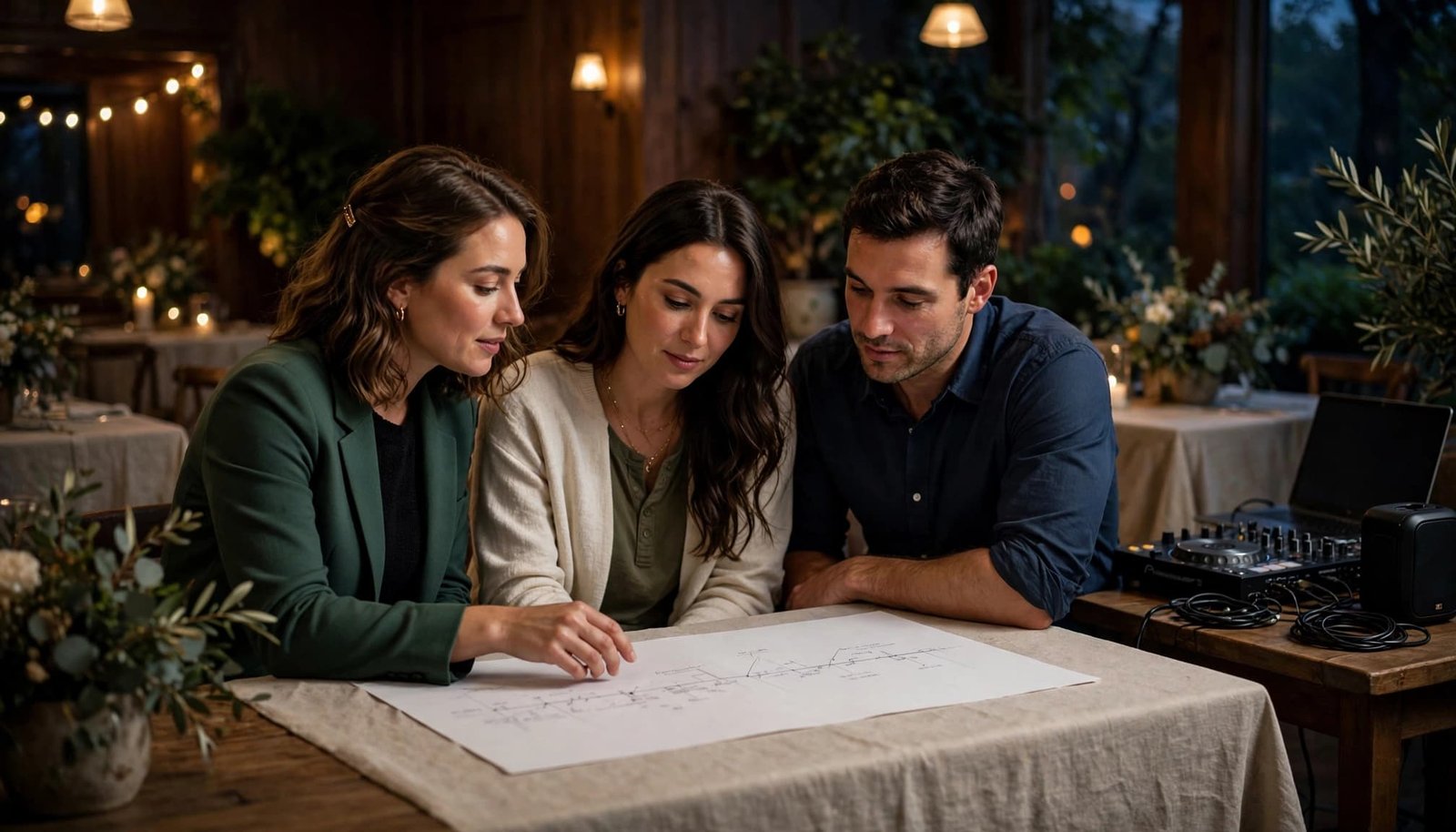
Music planning becomes easier when everyone shares one schedule. In the final two weeks, hold one focused production call with the venue coordinator, planner, caterer, photographer, and entertainment provider. Give every vendor the same timeline so the wedding weekend stays coordinated.
Share the Details That Affect the Evening
At the site visit, confirm the event start, meal service, toast order, microphone handoff, hard end time, and cleanup window. Name one contact authorized to approve changes, and identify the wedding DJ responsible for playback, microphones, and announcements.
Set the provider’s arrival time for load-in and sound check well before guests arrive. Record the audio setup, power access, equipment location, preferred music styles, formal names, and clean music requirements.
Share the dinner music plan, note whether children will attend, and confirm who can make last-minute changes. If you’re using a restaurant or venue’s sound system, ask who controls it during the event.
Confirm budget checkpoints for overtime, travel, additional speakers, generator or power needs, and weather-related relocation. Put each allowance and approval requirement in writing before the event.
Music licensing may be handled by venues and businesses, but responsibilities vary by location, so clarify them with the location and entertainment provider; ASCAP’s licensing FAQs explain how public performances of music are licensed, but they don’t replace local confirmation.
Plan for Timing Changes
Family photos may run long. Guests may need more time with dinner. A toast may be added without warning. These are normal event changes, not planning failures.
A professional entertainment team can lower the music for speeches, extend dinner selections, make a clear announcement, and keep the atmosphere comfortable while the schedule shifts. Professional DJ experience dating back to 1999 brings useful preparation to these moving parts.
Key Takeaways for a Relaxed Rehearsal Dinner
- Put conversation first with welcoming volume levels and quiet stretches during introductions and dinner.
- Create a simple timeline covering guest arrival, dinner, toasts, and the closing hour.
- Set clear must-play, nice-to-play, and do-not-play boundaries, then share them with the person handling sound.
- Review the entertainment quote and confirm equipment, setup time, staffing, breakdown, and additional fees.
- Treat this event as its own planning track, separate from ceremony and reception production. Verify local sound rules, curfews, power access, and an indoor weather backup.
Frequently Asked Questions
How loud should rehearsal dinner music be?
Keep rehearsal dinner music low enough for comfortable table conversation, especially in smaller New Hampshire restaurants and inns. Start at a low level, then make small adjustments as the room fills. Lower the sound before every toast, welcome, or important announcement.
Should we hire a DJ for the rehearsal dinner?
A wedding DJ is useful when you want personalized tracks, microphone support, announcements, and someone who can adapt to timing changes. For a quiet New Hampshire restaurant dinner, a curated playlist or acoustic performer may be enough. Base the choice on room acoustics, microphone needs, budget, and schedule flexibility.
Can we mix classic rock, Motown, folk, and jazz?
Yes. The key is pacing, not staying inside one genre. Begin with softer selections, then bring in livelier styles during dinner or dessert. Ask the couple before honoring a guest request, follow their do-not-play list, and group each style in short, natural runs.
A Strong Start for the Wedding Weekend
The evening’s soundtrack should fit the room, support conversation, and welcome guests warmly. Choose songs that reflect your personality without competing with the people and moments that matter.
Confirm the schedule, sound needs, and backup plan before guests arrive. Then leave room for the evening to change, because a well-paced soundtrack can keep the celebration comfortable and memorable from the start.