A beautiful grand entrance needs everyone ready before the first name is announced. A well-prepared quinceañera DJ timeline gives your court, family, and vendors clear direction while leaving room for the celebration to feel personal.
The strongest plan protects meaningful moments, supports meal service, and gives guests enough uninterrupted time to dance. Use planning tips to identify your family’s priorities, then give each part of the evening a clear musical cue.
Set Your Priorities Before Assigning Times
Every quinceañera has its own balance of tradition, family participation, and entertainment. Your reception schedule should reflect those choices rather than include every possible formality.
Confirm Traditions and Venue Deadlines
Decide whether you’ll include a court entrance, vals, father-daughter dance or another meaningful family dance, surprise dance, blessing, toasts, and cake presentation. Discuss any additional traditions with the family before assigning times.
Confirm the venue’s closing time, amplified-sound cutoff, catering schedule, and photographer’s contracted departure. Those commitments give your DJ a practical framework.
If the ceremony takes place elsewhere, allow for travel and guest arrival. Don’t schedule the court entrance before attendants have arrived, changed, and gathered in their agreed order. Leave a little buffer around the vals so the dance isn’t rushed.
Schedule Rehearsals and Final Approvals
Arrange a planning conversation several weeks before the celebration. Review guest ages, music preferences, family traditions, and the overall atmosphere you want.
For choreographed dances, rehearse with the exact recordings the DJ will play. Alternate versions can have different introductions, tempos, or endings.
About a week before the event, circulate one approved schedule. Confirm names, pronunciation, song versions, and the person authorized to approve changes. Review parking, load-in access, power, and setup timing with the venue before event day.
A Sample Quinceañera Reception Schedule
This proposed five-hour reception schedule runs from 5:00 to 10:00 p.m. Adapt this event timeline with your venue, caterer, photographer, and DJ. It isn’t a required order for quinceañera traditions.
| Time | Reception Moment | DJ Cue and Coordination |
|---|---|---|
| 5:00 p.m. | Guests arrive | Play welcoming background music; photographer captures room details. |
| 5:25 p.m. | Court lineup | Coordinator checks order; DJ confirms everyone is ready. |
| 5:30 p.m. | Grand entrance | Announce court, then celebrant; cue approved entrance tracks. |
| 5:40 p.m. | Welcome or blessing | Lower music; have the microphone ready. |
| 5:45 p.m. | Dinner begins | Follow catering instructions; keep music conversational. |
| 6:10 p.m. | Proposed vendor meal window | Confirm breaks and coverage; avoid featured moments. |
| 6:35 p.m. | Toasts | Check speakers and photographer; pause background music. |
| 6:45 p.m. | Court vals | Clear the floor; start the approved recording. |
| 6:50 p.m. | Parent dance | Introduce the participant; cue the selected song. |
| 6:55 p.m. | Dance reset | Allow shoe changes and court positioning. |
| 7:05 p.m. | Surprise dance | Confirm performers; start the rehearsed mix. |
| 7:10 p.m. | Cake presentation | Alert photographer and catering before announcing. |
| 7:20 p.m. | Open dancing | Invite guests; build energy with family-approved music. |
| 8:30 p.m. | Optional hora loca | Start the planned high-energy entertainment block. |
| 8:50 p.m. | Dance set resumes | Adjust selections to guest response. |
| 9:50 p.m. | Closing set | Play final favorites and the agreed last song. |
| 10:00 p.m. | Reception ends | Finish within venue and contract requirements. |
Protect transition time and vendor availability rather than chasing every printed minute.
Coordinate the Court Entrance and Featured Dances
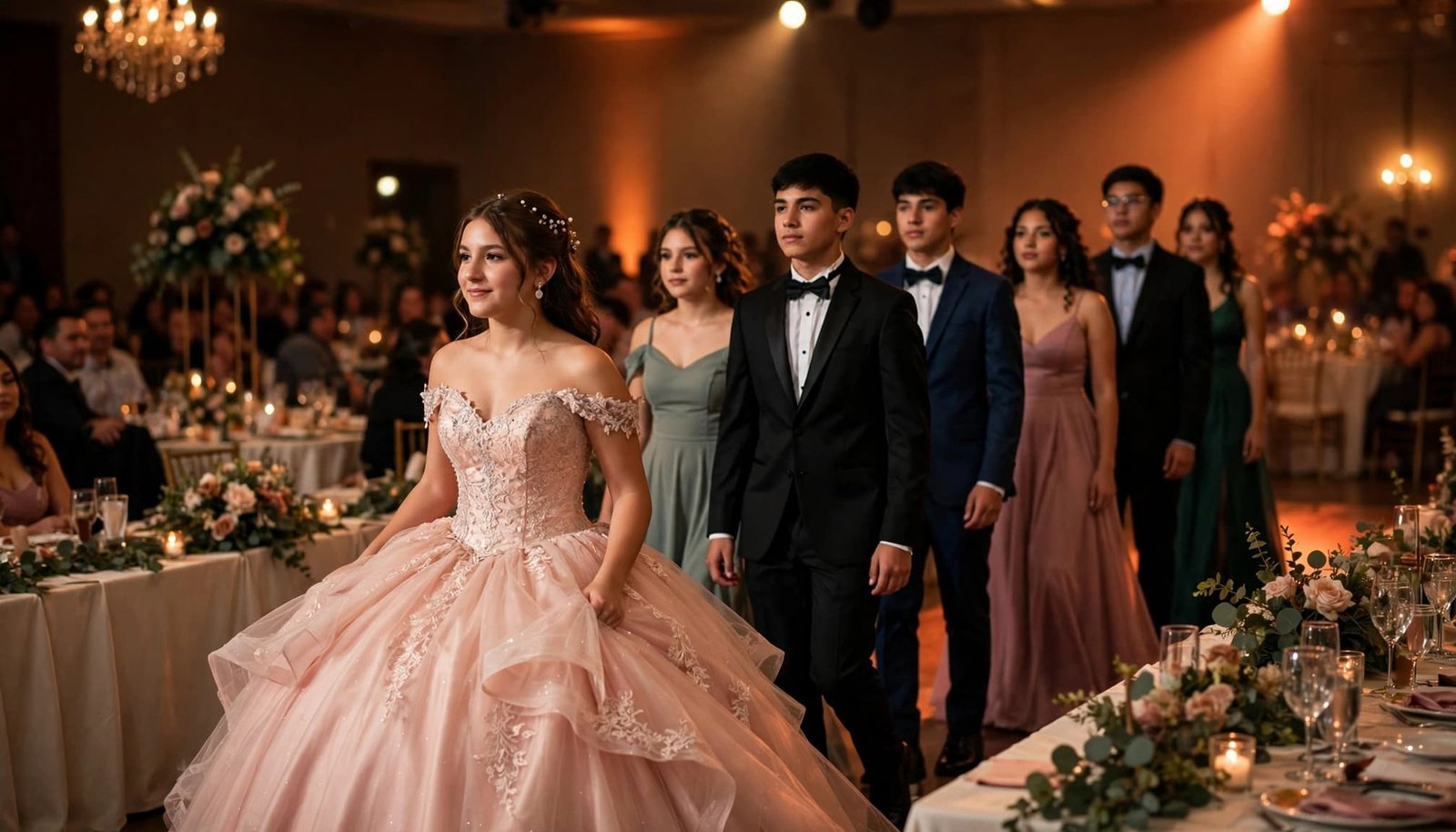
Give the Grand Entrance a Clear Order
For La Entrada, choose whether attendants enter individually, in pairs, or as a group. A practical option is introducing the court first and the celebrant last, but your family’s preference should guide the sequence.
Provide the MC with written names and pronunciation recordings when helpful. Identify where each person waits, which doorway they’ll use, and where they’ll stand afterward. Have the lineup and photographer ready before the grand entrance begins.
Assign an adult or coordinator to manage the lineup. The DJ needs a clear readiness signal, especially when the entrance is outside their view. The photographer should know where to be before introductions begin.
Separate the Vals, Parent Dance, and Surprise Dance
The vals is commonly a formal, rehearsed dance with the court, often performed as a traditional waltz. Confirm the vals format and style your family prefers. El Baile Sorpresa is typically a more energetic surprise dance, often using several edited songs.
A father-daughter dance, or another meaningful family dance, can have its own introduction and recording. Confirm who participates rather than assuming a particular family arrangement.
For song inspiration, consider “Tiempo de Vals” by Chayanne for the waltz or “Mi Niña Bonita” by Chino & Nacho for a family-approved celebration moment. These are options, not requirements.
Allow time for shoes, outfits, and floor positions. A short reset gives performers a comfortable start.
Build a Shared Cue Sheet for Every Formality
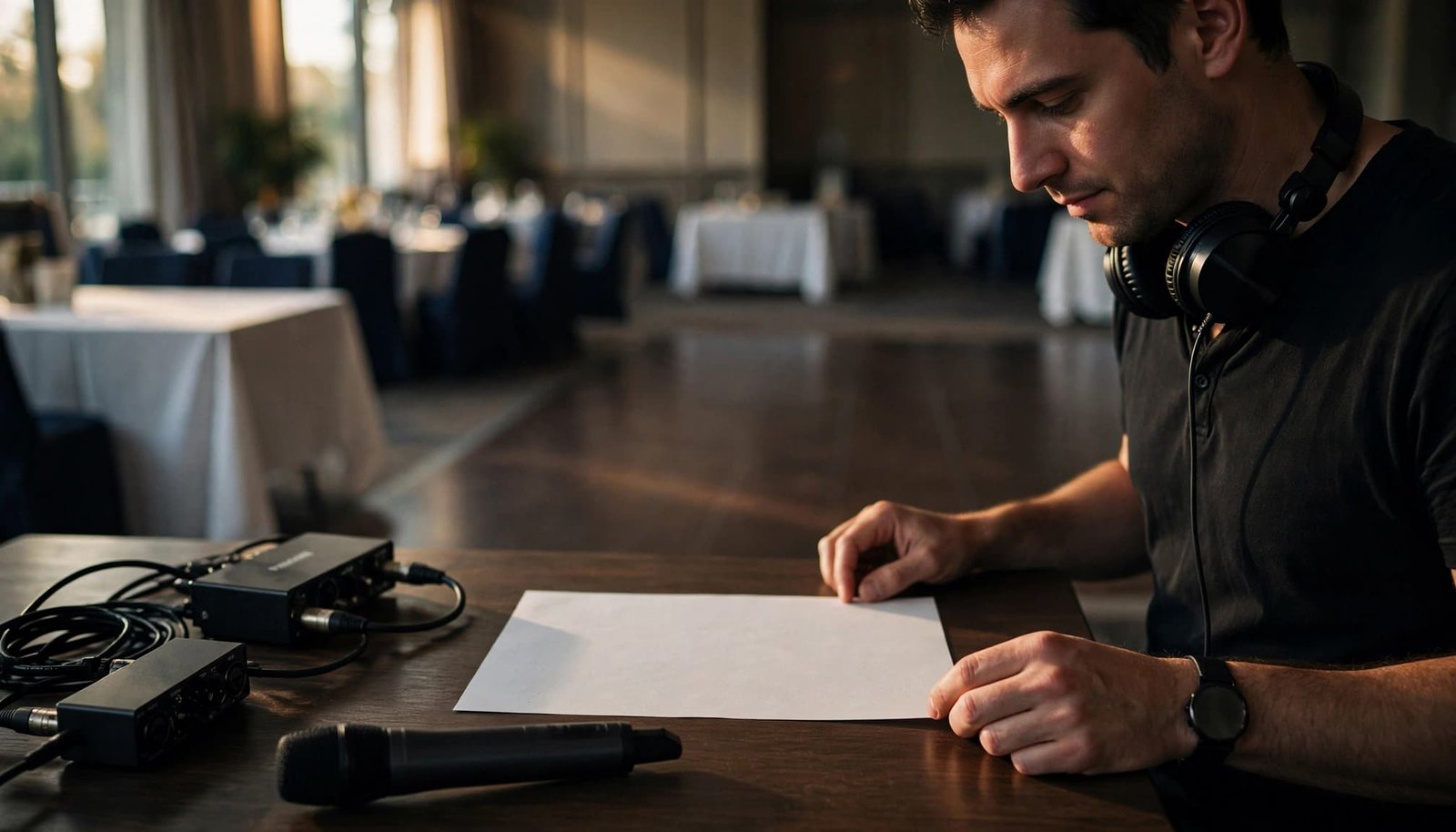
Specify What Starts and Stops Each Moment
Your quinceañera DJ timeline identifies when events happen. The cue sheet explains how they’ll happen.
For every featured moment, include the participants, announcement language, song title, artist, exact version, requested start point, and ending. Identify microphone needs and who gives the go-ahead.
A surprise dance mix should be delivered and tested in advance. Confirm backup playback and offline copies of approved music rather than relying on a personal streaming account.
DJ Steve Neff Entertainment LLC provides professional DJ and MC services with professional DJ experience dating back to 1999. The company is now based in Concord, New Hampshire.
Coordinate Photography, Catering, and Vendor Meals
Give the photographer an agreed warning before featured dances, toasts, and cake photos. A two-minute heads-up is a useful planning option.
Check with catering before announcements that require everyone’s attention. Toasts are easier to hear when servers aren’t distributing plates.
Confirm vendor meal arrangements individually, including any contracted breaks and coverage needs. Don’t place an important performance during the photographer’s meal break or leave announcements without an available host.
Choose one family contact to manage vendor coordination and approve schedule changes. Vendors shouldn’t receive competing instructions.
Protect Open Dancing and Plan the Hora Loca
A successful dance floor needs time to build. Once formalities finish, avoid stopping the music repeatedly for activities that could happen earlier.
During playlist planning, share a short song list, including must-plays, do-not-plays, and preferred genres, to guide music selection. Clean, age-appropriate selections help accommodate teens, younger siblings, grandparents, and family friends.
The DJ can mix familiar pop, Latin favorites, cumbia, bachata, merengue, or regional styles according to your guests’ preferences. Don’t assume every family wants the same musical blend.
Agree on guest-request rules beforehand. Requests can remain suggestions; the DJ should respect your music boundaries and adjust to the room.
The hora loca is an optional high-energy party block that may include props, performers, or themed music. Add it after dancing has gained momentum so it boosts the dance floor rather than interrupting it.
Confirm who distributes props, where performers enter, and how the music transitions afterward. It should fit your celebration without consuming all the remaining dance time.
Coordinate Uplighting, Photography, and Special Effects
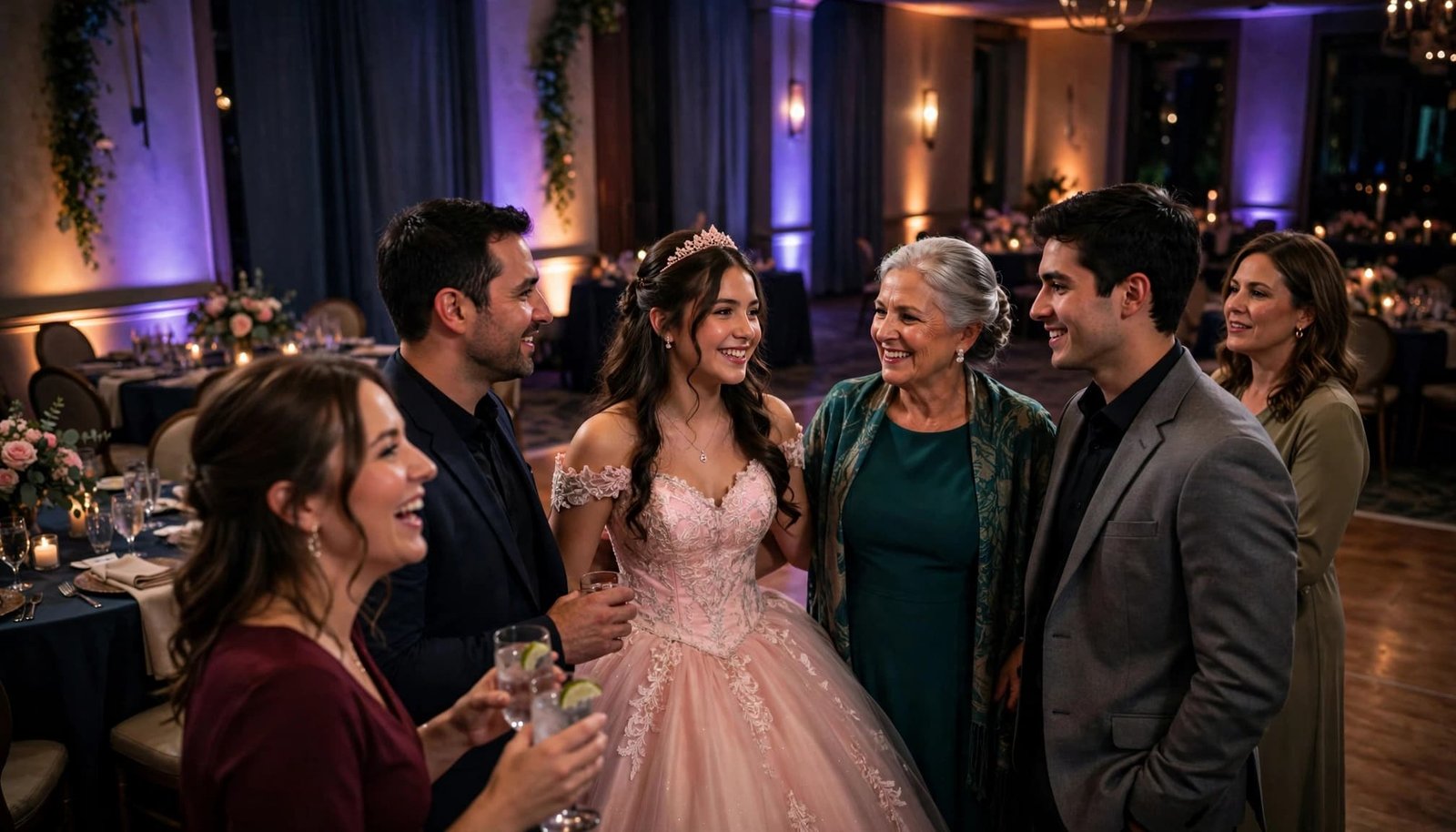
Keep Featured Moments Clearly Lit
Uplighting can create an attractive room atmosphere, but saturated uplighting colors on faces can complicate photographs. Discuss the entrance, vals, parent dance, and cake lighting with your photographer, including how uplighting will appear in each scene.
Behind the Shutter’s event photography lighting guidance explains how color temperature affects photography and how photographers use gels to adjust it. It can also help your photographer plan for uplighting.
Ask your DJ to coordinate uplighting changes with your photographer’s needs. A steady, neutral uplighting look during formal dances can give the photographer more consistent conditions. Shift to bolder uplighting colors and movement during open dancing.
Get Approval Before Booking Effects
Cold sparks and low-lying fog require advance review. Neither should be described as automatically safe or permitted indoors. Ask about cold sparks well before booking, since venue approval may take time.
The Syracuse Fire Prevention Bureau’s cold-spark guidance requires permits and licensing for specified audience-facing use. That is local guidance, not a New Hampshire rule, and shouldn’t be treated as blanket approval for cold sparks.
Confirm requirements with your venue and local fire authority. Review operating clearance, alarms, ventilation, insurance, and trained operation with the provider.
Keep any approved effect out of entrances, exits, and the court’s choreography path. Have a version of the moment ready without cold sparks if approval isn’t granted.
Compare DJ Quotes by Coverage and Responsibilities
A quinceañera quote should account for reception hours, preparation, MC responsibilities, sound coverage, lighting, travel, and any production extras.
For broad context, Thumbtack’s private DJ cost estimates listed a national range of $489 to $804 in 2025. That isn’t quinceañera-specific pricing or a current New Hampshire package quote.
Ask for a written proposal based on your actual schedule. Clarify setup, overtime, retainers, cancellation terms, liability insurance, and backup equipment.
Confirm who will perform and who will handle announcements. Bilingual hosting, choreography editing, and special effects shouldn’t be assumed to be included.
When requesting a personalized DJ package, share your venue, guest count, traditions, and entertainment hours. Clear details make proposals easier to compare.
Key Takeaways for Your Family
- Rehearse the court’s dances with the exact approved recordings.
- Give vendors one shared schedule and one authorized decision-maker.
- Confirm meals, photography coverage, and readiness before featured moments.
- Protect uninterrupted dancing and obtain approval for any special effects.
Frequently Asked Questions
Is a Bilingual MC Required?
A bilingual MC is helpful when guests need announcements in both English and Spanish. Choose language coverage based on your family and audience.
Ask about fluency, name pronunciation, and comfort introducing your traditions. Don’t assume bilingual hosting is part of a standard package. Brief, well-prepared announcements can keep both language groups informed without lengthy repetition.
What Happens if Dinner Runs Late?
Keep background music playing while the authorized coordinator checks revised timing with catering, photography, and the DJ.
Move flexible moments rather than rushing a meaningful dance. Protect the venue’s cutoff and any contracted vendor departure. If time becomes limited, shorten an optional entertainment block or toast sequence with family approval, then give guests a clear transition.
Give Every Important Moment Room to Shine
A reliable event timeline connects preparation with the celebration your family wants. Clear cues, a ready court, and coordinated vendors give meaningful moments proper attention.
Keep the schedule detailed enough to guide everyone and flexible enough to handle normal delays. When readiness comes before announcements, the entrance feels confident, the dances feel comfortable, and the evening moves naturally.