A prom can look beautiful in photos and still create problems when the contract leaves important details open. The right prom venue contract questions protect the budget, support student safety, and give staff a clear plan before deposits are paid.
For New Hampshire schools, resolve questions about district policy, supervision, transportation, weather, and vendor access before booking a venue. A prom agreement may use a wedding venue contract template, but it must be revised for student supervision, district approval, school transportation, and a dry-event policy. It should cover more than the ballroom and dinner service, including access times and the real flow of the evening. Start with the details that can change the entire night.
Key Takeaways
- Use this venue contract checklist to gather the complete agreement, attachments, floor plans, policies, and quoted services before signing.
- Ask for the total cost in writing, including taxes, service charges, staffing, security, cleaning, overtime, and damage deposits.
- Confirm the room’s actual capacity, exit routes, accessible entrances, parking, check-in area, DJ location, and dismissal plan.
- Put supervision and security responsibilities, emergency contacts, setup and cleanup duties, vendor access, insurance documents, and noise limits in the contract.
- Address cancellation, school closure, and severe weather separately, with written remedies if the venue cannot host the prom.
- Have administrators, procurement staff, or appropriate legal counsel review the agreement before approval. This article provides general information, not legal advice.
A verbal promise about early access, included lighting, or a waived fee isn’t dependable until it appears in the signed agreement or an approved addendum.
Start With Authority and the Complete Agreement
Prom committees can research, compare venues, and share ideas, but they shouldn’t make legal or financial commitments. An authorized superintendent, principal, business administrator, procurement official, or other designated district representative should approve and sign the agreement.
Who Has Final Authority on Prom Night?
Ask the venue to identify its event coordinator, manager on duty, and security contact. The school should name one administrator or lead advisor with final authority over the schedule, student conduct, announcements, music concerns, added costs, and early dismissal decisions.
That authority should be written into the agreement. The venue should only accept changes from the designated school representative, not a student volunteer, parent helper, or unapproved vendor.
Guest lists, student information, photography rules, and vendor access should be limited to the approved purpose and handled under district policy.
Does the Contract Include Every Promise?
Request the complete event venue contract, including its attachments, floor plans, policies, catering terms, insurance requirements, and addenda. The signed documents should control over informal promises made during tours, calls, or email discussions.
Compare the written agreement with what was discussed during the tour. Promises about private entrances, parking, staffing, décor, extra tables, security, or an earlier decorating window should appear in the signed agreement or an approved addendum.
Appropriate school administrators should review the final documents before signature. The district should also consult legal counsel when needed, since this guidance isn’t legal advice.

Ask for the True Total Price
A quoted rental fee is rarely the complete prom cost. Treat the quoted room price as a starting point, not the total contract amount. The agreement should record every charge the school may face before the event begins.
Which Fees Are Added to the Rental Fee?
Ask for separate line items for taxes, service charges, gratuities, staffing, security, custodial service, parking, tables, chairs, linens, audiovisual equipment, coat check, and cleanup. Also ask whether catering and food requirements include a food-and-beverage minimum or minimum guest count.
Overtime, cleaning, damage, and cancellation-related charges deserve careful attention. Ask what triggers each fee, who decides it applies, and who can approve extra charges. If the venue requires a security deposit, clarify how it differs from a damage deposit and how the venue documents any claim.
What Is the Payment Schedule and Deposit Policy?
The contract should state the amount due, deposit amount, due dates, final balance deadline, accepted payment method, and purchase-order requirements. It should also say whether the deposit is refundable, nonrefundable, or partly refundable under different circumstances.
If there is a damage deposit, state its due date, refund conditions, documentation requirements, and itemized process for withholding funds. Ask for a firm deadline for refund decisions after cancellation or rescheduling. The district business office should review the payment terms and compare the quoted venue rental package with the final invoice.
Match the Room to Student Flow and Supervision
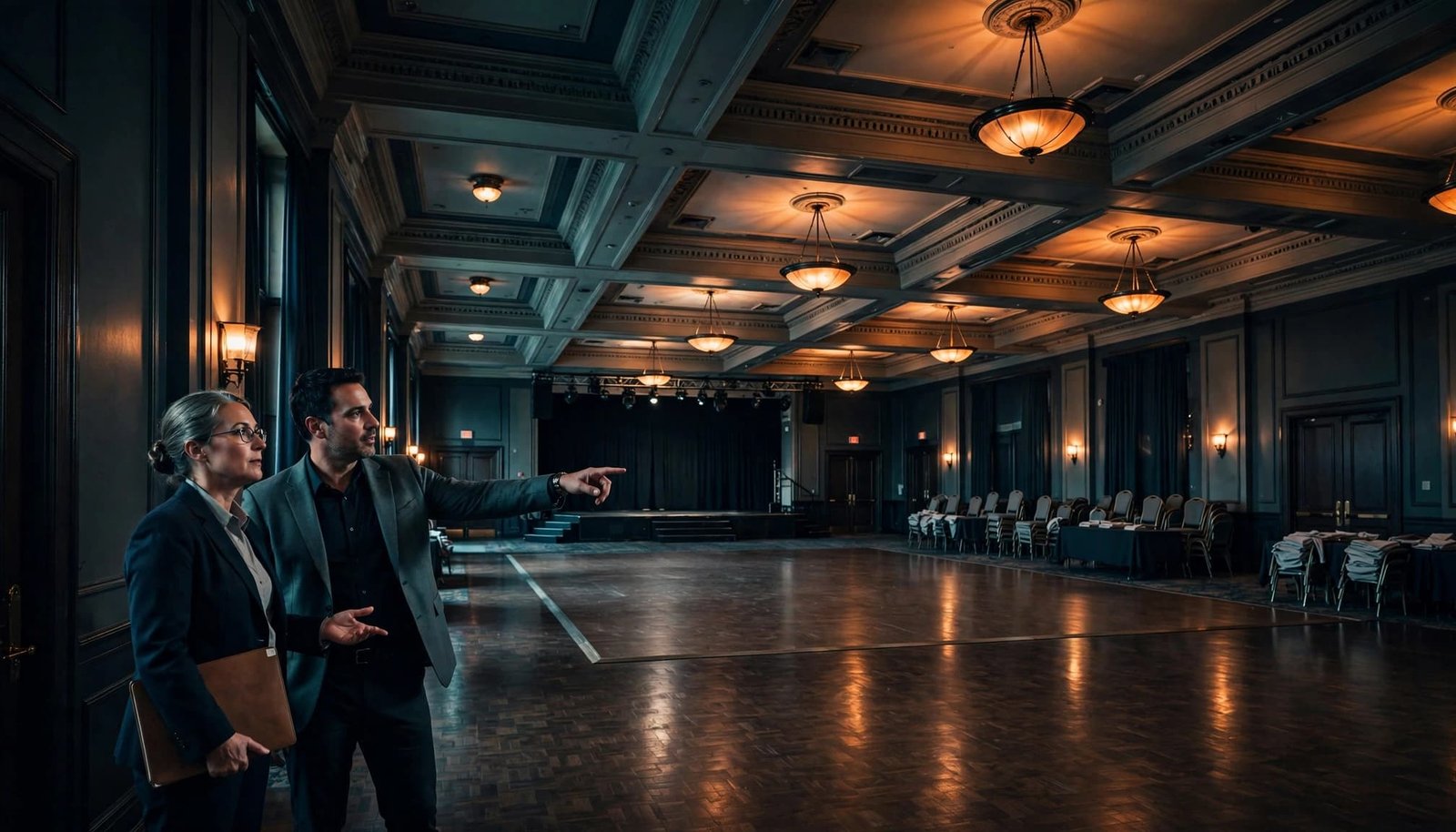
An advertised guest capacity doesn’t tell the full story. Confirm the legal or posted occupant limit, then determine the usable capacity for seated dining, dancing, buffet lines, DJ equipment, photo areas, check-in, chaperone posts, décor, and emergency egress.
Walk the room with the prom layout in mind. Inspect accessible entrances and routes, restrooms, seating, elevators, service-animal access, accessible parking, drop-off areas, pickup locations, and evacuation routes. Ask how the layout affects aisles, stairways, and student movement.
Ask where adult chaperones can maintain clear sight lines without blocking movement. Clarify how doors and hallways will be monitored, and whether the venue can restrict access to adjacent bars, restaurants, hotel areas, or other public spaces that don’t fit school policy.
Confirm transportation details, including bus staging, student drop-off, late-night pickup, lighting, and safe pedestrian routes between parking areas and the venue.
Confirm Vendors, Access, and Insurance Requirements
Prom entertainment, catering, photography, transportation, décor, and security all depend on the venue’s rules. Ask about those requirements before signing, not when vendors are already booked.
Are Outside Vendors Allowed?
Some venues require an exclusive caterer, approved security company, in-house AV provider, or preferred vendor list. Ask whether outside vendors need written approval, advance credentials, or specific access times.
Confirm all related charges before signing. These may include outside-vendor, corkage, service, delivery, or equipment fees. Also ask about food restrictions, kitchen access, vendor storage, accessibility for vendors and guests, and emergency contacts.
For music, lighting, announcements, and event timing, a New Hampshire school dance DJ should receive the venue’s documented access rules early. The contract should identify load-in access, parking, elevator use, power, cable routing, sound levels, music end time, and noise restrictions.
Ask how the venue handles photography, student privacy, and photo or video permissions. Clarify whether vendors may collect student information, publish images, or use the event for promotional purposes.
What Are the Load-In, Cleanup, and Coverage Rules?
Ask exactly when decorating can begin, when each vendor may load in, which entrance they must use, where vehicles can park, and when all equipment must be removed. Put the setup and cleanup schedule in writing, including responsibility for trash, décor removal, and damaged property.
Confirm elevator access, stairs, power outlets, cable restrictions, and whether the DJ area has a dedicated circuit. Require a process for documenting damage, completing the final inspection, and reporting problems after the event.
Many venues request certificates of liability insurance from vendors or the school. Review the required limits, additional-insured wording, vendor coverage, and indemnification language with the district insurer, administrator, procurement staff, or legal counsel. Special event insurance guidance offers general background on liability coverage, vendor documentation, and alcohol-related exposure, but it isn’t legal advice. Requirements differ by venue and event, so get the required documents and submission deadline in writing.
Put Prom-Specific Operating Rules in Writing
A prom has a different operating plan than a wedding reception. Students arrive in groups, staff manage check-in and guest eligibility, announcements guide the schedule, and dismissal needs adult supervision.
The agreement should list arrival and departure times for everyone involved. Identify door-opening time, vendor arrival, meal service, announcements, music start and end, student dismissal, and building-clear time. Include late pickup procedures, noise restrictions, and the person authorized to approve overtime. State whether charges use hourly, half-hour, or other overtime rates when students, staff, or vendors remain after the contracted end time.
The contract should also include a written supervision plan. Identify chaperone ratios or posts, security responsibilities, restricted areas, medical response, missing-student procedures, fire evacuation, severe behavioral incidents, and emergency communications.
What Are the Noise Limits and Event Hours?
Ask when doors may open, when music can start, when food service ends, when the dance must end, and when the building must be empty. Confirm any additional sound limits, speaker placement requirements, lighting limits, curfew rules, and consequences for running late.
How Does the Venue Handle a Dry School Event?
School and district policies should guide alcohol and substance-prevention procedures. Ask about alcohol storage or service in adjacent spaces, possession of alcohol or controlled substances, vaping and tobacco rules, and nearby public areas that could affect supervision.
Confirm whether re-entry, bag screening, or guest screening is permitted under district policy. The agreement should address incident documentation, communication with families or emergency services, and procedures for refusing entry or removing a guest.
A venue’s standard alcohol policy can’t replace the district’s K-12 rules or current New Hampshire guidance. Do not assume rules from another school, town, or venue apply to your event. The agreement should support a clear, school-approved plan for guest entry, re-entry, incident response, and family communication.
Negotiate Cancellation and Force Majeure Terms
A cancellation policy should be easy to apply during a difficult situation. It should not leave the school guessing about deposits, catering charges, service fees, or prepaid amounts.
What Happens if the School Must Change the Date?
The agreement should distinguish voluntary cancellation from school closure, severe weather, transportation disruption, utility failure, and public-safety concerns. For New Hampshire schools, it should coordinate with district closure decisions and bus or transportation provider limitations.
Require a written weather backup plan covering postponement, relocation, or cancellation. The contract should state what happens to the damage deposit, other deposits, catering commitments, service charges, and prepaid amounts in each situation. It should specify refund, credit, rescheduling, and partial-retention rules, along with notice deadlines and a firm timeline for deciding refunds. Force majeure contract guidance offers useful context on why this language should address both cancellation and inability to perform.
During contract negotiation, schools should request mutual, specific remedies instead of accepting language that shifts every risk to the district. The agreement should also identify who makes the final decision and how quickly both parties must communicate.
What if the Venue Cannot Deliver the Prom?
Ask what happens if the venue loses the contracted room, required staffing, utilities, or equipment. The school needs a written remedy, such as comparable space, a substitute date, a credit, or a refund.
Have the district’s authorized administrator, business office, procurement staff, insurer, or legal counsel review unclear language before signing. A contract should not place all risk on the school when the venue cannot provide the agreed services. This article offers general information, not legal advice.
Frequently Asked Questions
Do New Hampshire schools need prom insurance?
Some venues require liability coverage or certificates of insurance. Others place different obligations on schools or vendors. Prom insurance information explains common school-event concerns, including injuries, accidents, and property damage. Confirm requirements with the venue, district, and insurer well before the event.
What documents belong in the final prom contract file?
Keep the approved venue contract and all addenda together. Include the floor plan, invoices, payment records, insurance documents, vendor contacts, event timeline, and emergency numbers. Store approved versions in a controlled district location, not across separate email chains. Have unresolved provisions reviewed by the appropriate administrator or legal counsel.
How should schools confirm deposits, deadlines, and cancellation terms?
Verify the deposit amount, payment deadlines, refund rules, cancellation rights, and severe-weather remedies. Confirm how force majeure provisions apply to unsafe travel, venue closures, or public emergencies. Keep written confirmation of any changes with the signed agreement.
How can schools verify capacity and accessible routes?
Ask the venue to confirm the permitted guest capacity and the expected student count. Review entrances, restrooms, exits, ramps, elevators, and other accessible routes. Make sure the floor plan supports safe movement, supervision, and emergency evacuation.
Who handles security, supervision, medical response, and evacuation?
Identify the venue’s security lead, school supervisors, medical-response contact, and emergency coordinator. Confirm security posts, staffing levels, communication methods, and evacuation procedures. Put responsibility for each task in writing before prom.
How should transportation, parking, and pickup be coordinated?
Confirm bus and guest parking, drop-off locations, traffic control, and accessible unloading areas. Ask how late pickup will work and who monitors students after the event. Share the final transportation plan with families, staff, security, and the venue.
What venue requirements should schools confirm for food and vendors?
Ask about approved caterers, outside food, alcohol restrictions, allergies, serving times, and cleanup duties. Confirm vendor arrival times, loading access, setup limits, power needs, and teardown rules. Clarify responsibility for damages, missing equipment, and cleaning charges.
When should a school call the venue again before prom?
Schedule a final venue call two to three weeks before prom. Confirm attendance, layout, staffing, weather decision procedures, vendor arrival times, food service, security posts, accessible facilities, emergency contacts, and pickup plans. Also confirm any policy or contact changes.
On prom day, complete a short staff walkthrough before doors open. Recheck exits, lighting, restrooms, check-in supplies, communication methods, medical-response plans, security coverage, and the pickup area.
How should schools protect information in a shared event file?
Use access controls and a controlled district location for shared event files. Keep only the information staff need to operate the event. Don’t include unnecessary student information, medical details, or unrestricted guest lists.
A Clear Contract Supports a Better Prom
The best prom venue is not only attractive and available. It must support capacity, accessibility, supervision, security, transportation, and food service.
The agreement should also address vendor access, emergency procedures, weather contingencies, setup and cleanup, and written financial remedies.
Ask careful prom venue contract questions before signing, then confirm the details again before prom night. A clear agreement gives students a memorable celebration and gives staff confidence through professional preparation and dependable coordination.
Have the completed agreement and any addenda reviewed by the appropriate district administrator, business office, procurement staff, insurer, or legal counsel. This general information is not legal advice.