A weather change should not turn prom night into a chain of rushed calls, unclear messages, and disappointed families. A thoughtful backup plan gives school leaders time to protect student safety while keeping the celebration organized.
Prom planning works best when a weather backup plan is discussed before contracts are signed, tickets are sold, and vendors are locked into one night. With clear authority, written terms, and dependable communication, a postponement can feel like a change of plans instead of a complete loss.
Key Takeaways for Prom Committees
- Put the approved prom date and weather postponement plan in writing before confirming the venue, DJ, caterer, photographer, and transportation.
- Name one school-approved decision-maker who can confirm a delay, relocation, or cancellation.
- Review official forecasts, local conditions, travel concerns, and venue safety before making the call.
- Share one approved update through school-controlled channels, then keep the message consistent everywhere.
- Confirm vendor contracts, deposits, access times, and revised event schedules before announcing the new date.
Why Every Prom Committee Needs a Weather Backup Plan
A weather backup plan is not only for outdoor events. Severe storms can affect travel, power, venue access, staff availability, photography plans, and safe dismissal, even when the dance itself is indoors.
High school students may have spent weeks planning formalwear, dinner, transportation, and photos. Families need clear information quickly, but the committee needs a plan it can confidently carry out. Preparing early protects student safety and helps the school preserve the quality of an important evening.
Name the Decision-Maker Before Weather Arrives
Student committees can share ideas and help with communication, but adults should retain responsibility for contracts, safety decisions, emergency procedures, and financial commitments. Choose one designated school contact, such as an activities director, principal, faculty adviser, or event coordinator, to approve weather-related changes.
The venue manager, lead chaperone, transportation contact, DJ, and security team should all know who has final authority. This prevents conflicting messages when weather conditions change late in the day.
Know the Difference Between Watches and Warnings
A tornado watch means tornadoes are possible in or near the area. The National Weather Service explanation of tornado alerts notes that watches are issued by the Storm Prediction Center when conditions could support tornadoes.
A weather warning calls for immediate attention and action. A watch does not automatically mean prom must be canceled, but it should trigger closer monitoring, vendor check-ins, and a review of travel and shelter plans. The school district makes the final event decision based on local conditions and its own safety procedures.
Build a Prom Rain Date Plan Before Contracts Are Signed
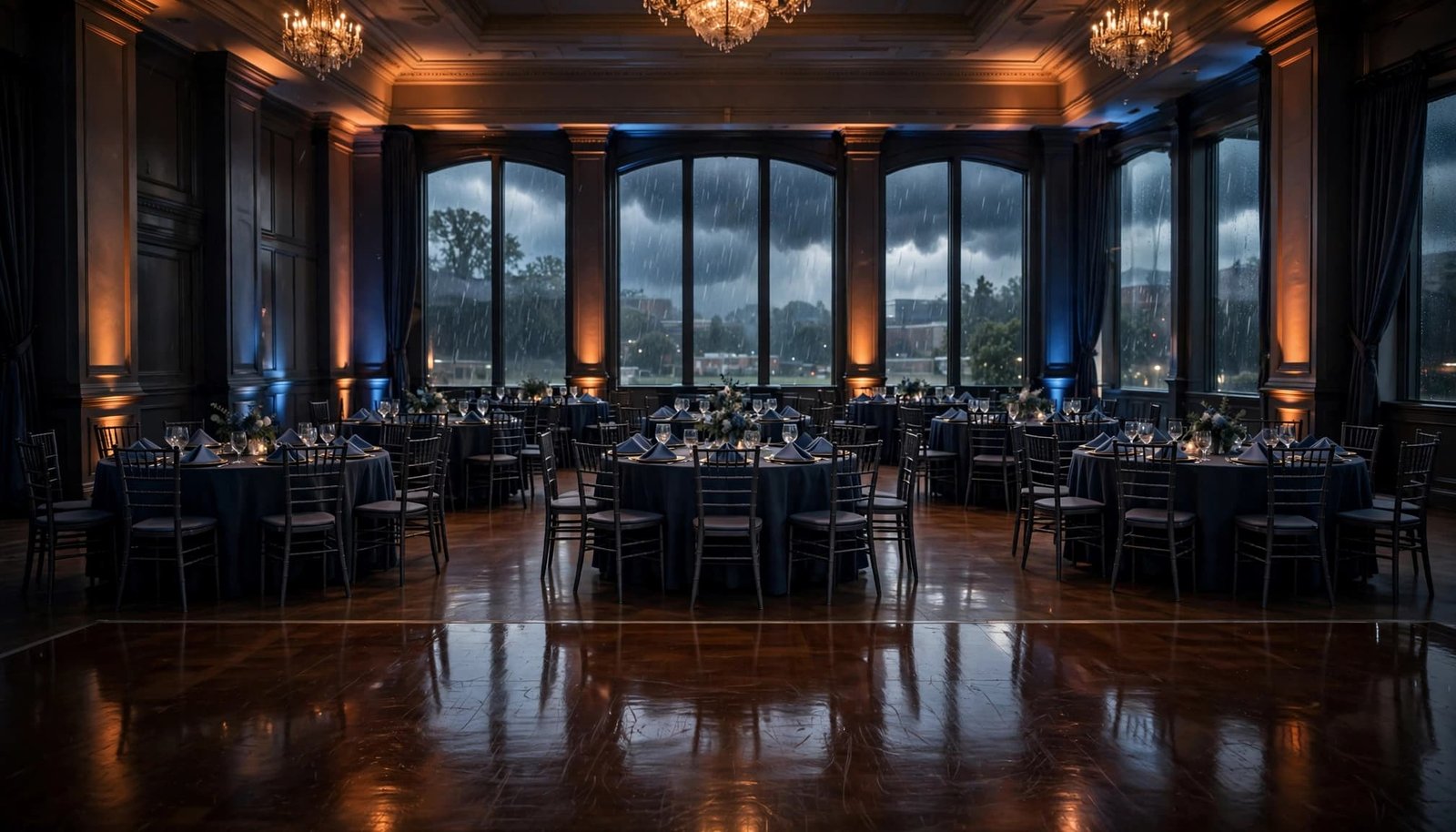
The strongest weather plan begins with the venue agreement. Before paying a deposit, confirm the venue availability and its ability to support attendance, supervision, vendor access, and backup options when spring weather becomes a concern.
Ask the venue for its written procedures before the school makes a deposit. Verbal promises about early access, included lighting, or a postponed date can create confusion later.
Hold a Backup Date and Time
Ask whether the venue can place a tentative hold on a second prom date or time window. A Sunday afternoon may work for some schools, while another Friday night, Saturday afternoon, or later weekday event may fit better for others.
Compare each option with the academic calendar, athletic schedules, religious observances, transportation availability, staff coverage, and family travel. The best backup date is the one your school can realistically support, not simply the first open slot on a calendar.
Review Deposits and Vendor Terms in Writing
Non-refundable does not always mean non-transferable, but no committee should assume deposits will move automatically. Review the venue, décor, catering, photography, transportation, and entertainment agreements for postponement, cancellation, school closure, inclement weather, and force majeure language.
The contract should explain what happens to damage deposits, service charges, prepaid balances, and vendor commitments. It should also state notice deadlines, refund or credit rules, and who must communicate with whom after a postponement.
A weather clause should address a canceled event and an event that cannot proceed safely, because those situations may have different financial outcomes.
Have the appropriate school administrator, business office, procurement staff, or legal adviser review the agreement before approval. A written remedy gives the committee a clearer path when the weather forecast changes.
How to Decide Whether to Postpone Prom
A decision should never rest on one weather app screenshot or a social media rumor. Use official forecasts, local emergency guidance, venue conditions, and transportation realities to make a calm, documented decision.
The National Weather Service severe weather preparedness guidance advises people to get inside, put as many walls as possible between themselves and the outside, and stay away from doors and windows during severe weather. That information helps school leaders assess what the venue can safely handle.
Review More Than the Forecast
Rain alone may not require a new prom date. A severe thunderstorm, lightning, damaging wind, hail, flooding, tornado risk, road closures, power concerns, or limited visibility can create a different level of risk.
Check the weather conditions at the school, venue, common travel routes, parking areas, and pickup zones. A venue may be safe indoors while guests still face unsafe travel or flooding around entrances.
The National Weather Service thunderstorm safety rules emphasize that a sturdy building offers protection from lightning, large hail, and damaging winds. The safety priority is whether the venue can protect students and provide shelter, accessible exits, and staff support. Confirm that a staff contact will be available during an emergency.
Consider the Whole Event Team
Prom depends on more than high school students arriving at the door. Chaperones, school staff, caterers, security teams, photographers, entertainment providers, and transportation companies all need safe access and enough notice to adjust.
If the school postpones, ask vendors to confirm availability in writing. Keep a shared event file with approved contacts, current contracts, revised timing, insurance documents, venue rules, and the school-controlled communication plan.
Can a Saturday Prom Move to Sunday Afternoon?
Yes, a Saturday prom can move to Sunday afternoon when venue availability, staff, vendors, and the school schedule allow it. It can be a practical choice because students may already have formalwear, transportation, and family plans in place.
Still, Sunday isn’t automatically the right answer. The committee should compare the new time against venue access, food service, religious commitments, sports, work schedules, dinner plans, and available adult supervision.
Confirm the Experience Will Still Work
A rescheduled prom held during the day may need a different event flow. Check whether lighting packages remain available, whether the room can be decorated in time, and whether photos will need a new location or schedule.
The DJ or MC should receive the revised timeline early. A professional entertainment team can adjust announcements, music cues, lighting, introductions, and key moments when given one approved schedule. Schools planning entertainment can review these school dance and prom planning resources for related guidance on event flow and student coordination.
Set a Firm Confirmation Deadline
Set a firm deadline to confirm the prom date, notify vendors, and contact families. Waiting too long can reduce venue access and make it harder for families to change transportation, dinner plans, childcare, or work schedules.
The deadline should be based on the weather forecast, district procedures, venue policy, and vendor notice requirements. Once the decision is confirmed, the school should communicate it quickly and avoid changing details unless a school-approved contact verifies them.
Communicate a Changed Prom Date Clearly

One email is not a full communication plan. Students may miss it, families may not see it, and unanswered questions can spread quickly through group chats and social media.
Use the school website, approved email lists, family messaging system, student announcements, and official social channels. Every version should use the same date, time, location, ticket direction, and contact information.
Send One Complete Information Sheet
The first message should answer the questions families will ask right away:
- Is prom postponed, relocated, or canceled?
- What is the updated date, arrival time, venue, and pickup plan?
- Will existing prom tickets be honored, transferred, refunded, or handled another way?
- Are guest approvals, transportation plans, dinner reservations, or photo times affected?
- Who should families contact with accommodation, dietary, or accessibility questions?
Keep private student information, security assignments, and emergency procedures out of public posts. Give families a school-controlled email address or office contact for individual concerns.
Keep the Message Respectful and Consistent
A postponement can be disappointing, especially after students have arranged prom dresses, tuxedos, hairstyles, transportation, and group photos. A clear, respectful message recognizes that disruption without promising outcomes the school cannot control.
Avoid asking students to share private concerns in comments or public messages. Accommodation requests, financial questions, transportation barriers, and dietary needs should go through appropriate school staff, such as a counselor, nurse, family liaison, or activities office.
Rebuild the Event Timeline After a Postponement
Once the replacement date is confirmed, the committee should treat it as a fresh event schedule, not a quick calendar edit. Reconfirm every moving part, including setup, vendor arrival, check-in, food service, announcements, quiet-room coverage, last dance, dismissal, and teardown.
Reconfirm Vendors, Power, and Access
Call the venue and each vendor to confirm revised arrival times, loading access, room layout, staffing, power needs, insurance requirements, and breakdown deadlines. A DJ setup may require dedicated power, a clear load-in route, and enough time for microphones, sound, and lighting checks.
For entertainment planning, New Hampshire school dance DJ services can help committees consider clean music, professional sound, microphones, lighting, announcements, and student-friendly event coordination.
Hold a Final Team Meeting
About two weeks before the rescheduled prom, bring together the school lead, venue manager, DJ, caterer, security team, and student representatives. Walk through the event in order and confirm who handles each responsibility.
On the new prom day, complete a short walkthrough before doors open. Recheck exits, lighting, restrooms, check-in supplies, medical-response contacts, communication methods, and the monitored pickup area.
Prom Rain Date FAQ
What typically happens to non-refundable deposits?
The answer depends on each signed agreement. Some vendors may offer a credit or transfer to a new date, while others may retain part or all of a deposit. Review the written contract before making public promises about refunds, credits, or replacement services.
How far ahead should schools announce prom details?
Announce the date, location, and core rules once they are approved through the school process. Many committees begin venue research well ahead of prom season, but the school should not publish details until contracts, policies, and key logistics are confirmed.
Who should notify families when prom changes?
One designated school contact should approve the message. The activities office, principal, faculty adviser, or event coordinator can then distribute the same information through approved school channels and update vendors through the shared event file.
What should the DJ do after a weather postponement?
The DJ should confirm every change with the designated school contact, then update the run sheet, setup time, announcement cues, music plan, and equipment schedule. A DJ should not rely on hallway conversations, student messages, or unverified social posts.
A Safe Plan Protects the Celebration
A prom postponement is never the outcome students hope for, but a well-prepared committee can keep the event organized, respectful, and safe. The strongest plan combines written contracts, clear authority, reliable vendor communication, and one consistent message for families.
When dangerous conditions change the schedule, student safety remains the priority. A prepared rain-date plan gives the school a practical way to protect that priority while still creating a memorable prom experience.