A prom menu can look perfect on paper and still leave students wondering what they can safely eat. Good prom food planning starts with clear dietary questions, a venue that supports the service plan, and one person responsible for decisions on event night.
Your prom committee doesn’t need an elaborate dinner to create a memorable celebration. During prom planning, a student-led committee should clearly explain what food ticket sales include and how students can get ingredient answers. Make sure food is accessible and service fits dancing and supervision, then start with the room and the people using it.
Start With the Venue, Not the Menu
A school gym, community space, and hotel ballroom can each support a different food plan. Rules at a prom venue shape the menu and service plan. Before requesting quotes, confirm where food can be prepared, delivered, held, served, and cleared. A venue that permits outside catering may still restrict kitchen use or require approved vendors. For an outdoor pavilion, confirm weather protection and food-service permission.
Walk the route students will take from check-in to the food stations. Leave room for accessible paths, seating, chaperones, and the dance floor. In a school gym, place food where lines won’t block exits or pull students away from supervised areas.
Ask the venue coordinator who supplies tables, power, trash containers, water access, and cleanup staff. Kitchen access and service support can vary between a hotel ballroom and other venue types. If a food truck is under consideration, confirm parking and whether students can reach it without leaving the supervised event area.
Begin comparing venues early, particularly when the date is tied to the school calendar. Get the food rules in writing before the committee commits to a menu or sells tickets based on a promised meal.
Choose a Food Format That Fits the Evening
Dinner service, appetizers, and dessert can all work at prom. The right choice depends on the schedule, available space, staffing, and what the ticket price can support.
Published catering estimates give committees a starting point, not a prom-specific rate card:
| Food format | Published planning estimate | Service question to settle |
|---|---|---|
| Appetizer stations | Fash estimates $10 to $30 per person | Will portions replace dinner or supplement it? |
| Food truck | Food Truck Club reports about $14 to $18 per person across its events | Can it serve the group within the meal window? |
| Buffet dinner | Food Truck Club estimates $25 to $40 per person | Who manages lines, refills, and dietary meals? |
| Plated dinner | Food Truck Club estimates $45 to $75 per person | How are meal choices and late changes handled? |
These estimates come from different pricing guides and aren’t directly comparable. Itemized local quotes matter more than the lowest number in the table.
Match Service to the Prom Schedule
A plated dinner gives the evening a formal opening but needs accurate meal counts and enough time for service. A buffet offers choice, although one long line can delay dancing. Appetizer stations suit a shorter reception when portions are substantial and students know what to expect.
Food trucks need a close look at throughput. Ask each vendor how many meals it can serve during your planned window, then compare that answer with expected attendance. A buffet in a school gym may need a different line plan than one in a hotel ballroom. A dessert bar or dessert-only reception can lower food costs, provided invitations and ticket information make clear that dinner isn’t included.
Compare Complete Quotes
Use the same guest estimate and service window for every proposal. When comparing event catering proposals, ask vendors to separate food, staffing, delivery, rentals, service charges, taxes, and any minimum purchase. Confirm whether chaperones and working vendors need meals.
For perspective, a quoted $18 per student becomes $2,700 for 150 students before other charges. A $35 quote becomes $5,250 on the same basis. Those figures don’t include drinks, so estimate food and drink separately. Compare the full cost with projected ticket sales, since a low menu price alone won’t settle the prom budget.
Build a Menu Students Can Trust
Variety matters, but a vegetarian pasta tray doesn’t answer every dietary question. Students may need accommodations for allergies, religious food practices, gluten, or other restrictions. Ask about needs privately during ticket registration, then coordinate dietary accommodations with the caterer through a designated school contact.
Confirm Ingredients and Preparation
Send the caterer a final dietary count before its guarantee deadline. Share only necessary details with the food-service lead, and confirm ingredients plus how each meal will be prepared, transported, identified, and handed to the right student. The FDA’s food-allergy information explains why preventing allergen cross-contact matters.
A dish label is helpful, but it can’t establish that a meal is safe for a serious allergy. Ask the caterer how it will prevent cross-contact and what it can safely provide. Don’t promise an allergen-free meal on the school’s behalf.
Before service, confirm:
- The food-service lead has only the student details needed to serve each meal.
- The caterer has confirmed ingredients, preparation, transport, identification, and handoff.
- The caterer has explained how it will prevent cross-contact.
Make Choices Clear at the Table
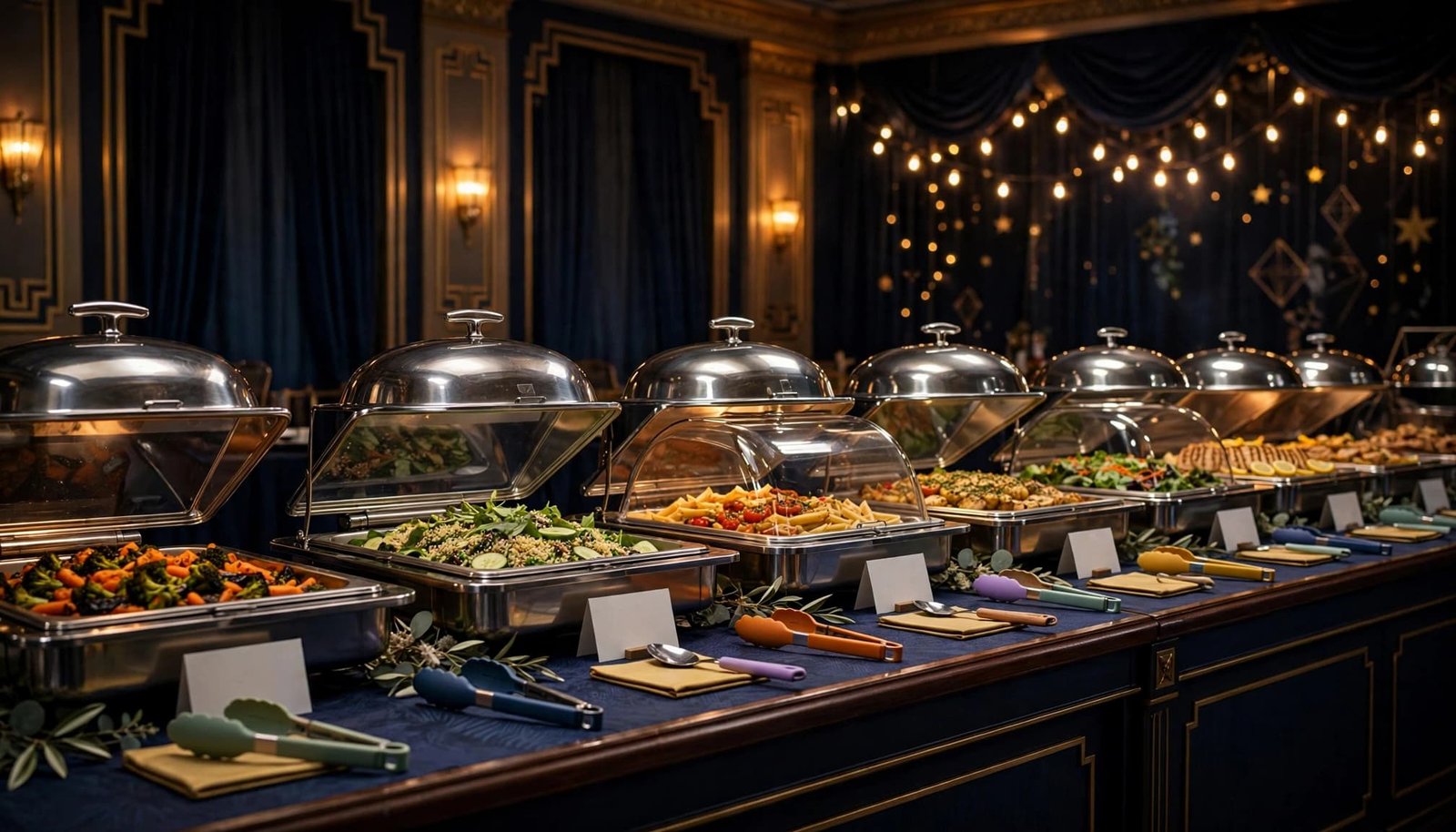
Use readable dish labels, keep ingredient information available, and assign separate serving utensils. Ask who will replace a utensil if it lands in another dish. Pre-arranged meals should have a discreet handoff that staff understand before doors open.
Check whether students can reach the service area and read labels without assistance. A clear layout reduces repeated questions and lets the catering team focus on accurate service. Involve the school nurse when appropriate for serious allergies, and confirm where emergency medication is kept, which adults are trained, and how staff will call for help.
Keep Food Safe Throughout Service
Prom food may arrive before students do and remain in the room through photos, announcements, and dancing. The caterer or food-service lead owns monitoring, replenishing, and removing food. Assign those duties before the event instead of relying on a committee member to notice a problem.

Check Holding Equipment and Temperatures
The USDA’s safe handling guidance for take-out foods advises keeping hot food at 140°F or above and cold food at 40°F or below. It also advises discarding perishables left at room temperature for more than two hours, or one hour when conditions exceed 90°F.
Professional food operations may follow different holding thresholds under the code adopted locally. The FDA Food Code 2022 is a model, not a substitute for the rules that apply to your caterer. Check the actual holding equipment and service setup, whether the event is in a school gym or hotel ballroom. Ask the food-service lead which requirements apply and how temperatures will be checked. Don’t assume decorative warmers or an ice bucket can maintain safe conditions.
On event day, confirm who checks temperatures and when. Verify that hot and cold foods stay under appropriate temperature control, and remove perishables at the applicable time limit.
Replenish in Smaller Batches
Ask staff to replace trays with clean ones rather than top off food that has been sitting out. Use dedicated serving utensils, keep backup portions under proper temperature control, and identify who decides when service ends.
For a self-catered venue, confirm whether the school is permitted and equipped to handle food at all. Volunteers can set tables and direct lines, but should follow the approved service plan for food handling and temperature monitoring.
Give Drinks Their Own Plan
Plan the beverage station alongside the food and drink layout, including supplies, staffing, and space. Water should remain easy to reach throughout the dance, not disappear when dinner ends. A mocktail bar can be fun, but long drink lines can compete with food service and chaperone sightlines.
A simple calculator makes the first order easier. For 150 attendees, three 8-ounce servings each equal 3,600 ounces, or a little over 28 gallons. That’s an illustrative planning amount, not a prediction of what students will drink. Add staff and vendor needs, allow for refills, and adjust for the event’s length and venue conditions.
Confirm whether the caterer supplies cups, ice, dispensers, and a refill attendant. Check if outside beverages are allowed, and ask who handles spills near the dance floor. Include any beverage minimum or service fee in the same comparison as the food quotes.
Read Contracts for the Costs Behind the Menu
A catering package can look affordable until the venue and vendor contracts are reviewed together. Ask the school administrator or business office to review both agreements before deposits are paid.
Check Access, Minimums, and Changes
Confirm food and beverage minimums, outside-caterer fees, required staffing, delivery charges, rentals, and overtime. Ask whether the venue requires certificates of insurance and who handles kitchen access, loading, and equipment removal, especially at a hotel ballroom.
Write down the final guest-count deadline and what happens if attendance changes, including how ticket sales affect the guaranteed count. Review cancellation and weather terms, including any deposit that won’t be refunded. Unresolved contract or insurance questions belong with the district’s appropriate administrator or adviser, not with students making an event-night decision.
Assign Cleanup Before Doors Open
Who removes leftovers, separates rentals, takes out trash, and completes the final room inspection? Put names and times beside each task in the cleanup plan. Confirm when vendors must be out of the building and what cleaning or damage charges could apply.
For a school gym, leave enough time to return the space to its normal use. Student volunteers can help with decorations, but they shouldn’t be the only cleanup plan after a long dance.
Put Food Service on the Event Timeline
One shared run sheet connects catering, school staff, the venue, and entertainment. It should list vendor arrival, temperature checks, doors opening, meal service, announcements, dancing, dessert, final food pickup, and dismissal.
Give Every Team the Right Information
Name one school contact, working with the prom committee, who can approve schedule changes. The caterer needs meal counts and private dietary instructions; the DJ needs service times and announcement cues, not students’ medical details. For New Hampshire schools, DJ Steve Neff Entertainment LLC’s school dance music and event coordination can be planned around food-service transitions.
A short staff walkthrough in the school gym before students arrive can catch blocked routes, poorly placed lines, and missing supplies. Keep a printed or school-controlled copy of the approved timeline where the event lead can reach it.
Plan for a Late Change
If dinner runs behind, decide who tells the DJ to delay an announcement and who confirms that food remains safely held. If a promised dietary meal is unavailable, the catering lead and school contact should speak with the student privately. Don’t substitute an unverified dish because the schedule is tight.
Key Takeaways
- Settle venue food rules, kitchen access, and cleanup duties before choosing a caterer.
- Compare complete quotes, including staffing, beverages, rentals, minimums, and service charges.
- Collect dietary needs privately, then confirm ingredients and cross-contact procedures with the food provider.
- Give one food-service lead responsibility for safe holding, replenishment, and the end of service.
- Share a single timeline so dinner, announcements, dancing, and dismissal work together.
Frequently Asked Questions
How early should a committee plan prom food?
Start when comparing venues, since outside-food rules and kitchen access shape your options. Request quotes once the date, estimated attendance, and meal window are clear. Collect dietary information before the caterer’s final guarantee date, then hold a final coordination call before prom.
Can a prom committee provide its own food?
That depends on the venue, school policy, and applicable food-service rules. Before the prom committee commits to self-catering, confirm permission, facilities, trained staffing, temperature control, insurance requirements, and cleanup. Packaged snacks may be easier to manage than a prepared dinner, but ingredient information and dietary needs still matter.
How can schools reduce food costs without limiting students’ choices?
Choose the service format before cutting portions or removing dietary options. Consider the event schedule and what ticket sales include when comparing substantial appetizers, buffet service, and dessert receptions. If more support is needed, explore fundraising ideas such as PTO support, local sponsorship, or a ticket-support fund. Keep essential access and safe service in the budget.
A Better Prom Meal Starts Before Prom Night
A menu only works when students can choose food with confidence and staff know how to serve it safely. Clear assignments connect the venue, caterer, school nurse, chaperones, and entertainment team before the first student arrives.
When the meal plan includes dietary details, holding procedures, complete costs, and cleanup, food becomes a welcome part of the celebration rather than a last-minute concern.