Prom should feel like a celebration, not a test of whether a student can afford the expected outfit or fit one narrow idea of formalwear. Strong prom dress code communication gives students and families clear expectations early, while leaving room for culture, faith, comfort, identity, and individual needs.
For New Hampshire schools, the goal is simple: set standards that support a safe, polished event without creating confusion or embarrassment at the door. Clear wording, consistent staff preparation, and a respectful question process make a noticeable difference on prom night.
Key Takeaways
- Share dress expectations before tickets go on sale, then repeat them in ticket materials, family messages, and student announcements.
- Use plain language such as “formal or dressy attire that follows school rules” instead of limiting students to gowns, tuxedos, or gendered categories.
- Explain any restrictions with a practical reason, such as safety, venue requirements, mobility, or school conduct rules.
- Give students one private contact for dress questions, cultural or religious considerations, adaptive clothing, and accommodations.
- Train staff to handle concerns calmly and privately. A dress issue should not become a public moment.
- Offer confidential ticket, clothing, and transportation support so prom remains open to more students.
Why Prom Dress Code Communication Needs a Clear Plan
A formal dress code can sound simple until students begin asking what it means. A school dress code policy should clarify the event dress code and clothing expectations. Families may wonder whether the standard is smart casual, a casual dress code, wedding guest attire, or formal attire for formal events.
Those questions are not minor details. They’re the difference between a student feeling prepared for prom and feeling unsure about attending at all.
Replace Assumptions With Real Examples
Words such as “appropriate,” “traditional,” and “proper” can mean different things to different families. They also leave staff to interpret attire in the moment, often when the entrance is busy and students are already nervous.
A better message identifies the event standard and gives broad examples of acceptable attire. Students may wear dresses, suits, dress pants with a formal top, jumpsuits, cultural formalwear, religious garments, adaptive clothing, and other dressy choices that follow school expectations.
A prom committee can review these examples before publication. This helps identify confusing or exclusionary wording and makes the guidance easier for families to use.

This approach keeps the focus on a polished atmosphere, not on policing one type of outfit. It also gives families useful guidance without asking students to justify personal choices.
Give Families Enough Time to Ask
Prom dress guidance shouldn’t appear in a reminder email two days before the dance. Publish it when tickets are announced, place it on the school activities page, and include it in communications that reach families directly.
A named activities-office contact makes the process more welcoming. Families need to know where to ask about a garment, footwear, a sensory need, or a religious and cultural consideration without posting private details in a public comment thread.
The best time to resolve a dress question is before a student buys, borrows, alters, or worries about an outfit.
Prom Dress Code Communication That Respects Student Choice
Dress expectations work best when they state what the school needs, then give students room to meet that standard in ways that fit them. Prom attire doesn’t need to look identical to be appropriate.
Use Gender-Neutral Formalwear Language
Avoid language such as “ladies must wear dresses” or “gentlemen must wear tuxedos.” These phrases create unnecessary pressure and don’t describe what the school is actually trying to accomplish.
The prom committee should review the wording with student needs in mind. Formal attire can include dresses, suits, separates, jumpsuits, cultural garments, religious attire, and adaptive clothing. For formal events, formality should describe the atmosphere, not one required garment.
Use acceptable attire to describe whether an outfit meets the school’s objective standard, not whether it matches a gendered expectation.
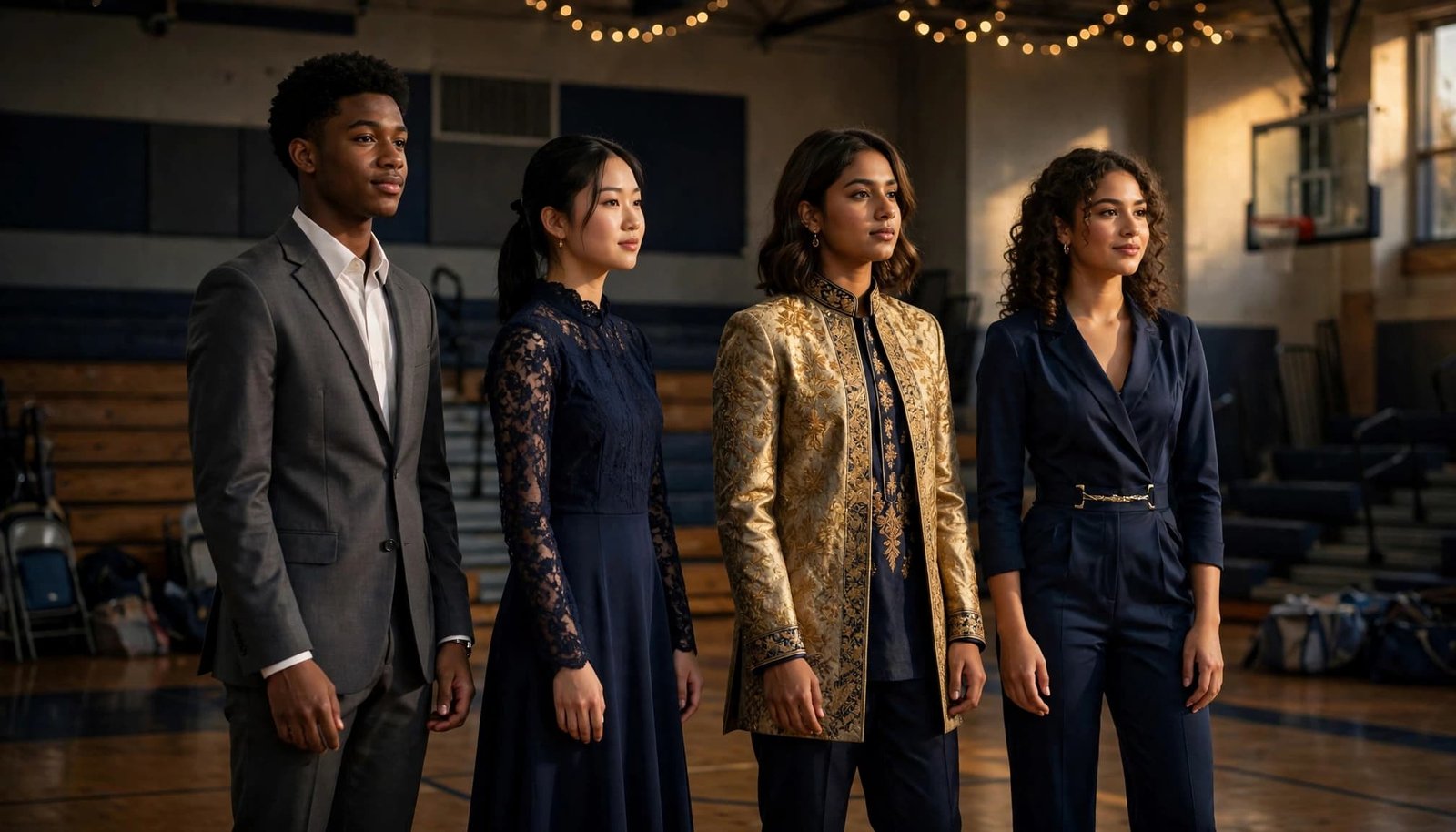
Students should also be welcome to attend alone, with a date, or with friends. The same inclusive wording should appear in the dress code guidelines, publicity, check-in instructions, photo opportunities, and announcements.
Include Culture, Faith, Hair, and Access Needs
New Hampshire public schools must consider the protections in RSA 193:38, Discrimination in Public Schools. The statute prohibits discrimination on protected grounds and includes racial traits such as braids, locs, tight coils or curls, cornrows, Bantu knots, Afros, twists, and headwraps within its definition of race.
Dress guidance should make room for cultural formalwear, religious head coverings, traditional garments, natural and protective hairstyles, and adaptive clothing. The U.S. Department of Education also explains that Title VI protections can apply to discrimination tied to shared ancestry or ethnic characteristics, including treatment connected to how a student looks, dresses, or speaks.
Administrators should verify the current district dress code policy, applicable New Hampshire requirements, and relevant federal requirements. This article provides communication guidance, not legal advice.
A school doesn’t need to predict every question. It does need a respectful process for hearing questions and reviewing individual situations.
Write Guidelines Students Can Understand
A family-facing formal dress code should translate the district’s dress code policy and event-specific dress code requirements into plain language. Keep it short enough to read on a phone and clear enough that students don’t need to decode it. Save lengthy policy language for internal planning documents.
Remove Subjective and Vague Terms
Terms like “modest,” “tasteful,” “distracting,” or “too revealing” often cause problems because they depend on personal interpretation. If an item is restricted, describe the concern in objective terms and connect it to a school or venue requirement.
For example, a school may explain that clothing and footwear must allow safe movement through the venue, meet the location’s rules, and follow existing conduct expectations. That gives staff a clear standard without placing judgment on body type, gender expression, or fashion choices.
Schools shouldn’t assume students understand labels such as “smart casual,” “casual dress code,” or “casual wear.” If the event is more formal than those labels suggest, the notice should say so directly.
The IDRA guidance on equity in dress codes similarly recommends gender-neutral language, less subjective wording, and staff awareness of bias in enforcement.
Build a Short, Useful Policy Format
Use the dress code guidelines and wardrobe guidelines as a brief communication document, not as new policy categories. They should answer the questions families are likely to ask first:
- Prom is a formal or dressy school event, and all acceptable attire must follow existing school conduct and safety rules.
- Students may choose formal attire and other outfits that reflect their personal style, cultural traditions, religious practices, gender expression, comfort, and access needs.
- Students and families may contact the activities office privately with questions or accommodation requests before prom night.
- The school will address concerns respectfully and away from the entrance whenever possible.
The prom committee should use the same plain-language wording in every draft and family notice. This language is clear, welcoming, and easier to apply than a long list of prohibited clothing.
Communicate in More Than One Place
One email is not a communication plan. Students may miss it, families may not see it, and new questions will come up as ticket sales and prom preparations move forward.
Use One Consistent Message Across Channels
The prom committee should maintain one approved version of the event dress code message for the website, ticket page, student newsletter, family email, and social post. The wording should stay consistent, even when the message is shortened.
The message should summarize the district dress code policy and identify the event’s formal attire standard. Include the prom date, location, arrival time, ticket details, guest rules, clothing expectations, and a contact for questions. Don’t include private accommodation information, security assignments, or student details in public posts.
A brief FAQ or printable reference can prevent unnecessary confusion. Use clear dress code guidelines and wardrobe guidelines to address footwear, formalwear options, guest expectations, cultural or religious attire, and questions families may have before buying, borrowing, or altering clothing.
Give Students a Private Way to Ask
Students should not have to explain a disability, family situation, faith practice, or financial concern to a classroom, student committee, or social media audience. A school-controlled email address, counselor, family liaison, or activities-office contact gives them a more comfortable path.
When an individual accommodation may be needed, involve the appropriate school team early. This may include the Section 504 coordinator, special education staff, nurse, counselor, facilities staff, or administrator, based on the student’s situation and district process. The prom committee can coordinate communication, but staff and the appropriate school team should handle accommodation decisions.
Clear communication is also part of broader prom planning. Schools can find useful ideas for schedules, entrances, and student flow in these school dance and prom planning tips.
Fair Dress Code Enforcement on Prom Night
Even a well-written policy can fall apart if staff haven’t agreed on how to apply it. The entrance isn’t the place for different adults to make different decisions.
Prepare Staff Before Doors Open
At the final planning meeting, administrators, chaperones, security personnel, and the authorized staff member should review the written dress code policy and objective dress code requirements. The prom committee can help circulate the approved standard, but shouldn’t improvise decisions at the entrance.
Staff should distinguish an actual safety or venue concern from an outfit that doesn’t match personal preference. Document the concern in factual language, rather than recording a student’s personal style as a dress code violation.
This preparation keeps the welcome line moving and helps students feel respected. It also protects staff from making rushed decisions without support.
Correct Privately Before Excluding a Student
Turning a student away at the door shouldn’t be the default response to a dress concern. When possible, offer a private conversation, a practical adjustment, or a staff-led solution that meets the acceptable attire standard.
A shawl, alternate footwear, a quick call to a family member, or a clear explanation may resolve some situations. Other concerns may need an administrator’s review. For formal events, a polished atmosphere doesn’t justify subjective judgments about bodies, gender expression, identity, culture, or disability.
Administrators should follow the current district policy and review concerns locally before excluding a student. The response should never punish a student for an identity, hairstyle, cultural tradition, religious practice, or access need.
A calm, private response protects both the event standard and the student’s dignity.
Keep Prom Affordable Without Singling Students Out
A formal event can become expensive quickly. Tickets, transportation, clothing, alterations, shoes, meals, and photos can create cumulative costs at formal events.
Schools can reduce barriers through confidential ticket assistance, clothing exchanges, garment support, sponsor-a-ticket fundraising, or transportation help. A prom committee can coordinate these options with a counselor, family liaison, or private request form. Secondhand formal clothing may include suitable wedding guest attire and other event clothing, giving students choices without requiring identical outfits.
Avoid public language about “hardship” or “need.” Students shouldn’t have to explain why they borrowed an outfit, received ticket support, or needed transportation assistance.
Prom committees can also focus spending where it matters most: a safe venue, supervision, clear coordination, good food options, professional sound, and an enjoyable dance floor. For schools looking for clean music, announcements, lighting, and organized event flow, New Hampshire school dance DJ services can support the entertainment side of the evening.
Frequently Asked Questions
Can a school require prom attendees to wear a dress or tuxedo?
A school’s dress code policy can establish a formal event standard without requiring a gendered garment. “Formal attire that follows school rules” allows students to choose dresses, suits, formal separates, cultural garments, religious attire, or adaptive clothing as acceptable attire.
What should staff do if a student arrives in attire they question?
Move the conversation away from the main entrance and involve the designated school lead. Treat dress code violations as concerns involving an objectively identified safety, venue, or conduct issue. Staff should review the written expectation and seek a respectful solution before considering exclusion from the event.
How should schools handle cultural, religious, or disability-related dress questions?
Invite private questions well before prom and involve appropriate school personnel when needed. Don’t make assumptions based on appearance. Students and families should have a respectful opportunity to explain what support or consideration would help them participate.
Should the prom dress code be separate from the student handbook?
It can be a short event-specific guide that supplements, rather than replaces, the district’s existing student conduct and dress policies. The guide should clarify the event’s formality, venue and safety expectations, contact process, and how questions will be handled. Schools should also review current district policies and applicable state or federal requirements locally.
A Prom Standard Students Can Feel Good About
The strongest prom dress code communication is clear, flexible, and prepared for real student needs. It gives families enough notice, offers practical examples, respects protected expression, and keeps staff from making rushed doorway decisions.
A polished prom does not require every student to wear the same kind of formalwear. It requires expectations that are fair, understandable, and welcoming for the full class.