A memorable prom needs more than a popular playlist. It needs clear leadership, appropriate music, dependable sound, and a disc jockey who can keep the evening organized when plans shift.
A well-written prom DJ RFP template gives procurement teams a fair way to compare qualified providers before a contract is signed. It puts school expectations, venue details, pricing, and backup planning in writing, so the committee can select an entertainment vendor based on the complete service package, not a vague quote.
Key Takeaways for School Procurement Teams
- Start the DJ search 9 to 12 months before a spring prom when possible, especially for Friday and Saturday dates.
- Request the same information from every vendor, including school-event experience, sound and lighting, clean-music procedures, insurance, and complete pricing.
- Identify the school employee who can approve music, announcements, overtime, and timeline changes on prom night.
- Compare the full scope of service. A lower quote may leave out microphones, lighting, setup time, travel, or backup equipment.
- Use district purchasing procedures and district-approved contract language for the final agreement.
Why a Written RFP Creates a Better Prom Plan
Prom is not a typical private party. The DJ may be responsible for music, announcements, formal introductions, special recognitions, room energy, and the final moments of the evening. A casual conversation does not give the school enough detail to evaluate those responsibilities.
A written request for proposal creates a shared description of the event. Vendors know what the school needs, and the committee receives proposals that are easier to compare side by side.
Define the Event Before Inviting Proposals
Start with the date, venue, expected attendance, event hours, theme, and available budget. Include load-in instructions, setup access, parking, power availability, volume limits, school rules, security procedures, and the designated point of contact.
The RFP should also identify the decision process. State the proposal deadline, interview schedule if one is planned, required insurance documentation, published evaluation criteria, and the person or committee authorized to select a vendor. The criteria should distinguish mandatory requirements from preferred qualifications and follow applicable district, state, and local procurement rules.
Compare Complete Services, Not General Promises
A polished proposal should explain what the DJ will provide before, during, and after prom. That includes planning meetings, music preparation, hosting, equipment, setup, teardown, and communication with school staff.
A written scope can reduce misunderstandings about what is included. It also gives the committee a stronger record for budget approval and vendor selection.
The best proposal is not always the lowest total. It is the proposal that clearly covers the services the school will need when the room is full and the timeline is moving.
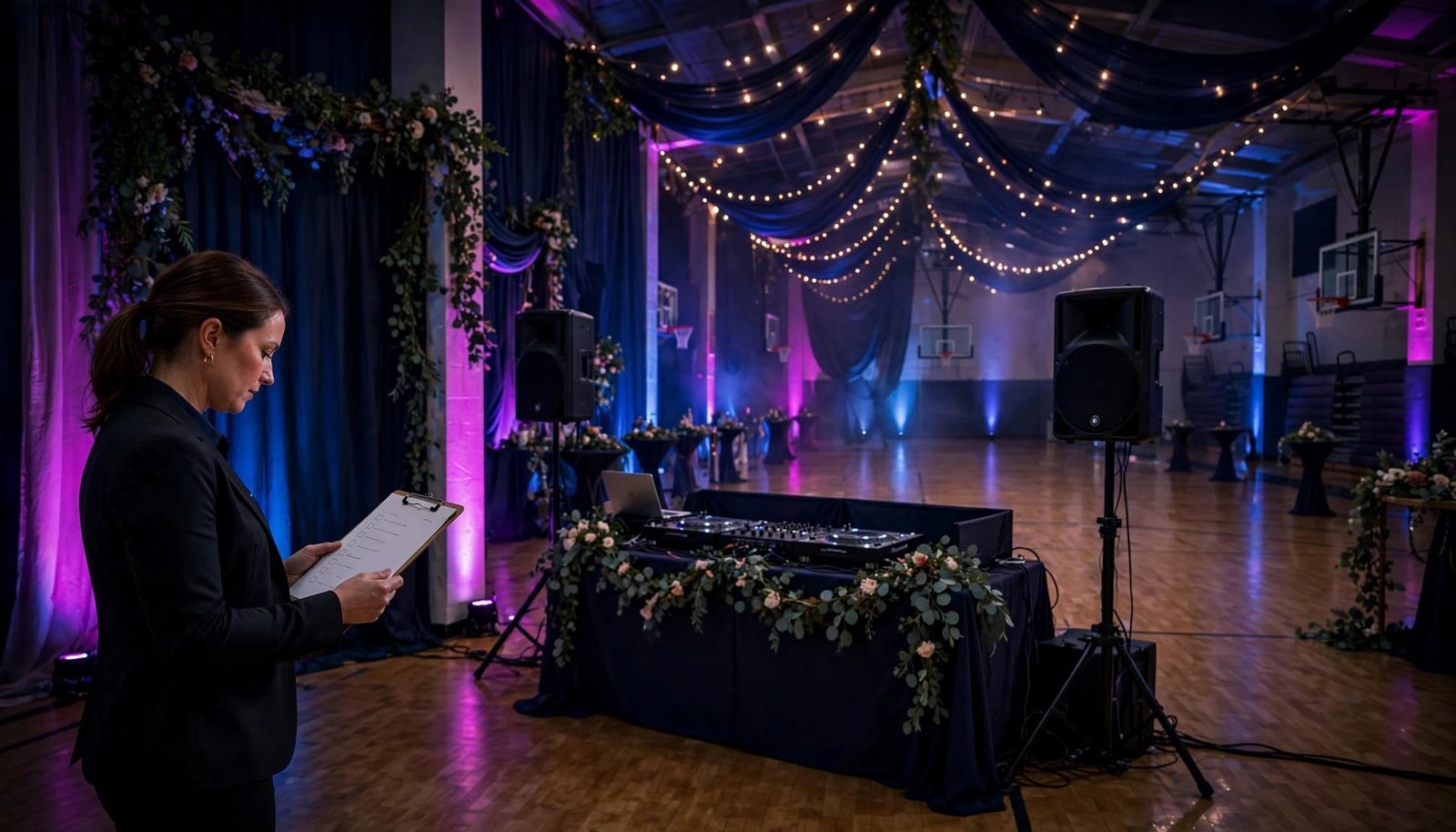
Prom DJ RFP Template: Required Vendor Responses
Every entertainment vendor should respond to the same categories. This keeps the process professional and gives committee members clear details to review.
Ask About School-Event Experience and Staffing
Request a short description of the DJ’s experience with high school proms, school dances, and mixed-age events. Ask vendors to identify the assigned performer, MC responsibilities, and any additional technician for larger productions.
Request two or three targeted references from recent school or youth events when district policy permits. Ask references about communication, clean music, arrival time, announcements, equipment reliability, and cooperation with staff.
For local committees, reviewing New Hampshire school dance DJ services can help clarify the type of music, hosting, sound, lighting, and coordination a school-focused package may include.
Set Clear Music and MC Expectations
Students want current music, recognizable throwbacks, and a mix that keeps different groups involved. School staff need clean edits, appropriate crowd interaction, and a DJ who respects the approved do-not-play list.
Ask each vendor to explain its clean-music screening and content approval process. Ask how it uses a digital music library to find appropriate versions and current school-friendly songs. Include the process for student requests and musical selections, while stating that the designated adult retains final content approval.
Ask about announcements as well. The proposal should identify whether the DJ handles master of ceremony duties, including formal introductions, a grand march, prom court announcements, raffles, and closing messages. Approved wording and timing should come from the school.
Sound, Lighting, and Backup Equipment Requirements
Different event production environments require different sound and setup plans. A gymnasium, cafeteria, ballroom, or outdoor tent each has unique needs. The RFP should describe the room, estimated guest count, performance area, ceiling height, and whether the venue has its own AV or staging team.
Request Equipment That Fits the Room
Ask vendors to list the sound systems, wireless microphones, dance-floor lighting, DJ booth, power needs, and cable-management plan included in the proposal. A typical event audio setup can include speakers, a mixing console, wireless microphones, monitors, cabling, and backup equipment, as outlined in this event audio setup guide.
The committee doesn’t need to dictate equipment brands or technical settings. It should require the DJ to explain how the proposed setup fits the venue, attendance, and planned announcements.
Lighting also deserves a clear description. Ask what fixtures are included, where they will be placed, and whether the setup leaves safe, open paths for students, staff, and photographers.
Require a Written Contingency Plan
Equipment can fail, batteries can run low, and venue access can change at the last minute. Ask what backup equipment the DJ brings, including backup music access, microphones, speakers, cables, and lighting where relevant.
The RFP should also ask what happens if the assigned DJ becomes ill, has a travel problem, or can’t perform. A professional response explains the replacement process, how the school will be notified, and whether a qualified backup DJ is available.
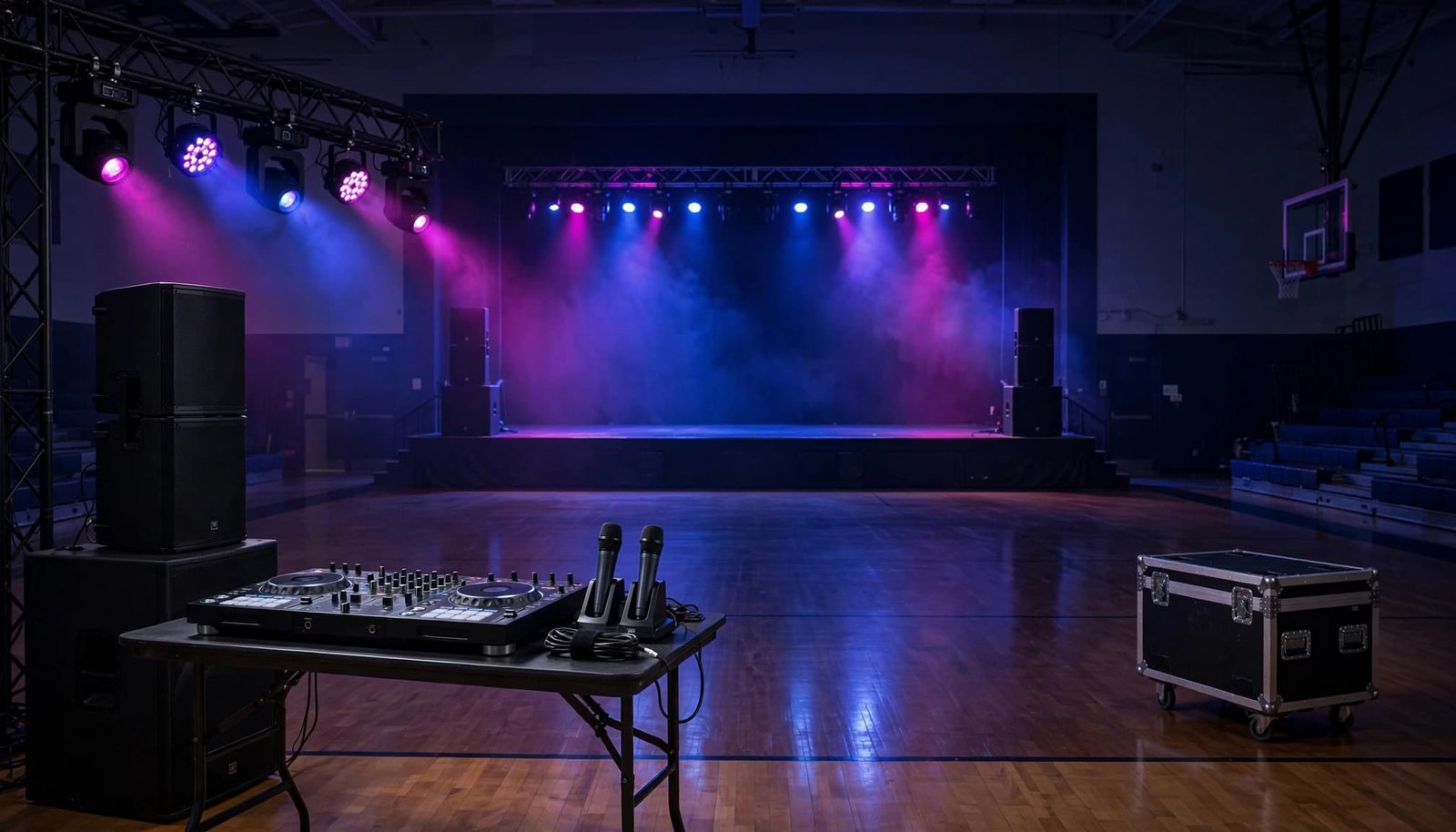
Plan AV Coordination and Prom-Night Changes
Plan AV coordination before load-in so the DJ won’t discover unusable power, an occupied stage, or venue AV requirements on arrival. Confirm AV coordination again before the event, including power, microphones, venue systems, and setup location.
Coordinate With Venue and Production Teams
Identify the venue manager, facilities contact, AV team, staging provider, event planner, photographer, and school lead who may need to coordinate with the DJ. Request the vendor’s load-in time, sound-check needs, power requirements, and preferred setup location.
Ask how the DJ will connect with existing microphones, speakers, projectors, or venue sound systems when needed. Reviewing basic signal flow and acoustic coverage helps committees understand why room layout and equipment placement affect clear announcements.
Wireless microphones need their own planning. Frequency coordination, interference prevention, battery management, and backup planning are all practical topics covered in this guide to wireless microphone planning.
Give One Adult Final Authority
Prom schedules can change. Dinner may run late, photos may take longer, or a formal presentation may create agenda changes. The RFP should name one point of contact, such as an administrator, activities director, adviser, or designated event organizer, to approve those changes.
Document the school-controlled approval process for overtime, additional announcements, music changes, and agenda changes. The DJ should know who can give direction, while staff should know the DJ has room to adjust song selection and pacing for the dance floor.
A technical rehearsal can test audio and microphones, while a grand march rehearsal helps students understand their route and helps staff supervise an organized entrance. These prom and school dance planning tips can support the broader event timeline.
Price the Full Prom DJ Package
Prom pricing varies by date, event length, guest count, venue location, travel, sound needs, lighting, event production needs, and service scope. For New Hampshire schools, basic dances may cost around $350 to $900, while a professional prom package often falls around $900 to $1,500. Larger productions with upgraded lighting, photo booths, expanded sound, or added coverage can reach $1,500 to $2,500 or more.
Those ranges are planning context, not a substitute for written proposals.
Require Itemized Pricing Details
Ask every vendor to provide complete pricing details. Include the total cost, deposit, balance due date, payment schedule, accepted methods, taxes, travel, parking, overtime, and purchase-order requirements. The proposal should separate optional extras from the base service.
Request the overtime rate and state whether it is billed by the half-hour or hour. The proposal should also identify who can authorize extra time. Students shouldn’t be able to extend the event by requesting one more song.
A custom prom DJ package request can be based on event size, schedule, sound needs, lighting, and travel. Those same details belong in every vendor’s response.
Use a Practical Evaluation Scorecard
There is no universal number of vendors a school must invite. Follow district purchasing rules, then document the vendor selection process and why each invited provider is qualified for the event.
Use the same published evaluation criteria for every complete proposal. Include mandatory requirements, preferred qualifications, and weighted categories.
| Evaluation Area | What to Review |
|---|---|
| School-event experience | Prom references, clean music procedures, and professional MC services |
| Production plan | Sound, lighting, microphones, venue fit, and AV coordination |
| Reliability | Backup equipment, replacement staffing, insurance, and communication |
| Price and terms | Complete cost, payment schedule, overtime, cancellation, and add-ons |
| Planning approach | Timeline support, request process, and staff coordination |
The scorecard keeps selection focused on value, preparation, and fit for the school, rather than the lowest number on a single line.
Copy-and-Paste Prom DJ RFP Template
Use the following outline as a starting point, then add district requirements, venue rules, and purchasing language.
- Event overview: [School name] requests proposals for prom DJ, MC, sound, and lighting services for [date] at [venue]. The event is scheduled from [start time] to [end time] for approximately [attendance] students and approved guests.
- Required services: Describe the DJ or MC service, including master of ceremony duties, music planning, clean-edit policy, student request process, formal announcements, sound, lighting, setup, teardown, and coordination with venue staff.
- Venue and access details: Provide the performance area, load-in entrance, parking instructions, setup window, power access, volume restrictions, security requirements, venue systems, staging needs, AV coordination, and school contact information.
- Music and event flow: Include school music rules, must-play and do-not-play guidance, dress code if relevant, theme, grand march, prom court, recognitions, photo periods, final dance, and closing time. Ask vendors to explain how approved agenda changes will be handled on prom night.
- Equipment and backup plan: Require a full equipment list, cable-management approach, backup music access, replacement microphones or speakers, contingency plan for equipment failure, and process for DJ illness or absence.
- Pricing and contract terms: Request pricing details, including an itemized total, deposit, final payment date, travel, parking, taxes, overtime, optional add-ons, cancellation terms, postponement terms, and proof of required insurance.
- Proposal submission: State the due date, file format, recipient, required references, point of contact, and expected award date. Identify which requirements are mandatory and which qualifications are preferred. The school will apply the published evaluation criteria when reviewing submissions.
Ask vendors to describe how they create and revise a custom proposal. Proposal software can help assemble vendor materials, but the school still needs a final, version-controlled proposal pack showing the approved scope, pricing, and terms.
Frequently Asked Questions
When should a school send a prom DJ RFP?
Begin contacting qualified DJs 9 to 12 months before prom when the date, venue, and budget are reasonably known. Aim to select and contract with a provider about 6 to 10 months before the event, especially for popular spring weekends.
What should a professional prom DJ package include?
The proposal should clearly identify professional sound, wireless microphones, dance lighting, DJ or MC services, music planning, setup, teardown, and the actual service hours. Confirm clean-music procedures, planning support, travel, backup equipment, and any optional upgrades before signing.
What should schools check before selecting a DJ?
Review school-event experience, references, music policies, insurance requirements, equipment, backup plans, pricing details, and contract terms. The strongest choice is a provider whose preparation matches the event’s needs and the school’s standards.
A Strong RFP Leads to a Better Prom Night
A prom DJ RFP gives the school a clear path from early planning to a confident vendor decision. It keeps the focus on appropriate music, reliable production, complete pricing, and respectful coordination with staff.
When expectations are written down early, the committee can choose a DJ who brings both energy and professional preparation to the school’s live entertainment experience.