A great prom should feel exciting on the dance floor, not painfully loud at the edges of the room. Prom DJ decibel planning gives school staff, parent volunteers, and prom committees a practical way to balance energy, safety, announcements, and student enjoyment.
The right music and lighting matter, but so does how sound behaves in a gym, cafeteria, ballroom, or event center. A thoughtful plan helps the DJ keep the room lively while staff can still communicate and students can enjoy the full night comfortably.
Key Takeaways for a Better Prom Sound Plan
- Start with the room, because a gymnasium, hotel ballroom, and cafeteria all handle bass and echo differently.
- Use a professional sound system that fits the guest count and floor plan, rather than turning up a smaller system beyond its comfortable range.
- Confirm clean music standards, approved requests, announcement needs, and volume expectations before prom night.
- Ask the venue and school about sound rules, loading access, power, insurance paperwork, and staff contacts.
- Choose a DJ who can read the crowd, adjust levels, make clear announcements, and handle unexpected moments without disrupting the event.
A packed dance floor does not require uncomfortable volume. Good speaker placement, balanced bass, and regular level checks create a stronger atmosphere than simply turning everything up.
Prom DJ Decibel Planning Starts With the Room
The same playlist can sound completely different from one school venue to another. Before equipment is selected, the DJ and prom committee should review room size, ceiling height, hard surfaces, venue acoustics, dance-floor location, and areas where staff need to speak with students.
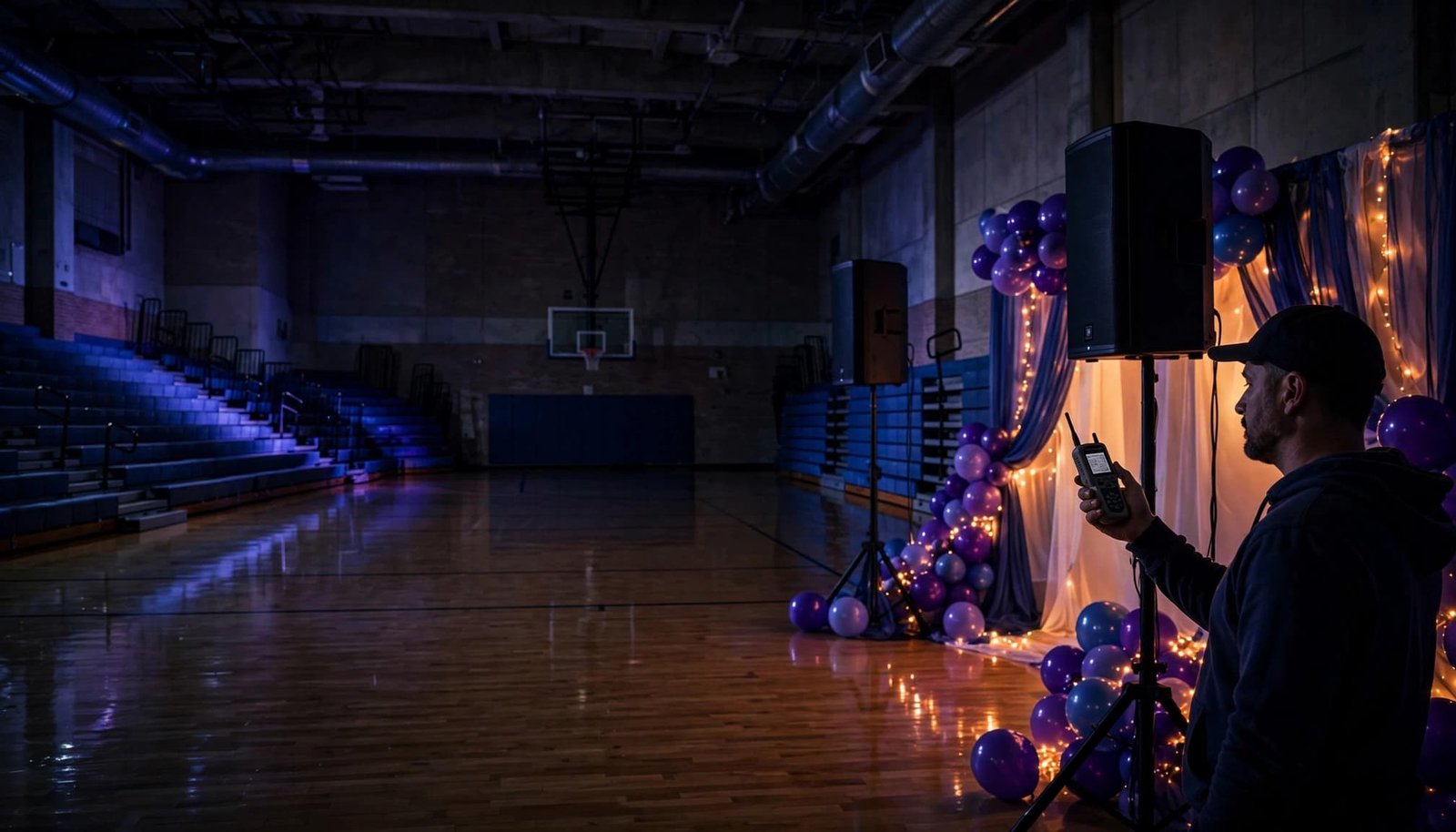
Gymnasiums Need More Than Extra Volume
School gyms often have hard floors, bleachers, high ceilings, and wall surfaces that reflect sound. Bass can build up near corners while vocals become muddy across the room. A cafeteria may create a different issue, with short echoes that make announcements harder to understand.
The answer isn’t to bring the loudest possible sound system. It is to use equipment sized for the room, place speakers carefully, and tune the system during setup. A professional DJ should assess where students will dance, where chaperones will stand, and where the entrance, photo area, and refreshments are located.
Check Sound Levels in More Than One Spot
A sound level near the DJ booth may not match what students hear on the dance floor. The DJ should use a calibrated sound-level meter to check readings at the DJ position, dance floor, room edges, entrance, and locations closest to speakers.
The National Institute on Deafness and Other Communication Disorders guidance on hearing protectors explains that repeated exposure at or above 85 dBA can contribute to hearing loss. This is educational context, not a prom-specific legal limit or universal New Hampshire decibel rule, so committees should use it alongside careful sound measurement throughout the night.
Set Practical Sound Targets Without Guesswork
A school prom needs enough energy for dancing, but it also needs room for supervision, announcements, and conversation away from the dance floor. Sound targets should be agreed upon by the venue, school administration, and school DJ before doors open.
Use Occupational Guidance as a Reference Point
OSHA’s hearing conservation program uses 85 dBA over an eight-hour time-weighted average as a workplace benchmark. This applies to workplace hearing-conservation planning for staff, not students or a universal New Hampshire prom rule.
For DJs, venue staff, photographers, and chaperones working around amplified music for several hours, exposure deserves attention. Review OSHA’s hearing conservation guidance when building workplace safety procedures for staff who regularly work school events.
Duration Changes the Conversation
Sound exposure rises quickly as decibel levels increase. A commonly used 3 dB rule of thumb cuts recommended exposure time in half with each increase: 85 dB for eight hours, 88 dB for four hours, and 91 dB for two hours.
That is why a DJ shouldn’t set a level at the beginning and walk away. A packed dance floor absorbs sound differently than an empty room. A big sing-along may justify a brief, controlled volume adjustment, followed by a return to the agreed level.
The American Academy of Otolaryngology guidance for music venues also supports measured sound, clear monitoring practices, and hearing-aware event planning.
Build a Professional Sound Setup Around the Floor Plan
A polished prom sound system is about coverage, clarity, and control. The audio setup should let students feel the music without forcing every speaker to work at its limit.
Place Speakers for Coverage, Not Just Impact
Speakers should face the dance floor and spread sound across the room without blocking student traffic. Stands, cables, and lighting setup fixtures must stay clear of walkways. Avoid pointing speakers directly at seating, food tables, or staff stations, where they can make the night uncomfortable for guests who are not dancing.
Bass also deserves careful planning. Subwoofers can add the low-end energy students expect, but excessive bass can travel through walls, shake nearby spaces, and make the mix feel overwhelming. Controlled bass sounds fuller and helps vocals stay clear.
Prioritize Clear Announcements and Backup Options
Proms often include welcome messages, grand march cues, raffles, court presentations, awards, and last-call reminders. A wireless microphone and properly balanced music level help announcements cut through without becoming harsh or distorted.
Ask how the DJ’s backup plan covers audio equipment, including a DJ controller, laptop, microphone, and speaker components. A professional setup includes preparation for technical issues, not just a playlist and a pair of speakers.
Confirm Policies Before Hiring a Prom DJ
The best planning relationship with a professional DJ service begins with clear expectations. Schools, venues, and committees should establish policies and requirements well before prom night.
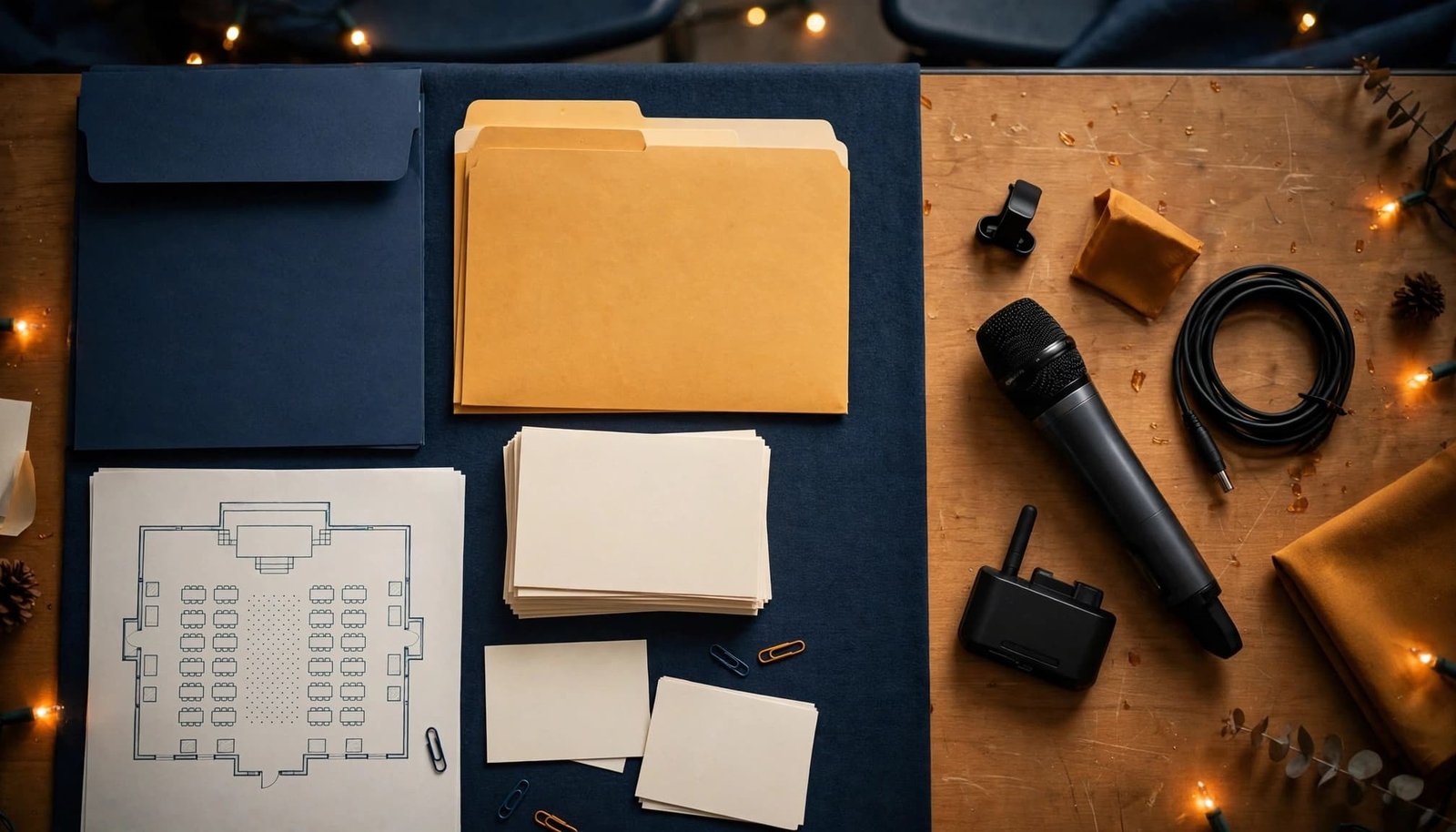
Clean Music Must Be Defined in Writing
Most high schools expect a radio edit, with no explicit lyrics or songs that conflict with school policy. A high school prom may have stricter content expectations than a private celebration. Ask the provider to confirm clean music standards before accepting student requests.
Provide the DJ with a music playlist, must-play list, and do-not-play list. The prom committee and student council can help establish these standards. Student requests should be welcomed and screened through them, whether collected informally or through a song request system. The same process can help when comparing a homecoming DJ for another school event.
For help comparing music planning, lighting, and coordination needs, review these New Hampshire school dance DJ services.
Contracts and Insurance Should Match the Venue
Ask the district or venue whether an insurance policy or other proof-of-coverage documentation is required. Some schools may request a particular certificate holder or additional-insured wording. Don’t assume every venue uses the same requirements.
The event contract should cover arrival time, setup window, payment schedule, overtime, cancellation terms, power access, parking, and equipment safety responsibilities. Address cables, speaker stands, lighting fixtures, DJ equipment, and power connections during a walkthrough, not after students arrive.
Prom Event Pricing in New Hampshire
Costs vary because every event has different hours, equipment needs, travel, lighting, staffing, and venue conditions. A smaller cafeteria dance and a large off-campus prom with extensive lighting are different types of production.
Compare Complete Quotes, Not Starting Prices
The Bash lists Concord pricing data starting around $200 per hour and up to $2,000 per event, with an average quote of $750 and an average cost of $553. Those figures offer a useful starting point, but Concord marketplace pricing isn’t a fixed quote or verified promise for every New Hampshire school event.
A professional package may include sound, clean music preparation, microphones, dance lighting, setup, teardown, travel, and event coordination. Ask for each item in writing so the committee can compare providers fairly.
Ask What Changes the Final Cost
The price may increase with additional speakers, lighting, staffing, longer coverage, difficult load-in access, extra travel, or more complex event production. A hotel ballroom with loading access may be simple. A school gym with stairs, limited power, and a short setup window may require more time and planning.
The clearest quote is built around the actual venue, attendance, timeline, and expectations.
Keep Prom Night Organized From Load-In to Last Song
Good planning protects the fun. It gives the DJ a clear framework while leaving room to respond to the crowd and moments that cannot be predicted on a timeline.
Hold a Short Pre-Event Briefing
The advisor, lead chaperone, student council representative, venue contact, and DJ should confirm the final schedule before doors open. Review entrances, announcements, music boundaries, the music playlist, clean music standards, staff contacts, and the single person authorized to approve changes.
Confirm the calibrated meter, speaker and cable placement, announcement contact, and emergency pause or evacuation procedure. Decide who documents any sound-level concerns and when the DJ may begin setup. This is also the time to confirm where equipment vehicles can park and which doors should be used. More school dance and prom planning tips can help committees organize those details early.
Monitor the Room During the Event
The DJ should watch attendance and room response, sound levels, and the flow between major moments. Staff should know how to reach the DJ for a last-minute announcement or student concern. Emergency announcements or music pauses should follow the school’s and venue’s established procedure.
A school dance is different from a club. Students arrive in waves, pause for photos, gather with friends, and respond to music in different ways. Crowd reading helps the DJ adapt while live mixing keeps the music responsive without losing schedule control or school standards. The DJ needs clean music judgment and a professional MC style that supports the school without making the event about the DJ.
Frequently Asked Questions About Prom Sound Planning
How far ahead should a prom committee book a DJ?
Availability depends on the date, location, and DJ’s existing calendar. Start discussions early in the school year, once the date and venue are reasonably firm. Ask about reservation terms, planning meetings, and the latest date when music and schedule details should be finalized.
Can students submit song requests for prom?
Yes, and requests often help the DJ understand what students want to hear. A song request system can collect songs in advance while the DJ screens them for clean music standards and school policy. The DJ can then use the list as a guide while reading the dance floor.
Does every prom need lighting equipment?
Not every prom needs the same lighting setup, but well-planned dance lighting can make a gym, cafeteria, or ballroom feel more like a special event. Ask what lighting fits the room, where fixtures will be placed, and whether the setup leaves clear walkways for students and staff.
How should staff monitor prom sound levels?
Use a calibrated sound-level meter and check readings from multiple positions around the room. Staff should communicate with the DJ throughout the event and document any concerns. Professional recommendations, venue policies, and verified legal requirements may differ, so confirm which standards apply before prom night.
A Prom Sound Plan That Supports the Whole Night
A strong prom is not built around maximum volume. It is built around the right sound system, thoughtful decibel planning, clean music, clear communication, and an experienced DJ who understands school expectations.
When the room sounds balanced and the schedule is organized, students can focus on celebrating while staff can focus on the people in the room. That is the kind of memorable prom experience that lasts well beyond the final song.