Great lighting does more than make a room look colorful. It gives guests a reason to step onto the dance floor, makes photos feel more polished, and helps an indoor celebration feel planned instead of thrown together.
The right private party DJ lighting can work in a family room, function hall, school cafeteria, or ballroom without overwhelming the space. Even a small DJ setup can create polished indoor party lighting with just a few well-placed effects.
For an affordable, low-effort option, choose sound activated party lights that respond to the music. Aim for a controlled, home-friendly version of disco party stage lighting, not a full nightclub look. Start with the feeling you want guests to have, then choose lights that support it.
Key Takeaways
- Start with the party theme, room layout, and desired mood before choosing fixtures or colors.
- Use uplights and LED PAR lights for room color, then add moving heads, LED bar beams, or an all-in-one system for dance-floor energy.
- Create defined lighting zones so the dance floor feels active while dining areas, entrances, exits, and guest seating remain comfortable and visible.
- Sound activated party lights are affordable and simple, while DMX control offers better timing and control for speeches, dinner, and dancing.
- Plan lighting safety in advance by securing stands, protecting cables, managing power, keeping beams above eye level, and checking venue rules for fog or laser effects.
Begin With the Party Theme and Room Mood
Lighting should follow the event’s personality. A 40th birthday with a black-and-gold theme needs a different look than a winter holiday party, an anniversary dinner, or a lively graduation celebration.
Choose two or three main colors before anyone sets up equipment. Many RGBW LED fixtures produce warm whites as well as saturated colors, making one setup more flexible. Too many changing colors can make a smaller room feel cluttered. A coordinated palette looks cleaner in person and on camera.
Match Color Choices to the Occasion
Warm amber, soft white, blush, and deep blue work well for weddings, anniversaries, and more formal private events. They create a welcoming atmosphere without making faces look washed out in photos. Consider candles, string lights, and existing ambient light when choosing intensity.
For birthdays, reunions, and graduation parties, richer colors can bring more energy. Blue and purple feel polished. Red and amber can feel warm and celebratory. Green often works best as an accent rather than the main room color, since too much green can be harsh in photographs.
Holiday events offer an easy starting point. Red, green, and warm white fit a Christmas gathering, while icy blue, white, and violet complement a winter celebration. Keep the dance floor colors separate from the dining area so guests can still talk, eat, and move around comfortably.
Create Zones Instead of Lighting Everything
A room looks more professional when each area has a purpose. Use soft uplighting for events along the walls, gentle illumination at entrances, and brighter stage lighting near the DJ area. Keep dining areas calm with even, low-level light, and confine sound activated effects to a controlled dance floor wash.
Avoid placing party lights in every corner. One wall with uplights and a few LED party lights on the dance floor usually looks better than six fixtures competing for attention.
Guests should be able to find the dance floor quickly without feeling like every seat is under a flashing light.
The Best Private Party DJ Lighting Fixtures
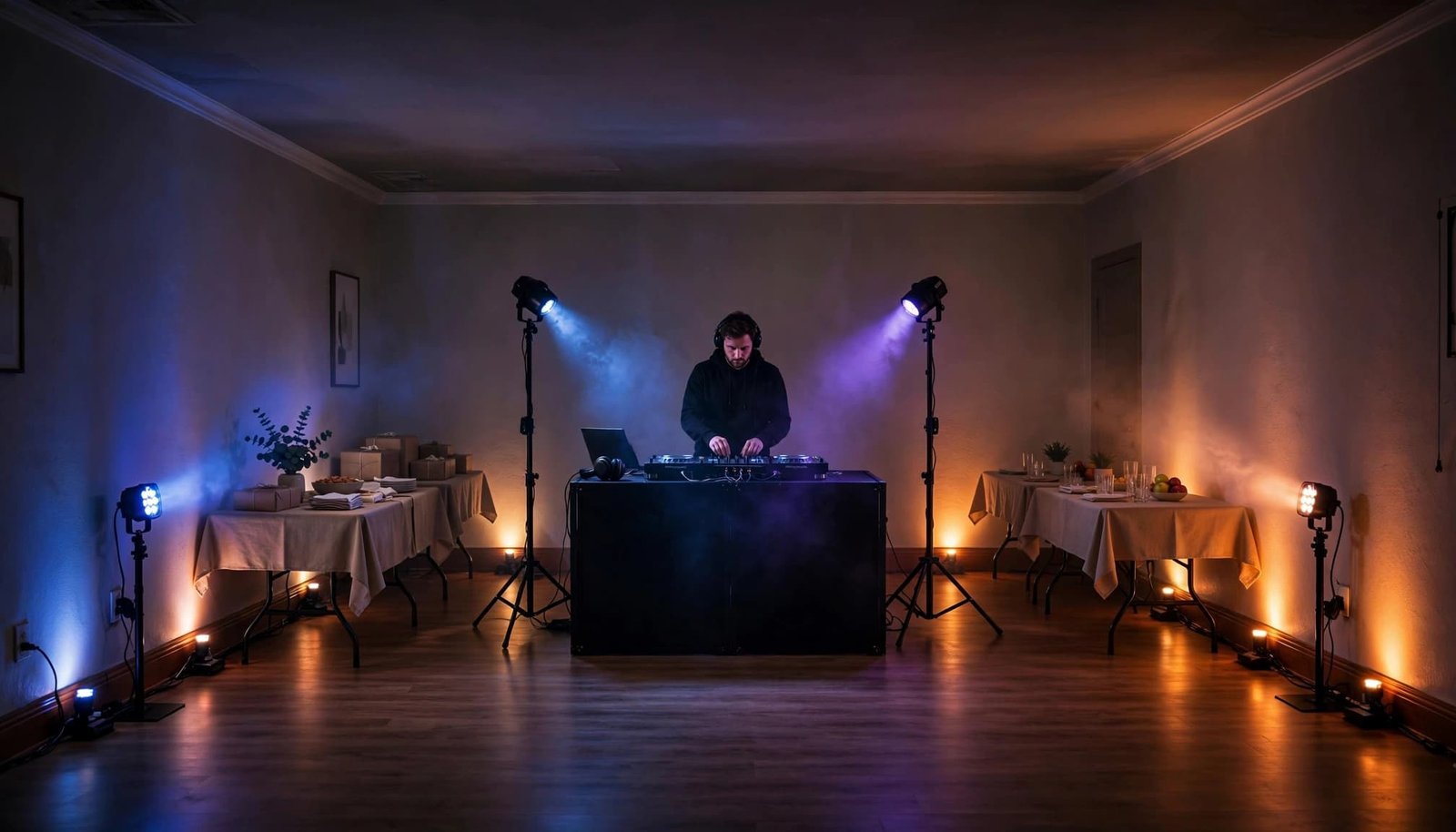
A strong lighting package doesn’t need dozens of fixtures. For most indoor parties, three categories of lighting fixtures cover nearly every need: room color, dance-floor movement, and a visual DJ backdrop. Together, they create disco party stage lighting with color, depth, and motion.
LED PAR Lights and Uplighting Set the Foundation
LED PAR lights create a wide color wash, and an RGBW LED model can provide usable white light too. Place them at floor level and aim them up a wall, behind a DJ table, or toward a plain backdrop. They can make an ordinary banquet room feel warmer and more intentional within minutes.
Wireless battery LED uplights are especially helpful in rooms with limited outlets or awkward wall layouts. Because they don’t need a cable at every fixture, they reduce trip hazards and keep the room looking tidy.
For a home celebration, four to eight uplights can make a noticeable difference. They can work alongside sound activated LED party lights, which add color changes without constant adjustment. Place them behind a dessert table, along the main wall, near the entrance, or behind the head table. Skip the temptation to line every wall unless the space is large.
Moving Heads Add Energy at the Right Time
A compact moving head light sends narrow beams across the dance floor. It adds motion, shape, and excitement once guests are ready to dance. Two units are usually enough for a smaller event, and a sound activated color effect can change patterns automatically.
Keep these effects pointed above guest height. Sweeping light across the ceiling and back wall looks exciting, but beams aimed directly at seated guests don’t. Laser strobe lights are optional, but they aren’t automatically appropriate for family events. If you add a fog machine, check venue rules first and keep visibility clear around guests and exits.
A small LED bar beam behind the DJ booth can add a clean backdrop without taking up much floor space. A second LED bar beam can frame the booth or plain wall, often working better than several separate effects in a tight room.
For a small DJ setup, the Chauvet DJ GigBAR is an all-in-one option. It combines several effects in one compact package and works best behind the booth when floor space is limited. Compared with basic party lights, dedicated DJ effects offer more direction and control. A mirrorball provides a simpler visual centerpiece.
How Much Lighting Do You Need for 100 Guests?
Guest count matters, but room shape and ceiling height matter just as much. A hundred people in a low-ceiling community room need a more controlled approach to lighting placement and dance floor lighting than the same crowd in a high-ceiling ballroom.
For most celebrations, the goal is even coverage and control, not quantity. Guests should see where they are walking, enjoy the color, and still recognize each other across the room.
| Party Size | Practical Coverage and Control Mix | Best Placement |
|---|---|---|
| Up to 40 guests | Four uplights, two LED PAR lights, and two compact moving head light units | Walls, DJ table, and dance area |
| 40 to 100 guests | Six to 10 uplights, including wireless battery LED units when outlets are limited; two wash lights or one Chauvet DJ GigBAR | Perimeter walls and defined dance floor, with an LED bar beam at the backdrop or DJ area |
| 100 to 200 guests | 10 to 16 uplights, multiple wash fixtures, and two to four movement effects | Room perimeter, stage area, and dance floor |
| More than 200 guests | Customized design with coverage, control, added power, and trussing when appropriate | Planned after a venue walkthrough |
For a 100-person birthday or wedding reception, six to 10 uplights plus two active fixtures is usually a strong starting point. Automatic sound activated party lights can suit casual events, but sound activated effects are less suitable during speeches. Add more only when the room has large blank walls, a high ceiling, or a wide dance floor.
Let the Room Breathe
A packed lighting setup can make a private event feel smaller. Keep stage lighting concentrated around the DJ position and dance floor, where the active look belongs. Leave open paths near food tables, restrooms, exits, and guest seating.
If the room already has decorative string lights, candles, floral displays, or a balloon wall, reduce the number of color-changing effects. Those details are already doing visual work.
Automatic Lights or DMX Control?
Lighting control sounds technical, but the decision is simple. Automatic fixtures react to music on their own. DMX control gives the DJ or lighting operator more direct control over colors, movement, timing, and intensity.
Both options have a place at private events.
Sound Activated Lighting Is Simple and Effective
Sound activated party lights use an internal microphone to detect the beat. They’re easy to set up and affordable. Remote control operation is simpler than DMX programming, making them useful for a DIY celebration without a lighting board.
This basic mode for party lights works best for simple dance-floor effects. Set a reasonable speed, choose a color program that fits the theme, and let the lights respond to the music. Some fixtures, such as Chauvet DJ GigBAR, offer automatic programs alongside more advanced control.
The downside is control. Compared with manually programmed party lights, a sound activated fixture can’t distinguish a quiet dinner toast. It may react to a bass-heavy song near the speaker and flash at the wrong moment.
DMX Gives the Show More Control
A data cable or wireless transmitter connects compatible lighting fixtures. It allows the DJ to create distinct stage lighting scenes. Use warm amber for dinner, soft blue for speeches, and a color chase when dancing begins.
For DJs seeking music-synced lighting, SoundSwitch software works with supported DJ software and DMX fixtures. It can create automated shows without manual programming for every song.
The Chauvet DJ’s SoundSwitch announcement explains how the system keeps lighting aligned with songs played in different orders. That flexibility is useful when requests, announcements, and guest energy change the planned music set.
For a small private event, DMX isn’t required. It becomes more valuable when lighting needs to feel organized, timed, and consistent throughout the night.
All-in-One Systems and Smart Lighting at Home
An all-in-one lighting system suits a mobile DJ or homeowner who wants polished effects and a shorter setup. The Chauvet DJ GigBAR combines wash effects, derby patterns, strobes, and sometimes laser strobe lights on one stand-mounted unit. Some models can add a fog machine, but always verify venue policies and visibility requirements first.
These systems save space and setup time, making them practical for a small DJ setup. A second Chauvet DJ GigBAR can widen coverage across a larger dance floor. A different configuration can aim a compact LED bar beam at a backdrop. The bar also adds a small amount of stage lighting around the DJ booth. Keep stands away from guest traffic and low-clearance areas. Don’t aim effects into guests’ eyes.
Philips Hue Works Best as Accent Lighting
Smart home lights, including Philips Hue bulbs and Nanoleaf lighting, can add color around a room. They work well in cocktail areas, dining rooms, entries, cake tables, or small home dance floors. Bar lighting can also define a serving area without brightening the whole room.
These products aren’t a full replacement for DJ lighting. Smart bulbs may offer RGBW LED color and white light, but dedicated fixtures deliver both more effectively. They also provide beam movement and faster response than smart bulbs. LED PAR lights and moving heads remain better suited to active dance-floor coverage.
Use them as part of the room design. Set Hue bulbs to a warm color during arrival, then let sound activated party lights create movement when dancing starts. Scheduled scenes feel calmer, while a separate sound activated mode can follow the music. Keep party lights focused on the floor instead of pulsing throughout the house.
Low Ceilings, Cables, and Power Need a Real Plan
Indoor celebrations come with limits. Many homes and function rooms have 8-to-10-foot ceilings, limited outlets, children moving through the space, and furniture that narrows walkways.
A good setup respects those limits from the first walkthrough, with lighting safety and lighting placement planned in advance.
Keep Moving Lights Low and Aimed Safely
In an 8-foot room, place each moving head light on a stable low lighting stand. Use a speaker pole only when the room allows it, or secure the fixture to a DJ facade.
Treat the setup as stage lighting, with each beam aimed above eye level. Direct beams across the upper wall or ceiling, never at guest faces.
Avoid laser strobe lights and other high-powered laser effects in low-ceiling rooms unless the venue approves them. Reflections from mirrors, windows, picture frames, or shiny decorations can become distracting or unsafe. Even a Chauvet DJ GigBAR needs safe placement and controlled intensity for its laser, strobe, or other effects. An LED bar beam offers a lower-profile, controlled alternative for a family-friendly event.
For dance-floor use, sound activated party lights can add movement at modest intensity. Keep party lights aimed away from guest faces. Disable that sound activated mode during speeches or near exits, where automatic flashes can reduce visibility.
Protect Power and Walking Paths
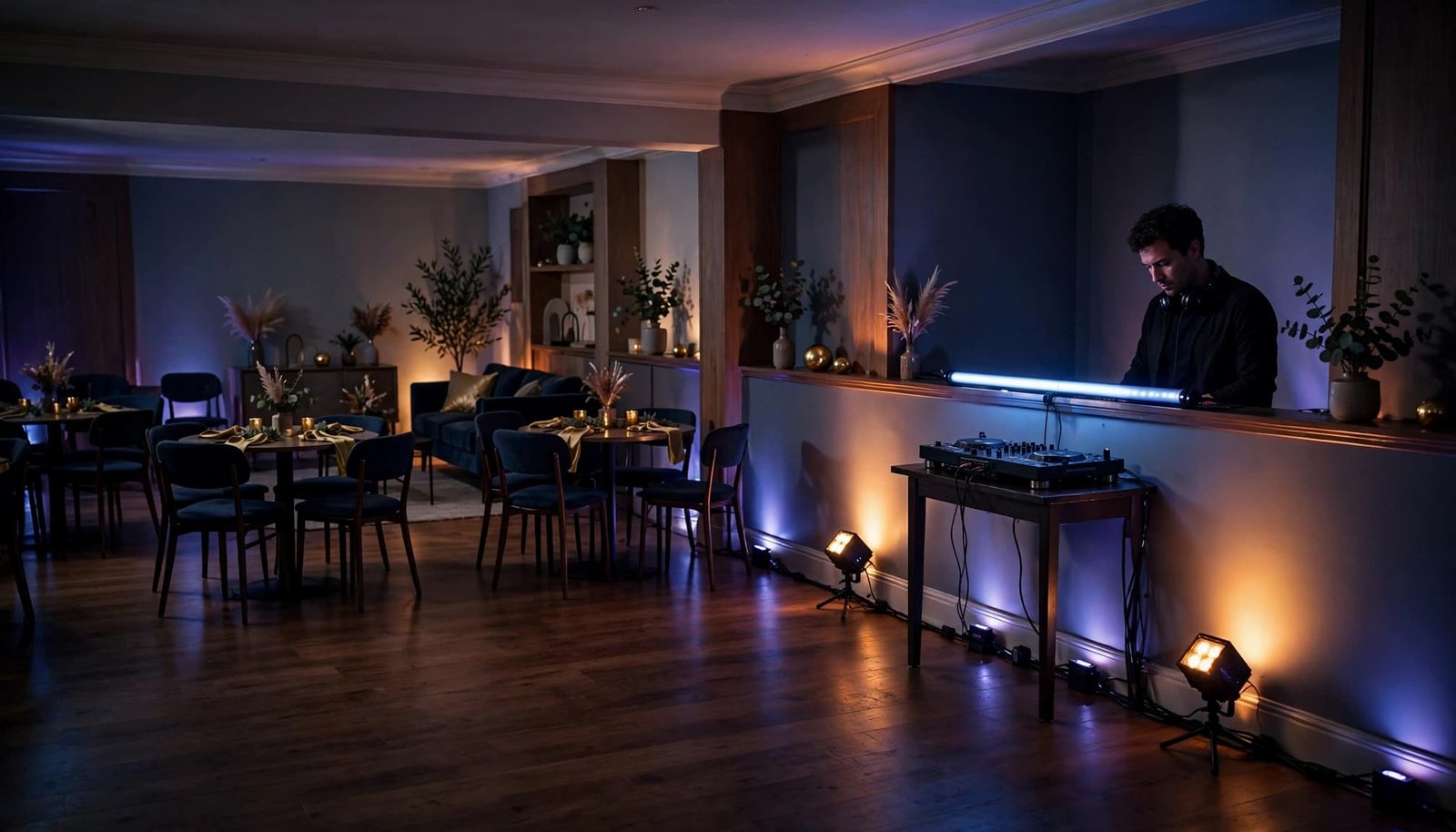
Run audio and power cables along approved room edges whenever possible. Never place them across an emergency exit, doorway, stairway, or accessible route.
Use a proper low-profile cable ramp if a cable must cross a busy walkway. Gaffer tape can hold a thin lead in a dry, low-traffic spot, but it isn’t enough protection where guests will repeatedly walk.
Before the event begins, confirm these details:
- Check that every light stand is weighted or placed where children and guests can’t pull it over.
- Spread electrical loads across appropriate outlets instead of overloading one household circuit.
- Keep heat-producing fixtures away from drapes, balloons, paper decor, and fabric backdrops.
- Get venue approval before using a fog machine, and consider guests with sensitivities because fog can reduce visibility.
- Test the full setup before guests arrive, including music playback, microphones, and every lighting mode.
- Walk the room with the host or venue coordinator to confirm exits and paths stay clear.
A professional DJ should also bring backup music playback, spare cables, and an extra microphone. Lighting is part of the experience, but dependable audio and clear announcements still guide the event.
Questions to Ask When Hiring a DJ
A DJ’s event lighting should fit the room and celebration, not follow a one-size-fits-all checklist. Ask about the lighting package before booking, especially if the venue has low ceilings, limited power, or strict setup rules.
A few direct questions can clarify the DJ lighting setup:
- How many uplights and dance-floor effects are included, and will the package scale for a small DJ setup?
- Can the DJ match lighting colors to the party theme or wedding palette?
- Will the DJ identify any all-in-one fixture clearly, such as a Chauvet DJ GigBAR, before setup?
- Will sound activated party lights run automatically, use manual control, or synchronize through DMX?
- Can the DJ override sound activated behavior during announcements, and who will operate simple effects with a remote control?
- What lighting placement will frame the DJ booth, and can an LED bar beam add color behind it?
- What lighting safety measures will secure cables, power, and light stands around guests?
- How will stage lighting separate dinner, speeches, and dancing visually?
- What’s the plan if a fixture, microphone, or playback device has a problem, and can the lighting stay softer during family moments?
The best answer isn’t always “more lights.” It’s a clear plan that respects the room, supports the music, and keeps guests comfortable.
Frequently Asked Questions
How many lights do I need for a private party?
For most indoor celebrations, four to eight uplights and two active fixtures create a noticeable, balanced look. Larger rooms or guest counts may need additional coverage, but room shape and ceiling height matter as much as attendance.
Are sound activated party lights a good choice for home events?
Yes, they are affordable, easy to set up, and useful for adding movement to a small dance floor. They may flash at unsuitable moments, so switch them off or override them during speeches, dinner, and other quieter parts of the event.
Should I use DMX control for a private party?
DMX is not required for a small or casual celebration, especially when automatic fixtures meet your needs. It becomes more valuable when you want coordinated scenes for dinner, speeches, dancing, and changing music energy.
Where should DJ lights be placed?
Place uplights along selected walls and position active effects around the DJ booth or defined dance floor. Aim moving beams above guest height, keep fixtures away from walkways, and avoid pointing lights directly into people’s eyes.
Are moving heads, lasers, or fog machines safe for indoor parties?
They can be appropriate when used at controlled intensity and approved by the venue. Keep beams above eye level, avoid reflective surfaces and low-clearance areas, and confirm venue rules before using lasers or a fog machine.
A Memorable Party Needs Balanced Light
Private party DJ lighting works best when each fixture has a clear job. Uplights shape the room, wash lights add color, and moving effects bring energy once dancing starts.
Choose a lighting plan that fits the guest count, ceiling height, theme, and room layout. Use purposeful lighting placement for indoor party lighting and dance floor lighting. Keep party lights focused on the people and music, rather than creating an intense disco party stage lighting setup. The result feels polished, comfortable, and memorable.