The event can lose momentum in a single awkward pause. The right soundtrack turns team entrances, cheer routines, championship announcements, and student games into one connected moment.
Song choices need to feel current, but they also have to be clean, recognizable, and ready on the exact cue. High school students notice quickly when a song feels dated or a transition drags. Start with the moments that need a musical lift, not a random list of popular songs.
Key Takeaways
- Choose clean, recognizable songs that each serve a specific rally moment, such as team entrances, cheer routines, crowd participation, or closing celebrations.
- Use short clips of about 10 to 60 seconds to keep the program moving and preserve the impact of each musical cue.
- Review the exact clean edit for lyrics, themes, openings, and outros instead of relying only on streaming labels or social media clips.
- Build a cue sheet and coordinate music starts, stops, announcements, microphones, teams, and performers before the rally begins.
- Watch the entire room and adjust song choices, volume, and pacing based on how students and staff respond.
Every Song Should Have a Clear Job
The strongest rally songs have a clear opening, a beat students can clap to, and a chorus that arrives before attention shifts elsewhere. A school gym is not a dance floor. Music needs to support what is happening on the court, on the floor, and in the bleachers.
Athletic teams need a confident walk-on moment. The cheer squad needs a reliable performance track. The emcee needs short music beds that provide a musical background without overpowering announcements. Arrival and crowd-participation cues can use more danceable music. Every song should support one of those jobs.
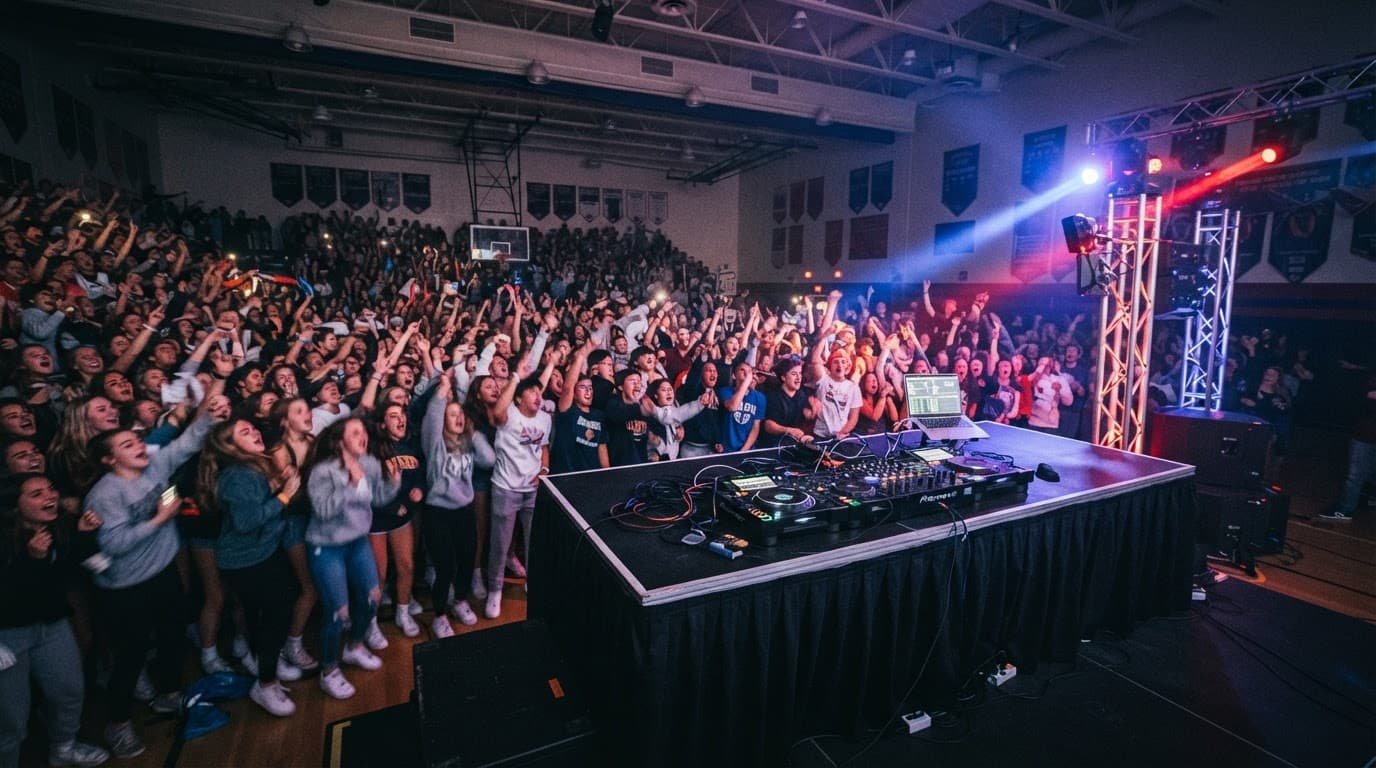
Most rally music works best in short sections, not full-length songs. A 35 to 60-second clip can deliver the opening beat, the familiar hook, and the crowd reaction without slowing the program. Save complete songs for a dance routine, a featured student performance, or the final celebration.
For a 45-minute rally, keep about 70 percent of the music current or recently popular. A small amount of clean indie music can add variety, while familiar classics fill the other 30 percent. Recognizable material associated with Dave Matthews or James Taylor may suit lower-energy arrival or transition moments. Students enjoy discovering newer songs. Bigger anthems usually draw louder responses during team entrances. Students recognize the stomp of “We Will Rock You” and the opening guitar of “Eye of the Tiger.”
Build your starting pool with a dependable school song collection, then narrow every selection to fit your school policies, audience, and event schedule. A playlist is only useful when the DJ can play the right part at the right time.
Build a Clean, High-Energy Music Pool
A clean radio edit is only a starting point, not final approval. Listen to the exact version you plan to play, including the opening, featured artist verses, and any extended outro. Avoid songs with explicit lyrics, sexual content, adult themes, alcohol or drug references, aggressive themes, or language that could create an uncomfortable moment for students or staff.
A song can have clean language and still be the wrong choice if its theme does not fit a school event.
Check streaming labels, lyric pages, and the downloaded DJ edit before rally day. Don’t assume a popular social media clip reflects the complete original track or downloaded DJ file. A music genre or an artist’s popularity doesn’t replace a review of lyrics and themes.
For a 2026 school event, current pop chart releases, including “Golden” by HUNTR/X, can offer newer, recognizable options. Songs from Miley Cyrus and Bruno Mars may also connect with students, but review each exact clean edit before playing it.
Use songs according to the part of the program they need to support.
| Program Moment | School-Appropriate Song Ideas | Best Use |
|---|---|---|
| Student arrival | “Happy” by Pharrell Williams, “Golden” by HUNTR/X | Build energy while students enter the gym. |
| Team entrances | “We Will Rock You” by Queen, “Eye of the Tiger” by Survivor | Use the opening beat and chorus for a confident walk-on. |
| Cheer and dance routines | “Dance The Night” by Dua Lipa, “Shake It Off” by Taylor Swift | Keep routines bright, recognizable, and easy to follow. |
| Crowd participation | “Cha Cha Slide” by DJ Casper, “Cupid Shuffle” by Cupid | Bring students and staff into a simple group activity. |
| Celebration moments | “Can’t Stop the Feeling!” by Justin Timberlake, “I Gotta Feeling” by The Black Eyed Peas | Support award presentations, game winners, and spirit reveals. |
| Closing sequence | “Roar” by Katy Perry, “Firework” by Katy Perry, “Best Day of My Life” by American Authors | Finish with a positive, school-pride feeling. |
A shared shared Spotify playlist can provide additional inspiration, but every community playlist still needs a careful review. The goal isn’t to play every familiar song. It’s to choose a smaller group that fits your students and keeps the event moving.
Pace the Set Like a Rally Program, Not a Playlist
Pacing is where an experienced DJ can change the entire feel of the program. Playing every song until the final fade wastes time and weakens the impact of the next moment. Short clips, planned pauses, and well-timed stingers give the program a professional flow without making it feel overproduced.
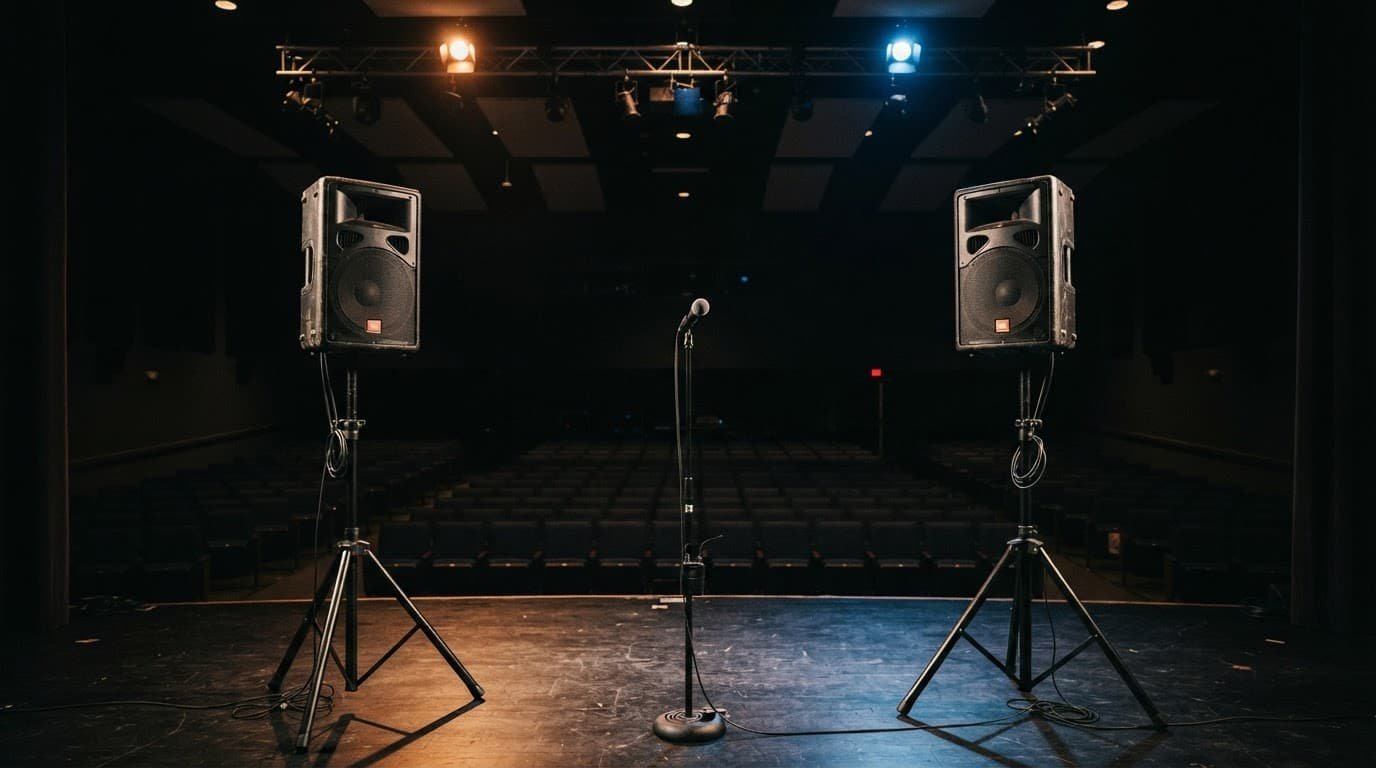
A practical rally set often follows this pattern:
- Use medium-energy music during arrival. Students are still finding seats, talking with friends, and waiting for the program to begin. Play upbeat songs, but hold back the biggest crowd-pleasers.
- Open with a strong, recognizable cue. Begin the formal program with bold instrumentation and a clear rhythmic foundation from bass and drums. A strong intro, school chant, or recognizable song gives the emcee a clear moment to welcome the crowd.
- Give every team entrance its own sound. A 12 to 20-second clip is often enough. Use bold classics for varsity athletes, bright pop for spirit squads, or clean hype for leaders on the performance stage.
- Leave silence around important announcements. Lower the music before names, award winners, or schedule details. Keep a restrained musical background only when it won’t interfere with speech, so the audience can hear the emcee clearly.
- Use a short musical burst after each win. A 10-second celebration clip gets a bigger reaction than restarting a full song after every contest or relay.
Watch the whole room, not only students nearest the DJ booth, to assess the audio stage, sound balance, and coverage. If the far bleachers are clapping, singing, or joining a dance, the selection is working. If students are talking over the music or waiting for something to happen, change direction on the next cue.
A community Amazon Music playlist can help identify familiar sports anthems. Still, your final mix should reflect the current student body, not only the songs adults remember from their own school years.
Coordinate Every Cue With the Emcee and Teams
A great song can still fall flat if the music starts before the team is ready or the microphone cuts through a cheer routine. Coordination should begin before students enter the gym.
Use a One-Page Cue Sheet
Prepare a simple run sheet with each segment, the person in charge, the song or sound effect, the start cue, and the maximum music length. Include the athletic director, cheer coach, student council representative, emcee, and DJ in the final review.
A 15-minute technical check before doors open can prevent common problems. Test the audio stage, wireless microphones, playback volume, cheer tracks, and scoreboard audio. Confirm who gives the DJ the signal to start or stop each selection.
The emcee should know when music is playing underneath announcements and when the room needs quiet. The DJ should know how to pronounce team names, player names, and any school traditions that are part of the rally.
Make Room for Live Student Talent
A student band, musical duo, or drum performance can bring personality when scheduled with the DJ. A short live performance works well between major segments because it gives students a change of pace without losing energy.
If the school occasionally invites local bands, remember that a school gym is not a live music venue. Outside acts still need short run times, approved lyrics, clear load-in expectations, and beginning and ending cues.
Ask performers for their total run time, lyric approval, sound input needs, and a clear beginning and ending signal. For recorded backing files, note whether each came from a recording studio, identify the recording engineer or school technician responsible, and document music production requirements, such as stems, click tracks, or separate inputs.
The DJ can play a short entrance track before the live set, then bring back upbeat music when performers leave the floor.
Keep the student set focused. A short set of approved original songs from student groups or a school-appropriate cover often lands better than a long set while students wait for the next activity.
Frequently Asked Questions
How long should pep rally music clips be?
Most rally music works best in short sections rather than full-length songs. Use about 12 to 20 seconds for team entrances, 10 seconds for quick celebrations, and up to 35 to 60 seconds when a longer musical moment is needed.
How do I choose school-appropriate songs?
Review the exact version you plan to play for explicit lyrics, adult themes, drug or alcohol references, and other content that may not suit the event. A clean label does not guarantee that the song’s overall message fits a school rally.
What types of songs work best for team entrances?
Choose recognizable songs with a strong opening beat, clear rhythm, and confident energy. Classics such as “We Will Rock You” and “Eye of the Tiger” can create an immediate walk-on moment when used in short clips.
Should the DJ play full songs during a pep rally?
Usually, no. Short edits keep the program focused and leave room for announcements, contests, performances, and crowd reactions; save full songs for dance routines, featured performances, or the final celebration.
How can the DJ coordinate music with the emcee?
Create a one-page cue sheet listing each segment, song, start cue, person responsible, and maximum music length. Hold a technical check before doors open so the DJ, emcee, coaches, performers, and event staff understand when music should start, fade, or stop.
A Rally Students Will Remember
Great pep rally DJ music is not about playing the loudest songs or chasing every trend. It means choosing clean songs students recognize, editing each track to its best moment, and supporting every important cue with confidence.
When the DJ, emcee, cheer squad, and athletic teams share a clear plan, the rally feels organized, energetic, and personal to the school. The strongest reaction often comes from a simple cue played at exactly the right second.