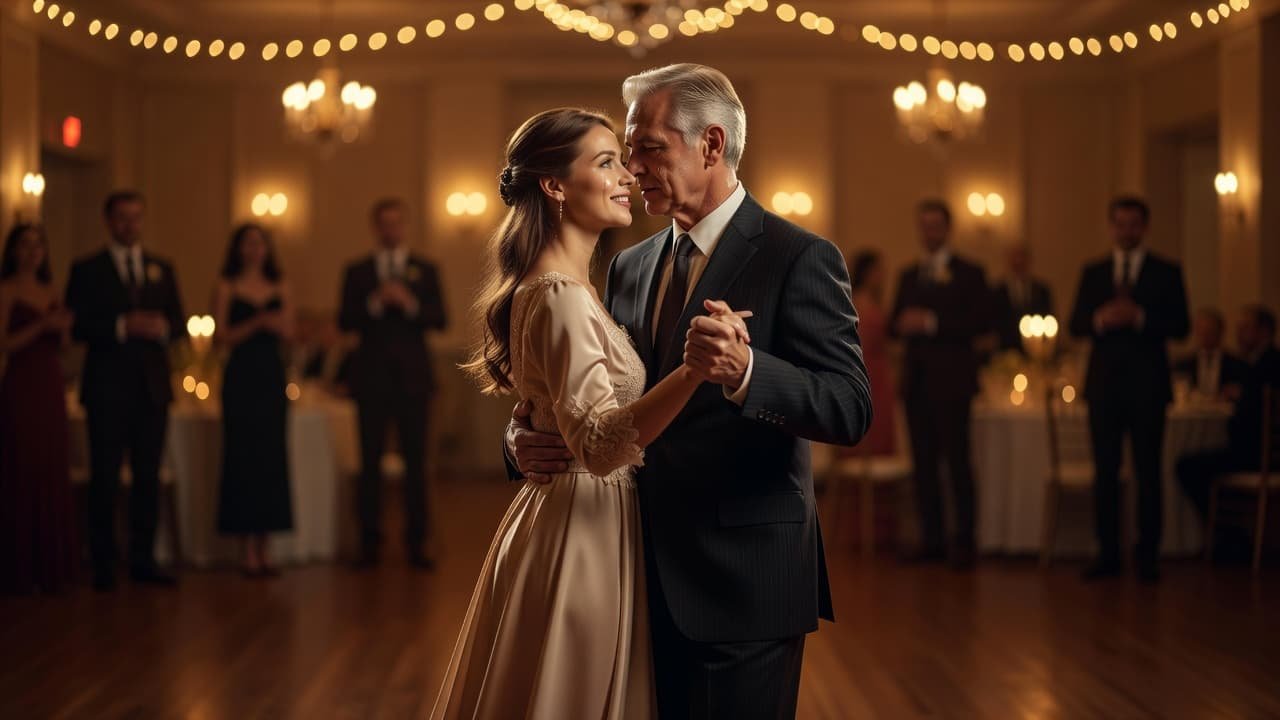
The parent dance can be one of the most emotional moments of the wedding reception. When selecting the perfect parent dance songs, the focus should not be on finding what is currently popular or trending. Instead, it is about finding a melody that feels authentic when you are standing on the dance floor with the person who helped shape your life.
Whether you want to honor a dad, mom, stepparent, grandparent, guardian, sibling, or any chosen family member, this is your opportunity to recognize a parental figure who has provided invaluable support. There is no single format you have to follow. The right music choices reflect your unique bond, your comfort level, and the specific feeling you want to create in the room.
Start with the meaning, then let the music follow.
Key Takeaways
- Choose a song based on your real relationship, not a tradition you feel pressured to follow.
- Listen to the full lyrics before making a final decision, even with well-known wedding songs.
- Keep the dance short enough to feel meaningful, usually around two to three minutes.
- Include stepparents, grandparents, guardians, or any chosen parental figure in ways that feel fair and comfortable.
- Give your DJ the final song versions, dance order, and cue points well before the reception.
Start With the Relationship, Not Traditional Wedding Traditions
Many couples begin by searching for a classic father-daughter dance or a traditional mother-son dance. Those searches are helpful starting points, but they can also feel limiting. Every family looks different, and your wedding should leave room for that.
Maybe your father raised you and has always been your biggest supporter. Maybe your mother is the person who taught you how to handle the hard days. Maybe a grandmother, stepdad, aunt, guardian, or close family friend filled that role. The dance is about the bond, not the label.
Think about what you want the moment to say. Do you want it to feel warm and filled with sentimental songs? Fun and lighthearted? Proud? A little emotional without making the whole room cry? There is room for all of it.
Start with a few simple questions:
- What memories do you share with this person?
- Is there an artist, genre, or song that has always been part of your relationship?
- Would you rather laugh together than have a slow, emotional moment?
- Is there a message you want them to hear through the music?
A classic slow song can be beautiful. So can popular wedding songs like “My Wish” by Rascal Flatts, “Forever Now” by Michael Buble, or “You’ve Got a Friend in Me” by Randy Newman. A couple who grew up dancing in the kitchen may prefer “Dancing in the Moonlight” by Toploader. Another family may light up for “Sweet Child O’ Mine” by Guns N’ Roses.
The song does not have to make sense to every guest. It only has to make sense to you.
A parent dance feels more memorable when your song choice reflects your specific relationship, rather than just following someone else’s wedding tradition.
Listen to the Full Lyrics Before You Commit
A song can have a beautiful chorus and still tell the wrong story. This happens more often than couples expect, as the song lyrics sometimes contradict the intended sentiment. You should always vet the song lyrics in their entirety because some popular tracks sound perfect until you hear verses about heartbreak, divorce, regret, or romantic love that does not fit a parent-child dance.
Never choose a title alone. Listen through the entire song. Read the lyrics. Pay attention to the tone, not only the melody.
For example, “What a Wonderful World” by Louis Armstrong has a warm, timeless feel, but be aware that its actual lyrics reflect on the state of the world rather than a parent-child relationship. “Forever Young” by Rod Stewart often works well for a parent dance because of its message of hope and support. “Humble and Kind” by Tim McGraw can be a strong fit for a parent who has always offered guidance.
Still, every song lands differently. Lyrics that feel meaningful to one family may feel too heavy for another.
A good process is simple. Make a short list of five to eight songs. Listen separately first, then sit down with your parental figure if that feels comfortable. You may both land on the same song immediately. Or you may learn that their favorite choice is not what you expected.
That conversation can become part of the memory.
Some parents will have strong opinions. Others will say, “Whatever you want is fine,” even when they do have a favorite. Ask direct questions if you need to.
Try saying:
“I want this dance to feel like us. Is there a song that reminds you of me or our family?”
That one question can lead you to a song choice you would never have found through a standard wedding playlist.
Choose the Right Feel for Your Parent Dance
The best parent dance songs are not all slow ballads. Your reception has its own unique personality, and the music you select should fit the mood without feeling forced. When browsing popular wedding songs, consider how the tempo and lyrics reflect your specific relationship.
For a classic and emotional moment
These songs work well when you want a traditional, heartfelt dance with a clear message. Creating an emotional moment is often about choosing a timeless melody that resonates across generations:
- “The Way You Look Tonight” by Frank Sinatra
- “Because You Loved Me” by Celine Dion
- “Stand By Me” by Ben E. King
- “In My Life” by The Beatles
- “Landslide” by Fleetwood Mac
- “God Only Knows” by The Beach Boys
- “Butterfly Kisses” by Bob Carlisle
These choices have a softer pace and give guests a chance to settle into the performance. They are also easier to dance to if neither of you wants to worry about complicated choreography.
For a warm, modern family moment
Modern songs can feel personal without losing the core emotion. “Never Grow Up” by Taylor Swift is often chosen for a dance with an adult child, while “A Song for Mama” by Boyz II Men remains a staple for a beautiful mother-son dance. “You Are the Reason” by Calum Scott can work for any close family bond, and “Forever Now” by Michael Buble offers a strong message, especially for a sentimental father-daughter dance.
Country music also offers plenty of meaningful options. “My Little Girl” by Tim McGraw, “I Loved Her First” by Heartland, “My Wish” by Rascal Flatts, and “Then They Do” by Trace Adkins are familiar choices for many families.
Be careful with songs that become overly specific. A song written strictly about a “little girl” may not feel right for every parent-child pairing. The universal message of the lyrics matters more than the specific genre.
For a fun, upbeat family dance
Not every meaningful dance needs to be a tearjerker. If your relationship is more playful, choose an upbeat song that lets you smile, laugh, and move comfortably.
“Isn’t She Lovely” by Stevie Wonder, “Home” by Edward Sharpe & Magnetic Zeros, “You Make My Dreams” by Hall & Oates, and “How Sweet It Is (To Be Loved by You)” by James Taylor all bring a brighter, more energetic feeling to the dance floor.
An upbeat song can also help when a parent feels nervous about slow dancing in front of a full room. It takes the pressure out of the moment, allowing you to sway, sing along, and keep the interaction feeling natural and lighthearted.
Make Room for Every Important Parent Figure
Family dynamics can be complicated, and weddings often bring up complex emotions. A clear plan helps you honor every influential parental figure in your life without creating confusion during your reception. Modern weddings, including those for LGBTQ couples, are beautifully redefining these traditions to ensure that every meaningful relationship is celebrated authentically.
If you have more than one person to include, you have plenty of creative options. You might consider a combined parent dance, a joint parent’s dance, or even a group dance. If you want to keep the formal portion brief, a split song is an excellent solution. Your DJ can start with one song, then fade into a second track to invite the next person onto the floor. This approach feels organized and ensures each relationship receives its own special moment.
For example, you could dance with your father during the opening portion of a song, then bring in your stepdad for the second half. Alternatively, a groom might share a dance with his mother before inviting his grandmother onto the floor for the final chorus. There are no rigid rules that say every dance must look the same; it is about honoring the people who shaped you.
If you want to include stepparents but worry about potential hurt feelings, it is best to talk through the plan early. Do not wait until the final week when emotions and deadlines are already piling up.
Keep the conversation kind and direct. You do not need to defend every decision, but you should communicate with clarity. You can say, “I want to include you because you have been such an important parental figure in my life. I am planning the dances in a way that gives everyone a meaningful moment.”
That is honest, respectful, and sets clear expectations well before your wedding day.
Keep Parent Dances Meaningful, Not Too Long
A full song can feel long once you are standing in the middle of the dance floor. Most parent dances work best at two to three minutes. You still get the emotional payoff without losing momentum before dinner, toasts, or the rest of the wedding reception.
Ask your wedding DJ to choose a clean fade point after a strong chorus or meaningful verse. This is especially helpful with songs that run four or five minutes.
Your wedding DJ should also know the exact order of events. Are you doing your first dance first? Will both parent dances happen back-to-back? Is a grandparent joining your father-daughter dance halfway through? Those details affect the music cues, microphone announcements, and the overall flow of the event. After the couple completes their first dance, having a clear plan ensures the transition into parental moments remains seamless.
Sound matters too. The dance should feel intimate, but guests still need to hear the song clearly. Professional sound and clean microphone work help your professional team introduce each dance with confidence. There should be no awkward pause, no searching for the right track, and no confusion about who is coming to the floor.
Share the final plan with your DJ before the wedding. Include the artist, exact song version, dance order, and any special instructions. If you want a certain lyric or chorus used, say so.
A polished event is built on those small details.
Frequently Asked Questions
Do we have to choose a traditional song for our parent dance?
Absolutely not. While traditional songs are popular, the best choice is one that reflects your actual relationship and personal history. Feel free to pick a song that fits your dynamic, whether that means something funny, upbeat, or deeply sentimental.
How long should the parent dance last?
It is generally recommended to keep parent dances between two and three minutes long. This duration is long enough to feel significant and capture photos, but short enough to keep the reception momentum going before your guests get restless.
Can I include multiple parents or guardians in the dance?
Yes, you can easily include multiple parental figures by splitting a song or having a DJ transition between tracks. This allows you to honor everyone who has supported you while keeping the formal portion of the reception organized and manageable.
Should I check the lyrics of my chosen song?
Yes, it is highly recommended to listen to the full song and read all the lyrics before committing. Some songs may sound perfect during the chorus but contain verses about heartbreak or romantic themes that are not suitable for a parent-child dance.
Let the Moment Be Yours
The right choice for your celebration does not come from a generic wedding playlist. Instead, the most memorable parent dance songs come from the personal story you share with the person beside you on the dance floor.
Choose music that feels honest and keep the timing comfortable for everyone involved. Make space for the family members and chosen family who helped get you here. Whether you share the spotlight or choose a sentimental classic, this dance acts as a beautiful tribute to the parental figure who has supported you throughout your life. With the right song and a clear plan, your parent dance becomes one of those wedding moments you will cherish long after the final song plays.