Great outdoor music can make a backyard party feel like a real celebration. Poorly placed outdoor speakers near the grill, though, can leave half the guests hearing only chatter and lawn mowers.
A dependable outdoor party music setup has to fit the yard and guest count. New Hampshire weather can shift from sunshine to a hard summer shower in minutes. Good planning protects the equipment, preserves sound quality, and keeps the party moving without added stress.
Key Takeaways
- Match the outdoor party music setup to the yard size, guest count, listening zones, and event type rather than choosing the loudest speaker available.
- Use two well-placed outdoor speakers for more even sound distribution, and keep them near guests to improve sound quality and limit noise toward neighbors.
- Check weather ratings carefully, protect powered equipment and connections, and use GFCI-protected outlets with outdoor-rated wiring for permanent installations.
- Test wireless speakers, playlists, power, and coverage before guests arrive so music stays synchronized and interruptions are less likely.
- Prepare for New Hampshire rain, wind, thunderstorms, and local noise rules with a covered or indoor backup plan.
Start With the Yard and the Forecast
New Hampshire weather asks more of outdoor speakers than a sunny product photo suggests. Spring brings soft ground, mud, and steady rain. Summer events can face humidity, heat, and thunderstorms. Fall parties often need to handle wind and cooler evenings, while winter gatherings require a dry, sheltered plan for every powered component.
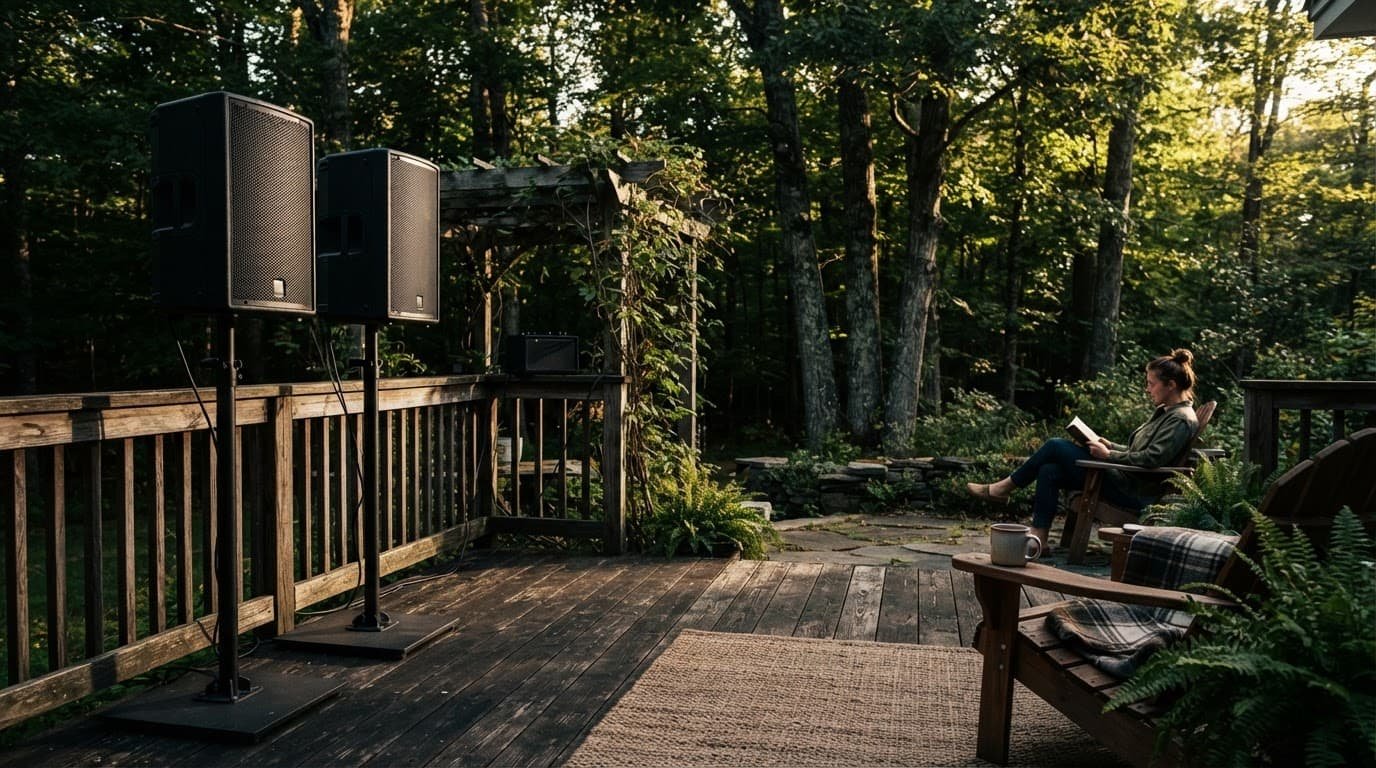
Before a backyard party or another outdoor event, identify the actual listening zone before choosing party speakers. A 20-by-20-foot patio needs a different approach than a 50-by-80-foot lawn with a tent, bar, food station, and dance area. Guests should hear the music comfortably throughout the seating area, not only next to the speaker.
Use this quick guide to match the audio system to your outdoor event and available space:
| Party Size | Typical Listening Area | Practical Setup | Connection Method |
|---|---|---|---|
| Up to 20 guests | Patio or deck | One quality portable speaker | Bluetooth |
| 20 to 50 guests | Patio and small yard | Two linked powered speakers | Party-link Bluetooth or Wi-Fi |
| 50 to 100 guests | Large yard, tent, or pool area | Powered speakers on stands, with a mixer if needed | Wired audio or professional wireless system |
| More than 100 guests | Wedding, school, or corporate event | Professional sound system with separate zones | Mixer, wireless microphones, and managed audio |
For a mid-sized gathering, two speakers usually sound better than one oversized unit. The arrangement improves sound distribution, allowing a comfortable volume level as music reaches guests from closer positions.
Open-air sound has no walls to help it along. Speaker placement matters more outside than it does in a living room.
Choose an Outdoor Party Music Setup That Fits Your Event
A portable bluetooth speaker is a strong choice for casual cookouts, small pool gatherings, and rental properties where permanent installation isn’t practical. Match outdoor speakers to their placement, then check battery life, Bluetooth stability, and the manufacturer’s rating.
A portable unit should stay away from the pool edge, wet grass, and direct sprinkler spray, even when it has a high waterproof rating. Water resistance and waterproofing aren’t the same promise. An IPX rating reports water testing but does not state dust protection, while an IP66-rated speaker is built to resist dust and powerful water spray. The Sonos outdoor speaker guide is a useful reminder that weather ratings vary by model and use case.
For a patio that hosts gatherings throughout the year, powered models offer a more polished option. These are active speakers, meaning the amplifier is built inside the cabinet. They need nearby power, but they reduce the number of separate components needed for music playback.
Passive outdoor speakers have no built-in amplifier. They connect to a stereo amplifier or audio receiver with dedicated cabling. This takes more planning, yet it creates a clean long-term system for a deck, covered porch, or pool area. A Sonos Amp or WiiM Amp can also bring app-based control to passive outdoor speakers when the home Wi-Fi network reaches the patio.
Published power output numbers can be misleading because brands measure power differently. Focus first on speaker coverage, speaker sensitivity, and placement. A well-positioned pair of outdoor speakers usually delivers better sound quality than one loud box pushed to its limit.
Place Speakers Where People Can Hear Them
Set outdoor speakers between waist and ear height whenever possible. A deck railing, sturdy table, speaker stand, or mounting bracket can keep the sound above chairs and outdoor furniture. Never place a speaker directly on wet ground or where guests may kick, spill on, or trip over it.
For a standard patio, begin with about 8 to 10 feet between two speakers. Angle each speaker toward the seating area instead of aiming both flat against the house. This helps music reach the center of the party without sending excessive sound toward a neighbor’s home.
Keep party speakers near guests instead of turning them up across a large yard. This improves sound quality, keeps conversations comfortable, and creates more even sound distribution while limiting bass spill toward neighbors. The Wirecutter speaker comparisons are also helpful when comparing models with different weather ratings and sound coverage.
For weddings and larger celebrations, separate the ceremony, cocktail, and dance locations when possible. A small speaker for cocktail music shouldn’t compete with a dance-floor system. Each area needs the right volume level for its purpose.

Photo by Taha Samet Arslan
Wire, Power, and Electrical Safety Outdoors
A permanent outdoor sound system needs more than good speakers. Outdoor speakers are only one part of the safety picture. Safe wiring, protected power, and dry equipment matter throughout the event.
Use an exterior GFCI-protected power outlet for powered speakers, amplifiers, mixers, and lighting. Test the outlet and electrical setup before guests arrive for the outdoor event. Keep all plugs and power strips inside weather-resistant covers or in a dry, elevated location. A speaker’s waterproof rating doesn’t make its power connections safe.
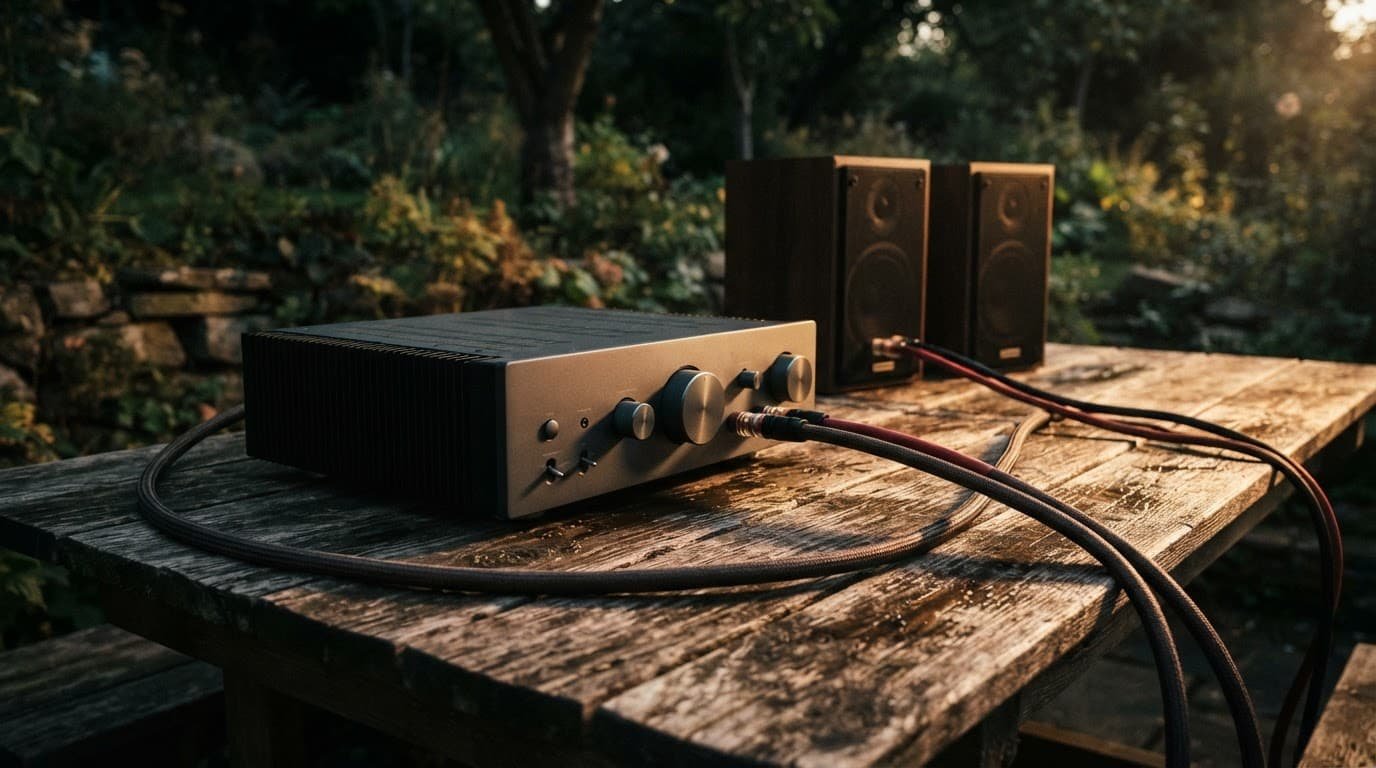
For passive outdoor speakers, use outdoor-rated speaker wire. Sixteen-gauge speaker wire is common for shorter runs, while 14-gauge is often better for longer distances. Follow the amplifier manufacturer’s limits, and don’t substitute lamp cord or an indoor extension cable for permanent wiring.
For permanent installations serving passive outdoor speakers, route speaker wire along a protected edge, inside approved conduit where needed, or underground with direct-burial-rated cable. Avoid loose cords across walkways. If a cable must cross a path, cover it with a proper cable ramp.
The outdoor speaker installation guide from AV.com offers a helpful overview of mounting, placement, and weather considerations. For any new exterior circuit, wall penetration, or buried electrical line, hire a qualified electrician and follow local code requirements.
Bring portable equipment inside after the party. Even a covered porch can collect wind-driven rain, overnight condensation, or winter moisture.
Synchronize Multiple Wireless Speakers Without the Delay
A portable bluetooth speaker can work well for a barbecue or small gathering, but wireless speakers are not always designed to play together. Use a built-in Party Mode, PartyBoost, or similar manufacturer feature when it is available. Two speakers from unrelated brands usually will not stay synchronized from one phone.
Run a full sound check before guests arrive. Pair every wireless speaker, walk the property, and listen for an echo. If one speaker lags, disconnect it and reconnect through the brand’s group-play feature. Do not try to start separate speakers manually from different phones.
Wi-Fi multiroom audio is the better choice for a home that hosts frequent parties. A strong outdoor Wi-Fi signal can support multiroom audio through grouped speakers or a networked amplifier. This multiroom audio setup keeps one source playing in sync across the deck, patio, and garden. Place a mesh Wi-Fi point indoors near the exterior wall or under a dry covered area, never where rain can reach it.
Download playlists before the event in case the internet drops. Keep notification sounds off and check battery life on any battery-powered units. Charge the phone or tablet, and use one mobile device as the designated music source. These small details prevent abrupt interruptions during dinner, speeches, or a favorite dance song.
Prepare for Rain, Wind, and Neighborhood Noise
Check the forecast the day before and again before setup, and prepare an indoor backup location or covered area with safe power access if thunderstorms are possible. A high waterproof rating may protect outdoor speakers from rain, but it doesn’t make powered equipment safe during lightning. When thunder is heard, pause the music, disconnect powered equipment, and move guests and electronics away from exposed outdoor areas.
A canopy can protect a DJ table or mixer, but it should not trap heat around amplifiers or create a dripping edge over cables. Use equipment cases, rubber mats, and sturdy tables during spring events when mud is likely. In fall, secure lightweight speakers and decor against wind.
New Hampshire noise rules can differ by town, city, neighborhood, and rental agreement. Review local ordinances and quiet-hour policies before the party. Aim speakers inward, keep the volume level under control, and schedule the high-energy portion of the event earlier in the evening.
Frequently Asked Questions
How many outdoor speakers do I need for a backyard party?
For up to 20 guests, one quality portable speaker may be enough. Larger patios and yards usually benefit from two linked speakers placed near the main listening areas.
Are outdoor speakers waterproof?
Some outdoor speakers resist rain, spray, or dust, but their ratings vary by model. Keep portable speakers away from standing water, and remember that a waterproof speaker rating does not protect plugs, power strips, or amplifiers.
Should I use powered or passive outdoor speakers?
Powered speakers include a built-in amplifier and are convenient when nearby power is available. Passive speakers require an amplifier and more wiring, but they work well for clean, permanent installations on decks, porches, and pool areas.
How can I keep multiple wireless speakers in sync?
Use the manufacturer’s built-in Party Mode, PartyBoost, or group-play feature instead of starting separate speakers manually from different phones. Test the system before the event and listen for delays or echoes across the property.
What should I do if thunderstorms are possible?
Prepare an indoor or covered backup area with safe power access, but do not rely on a canopy during lightning. When thunder is heard, pause the music, disconnect powered equipment, and move guests and electronics away from exposed outdoor areas.
A Better Party Starts With Reliable Sound
The strongest outdoor sound system plan is not always the loudest one. It places outdoor speakers near guests, protects the equipment, and keeps a weather backup ready before the first song plays.
With smart placement, realistic coverage, and weather-aware preparation, your audio system can support a backyard party or another outdoor event, including a wedding or chilly fall celebration.