A great wedding reception should feel full of energy, not full of surprises after the music starts. New Hampshire noise restrictions can affect your reception end time, speaker placement, outdoor dancing, and whether a local permit may be required.
There is no single statewide wedding-music standard. Requirements may come from the municipality, venue contract, permit conditions, or private-event policies. Local rules can vary for outdoor, lakeside, barn, mountain, and backyard celebrations, so confirm with the town or city before booking.
This is general planning information, not legal advice. Verify the current municipal code, permit process, and venue policies before the event, since requirements can change. A little sound planning early keeps the focus where it belongs, on your guests, your music, and the moments you will remember under New Hampshire noise restrictions.
Why Sound Planning Starts Before the Reception
Wedding music is part of the atmosphere, but it also has to fit the property, the schedule, and the surrounding area. A professional DJ can keep a dance floor active without treating every venue like a concert space.
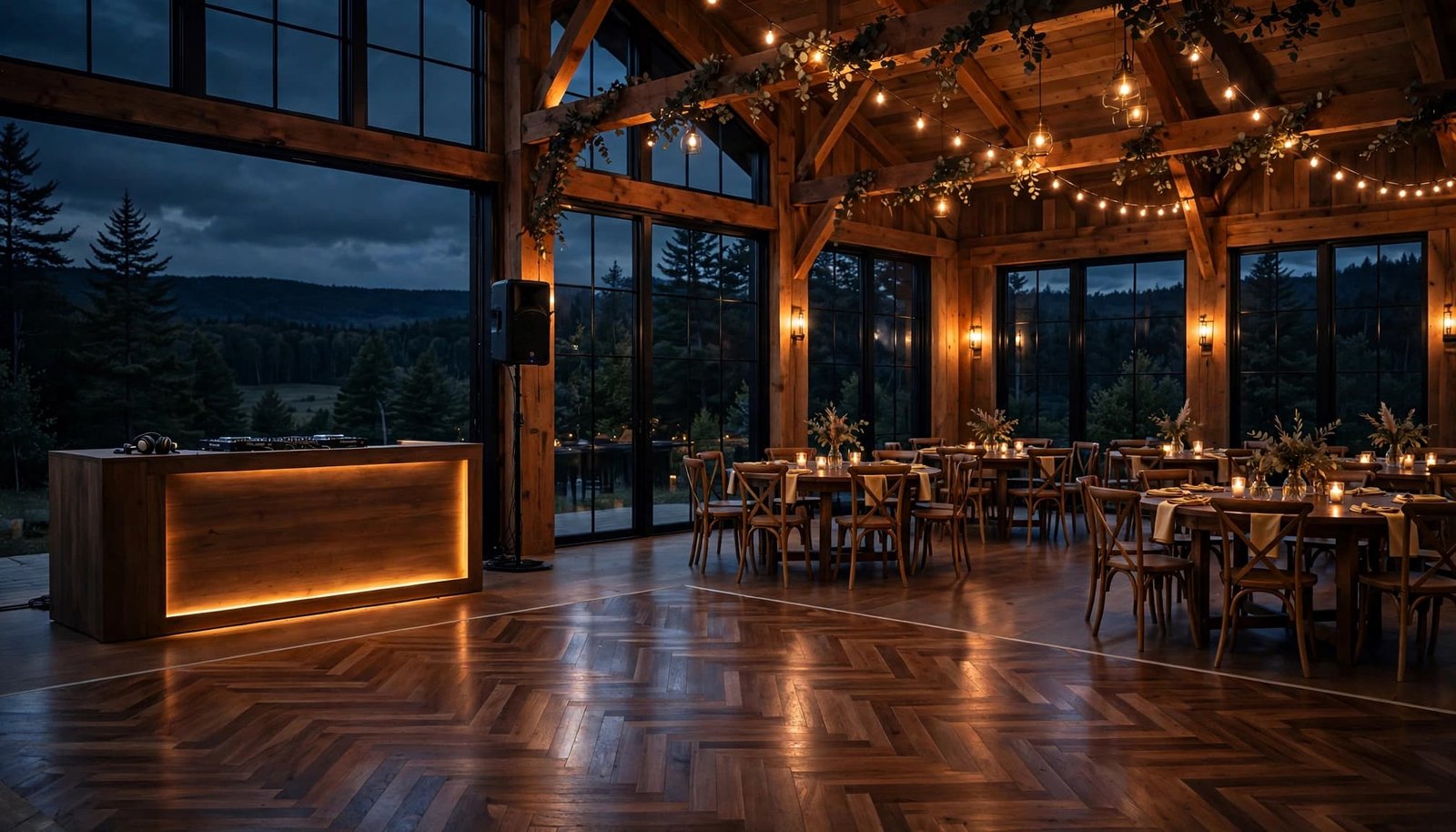
Local Rules Matter More Than a Statewide Assumption
New Hampshire towns and cities may address excessive or unnecessary noise through local noise ordinances. Municipal code controls public enforcement, so rules in Manchester, Concord, Rye, or Woodstock may not apply elsewhere.
A venue contract can impose stricter private-event requirements than municipal code. A permit or venue approval may also apply, even without a wedding-specific rule in the code.
Many general guides mention quiet hours around 10:00 p.m. to 7:00 a.m., but that window is only a general reference. The general quiet-hours guidance offers background, not controlling law.
Ask the local clerk, code-enforcement office, or designated municipal contact how amplified sound, permits, and enforcement apply to the specific property.
Do not assume that an 11:00 p.m. reception end time means amplified dancing can continue until 11:00 p.m. The sound cutoff may come earlier.
Outdoor Receptions Have More Moving Parts
A ballroom contains sound. An open tent, barn field, lakeside lawn, or mountain property does not. Wind can carry music farther than expected, while uneven terrain and guest spacing can make close-range sound feel louder than it needs to be.
Outdoor sound also needs more than a larger speaker. It needs thoughtful placement, elevated coverage, clear microphones, power planning, and a DJ who can make practical adjustments as the evening changes.
A reception can feel energetic at a controlled volume when guests hear the music clearly across the dance floor instead of only near the speakers.
Local Noise Rules Vary by Town
The rules vary by municipality. Couples should check the code for the town where the venue is located, not where they live or where vendors are based.
Manchester Has Rules for Outdoor Amplified Sound
Manchester’s ordinance shows why couples should ask direct questions. Outdoor venues face a 10:00 p.m. curfew for amplified sound or speech above 60 dBA. Sound above that threshold requires a City Clerk noise permit.
The ordinance also sets a permitted decibel level of 100 dBA when measured 100 feet from the source. These figures are local ordinance requirements, not statewide standards. The City Clerk can answer permit questions, while city officials handle potential violations.
Rye Uses a Property-Line Standard
Rye takes a different approach. Between 11:00 p.m. and 7:00 a.m., music or other sound clearly audible at the property line can be unlawful. The ordinance lists civil penalties of $100 for a first offense and $500 for later offenses within 24 months.
For weddings near homes, cottages, or a shoreline, speaker direction and reception timing matter. A property line measurement can differ significantly from the volume next to the DJ booth, so couples should ask town officials how complaints are handled.
Woodstock Uses Day and Night Decibel Limits
Woodstock’s ordinance sets a daytime decibel level of 65 dB from 7:00 a.m. to 10:00 p.m., then 55 dB from 10:00 p.m. to 7:00 a.m. The measurement is taken at the property line or receiving premises, not beside the speakers. The ordinance identifies unreasonably loud amplified music as a concern.
Other towns may use different limits, hours, or general nuisance language. Start with the Concord Code of Ordinances if your venue is in Concord, then confirm the current rule with venue management or the appropriate municipal office.
Questions to Ask Your Venue Before Booking
A beautiful venue can have strict rules that aren’t obvious during a tour. Ask for sound policies in writing before you sign, especially for an outdoor ceremony, cocktail hour, or late night dance floor.

Confirm the Real Music Cutoff
Ask when amplified music must end, not only when guests must leave. The venue’s cutoff may be earlier than the town’s maximum allowed time. Some venues allow quiet background music afterward, while others require all speakers and microphones to be off.
Ask whether the venue’s rules are private policies or part of a municipal requirement. Confirm which local office can verify the requirement and who responds if officials raise an enforcement concern.
Also ask who obtains any required permit. The answer shouldn’t be guessed during the final week of planning. The venue may manage the process, or it may place responsibility on the couple.
Ask About the Property, Not Only the Room
The event space is only one part of the sound plan. Ask how the venue handles sound reaching nearby homes, guest lodging, roads, patios, and ceremony sites. Discuss what happens if nearby residents become noisy neighbors.
A few useful questions include:
- Does the town require a permit, and which local office confirms that requirement?
- Does the venue have written rules for outdoor amplified sound?
- Are sound measurements taken at the property line or at a receiving premises?
- Can the DJ perform a pre event sound check before guests arrive?
- Who controls volume changes during the reception?
- Are subwoofers or outdoor microphones restricted?
- Does the venue require a specific end time for outdoor dancing?
- Who responds if officials or venue management require the volume to be reduced?
- Is there an indoor backup space if weather or sound conditions change?
A neighbor’s informal approval doesn’t override an ordinance, permit condition, or contract. Clear answers help you match the entertainment plan to the venue instead of trying to force the venue to fit the plan.
What a Wedding DJ Can Do to Keep Sound Balanced
A DJ’s role is more than selecting music. Professional sound management includes choosing suitable equipment, placing it carefully, and performing a sound check before guests arrive. The venue and local officials, not the DJ alone, confirm permits, enforceable limits, and required cutoffs.
Use Placement Instead of Excess Volume
A well-placed sound system gives more guests a clear experience at a lower overall level. Speakers should cover the dance floor and key guest areas without pointing toward neighboring properties whenever the layout allows.
Barns can build up low-end sound. Tents can shift sound when sidewalls are lowered. Outdoor ceremonies contend with wind and distance. These conditions call for a tailored setup, careful bass management, and a lower-impact system.
A DJ can also prepare indoor or reduced-volume contingencies when weather, venue rules, or nearby activity changes the plan. Couples can ask how the DJ will coordinate with the venue manager if sound needs to be adjusted.
For couples who need ceremony audio, reception music, lighting, and MC support, New Hampshire wedding DJ services can be planned around the venue’s layout, schedule, and sound expectations.
During booking, ask what equipment suits the room or tent and how volume is monitored. Ask how announcements differ from dance music. Also ask how the DJ handles a venue-mandated reduction.
Build Volume Changes Into the Timeline
Dinner music should support conversation. Toasts need a lower music bed and clear microphone levels. Once formalities end, the dance floor can build energy without making the entire property feel louder than necessary.
Share your must-play list, do-not-play list, preferred genres, and important cultural traditions early. Then give your DJ room to read the crowd and make smart choices as the reception develops. Good pacing protects the experience as much as good song selection.
What Happens if There Is a Noise Complaint?
Noise complaints do not have to ruin the evening. The response should be calm, respectful, and immediate. The venue manager and DJ should know who can make decisions if noisy neighbors, staff members, or local officials raise a concern.
Lower the Sound and Identify the Issue
The first step is simple: reduce the volume and identify the source. Excessive noise may come from music level, bass, speaker direction, an open door, outdoor announcements, or a specific part of the property.
A professional DJ can adjust the mix, reposition a speaker when practical, reduce low frequencies, or move the focus indoors. A same-night volume adjustment is preferable to escalating neighbor disputes.
Keep a Clear Record if Officials Are Involved
If noise complaints continue, police or municipal staff arrive, cooperate and follow their direction. Enforcement may involve venue management, a municipal office, or police, depending on the town and circumstances. A complaint does not automatically establish a legal violation.
The venue should record the time, location, reported concern, requested change, person who gave the direction, and action taken. This written record helps the venue resolve the event promptly, but it isn’t a substitute for legal advice.
Couples shouldn’t rely on informal approval from a neighbor if a noise ordinance or venue rule says otherwise. A written venue policy and a well-planned sound setup are far more dependable.
Key Takeaways for Couples and Wedding Teams
The best reception sound plan is clear, realistic, and built around your actual venue.
- Check the town or city code where the wedding takes place. Noise rules vary across New Hampshire.
- Review the venue contract for amplified sound cutoffs, outdoor music limits, and other site requirements.
- Confirm who handles permits, and ask whether the couple, venue, or event team is responsible.
- Verify current requirements with the venue and appropriate municipal office before relying on a quoted cutoff, decibel measurement, or permit assumption.
- Plan speaker placement around guests and nearby properties, especially at tents, barns, lakeside sites, and rural venues.
- Choose a DJ who can manage music, microphones, announcements, and sound levels throughout the evening.
- Keep the timeline flexible enough to move dancing indoors or lower the volume if conditions require it.
This article offers general planning information, not legal advice.
Professional DJ Entertainment Since 1999, DJ Steve Neff Entertainment LLC brings DJ, MC, sound, lighting, and event-flow planning together for celebrations across New Hampshire.
Frequently Asked Questions About Wedding Noise Rules
Are noisy wedding guests or DJs breaking the law?
Not automatically. A reception can become a legal issue when it violates a local noise ordinance, permit condition, venue rule, or general nuisance standard. Excessive noise, late amplified music, and sound reaching neighboring properties are common concerns.
Decibel limits, audible-at-the-boundary standards, permits, and enforcement vary by municipality. Check the current municipal code and venue contract before planning outdoor dancing or a late reception.
What quiet hours should couples expect?
Many towns set nighttime limits, often beginning around 10:00 p.m. Some start later or apply different standards on weekends. Hudson, for example, has rules covering certain weekday evening periods and all day Sunday under its local noise ordinance.
Hudson’s schedule doesn’t authorize the same timing at another venue. Confirm the current local standard in writing through official municipal sources.
Can a DJ keep the party going after amplified music ends?
Sometimes, but only if the venue and applicable rules allow it. A lower-volume indoor gathering, quiet background music, or headphones-based option may be possible. Private-event requirements can be stricter than municipal minimums.
Discuss the plan before the wedding day, including who can require changes if music must be reduced or stopped. Ask the venue, DJ, and municipal office who confirms any permit, cutoff time, measurement method, and enforcement contact.
Should we tell our DJ about restrictions before signing?
Yes. Share the venue name, municipality, ceremony location, reception layout, planned end time, and contract language about sound. A DJ can then quote suitable equipment and prepare for the space.
When you are ready to discuss your schedule and venue details, you can request a personalized DJ package built around your wedding plans.
These answers are general information, not legal advice. For current legal requirements, consult the official municipal code and contact the appropriate town or city office.
A Memorable Reception Starts With a Practical Plan
Your wedding should feel personal, polished, and full of the music your guests love. Rules vary by location, so your plans should respect the venue, surrounding community, and after-dark requirements.
Before booking or finalizing the timeline, verify the current municipal code, venue policy, permit requirements, and event cutoff with the appropriate town or city. Use this overview of New Hampshire noise restrictions as general planning information, not legal advice, then work with your DJ to create a celebration that sounds as good as it feels.