A beautiful mountain view deserves a ceremony where every guest can hear the vows. Hiring a DJ for a mountain wedding means planning dependable sound, safe equipment access, and clear coordination before the first song plays.
Hiring a DJ for a mountain wedding, particularly in New Hampshire venues, demands meticulous logistical planning to ensure dependable sound, safe equipment access, and clear coordination. This is due to unique challenges like remote ceremony sites, variable weather, and separate reception locations. Essential steps include confirming load-in access, power, sound restrictions, and weather coverage, along with understanding specific venue requirements, such as those for NH State Parks. DJs must also plan distinct audio setups for the ceremony, cocktail hour, and reception to ensure clear sound for all guests.
Remote ceremony spaces, changing weather, and separate reception locations all affect the wedding entertainment plan. Early preparation keeps those details manageable. Your DJ should understand how the venue works, how guests will move, and what happens if conditions change.
Start with the setting, then build the music and reception plan around it.
What are the key takeaways for planning a mountain wedding DJ?
- Confirm load-in access, power, sound restrictions, and weather coverage before comparing DJ proposals.
- Plan audio for the ceremony, cocktail hour, and reception separately, even when everything happens at one property.
- Request written details about equipment, backup arrangements, travel charges, MC support, and setup responsibilities.
The strongest proposal connects these practical details to your celebration. Clear microphones, personalized music, and confident hosting work together when the logistics are settled early.
Confirm Access With Your Mountain Wedding DJ
Venue familiarity is helpful, but every booking still needs a current access plan. For this wedding venue, send your DJ the property address, event locations, guest count, and venue coordinator’s contact information.
Review the Equipment Route
Confirm where the DJ can unload, where vehicles must park afterward, and how equipment reaches each performance area. Stairs, gravel paths, steep grades, and narrow doorways can affect staffing and setup time.
For a ceremony reached by resort transportation, ask whether equipment can travel that way and who approves it. Guest transportation arrangements don’t automatically cover vendor equipment.
Also confirm the earliest setup time and latest breakdown time. A generous performance window doesn’t help if access begins too late for a complete sound check.
Check Permissions and Paperwork
Ask about amplified sound limits, outdoor music cutoffs, generator approval, and any insurance documentation the venue requires. Obtain these details before signing the entertainment contract.
For weddings on state park property, review NH State Parks’ special-use permit guidance and contact the specific park about availability and requirements.
Permission to visit a scenic location doesn’t establish permission to host an amplified event. Confirm who handles applications and how approvals affect the sound, lighting, and layout plan.
Plan Sound for Every Wedding Location
A wedding ceremony at an overlook and a wedding reception in a lodge may each need separate audio coverage, as may a cocktail terrace. Ask how each space will be ready before guests arrive.
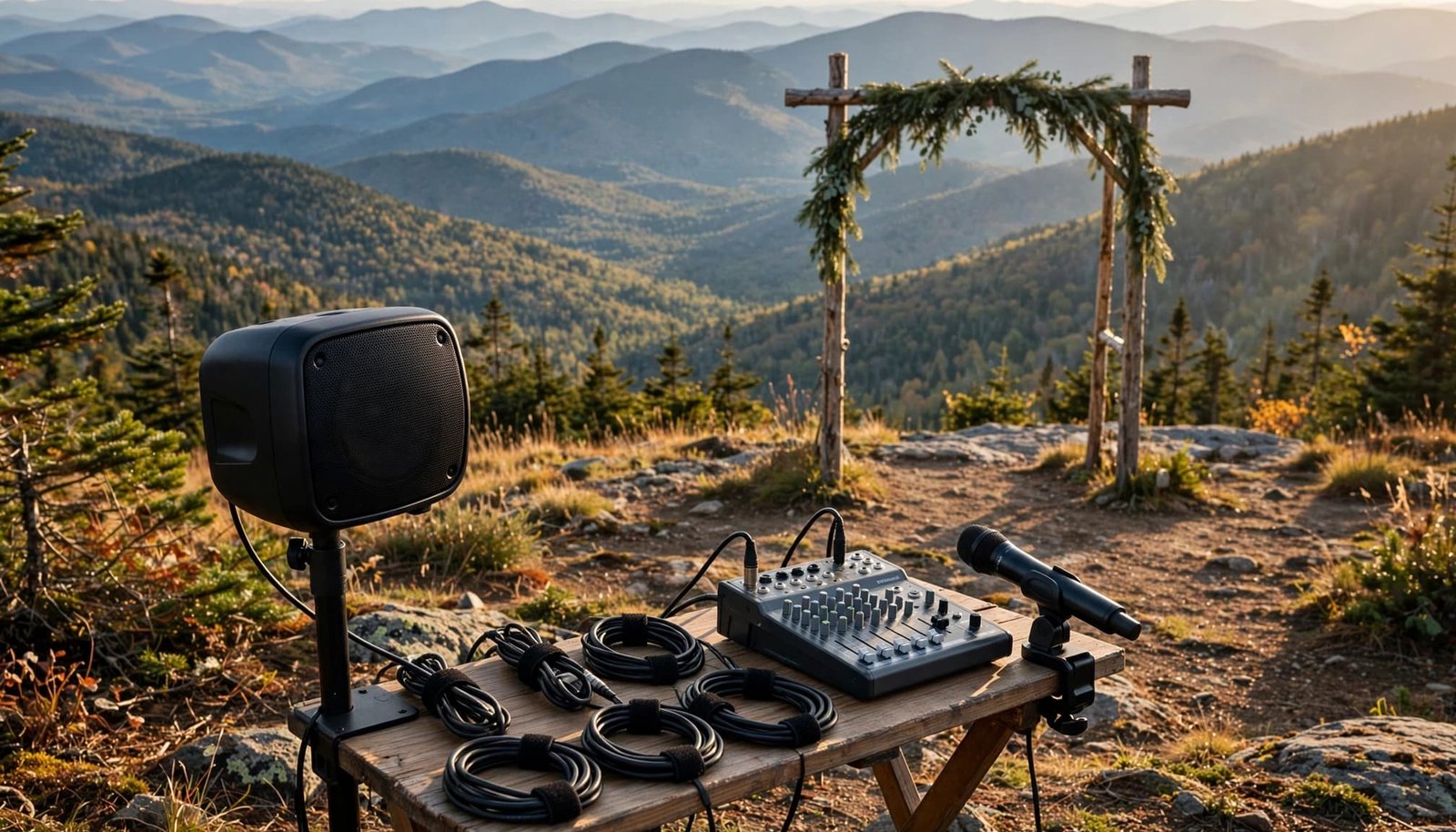
Keep Ceremony Words Clear
Outdoor sound needs thoughtful speaker placement, suitable microphones, and protection against wind noise. Turning everything louder can leave front-row guests uncomfortable while speech remains unclear farther back.
Discuss microphones for the officiant, vows, and any readings. A lapel microphone on the officiant doesn’t automatically capture both partners equally well.
Your DJ should check for professional sound across the seating area. They should test wireless systems in their actual positions and confirm procession cues with the ceremony coordinator.
Test ceremony audio from the last guest row, not only beside the sound equipment.
Cover Cocktails and Reception Comfortably
Cocktail hour usually needs comfortable background music rather than dance-floor volume. Confirm whether guests will be indoors, outdoors, or spread across adjoining areas.
At the reception, sound should match the room and guest layout. A timber lodge, barn, and open-sided tent each need different placement and volume decisions.
Ask whether the DJ provides additional systems or moves equipment between spaces. Moving the only sound system during guest arrivals can create an avoidable service gap.
Establish Reliable Power and Backup Coverage
Power planning belongs in the proposal, not in a wedding-day search for an outlet. The venue and DJ should agree on the supply, cable route, and contingency arrangements.
Verify Outlets and Cable Routes
Have the venue identify approved outlets near each setup location. Your DJ should share the audio equipment requirements. The venue or a qualified electrical provider can confirm adequate capacity.
Ask whether catering appliances, heaters, or other vendors share the available power. An outlet’s location alone doesn’t establish that it can support the planned equipment.
Cables should stay clear of aisles, doors, and guest pathways. Where a crossing is unavoidable, arrange an approved cable ramp; tape alone isn’t suitable protection for every busy walkway.
Clarify Battery and Generator Responsibilities
Battery-powered audio can be useful for a remote ceremony, but runtime depends on the equipment, volume, and operating conditions. Confirm coverage for setup testing, guest arrival, and the complete ceremony.
If power generators are needed, identify who supplies them, operates them, and approves their placement. Follow U.S. Fire Administration generator safety guidance, including outdoor operation away from doors, windows, and vents.
Ask about backup speakers, microphones, playback devices, and power options separately. A spare microphone won’t solve a failed power supply.
Make the Weather Plan Actionable
For a destination wedding in New Hampshire’s mountains, changing weather affects guest comfort, equipment protection, and travel timing. A useful backup plan identifies a location, a decision-maker, and enough time to change setups safely.
Confirm the covered ceremony option and whether it has suitable power and seating. Ask how long an audio relocation takes and whether a second setup would be more practical.
The Mount Washington Observatory’s higher-summits forecast is useful context for high-elevation conditions. It isn’t a substitute for the forecast at your venue’s actual elevation and location.
Agree on who makes the weather decision and when vendors receive it. Rain, unsafe wind, or thunderstorms shouldn’t leave the DJ, planner, and venue working from different instructions.
A tent isn’t automatically a complete safety solution. Confirm the venue’s shelter procedures and equipment restrictions rather than assuming fabric coverage makes outdoor operation appropriate.
For winter celebrations, discuss road access, snow removal, and additional arrival time. Keep essential audio equipment staged where a late change won’t block guests or staff.
Coordinate Guest Movement, MC Cues, and Lighting
A professional DJ and event MC support the schedule with warm, clear announcements. They handle timeline coordination with your planner or venue coordinator, since travel between mountain spaces can take longer than expected.
Give Vendors One Approved Timeline
Your planner or venue coordinator should maintain the master schedule. The DJ handles agreed music cues and announcements in coordination with the catering team, photographer, and other vendors.
Include guest movement, transportation departures, introductions, dinner, speeches, special dances, musical transitions, and the venue’s hard end time. Allow realistic transition time when guests must walk or board transportation.
Review the wedding MC announcement order before the final planning meeting. Confirm names, pronunciation, and who gives the signal when each moment is ready.
Match Lighting to the Reception Space
Uplighting can add warmth to a lodge or tent, while lighting around the dance floor helps establish the party atmosphere. Choose reception lighting that suits your decor, guest comfort, and venue rules.
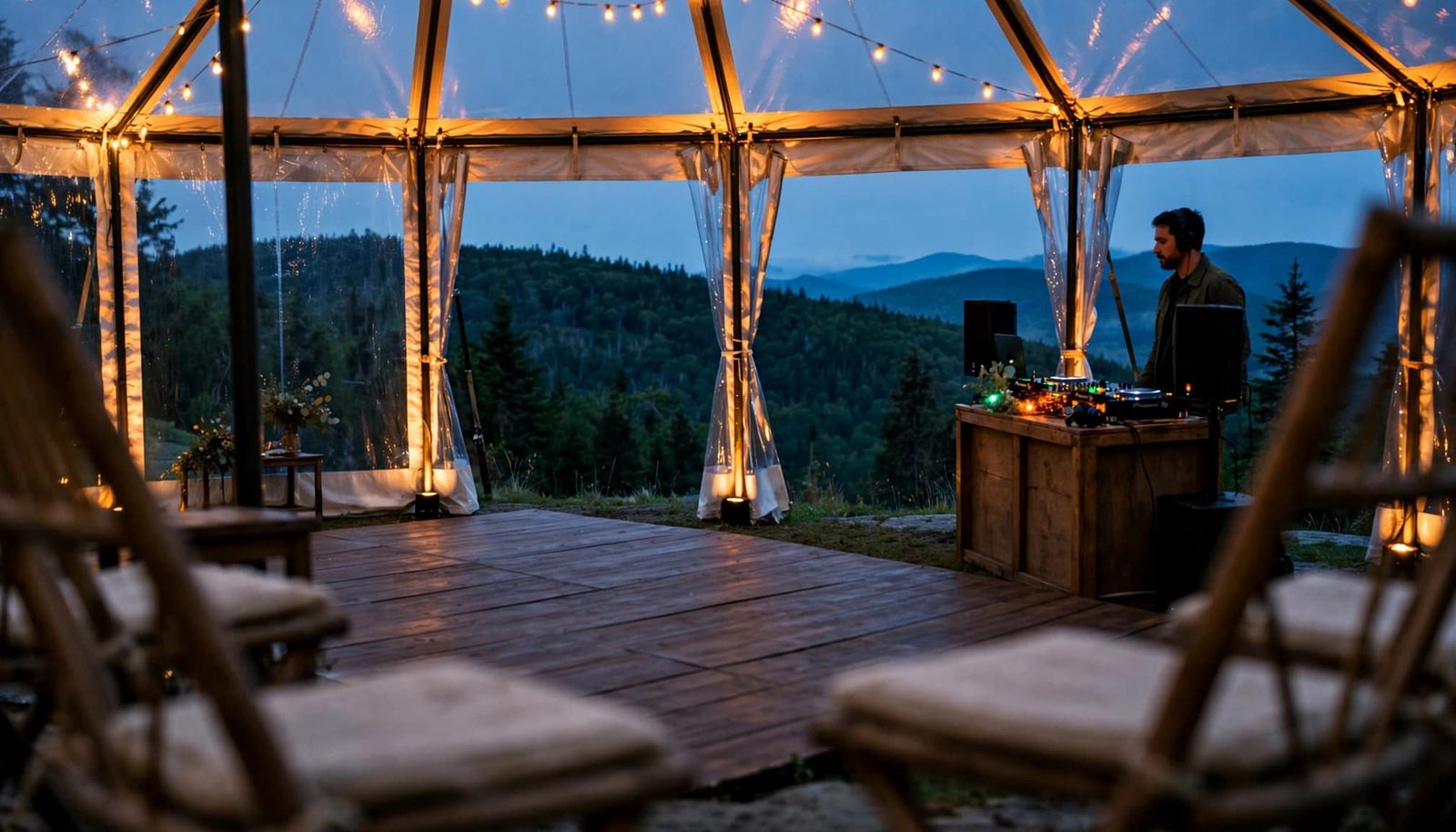
Confirm approved fixture locations and power needs. Battery fixtures still require secure placement and enough operating time.
DJ lighting also has a different purpose from safety lighting. The venue or rental team should provide appropriate illumination for pathways, exits, stairs, and parking areas.
Prepare Personalized Music Without Relying on Reception
Your music plan should reflect your guests, traditions, and preferred atmosphere. Share must-play songs, do-not-play selections, cultural favorites, and clean or age-appropriate version preferences. Discuss playlist curation and custom music to shape the overall experience.
Discuss the music genres you enjoy, including pop, country, hip-hop, EDM, jazz, and familiar classics. Share how much dance music you want. Ask how the DJ handles guest requests and adjusts the evening’s energy to keep the dance floor moving without ignoring your preferences.
Provide exact versions for the processional, first dance, parent dances, and other important cues. Different edits can change an entrance or shorten a carefully planned dance.
Reliable playback shouldn’t depend on mountain cellular service or venue Wi-Fi. Ask how the music library is prepared for offline playback and how the DJ handles a playback-device failure.
DJ Steve Neff Entertainment LLC’s New Hampshire wedding DJ services include music planning, MC support, and sound and lighting options. Confirm which services are included in your particular proposal.
Leave room for professional crowd reading. A clear set of priorities gives the DJ direction without locking every minute into a fixed playlist.
Compare Complete Quotes and Book With Clear Expectations
A mountain wedding DJ quote should describe the work required at your venue. Compare the full wedding entertainment scope, preparation, and total price, since proposals may cover different services.
Ceremony audio, cocktail hour music, reception entertainment, wireless microphones, MC services, and lighting may be bundled or priced separately. Don’t assume a standard wedding package includes every location.
Travel charges can reflect driving distance, early arrival, lodging, difficult equipment access, or additional staffing. Ask which expenses are included and which require separate approval.
Confirm setup and breakdown, performance hours, overtime terms, backup arrangements, and procedures for schedule changes. Any generator or specialty transportation requirement should have an assigned provider and written cost.
Check availability once your date and venue are confirmed. There isn’t one booking deadline that suits every season, property, or provider.
For a destination wedding at remote venues, ask how consultations, music selections, and timeline revisions are managed from afar. Photos, floor plans, and a short video walkthrough can help clarify access without requiring another trip.
DJ Steve Neff Entertainment LLC has provided professional DJ entertainment since 1999. The business began in Maine and is now based in Concord, New Hampshire, operated by Steve Neff and business partner Jon Turgeon.
When requesting a personalized wedding DJ proposal, provide the venue layout and logistics alongside your musical preferences. That gives the entertainment team a stronger foundation for accurate planning.
What are the frequently asked questions about mountain wedding DJs?
When should I book a mountain wedding DJ?
Book once your date and venue are confirmed, then discuss access, sound requirements, and the event schedule early. Availability varies by season, venue, and provider, so ask about your date rather than relying on a fixed booking deadline.
What should a mountain wedding DJ quote include?
Ask for a written breakdown of ceremony, cocktail hour, and reception coverage, along with equipment, MC support, setup, and breakdown. Confirm travel charges, overtime terms, backup arrangements, and any additional staffing or transportation costs.
How can we prepare for bad weather at an outdoor ceremony?
Agree on a covered backup location, who makes the weather decision, and when vendors will be notified. Confirm that the alternate space has suitable power and that there is enough time to move or reset the audio equipment safely.
Will the DJ need separate sound systems for each wedding location?
That depends on the distance between spaces, the schedule, and whether guests will need music or announcements in each area. Ask whether the DJ will provide additional systems or move equipment, and how they will prevent gaps in coverage during transitions.
How does a prepared plan ensure your mountain wedding celebration takes center stage?
A memorable mountain wedding starts with clear responsibilities: approved access, dependable power, suitable sound coverage, and a weather plan everyone understands. Wedding entertainment shaped by personalized music and polished hosting can then support the celebration without last-minute logistical distractions.
Before booking, ask your venue and DJ to confirm those details in writing. The mountain view sets the scene; professional preparation helps every meaningful word and musical moment reach your guests.