A great homecoming dance feels easy for students because someone handled the hard parts early. homecoming dance planning brings creativity together with responsibilities such as spending, contracts, safety, accessibility, and preparation for the unexpected.
For student councils, the event is practical school event planning. The goal is not the most expensive dance, but a welcoming night with good energy and reliable coordination.
Start with a strong foundation, then build the music, homecoming theme, and traditions around it.
Key Takeaways
- Start homecoming dance planning early with a clear calendar, defined committee roles, approval process, and shared planning document.
- Build the budget around realistic attendance, complete vendor quotes, safety needs, and a contingency reserve before choosing a theme or booking services.
- Choose a welcoming, accessible homecoming theme that works with the venue, supports multiple photo opportunities, and does not exclude students.
- Put ticket rules, safety protocols, chaperone coverage, emergency procedures, and accessibility into the event design from the beginning.
- Use a simple day-of plan, clear student and adult leads, and a post-event debrief to keep the night organized and make future planning easier.
Homecoming Dance Planning Starts With a Clear Calendar
Begin planning at the start of the school year whenever possible. If that is not realistic, allow at least eight to 12 weeks before the dance. Popular DJs, photographers, venues, transportation providers, and rental companies may already be booked during fall weekends.
Your first meeting should confirm the non-negotiables: the proposed date, event hours, location, estimated attendance, adviser oversight, school approval process, and initial safety protocols. Homecoming often includes a football game, spirit week, parade, alumni events, and a dance. The calendar can become crowded fast, which makes coordination essential to school event planning.
A practical homecoming planning committee includes student council officers, student volunteers, a faculty advisor, school administration, parent or booster volunteers, custodial or facilities staff, and any school safety personnel required by policy. Students should lead the ideas and student engagement. Adults should handle approvals, spending authority, contracts, and policy decisions.

Give every person a defined lane. A committee where everyone “helps with decorations” usually creates duplicate work, missed details, and last-minute confusion.
| Planning phase | Main decisions | Best time to complete it |
|---|---|---|
| Foundation | Date, venue, adviser approval, committee roles, working budget | 12 to 10 weeks out |
| Booking | DJ, photographer, rentals, security, food, ticketing software | 10 to 7 weeks out |
| Promotion | Theme reveal, ticket launch, spirit week details, volunteer sign-ups | 7 to 4 weeks out |
| Final checks | Floor plan, music review, chaperone assignments, emergency plan | 3 weeks to event day |
| Closeout | Vendor payments, inventory, feedback, photo archive, final budget | Within one week after |
Keep one shared planning document that records decisions, vendor contacts, payment deadlines, purchase approvals, volunteer shifts, and safety protocols. Use it as the basis for the day-of plan, including event-day procedures. A shared spreadsheet works well for many schools. Larger districts may require an approved purchasing platform or school-managed account.
Set a weekly meeting rhythm, even if it only lasts 20 minutes. Start with what is finished, what needs approval, and what could delay the event. That approach keeps the work clear without turning every meeting into a long discussion.
A contract is not finished when the committee or vendor lead likes a vendor. It is finished when the required school approval and signatures are in place.
For more staff-centered guidance on the early stages, this homecoming dance guide for school staff offers a useful reminder that logistics and student experience must be planned together.
Build a Budget Before You Fall in Love With a Theme
A budget is not the least exciting part of homecoming dance planning. It gives the committee permission to make good decisions. Without a spending limit, a simple theme can become a rushed list of purchases. That can drain funds meant for music, safety, or future events.
Ask the faculty advisor or activities office for three numbers before contacting vendors: available funds, expected ticket income, and the maximum amount the school can approve without extra authorization. Then build the budget around realistic attendance, not total school enrollment.
For example, if 250 tickets is a reasonable estimate, base your income projection on 250 tickets. Don’t set prices around the hope that every senior will attend. A smaller attendance estimate gives you a safer starting point.
Use a budget framework that matches actual invoices and receipts.
| Budget category | What to include | Planning note |
|---|---|---|
| Entertainment | DJ or band, sound system, lighting, microphone needs | Request event hours, setup time, and overtime terms in writing. |
| Venue and operations | Rental fee, custodial time, tables, chairs, power access | A school gym may still have staffing and cleanup costs. |
| Decor and activities | Backdrop, balloons, lighting, photo booth, props | Choose reusable items when possible. |
| Safety and staffing | Security, chaperone meals, first-aid supplies, radios | Follow district requirements before setting this amount. |
| Hospitality | Water, snacks, allergy-aware options, vendor meals | Keep water easy to find and free for students. |
| Contingency | Last-minute replacement, weather adjustment, supply shortage | Hold back a portion instead of spending every dollar. |
Reserve part of the budget for a contingency plan covering weather changes, replacement purchases, or supply shortages. Reusable decor and careful quote comparison can serve as practical cost-cutting strategies without reducing safety or sound quality.
Request at least two or three vendor quotes when school policy calls for comparison. Each quote should show the total price, deposit, cancellation policy, insurance requirements, arrival time, setup needs, and exactly what equipment is included.
Compare complete entertainment options, not just the headline price. A low quote can become expensive if it does not include speakers, lighting, a microphone, or enough setup time. A professional DJ who can read the room, make clear announcements, and bring dependable sound equipment may cost more than a basic playlist setup. The difference shows up when the schedule changes, the crowd needs direction, or a technical issue needs a quick fix.
Approve contracts, vendor certificates, and promotional materials early. A poster with an unapproved theme or a vendor agreement signed by the wrong person creates unnecessary problems. The school dance planning guidance from TouchWall also emphasizes the connection between budget control, venue logistics, safety, and entertainment quality.
Choose a Homecoming Theme Students Can Actually Experience
Homecoming dance planning becomes more focused when the chosen visual identity guides decorations, music selection, dress suggestions, photo opportunities, social media promotion, and the overall atmosphere. A good homecoming theme should also fit the room, budget, and school community.
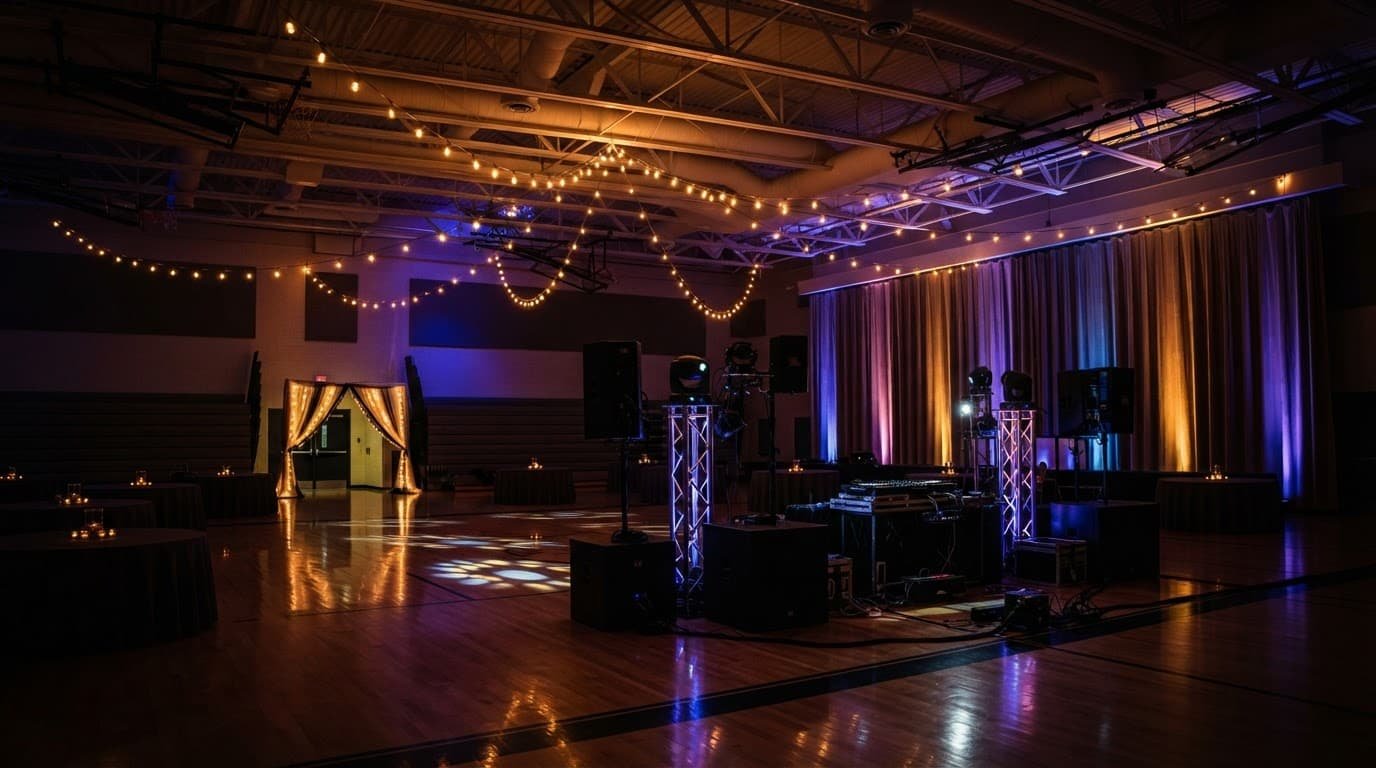
Themes with flexible visuals often work best. A “Midnight Garden” can use soft lighting, greenery, stars, and floral details. A “Disco Nights” theme can use silver, bold colors, a mirrored backdrop, and an upbeat playlist. “City Lights” works with skyline silhouettes, LED uplighting, and a polished photo area. These ideas can look impressive in a cafeteria, gym, ballroom, or community venue without requiring elaborate construction.
Avoid choosing a theme that excludes students or depends on expensive costumes. Give the dance a clear visual identity, but keep attendance open to students who want to dress formally, casually, creatively, or somewhere in between within school guidelines.
Accessibility belongs in the decoration strategy from the beginning. Keep aisles open for mobility devices. Do not block exits with photo backdrops or balloon arches. Use lighting that creates atmosphere without making walkways unsafe. Provide seating away from heavy speakers for students who need a quieter place to take a break.
A photo booth can be a popular feature, but it should not become the only place where students can make memories. Build multiple photo-friendly areas, such as a themed entrance, a simple backdrop, and good lighting near the dance floor. That gives students room to move and reduces a long line at one attraction.
Sell Tickets With Clear Rules and Fair Access
Ticket sales should begin after the date, price, location, and eligibility rules are approved, and proven school dance ticket sales ideas can help you turn early interest into a fuller floor. Students need one clear source of truth, so coordinate the launch with spirit week to build school spirit. Use the same message across school channels, announcements, printed materials, and digital signage when available.
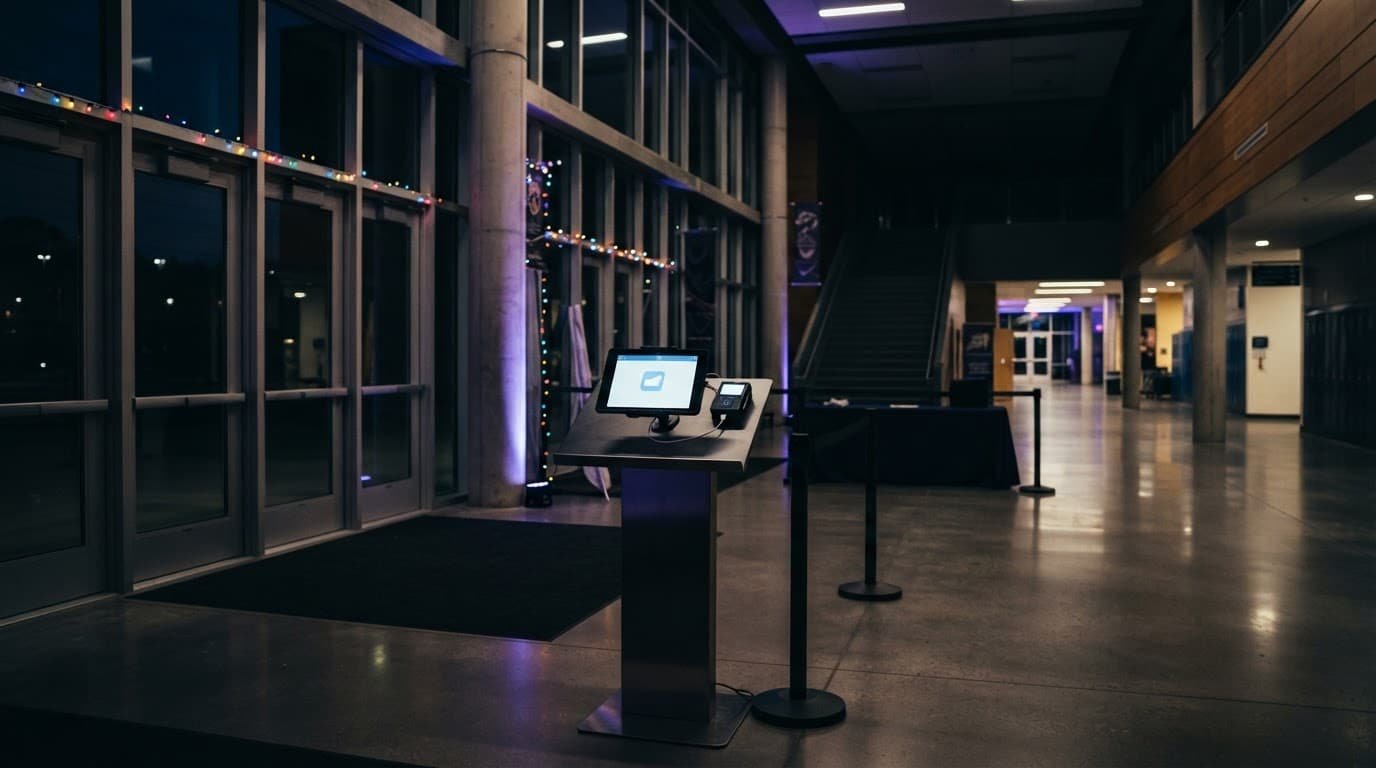
Digital ticketing can reduce cash handling and make attendance counts easier. School-approved ticketing software may also help track names, permissions, guest forms, and payment status. Keep an accessible in-person option for students who cannot use online payment or need help with the process.
State the rules before tickets go on sale:
- Share the event hours, ticket price, refund policy, guest policies, dress expectations, and whether students may leave early.
- Explain what identification is required at check-in and whether outside guests need pre-approval.
- Give a clear deadline for guest forms, ticket sales, and name corrections.
- Use school-approved channels for any student data, photos, or digital memory boards.
If ticket sales need to support the budget, build fundraising around a specific gap rather than a vague goal. A restaurant night, school merchandise sale, community sponsorship, car wash, or concession stand can help offset decor and activity costs. Offer lower-cost ticket windows if your school allows it, then increase ticket pricing modestly closer to the event. This rewards early planning and gives the committee a clearer attendance count.
Student council does not need to fund every detail through ticket sales. The high school dance fundraising ideas from GigSalad include committee building, budgeting, and fundraising approaches that can be adapted to your school’s policies and community support.
Put Safety Protocols Into the Event Design
Safety protocols work best when they are part of the event design, not a speech given five minutes before doors open. As part of homecoming dance planning, meet with the adviser, administrator, school resource officer, security team, and facilities staff well before the dance. Treat this review as part of school event planning, so safety is built into the event rather than added at the door. Review venue logistics, including the building layout, entry doors, exit routes, restrooms, parking, medical needs, and who has authority to make decisions during the event.
Chaperone coverage has no one-size-fits-all ratio. School and district policy comes first. The right coverage depends on the venue size, attendance, floor plan, student age, guest policy, and number of separate spaces. Place adults where they can see entry points, exits, hallways, restrooms, quieter seating areas, and the dance floor without hovering over students.
Build the adult briefing into the day-of plan. Cover check-in procedures, prohibited items, how to contact the lead administrator, how to report a concern, what to do if a student needs medical help, and when doors will close. Give chaperones a simple venue map and a contact method that works in a loud room.
A safe entrance process may include student ID checks, ticket verification, approved guest lists, bag checks if school policy permits, and a clear re-entry rule. Be consistent. Selective enforcement invites arguments and makes students feel singled out.
Plan for common problems before they happen:
- If weather affects an outdoor arrival area, move check-in inside and communicate the change through school channels.
- If a vendor is delayed, identify who can make announcements and which activity can occupy students during the gap.
- If power or sound equipment fails, know who contacts facilities and whether the DJ has backup equipment.
- If a student needs support, designate a private, supervised area away from the crowd.
Alcohol, vaping, drugs, harassment, fighting, and unsafe behavior need a response plan that follows school policy. Student leaders should not be expected to manage these situations alone. Their role is to quickly alert the right adult and protect the event’s welcoming atmosphere.
Work With Your DJ to Keep Music Appropriate and the Floor Full
Music selection sets the pace of the night. It can bring students together, support the event’s atmosphere, and move the schedule naturally from the grand entrance to the final song. It can also create problems when the music plan is vague.
Meet with the DJ before the event and provide school expectations in writing. Discuss clean versions, language rules, songs to avoid, prohibited dance requests, special announcements, school traditions, and crowning details. Record approved requests, announcement cues, crowning details, and timing in the day-of plan. A professional entertainer should work within those boundaries while playing music students recognize.
Ask how the DJ handles requests. Some schools use a monitored form or another staff-approved process. Others allow students to ask directly, with the DJ screening every request. Either way, the DJ needs final authority to decline songs that violate policy, contain inappropriate lyrics, or shift the room in the wrong direction.
Share broad genre preferences instead of an impossible list of 150 songs. A balanced plan may include current clean Top 40, hip-hop, EDM, country, throwbacks, and school-appropriate singalongs. Let the DJ read the crowd and adjust. The song that fills the floor at 8:15 may not work at 10:30.
Ask about professional sound coverage, wireless microphones, backup equipment, lighting options, and setup time. Strong lighting can make a school gym feel special, while clear microphones keep announcements from getting lost. These details create a more organized, confident event for everyone involved.
Run the Night With a Simple Day-of Plan
By event day, homecoming dance planning should shift to coordination, communication, and student hospitality. Use the day-of plan instead of making major creative decisions.
Create a one-page event timeline for advisers, vendors, and lead volunteers. Include vendor arrival, setup access, entrances, decoration completion, staff check-in, and doors open. Add safety protocols, a contingency plan, featured moments, the final song, student exit, cleanup, and building lockup. Keep a printed copy available in case phones lose battery or service.
Assign one adult and one student lead for each major area: entrance, decorations, vendor coordination, student questions, photo area, cleanup, and social media. Student leaders can solve small issues quickly, but the faculty advisor should remain the central contact for policy concerns, emergencies, and vendor decisions.
In the final checks, confirm the music selection, trash bags, storage bins, removal of rented equipment, and a clear plan for reusable decorations. A room that looks beautiful at 10:00 p.m. still needs to be cleared responsibly after the final song.
Within a week, hold a short debrief. Compare actual spending with the budget, return borrowed materials, confirm every vendor invoice, export attendance or payment records from the ticketing software, and collect feedback from students and chaperones. Save approved photos, poster files, vendor contacts, floor plans, and final checklists as post-event documentation in a school-managed folder. This archive supports future school event planning. Next year’s student council will thank you.
The homecoming planning checklist from Anderson’s is also a helpful reference when reviewing final venue, vendor, safety, and student-involvement details.
Frequently Asked Questions
When should homecoming dance planning begin?
Begin at the start of the school year whenever possible. If that is not realistic, allow at least eight to 12 weeks so you have time to secure vendors, approvals, volunteers, and safety plans.
How should a school set a homecoming dance budget?
Start with available funds, expected ticket income, and the school’s approval limits. Base projections on realistic attendance, compare complete vendor quotes, and reserve part of the budget for unexpected costs.
What should be included in a homecoming dance safety plan?
Review entry procedures, exits, restrooms, parking, medical support, chaperone assignments, communication methods, and emergency responsibilities. Include plans for weather changes, vendor delays, equipment failures, unsafe behavior, and students who need a private support area.
How can a homecoming theme remain welcoming and accessible?
Choose a flexible visual identity that works with the venue and budget without requiring expensive costumes or formal clothing. Keep aisles and exits clear, provide seating away from heavy speakers, and create several photo-friendly areas instead of one crowded attraction.
What belongs in the day-of plan?
Include vendor arrival and setup, staff check-in, doors open, featured moments, safety procedures, the final song, student exit, cleanup, and building lockup. Assign adult and student leads for major areas and keep a printed copy available in case phones lose battery or service.
A Memorable Dance Is Built Before the Doors Open
The best homecoming dances don’t depend on one giant decoration or one viral song. They come from early approvals, clear budgeting, prepared adults, and engaged student leaders.
When homecoming dance planning centers on safety, inclusion, and reliable coordination, students can focus on what matters most. The right music selection helps them show up, have fun, and make memories with their school community.