A school gym can turn a great playlist into a loud blur in minutes. When staff search “fix echo school gym,” they usually need more than extra speakers. They need clear music, understandable announcements, controlled bass, and a setup that keeps students comfortable.
Hard surfaces reflect sound waves throughout the room. A school gym often serves as a multi-use room, so it needs a different plan from commercial gyms. For unusually wide spaces, line array speakers can help, but they don’t replace careful aiming or room improvements. The right approach balances a temporary dance-event setup with longer-term upgrades that fit the school’s budget and improve the room year-round.
Key Takeaways
- Start with the room: aim speakers toward the dance floor, avoid firing sound at walls, bleachers, or ceilings, and keep coverage focused rather than turning up the entire gym.
- Test speech, full-range music, and controlled bass before students arrive. Use conservative microphone gain, keep microphones behind the speakers, and adjust placement before relying on EQ or higher volume.
- Measure RT60 when possible to separate a temporary event setup from a lasting acoustic solution. Untreated gyms often have excessive reverberation that harms both music clarity and announcements.
- For permanent improvement, use properly placed acoustic wall panels, ceiling baffles, or clouds across the strongest reflective surfaces. Product ratings alone do not replace room-specific planning and before-and-after measurements.
- Coordinate the DJ, staff, and chaperones around volume limits, safety, communication, equipment checks, and monitoring as the room fills.
Why School Gyms Create So Much Echo
Gymnasiums are built for activity, not live music. Their large open volume gives sound waves room to travel, while the broad surface area of concrete block, glass trophy cases, polished wood, metal bleachers, and roof decking reflects those waves back.
The room keeps replaying the music
Echo is the obvious repeat you may hear after a clap or announcement. Reverberation is the lingering wash of sound reflections that stays in the room after the source stops. Dance music can sound muddy when kick drums, bass lines, vocals, and synths overlap with their own reflections.
An empty gym often sounds worse than a crowded dance. Students, coats, tables, and decorations absorb some sound energy once the event begins. That doesn’t mean the room is fixed, but it does mean the pre-event sound check shouldn’t be based on maximum volume.
Bass gathers in the wrong places
Low frequencies can build up near walls and corners. A subwoofer placed against a wall may make the nearest students feel overwhelmed while the middle of the dance floor still lacks clarity.
Don’t use bass-boosted tracks or a hard bass drop as a reason to raise the master volume. Test with a brief, moderate-level sample of varied, school-approved music before students enter. Listen for rattles, harshness, and booming bass before the event begins.
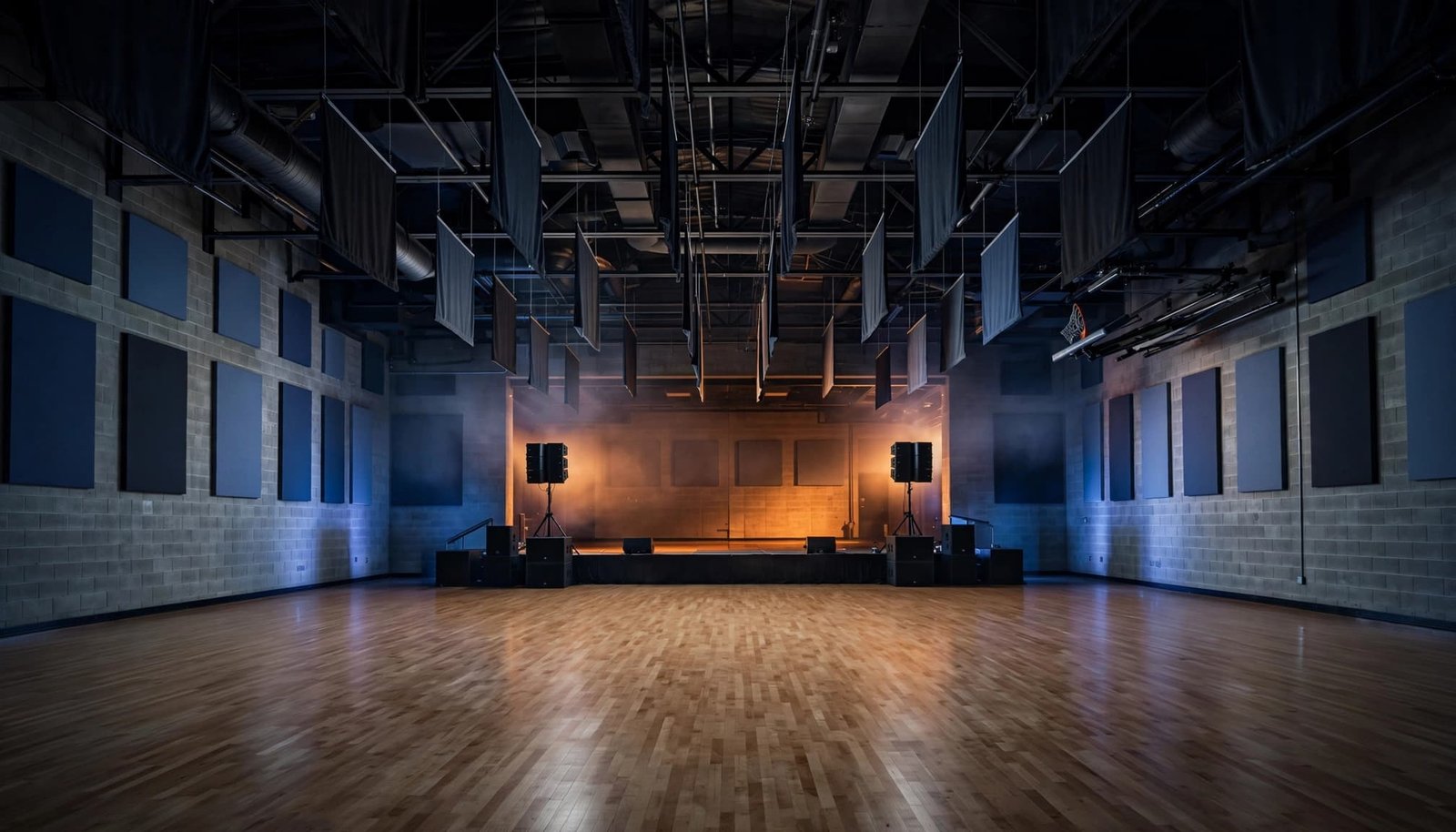
How to Fix Echo School Gym Problems Before the Dance
Temporary sound-system choices can’t remove reverberation from the building, but they can prevent the PA from sending more sound toward reflective surfaces. Good speaker placement creates better coverage at a lower volume.
Start with the gym, not the equipment
Walk the room before load-in. Clap your hands, speak at a normal announcement level, and listen near the dance floor, bleachers, rear wall, entrance, and staff area. Notice where speech starts to smear or your voice seems to linger overhead.
Then map the practical listening zones. The dance floor needs energy. The chaperone area needs manageable volume. Entrances, refreshment tables, medical support, and exits need clear access and usable communication.
Coordinate the DJ location, power access, room boundaries, approved volume level, and staff positions before powering on equipment. A setup that looks good in the center of the gym may block a door or limit staff sightlines.
Aim speakers at listeners, not the building
Place the main speakers on stable stands and aim them across the intended dance floor. Aim over the first rows of dancers instead of directly at nearby students, but don’t fire sound into bleachers or toward the ceiling.
For a wide gym or long listening area, line array speakers may help distribute coverage. First, test fewer properly aimed speakers before purchasing or renting additional equipment.
Keep the speakers clear of curtains, basketball equipment, decorations, and bleacher traffic. If possible, avoid corners and walls, especially for subwoofers, until testing confirms the bass response works there. A reasonably compact dance area with clean sound quality is better than blasting every square foot of the building.
A louder system doesn’t solve uneven coverage. It usually makes the closest students uncomfortable while reflections make the far side less clear.
For schools planning a prom, homecoming, or middle school event, New Hampshire school dance DJ services can include sound, lighting, clean music, and room-specific coordination.
Use RT60 to Separate a Quick Fix From a Real Fix
A hand clap can reveal a problem, but RT60 measurements help a school compare the room before and after treatment. This provides more reliable evidence than a subjective clap test.
What RT60 means in plain language
RT60 is the number of seconds it takes sound pressure to drop by 60 decibels after the original sound stops. What RT60 measures helps explain why a room may feel loud even after the music level has been lowered.
A long RT60 makes vocals overlap, turns microphone announcements into mush, and causes dance tracks to lose their punch. Music may still feel loud, yet students cannot make out lyrics, staff directions, or introductions.
What range should a school target?
Every gym has different room volume, surface area, layout, finishes, and intended uses. These factors shape gymnasium acoustics, so a qualified acoustician should set the final target.
The same measurement principles apply in commercial gyms, but school targets must support classes, sports, assemblies, and dances. Gymnasium RT60 guidance reports that untreated gyms commonly fall in the 3 to 5 second range. It summarizes a target of 1.5 seconds or less at 500 to 2000 Hz under ANSI/ASA S12.60-2010 Part 1.
That target supports speech intelligibility. Dance music also benefits because vocals and rhythmic detail stay cleaner. A room with a better reverberation time doesn’t need excessive volume to feel energetic.
A low-cost room analysis or preliminary professional assessment can establish whether treatment is needed. The measured result can also demonstrate the room’s acoustic performance without requiring a full redesign.
The current school acoustics standard includes guidance and optional testing procedures for gymnasium conditions. Ask for before-and-after measurements, not only a promise that panels will reduce echo.
Add Acoustic Treatment Where Reflections Are Strongest
Permanent acoustic treatment controls sound inside the gym. It is not the same as soundproofing, which focuses on limiting sound transfer to nearby rooms or outdoors.
Put fabric wrapped panels on hard, open surfaces
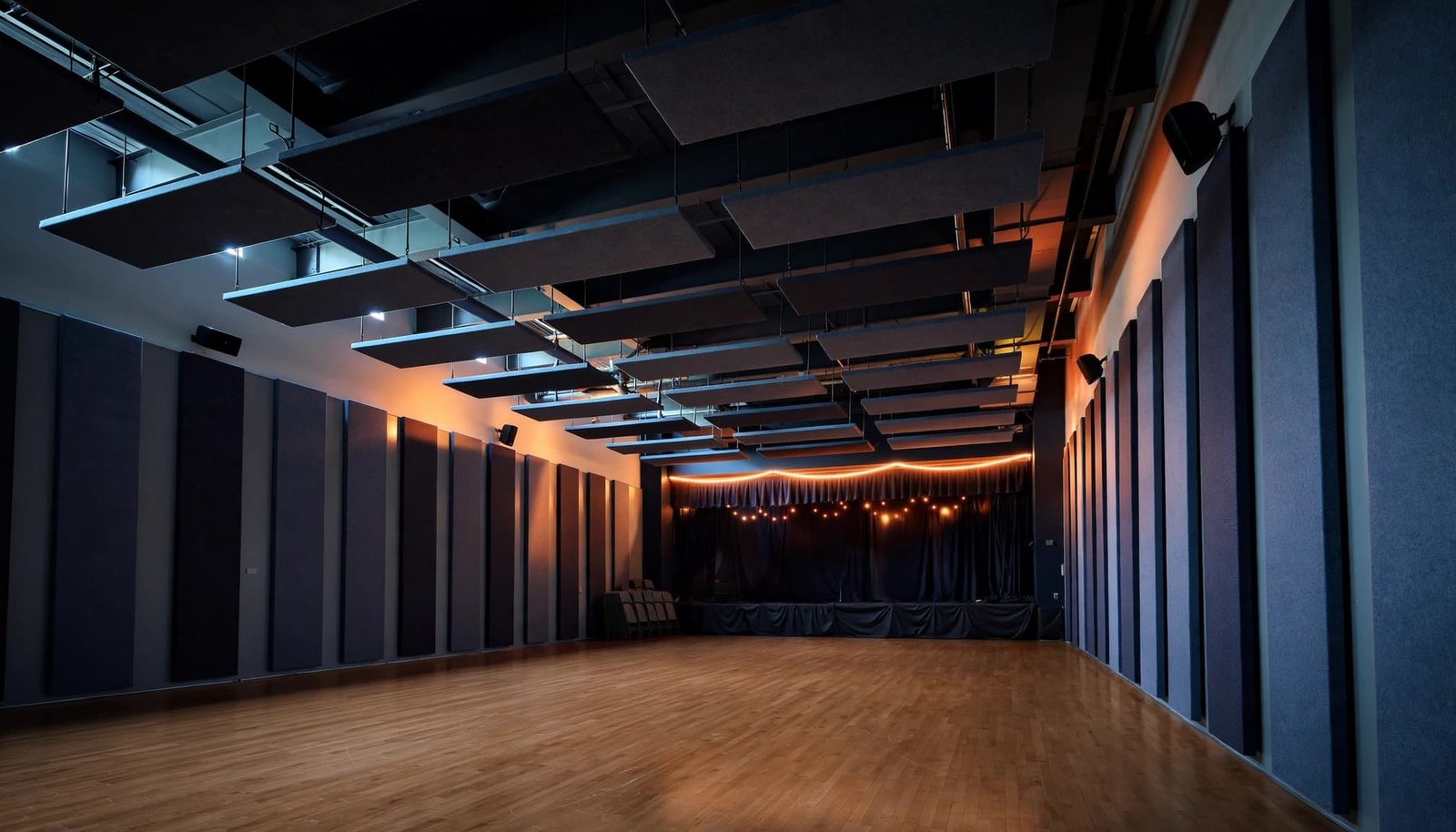
These acoustic wall panels provide sound absorption on large, reflective wall areas where sound repeatedly bounces across the gym. Side walls and rear walls are common priorities, especially where bleachers, block walls, or glass create strong reflections.
A treatment plan should account for basketball backboards, folded bleachers, doors, storage areas, and existing displays. The right surface area depends on the room’s layout and the strength of its sound reflections. Schools may need more flexible acoustic wall panels than commercial gyms because layouts and sports equipment can change.
For a budget-conscious temporary option, approved heavy drapes can cover selected reflective areas. They must meet school, fire, sprinkler, and maintenance requirements before installation.
When comparing products, look at the NRC rating. Noise Reduction Coefficient is an average sound-absorption rating. It helps compare materials, but it does not predict the finished RT60 by itself. Placement, total surface area, mounting method, and room volume all affect acoustic performance. Total coverage matters more than randomly placing a few panels.
Use ceiling baffles or clouds overhead
Ceiling baffles and acoustic clouds add absorption where wall space is limited. They are especially helpful in a tall gym because they intercept reflections that would otherwise travel across the ceiling and back into the dance floor.
The best locations depend on sprinkler clearance, lights, scoreboards, HVAC equipment, basketball systems, maintenance access, and local fire requirements. A professional acoustic design should be reviewed with the school, facilities team, and qualified installer before materials are ordered.
Choose PA Coverage That Works With the Room
Speaker design matters, but aiming and placement still make the largest difference during a school dance. The goal is even coverage over students, not a system that reaches every corner at the same high level.
Keep the PA close to the dance floor
The farther sound must travel, the more the room contributes its own reflections. Position the DJ system so the speakers cover the actual dance area instead of projecting across the full gymnasium.
Check coverage from the front, center, and rear of the floor. Then walk near the bleachers and walls to hear whether reflected sound becomes harsh. Make adjustments before changing EQ or increasing volume.
Consider controlled vertical dispersion
Line array speakers and other column-style systems can offer wide horizontal coverage with narrower vertical dispersion. When properly aimed, they can limit spill toward the ceiling and improve audio clarity for vocals and announcements without raising the overall level.
They don’t eliminate reverberation or replace improvements to the walls and ceiling. Room size, ceiling height, dance floor placement, crowd size, and the event schedule should guide the sound plan. Schools should rent or bring a system sized for the event rather than buy one oversized speaker.
Protect Speech Clarity and Prevent Feedback
Dance music gets the attention, but microphones often reveal the room’s biggest sound problems. Announcements for arrivals, games, awards, safety directions, or a final call need to be heard the first time.
Set microphones conservatively
Keep wireless microphones behind the main speakers whenever possible. Pointing a microphone toward a loudspeaker can create microphone feedback, which quickly becomes painful in a reflective gym.
Start with conservative microphone gain. Mute unused channels. Test both the primary wireless microphone and a backup wired microphone before doors open. If feedback begins, lower microphone gain and reassess speaker direction before raising any system level.
Tune with representative material
Run a complete sound check using the same controller or laptop, microphone, and speakers planned for the event. Test a short speech sample for speech intelligibility, full-range music, and controlled low-end music. Keep microphone gain conservative so announcements stay understandable without excessive harshness. One bass-heavy track cannot tell you how a full event will sound.
Use a graphic EQ carefully to reduce obvious tonal harshness, but don’t expect it to fix a long room decay when reverberation time is excessive. Recheck the system once students arrive because a full dance floor changes the room.
Create a Simple Sound Check Plan With Staff
The most reliable events use a shared plan. The DJ, activity coordinator, custodian, administrator, and chaperones should know who can request volume changes, make announcements, or stop the program. Noise control is a shared responsibility, not simply a matter of turning down the music.
Check the full room before doors open
Use this quick sequence during setup:
- Listen to the empty gym and identify the dance floor, staff zones, exits, and reflective trouble spots.
- Test both main speakers with speech, music, and brief low-level bass. Confirm the approved graphic EQ preset.
- Walk the front, center, rear, wall, and bleacher positions with a staff member.
- Confirm stable speaker stands, protected subwoofers, covered cable crossings, and clear exits.
- Test the primary microphone, backup microphone, backup playback source, and staff communication method.
A final room-wide check protects sound quality and helps the event feel organized before the first students arrive.
Monitor the room as it fills
Start at a moderate, staff-approved level. Watch how the room changes when students move onto the floor, gather near the walls, or begin making requests. A reading near the DJ booth may not match the volume at the hallway or far wall.
Agree on a simple hand signal or direct contact method for volume concerns, medical situations, feedback, or schedule changes. Pause playback for a power, equipment, or student-safety issue, then coordinate with staff before continuing. More school event DJ advice can help committees plan sound, music, timing, and supervision before event day.
Frequently Asked Questions
Can acoustic foam panels fix a school gym?
Small foam panels may help with limited high-frequency reflections, but they’re rarely enough for a large gym. Larger acoustic wall panels, ceiling baffles, or clouds designed for the room’s size are usually more effective. A measured plan is better than randomly adding materials.
How much acoustic treatment does a gym need?
There’s no reliable one-size-fits-all percentage. Ceiling height, room volume, wall materials, bleachers, equipment, and the desired acoustic result all affect the amount. An acoustic consultant can measure how long sound lingers and recommend panel locations and coverage based on the room.
Should speakers face the bleachers at a dance?
Usually, no. Aim speakers toward the intended listening area, typically the dance floor, instead of directly at hard bleachers or walls. Test from several locations because a small angle change can improve coverage and reduce harsh reflections.
Why do announcements sound worse than music?
Speech depends on clear consonants and short pauses. Reverberation fills those pauses and reduces speech intelligibility, making words run together. Lowering the music, controlling microphone gain, and improving the room can make announcements much easier to understand.
A Clearer Gym Makes a Better Dance
To fix echo in a school gym, begin with the room itself. Place speakers for even dance-floor coverage, control bass and microphone gain, and test the sound where students and staff will stand.
For a lasting improvement, measure RT60 and use acoustic treatment across the surface area with the strongest hard-surface reflections, rather than scattering materials randomly. Wall panels, ceiling baffles, or clouds can reduce sound reverberation.
For the next dance, place speakers sensibly, keep volume moderate, and make careful EQ adjustments. Better sound quality supports more energy, clearer announcements, and a more comfortable school dance.
If the room remains unsafe, excessively loud, or difficult for staff and students to understand, consult an acoustics professional.